
DIY / Pillar Pages
When Not to DIY: Problems You Leave to the Pros
Good DIY includes knowing where the task ends. Fixed electrical systems, gas, concealed or pressurised plumbing, structural movement, unstable glazing, safety hardware and sealed appliance internals need qualified assessment. This guide gives observable stop conditions and the limited checks that can be made without opening, dismantling, bypassing or testing a hazardous system.
Quick answer
What home repairs should you never DIY?
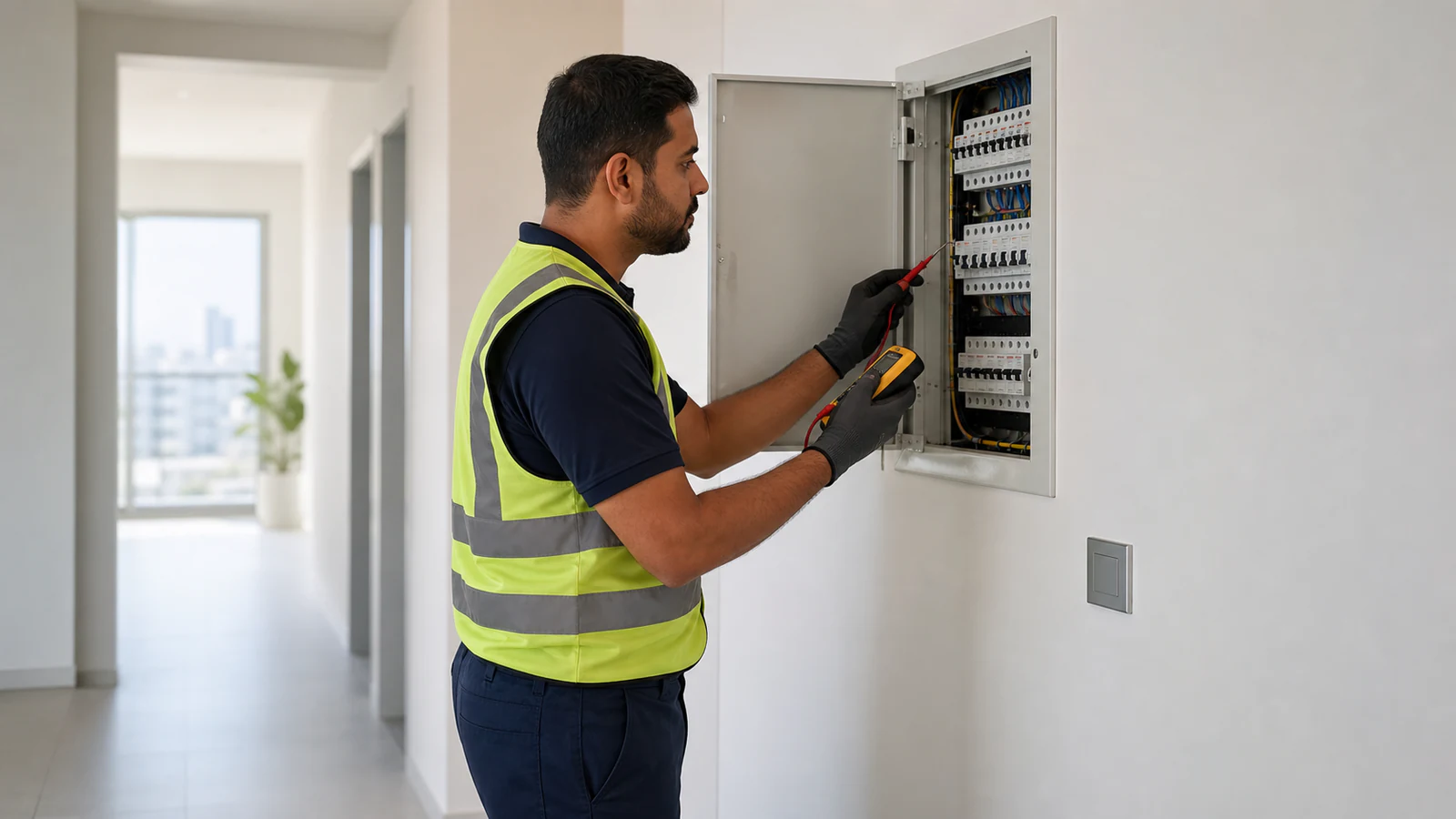
Do not open fixed wiring, breakers, gas equipment, concealed or pressurised plumbing, sealed appliance internals, structural assemblies, unstable glazing or safety-critical hardware. Step away from burning smells, heat, sparks, active leakage, movement or unsafe access. Keep any initial check external and non-invasive, isolate the area when safe, and use a qualified professional.
Room-by-room library
Start with the surface or problem in front of you.
Each section gives the direct rule first, then points to the complete photographed fixes in this cluster.
-
Why is electrical work off-limits?
Keep DIY limited to visible, accessible and reversible work. Stop when the fault involves a live service, a sealed assembly, structural movement, height or recurring water damage. Yellowed Light Switches: The Safe Way to Clean Them: If the switch is intact, cool, dry and silent, turn the light off and wipe only its solid external face with a soft cloth barely dampened in label-diluted mild detergent. Never spray, remove the cover or wet gaps. Aged yellow plastic needs electrician-approved replacement, not bleaching. The important limit is this: Never spray a switch, remove its cover or insert anything into a gap. Exclude alcohol, bleach, solvents, abrasives and whitening chemicals. A warm, buzzing, sparking, loose, scorched, cracked, wet or odorous switch is electrical work: keep it unused and contact a qualified electrician. For a more reliable result: Photograph it in daylight before cleaning. If grime disappears but the colour remains, the plastic has probably aged. Stop there. Building management or a qualified electrician can identify a compatible replacement.
-
When does plumbing require a licensed plumber?
How to Remove Limescale From a Tap Without Damaging the Finish: Check the exact faucet care guide before using vinegar. If it permits vinegar, use its stated dilution and contact time; Kohler specifies a 50/50 white-vinegar-and-warm-water solution on a soft cloth for about 5–10 minutes. Rinse immediately and dry. If the maker prohibits acetic acid or the finish is unknown, use its approved cleaner instead. Slow Kitchen Drain? What Actually Works (Hint: Not Baking Soda + Vinegar): Baking soda and vinegar do not create useful pressure in an open drain. Remove strainer debris first. For a slow sink with an undamaged plastic slip-joint P-trap, place a bucket below, photograph washer positions, clean the trap, reassemble without overtightening and test for leaks. Stop if chemicals, backflow, corrosion or multiple slow fixtures are involved. Slow Bathroom Drain: Remove Accessible Hair With a Plastic Hook: For visible hair just below an accessible cover, wear gloves and eye protection, lift the cover only as designed, insert a flexible plastic drain hook without force and withdraw slowly into a lined bin. Do not proceed after chemical cleaner, with standing sewage, or when several fixtures gurgle or drain slowly; call maintenance or a plumber. The important limit is this: A hidden-area test does not override the manufacturer. Do not use the vinegar-bag trick on an unknown faucet or one whose guide prohibits acetic acid; prolonged immersion can expose coatings, seams and internal parts. Never mix vinegar with bleach or another cleaner. Stop for colour change, dulling, blistering, corrosion, leaking or a fitting that needs force. For a more reliable result: Prevent repeat deposits by wiping the faucet dry with a soft cloth after use. If low flow remains after surface cleaning, look up the model-specific aerator removal instructions. Do not grip a finished aerator with bare pliers or disassemble a pull-out hose, cartridge or concealed fitting. The important limit is this: Never open or plunge a drain after a chemical opener, bleach, acid or unknown cleaner has been used. Corrosive liquid can remain in the trap and cause severe skin or eye burns. Do not add baking soda, vinegar or any other product. Call a licensed plumber and name the product. Also stop for backflow, sewage, multiple slow fixtures, corrosion, fixed pipework, a disposer connection or an active leak. For a more reliable result: Prevent kitchen clogs at the source: scrape food and cooled grease into the bin and use the strainer. Never pour cooking fat or oil into the sink. Recheck the dry cabinet and every trap joint after the next normal sink use; a small hidden drip can damage cabinetry before it becomes obvious. The important limit is this: Never insert a hook after chemical drain cleaner or when the prior product is unknown; do not rely on flushing or waiting to make trapped chemical safe. Never put fingers into the drain. Stop for sewage, backflow, a fixed cover, tool resistance, leakage, several affected fixtures or a strong sewer smell. These conditions need maintenance or a plumber. For a more reliable result: A removable hair strainer reduces what reaches the opening, but it must sit securely and be cleaned before flow slows. Follow the hook maker's disposal or cleaning instructions. Keep drain tools separate from household and food utensils, and replace any single-use hook rather than stripping contaminated hair by hand.
-
Why is gas work strictly professional?
How to Clean a User-Serviceable AC Filter and Restore Airflow: Confirm in the exact model manual that the filter is user-removable and washable. Switch the unit off, remove the filter only as shown, vacuum or rinse it as directed, shade-dry it fully, and reinstall it in the original orientation. Stop for unsafe access, damage, leaks, ice, odour or exposed wiring. The important limit is this: Do not open electrical or service panels, wash an unidentified filter, run the unit without its filter or reinstall a damp one. Ceiling and concealed units need safe professional access. Water, ice, burning odour, wiring damage or persistent mustiness requires qualified HVAC assessment. For a more reliable result: Inspect at the interval in the manual and adjust for visible dust. Do not promise a fixed bill saving: energy use depends on the complete system, set point, weather and building.
-
What about work at height and broken windows?
Water Under Fridge Drawers? Check the Model-Specific Defrost Drain: Check the exact refrigerator manual before touching a drain. Keep food at 4 C or colder, unplug as directed, remove only user parts, and use the model-specified thaw or flush method on a visible accessible opening. Never probe blindly. Stop for hidden access, firm resistance, recurring water, damaged seals, electrical moisture or poor cooling. The important limit is this: Never probe a drain with a rigid object, remove a service panel, use boiling water or force a flush. Keep food at 4 C or colder and moisture away from electrics. Stop for resistance, recurring water, leakage or poor cooling. For a more reliable result: Remove spoiled food and visible spills first. Baking soda may absorb some odour where permitted, but it cannot clear a drain, repair a seal or correct unsafe food temperature.
-
When must you not touch sealed appliances?
Dishwasher Leaving Dishes Cloudy? Check the Filter, Spray Arms and Settings: Let the dishwasher cool, then check whether the cloudy film wipes from one glass. Follow the exact model manual to remove and wash only its user filter and spray arms, refit them securely, and correct salt or rinse-aid settings. Use a maintenance product only when both the appliance instructions and product label approve it. The important limit is this: Do not treat all haze as limescale: etched glass is permanent. Never force parts, reach into the sump, use metal wire or run with parts loose. Use maintenance chemistry only when the appliance instructions and product label approve it, and never combine cleaners.
-
How do you describe a fault to a professional?
How to Clean a User-Serviceable AC Filter and Restore Airflow: Confirm in the exact model manual that the filter is user-removable and washable. Switch the unit off, remove the filter only as shown, vacuum or rinse it as directed, shade-dry it fully, and reinstall it in the original orientation. Stop for unsafe access, damage, leaks, ice, odour or exposed wiring.
What you need
Before you call
No repair kit is required for this page. Keep people away from the affected area and use only normal building controls that you already understand and can reach safely. Do not remove a cover, probe an opening, reset a repeatedly tripping circuit, disturb wet electrical equipment or improvise an isolation procedure.
- Electrical
- Improper electrical work causes 27% of residential fires in the UAE (DEWA safety data)
- Water
- Water pressure faults can damage neighbouring properties and void building liability insurance
- Gas
- Gas work by unqualified persons voids appliance warranty and building safety certification
- Working at height
- Work-at-height falls are the leading cause of serious home injury in the region
Quick answers
Frequently asked questions.
What home repairs should you never DIY?
Do not DIY fixed wiring, breaker panels, gas equipment, concealed or pressurised plumbing, sealed appliance internals, structural movement, unstable glass, guardrails or safety-critical doors. Stop for heat, smoke, sparks, gas odour, active leakage or movement. Keep checks external and non-invasive, then use the appropriately qualified professional or emergency service.
When should you call a plumber versus fix it yourself?
A labelled, user-accessible aerator or strainer may be cleaned under its specific guide. Use a plumber for leakage from walls or floors, failed isolation, recurring blockage, pressure changes, damaged toilets, concealed pipes, or any job requiring a trap after drain chemicals. Stop immediately when water approaches electricity or structural finishes.
What electrical work can you do without an electrician?
Limit DIY to replacing a compatible bulb in a dry, intact fitting that is safely reachable and covered by its instructions. Do not remove switch plates, outlet covers, fixtures or panel covers, and never touch wiring or terminals. Repeated trips, heat, odour, buzzing, damage, moisture or sparks require professional assessment.
How do I describe a fault clearly to a tradesperson?
Describe only observable facts: the fixture, when the symptom occurs, whether it is changing, and any visible heat, water, movement, odour or sound. Do not guess a technical cause or dismantle equipment to obtain more detail. Clear observations help the qualified professional choose the correct trade and safe first inspection.
Sources and review notes
- Clipsal by Schneider Electric: Cleaning Care for Switches and Power Points - Recommends a damp, not wet cloth with detergent solution and warns against chemical sprays entering gaps or damaging plastic.
- Clipsal by Schneider Electric: Enhance Your Home with Clipsal Iconic - Confirms wipeable finishes and directs old or damaged electrical devices to an electrician.
- Kohler: Hard Water, Calcium or Mineral Buildup on Faucet - Manufacturer instructions for a brief 50/50 white-vinegar-and-warm-water treatment.
- hansgrohe: Care and Cleaning Guide for Faucets and Bathroom Products - Manufacturer guidance requiring soft cotton, clean-water rinsing and citric-acid products instead of acetic acid.
- Moen Faucet Finish Care and Cleaning - Manufacturer finish-specific restrictions and limited diluted-vinegar guidance.
- Oatey: How to Install a P-Trap - Manufacturer guidance for slip-joint order, hand tightening, avoiding excessive force and leak testing.
- Oatey: What Is a P-Trap and How Does It Work? - Manufacturer explanation of trap function, debris collection and removable cleaning access.
- National Capital Poison Center: What's in Drain Cleaner? - Medical toxicology guidance on corrosive drain cleaners and the limits of baking soda and vinegar pressure.
- US EPA: Household Hazardous Waste - Primary guidance on hazardous-product labels and using a plunger or plumber's snake instead of drain-cleaner chemicals.
- US Consumer Product Safety Commission: Drain Cleaners - Primary consumer-safety information documenting sodium-hydroxide drain-cleaner poison and labelling hazards.
- Daikin: Air Conditioner Maintenance Tips - Manufacturer guidance distinguishes washable split-unit filters, automatic-cleaning models and equipment that needs professional service.
- US EPA: Should You Have the Air Ducts in Your Home Cleaned? - Primary guidance on filter maintenance, moisture problems and qualified HVAC assessment.