
DIY / Appliances
Dishwasher Leaving Dishes Cloudy? Check the Filter, Spray Arms and Settings
Cloudy glassware can mean removable film, incorrect settings, blocked wash parts or permanent etching. Cleaning a user-removable filter and spray arm may improve washing but cannot reverse etching. The exact manual controls removal, cleaner, softener and maintenance-cycle instructions.
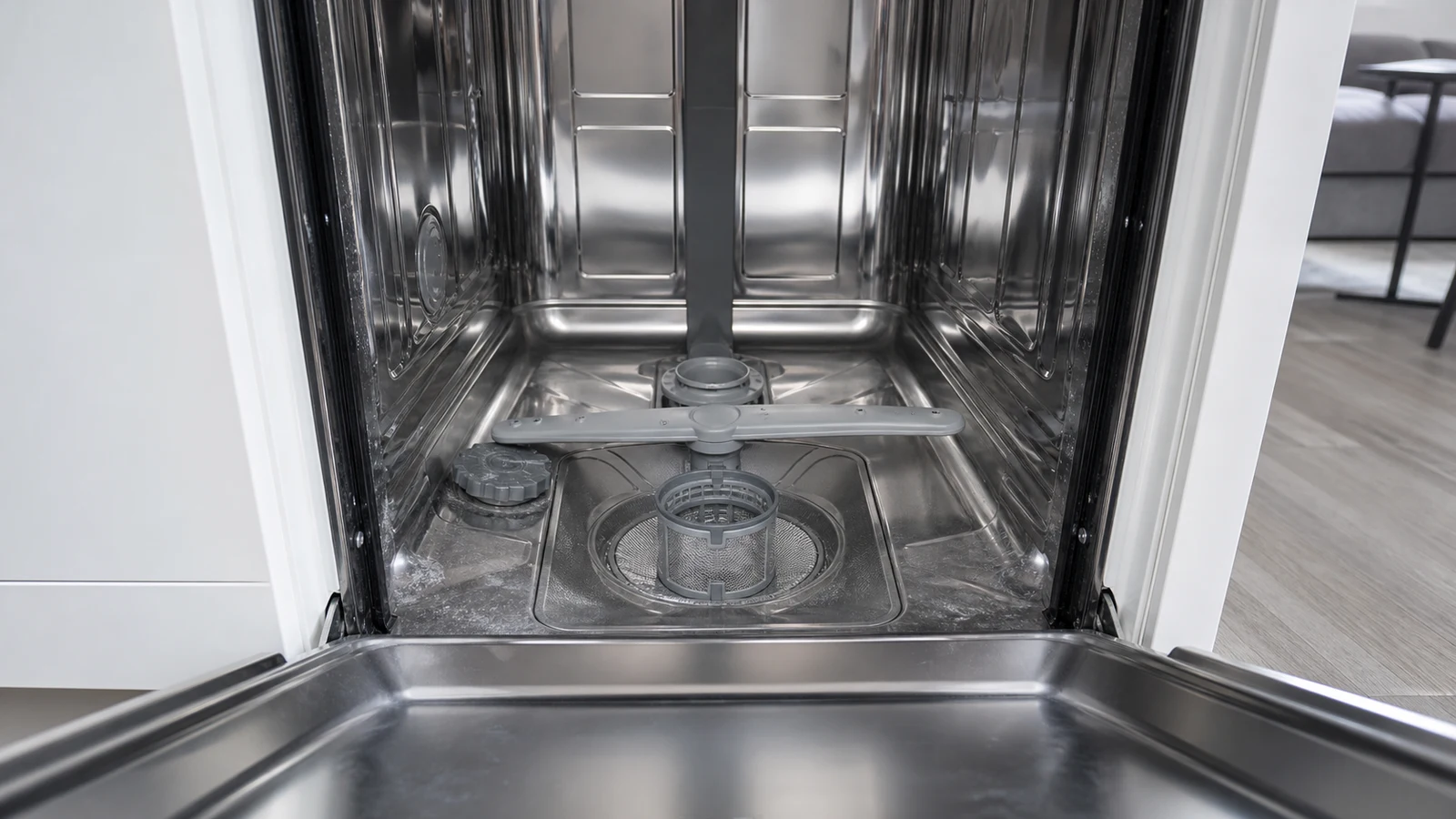
Quick answer
Why do dishes come out cloudy from the dishwasher?
Let the dishwasher cool, then check whether the cloudy film wipes from one glass. Follow the exact model manual to remove and wash only its user filter and spray arms, refit them securely, and correct salt or rinse-aid settings. Use a maintenance product only when both the appliance instructions and product label approve it.
Domestic dishwashers with manual-documented user-removable filters and spray arms
Sealed or self-cleaning filter systems / Parts requiring tools or service-panel access / Units with leaks, electrical faults, error codes or damaged racks / Glassware with permanent etching or surface damage
What you need
What you need
Do not assume citric acid or vinegar is compatible. Use only products named for the exact dishwasher and follow both manual and label.
- Difficulty
- Easy
- Active time
- About 20 minutes
- Total time
- Longer only if an approved maintenance cycle is used
Exact dishwasher model manual
One digital or printed copy
Soft nonabrasive brush
One
Mild dishwashing liquid
A small amount only if the filter instructions permit it
Manufacturer-approved maintenance product
One labelled dose, only when required
Typical UAE retail ranges. Prices vary by pack and store, and your total is lower when you already own the reusable tools.
Step by step
How to clean your dishwasher filter and spray arms
Cool the appliance, follow its illustrated removal sequence and verify that every user part locks securely before running it.
-
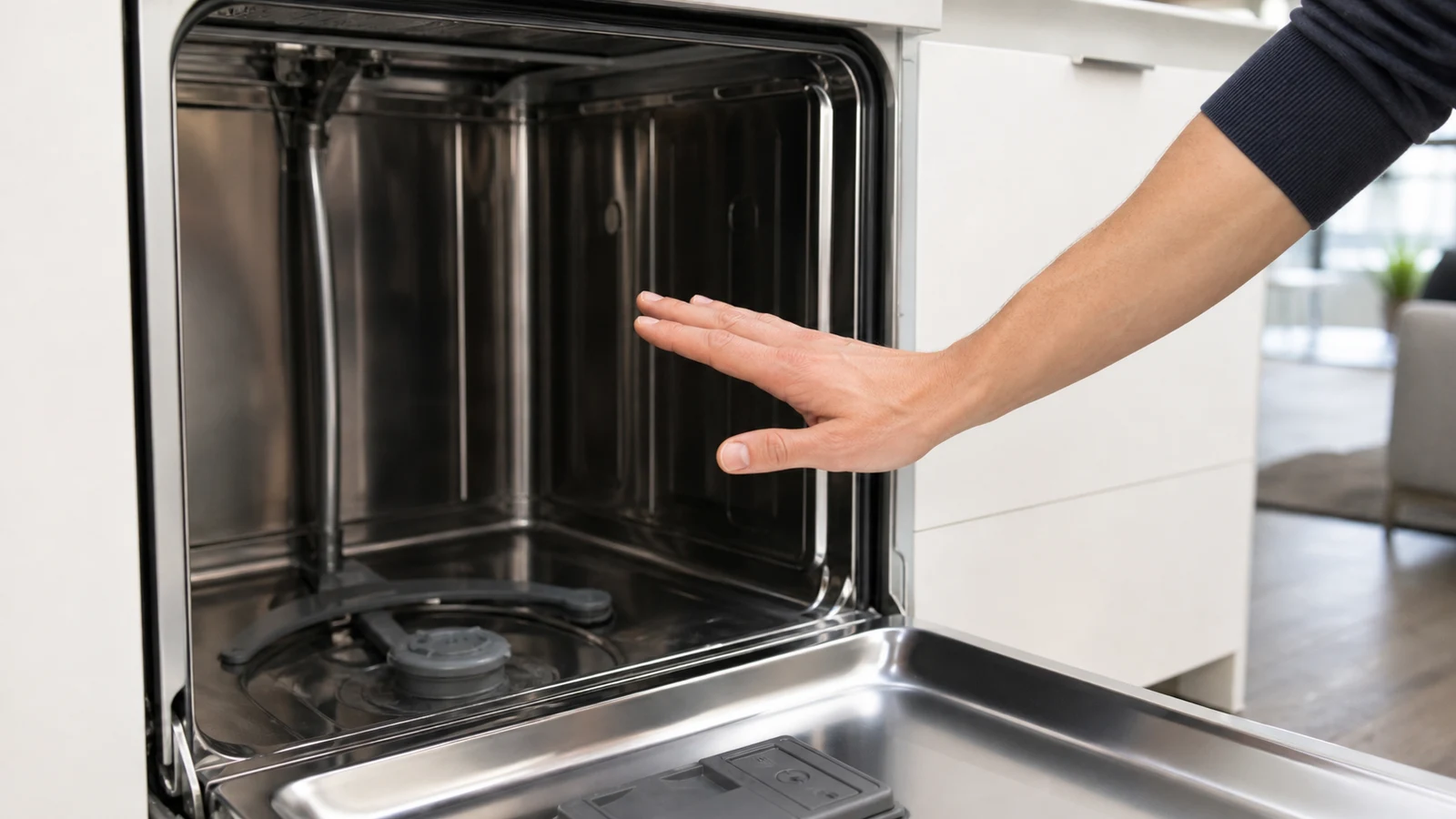
Step 01
Cool the dishwasher and check the type of cloudiness
Finish or cancel as the manual directs, switch off and open cautiously. Let steam and parts cool. Test one cool glass using maker guidance; haze that will not wipe away may be permanent etching.
-
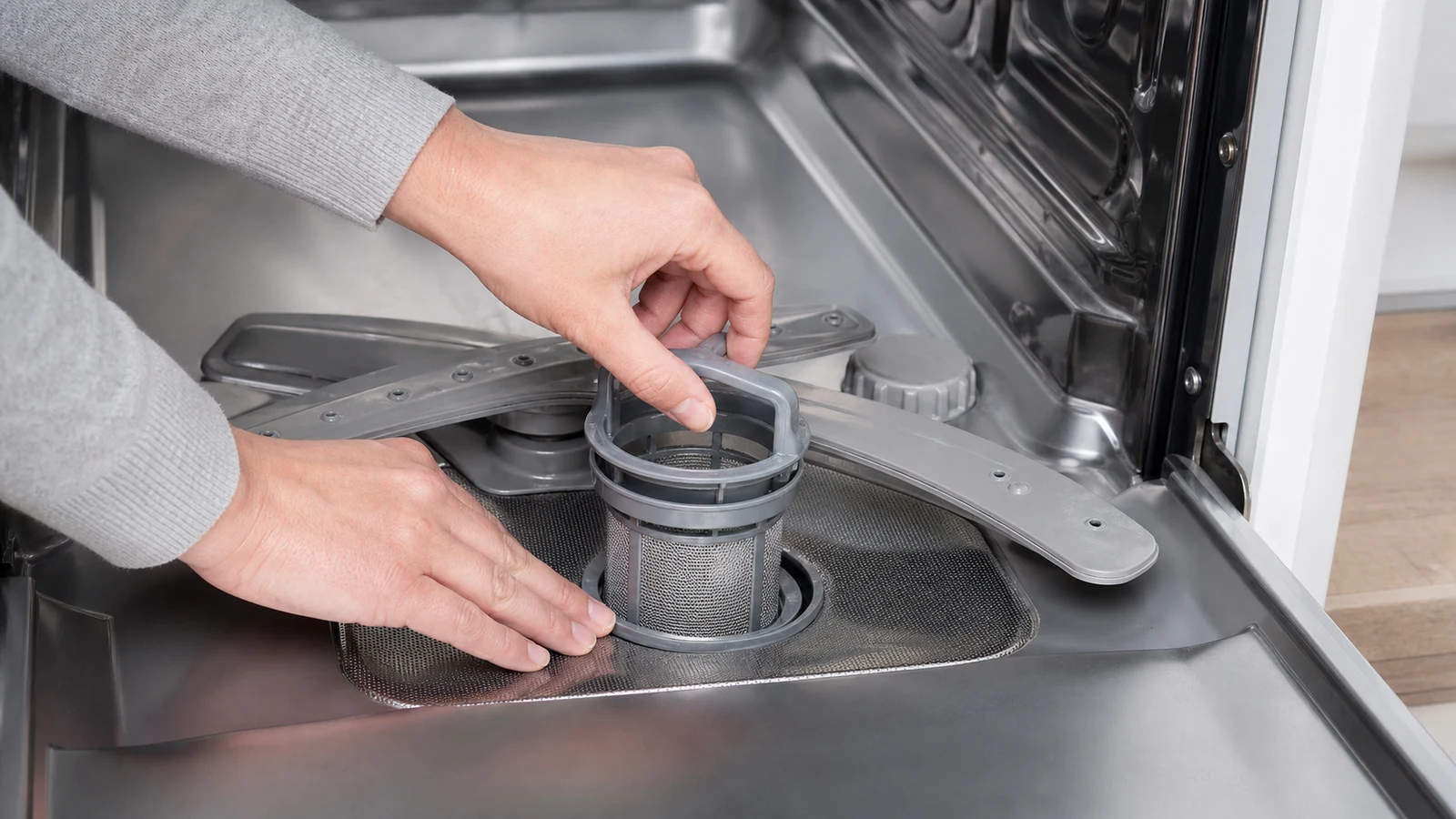
Step 02
Remove only the documented user filter
Remove the lower rack and locate the filter in the model diagram. Release it only in the shown direction. Do not guess, force a lock, reach into the sump or remove a service cover.
-
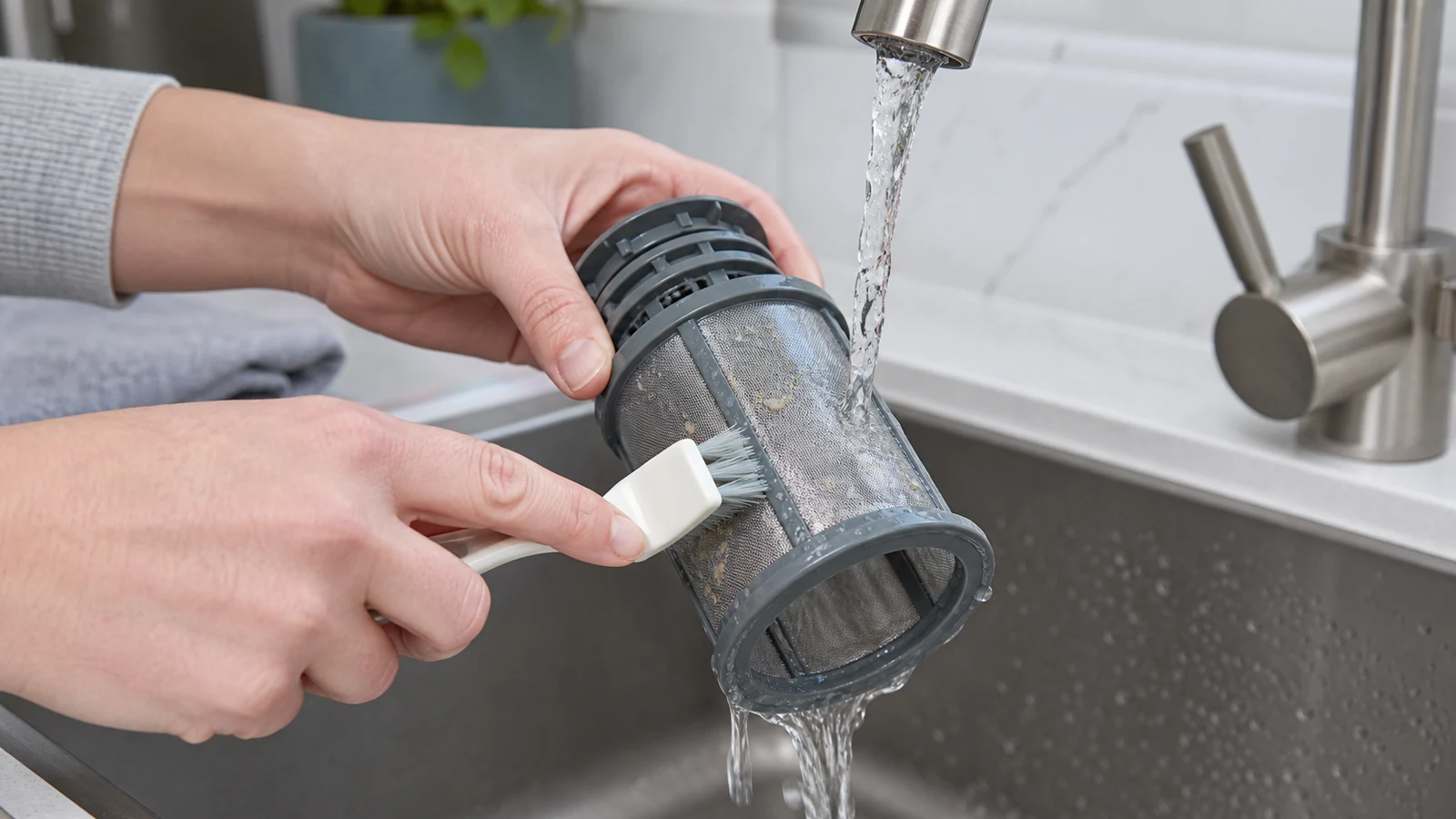
Step 03
Wash the filter gently and inspect its condition
Rinse the removable filter in warm water. If permitted, use mild dishwashing liquid and a soft brush. Stop for cracks, tears, distortion or residue needing aggressive tools.
-
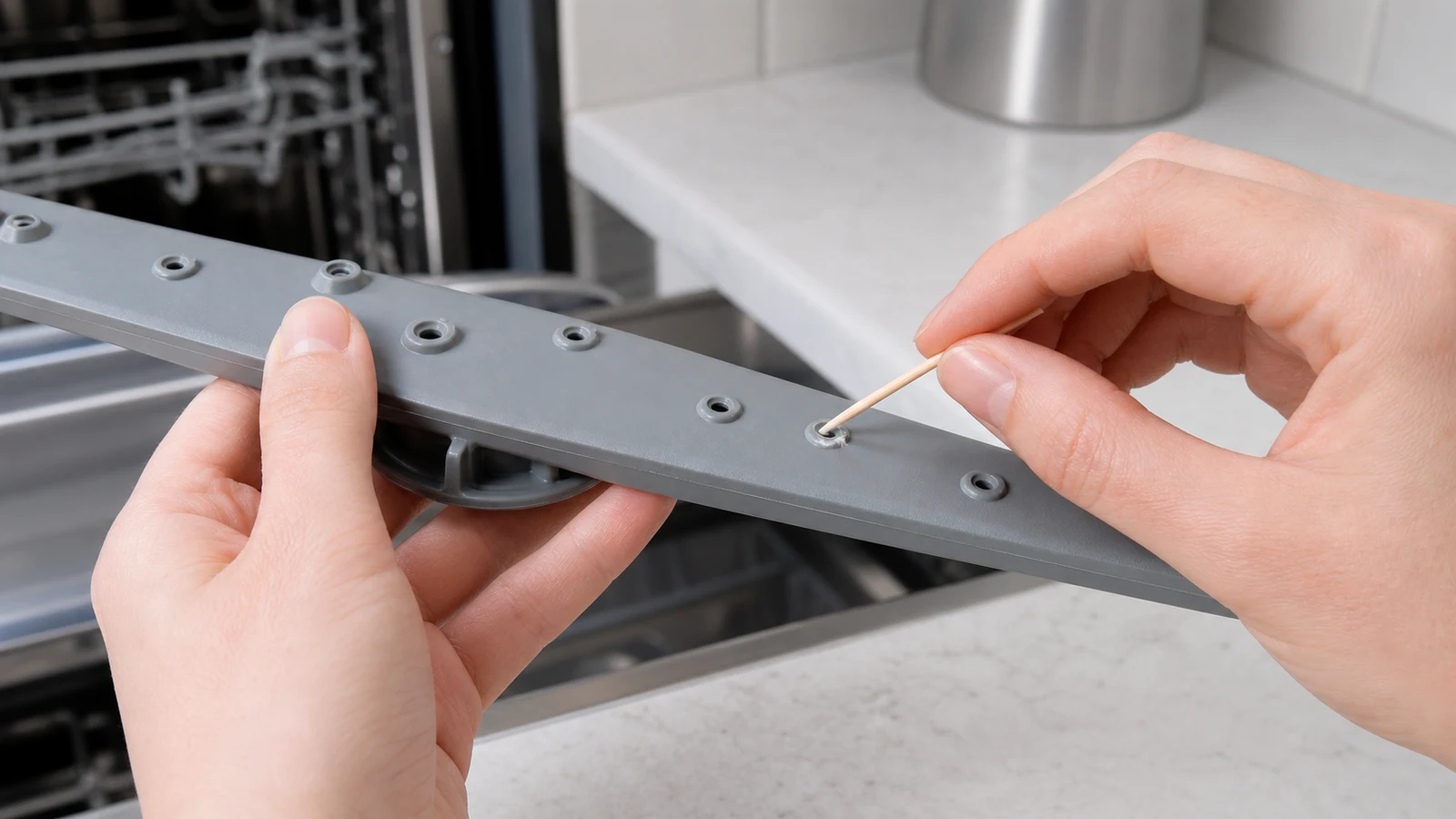
Step 04
Inspect and clean only removable spray arms
Remove a spray arm only by its documented method. Rinse it and use only the maker-approved soft tool for nozzle debris. Never use wire, enlarge holes or reach into the pump area.
-
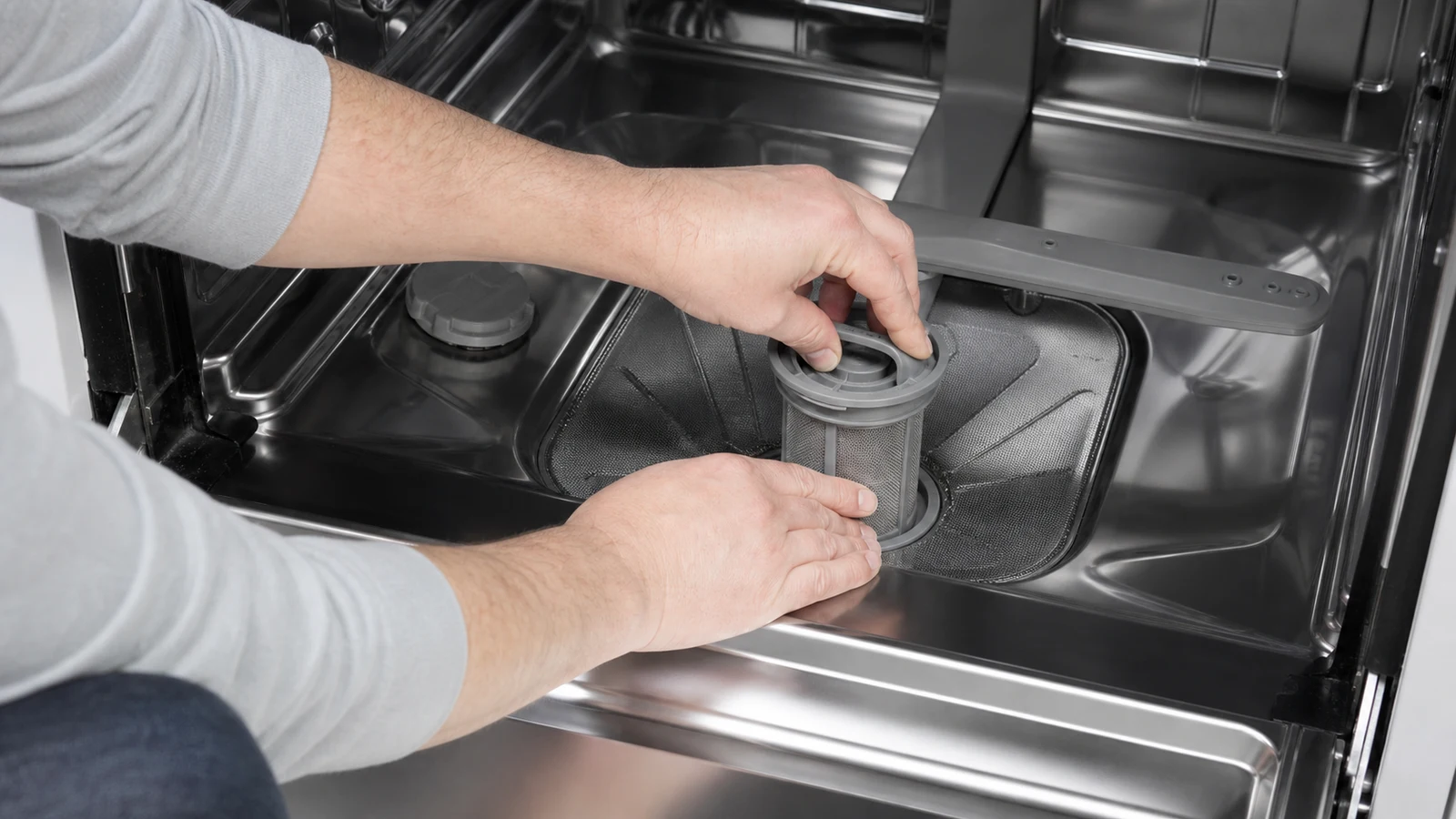
Step 05
Refit and lock every component
Refit the filter, arms and rack in the illustrated order. Confirm each lock and free arm rotation. Do not run with a loose filter, missing screen or unsecured arm.
-
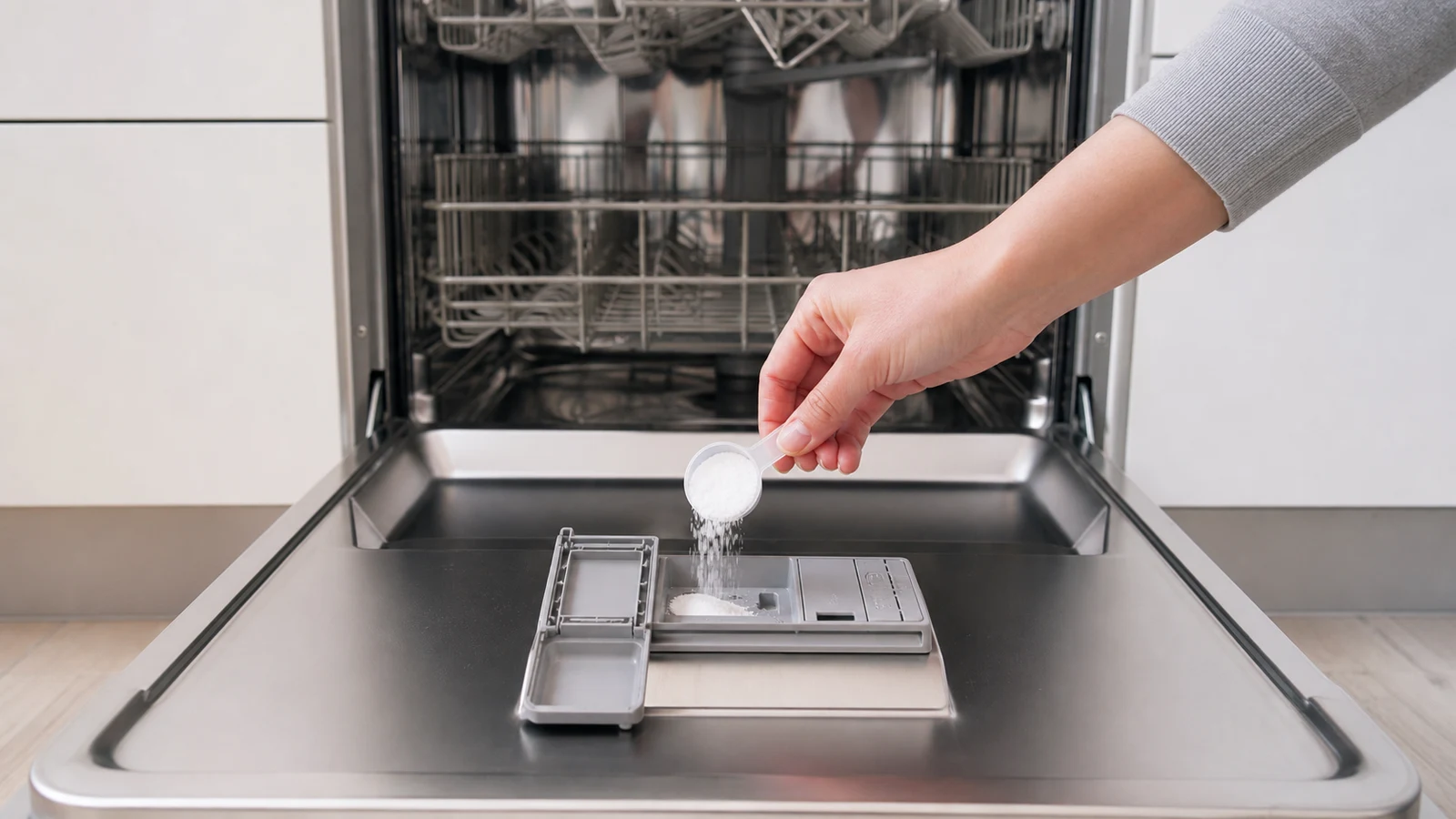
Step 06
Correct settings before an approved maintenance cycle
Check salt, softener and rinse-aid settings against the manual and water hardness. Run a maintenance cycle only with an approved product and dose. Stop for leakage, odour or an error.
Quick answers
Frequently asked questions.
Why do dishes come out cloudy from the dishwasher?
Cloudiness may be removable mineral or detergent film, poor rinsing, incorrect salt or rinse-aid settings, blocked wash parts, or permanent glass etching. Test one cool item using the maker guidance. Clean the filter and spray arms only as the model manual allows, then correct the documented water settings.
How do you clean dishwasher spray arm holes?
Let the machine cool and remove the arm only as the exact manual shows. Rinse it under warm water. Use only a manufacturer-approved soft tool, such as a toothpick on certain Bosch models, to release debris. Do not use wire, enlarge holes or force a fixed arm.
Is citric acid safe for dishwashers?
Citric acid is not universally approved for every dishwasher, coating, seal or maintenance programme. Use it only when the exact appliance manual and the descaler label both permit that product, dose and cycle. Otherwise choose the manufacturer-named cleaner. Never combine a descaler with bleach, detergent or another household cleaner.
Sources and review notes
- Bosch: How to Clean a Dishwasher Filter - Manufacturer steps for model-manual review, filter removal, mild cleaning and secure reinstallation.
- Bosch: How to Clean Dishwasher Spray Arms - Manufacturer procedure for removal, rinsing, toothpick use on covered arms and refitting.
- Bosch Appliance Care Guide - Primary guidance on cloudy deposits, dishwasher salt, rinse aid and model-appropriate care products.