
DIY / Appliances
How to Descale a Kettle Safely: Is Citric Acid Allowed?
Citric acid is approved for some kettles; other models specify a proprietary product or different method. Match the exact instructions for product, dose, fill line, heating, contact time and rinses before returning the kettle to drinking-water use.
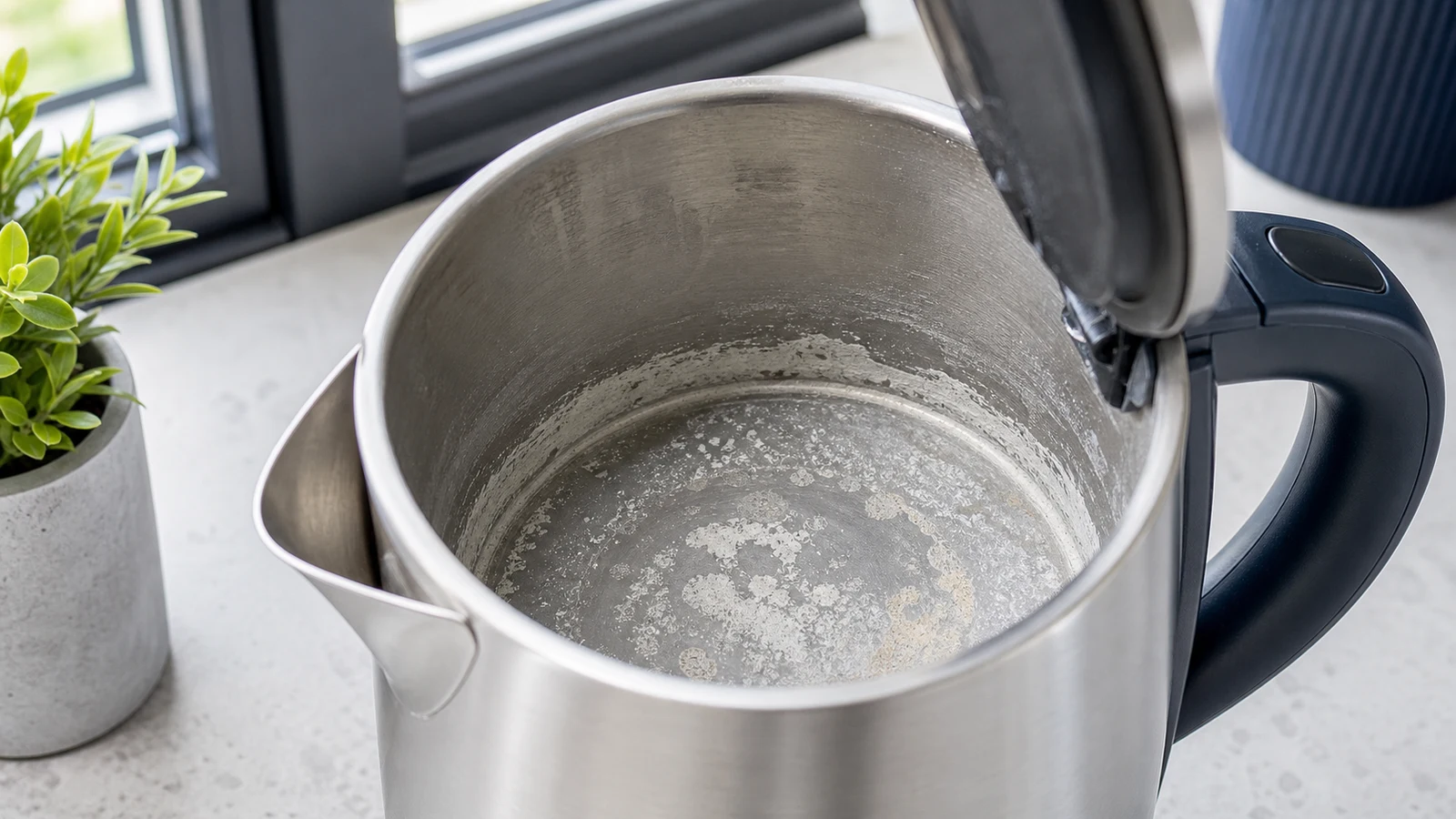
Quick answer
Is citric acid or vinegar better for descaling?
Use citric acid only if the exact kettle manual approves it or specifies a compatible citric-acid descaler. Follow the stated dose, water level, heating or no-heating step, contact time and rinse sequence. Keep the base and connectors dry, allow hot liquid to cool, and stop for leaks, coating damage or failed shutoff.
Electric kettles whose exact manual approves citric acid or a compatible citric-acid kettle descaler
Kettles whose instructions require another product or prohibit home acids / Coffee machines, hot-water dispensers and other appliances with different circuits / Leaking kettles or units with damaged cable, base, connector, coating or automatic shutoff
What you need
What you need
Use a product labelled for kettles and compatible with the model. Do not invent a loose-powder ratio or adapt coffee-machine instructions.
- Difficulty
- Easy
- Active time
- 5 minutes
- Total time
- 35–40 minutes (including cooling and rinse cycles)
Exact kettle model manual
One digital or printed copy
Manual-approved kettle descaler
One labelled dose
Fresh drinking water
Enough for the specified solution and rinse cycles
Typical UAE retail ranges. Prices vary by pack and store, and your total is lower when you already own the reusable tools.
Step by step
How to descale a kettle using its approved method
Read the full method first. Manufacturers differ on whether acid is added before or after heating and on contact time.
-
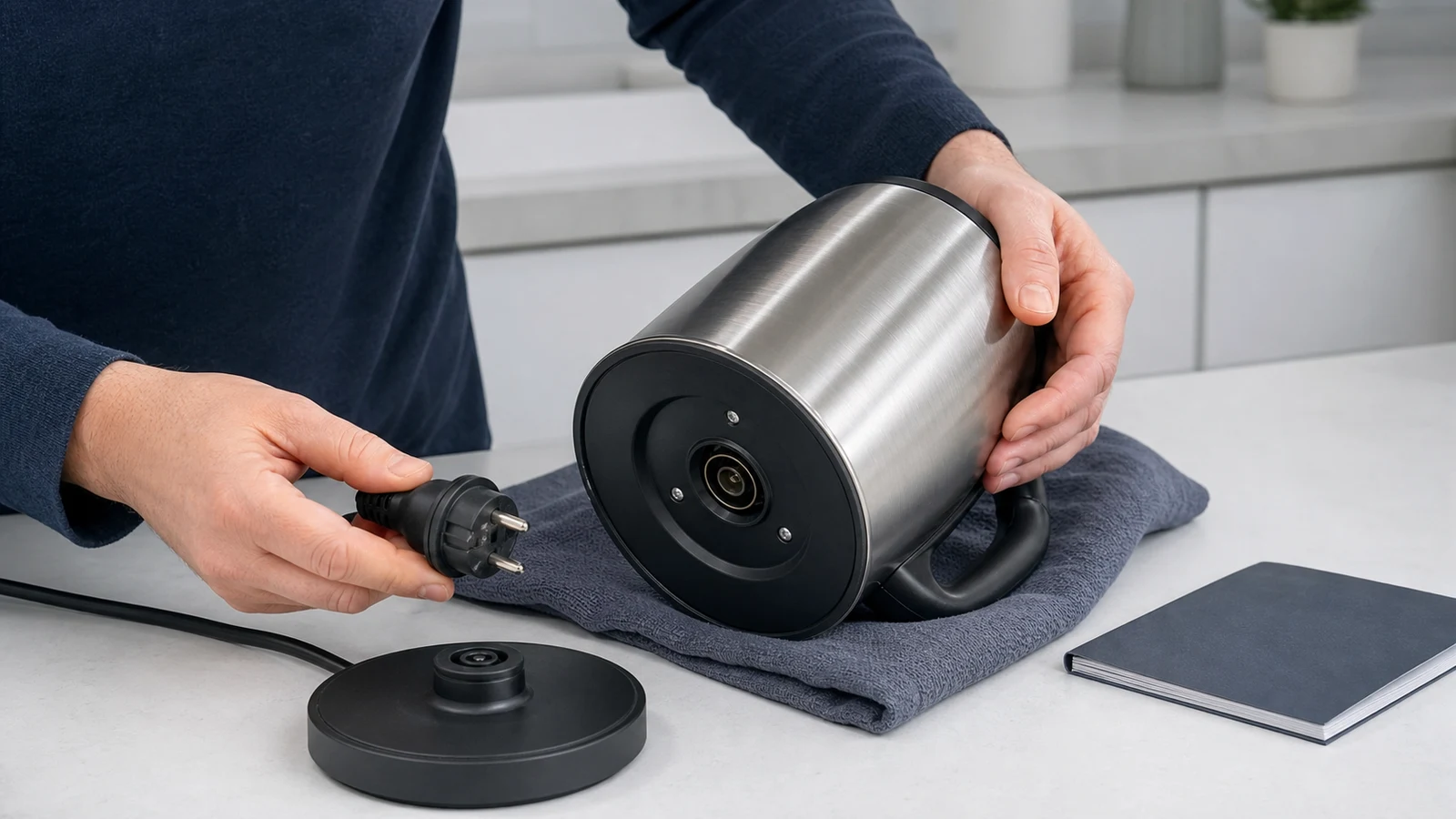
Step 01
Read your kettle manual and test for damage
Unplug and cool the kettle. Read its manual and the descaler label together. Continue only when they agree. Stop for a damaged cord, base, connector, coating, lid, body or automatic shutoff.
-
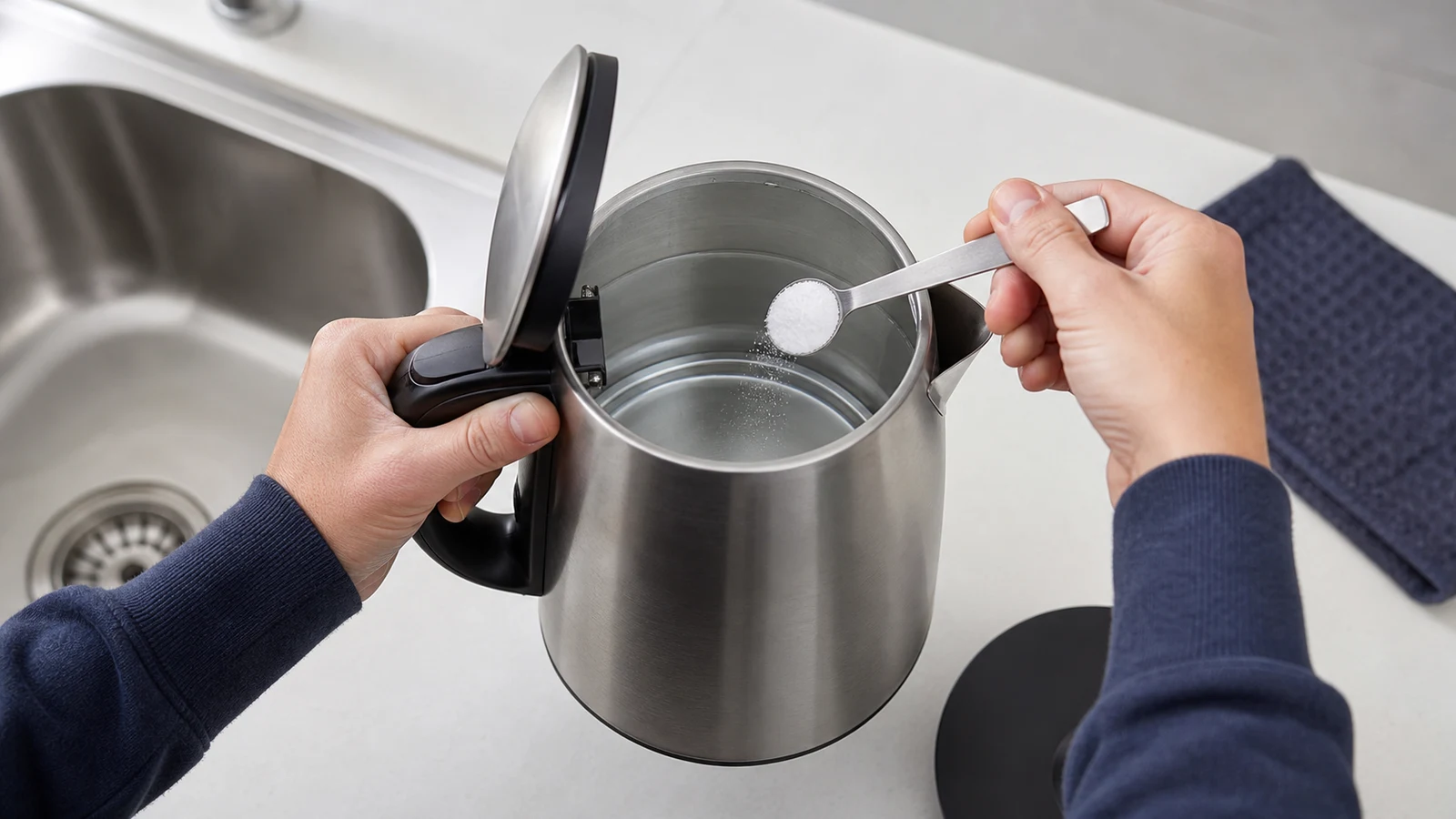
Step 02
Measure only the approved solution
Add the exact water volume and descaler dose in the stated order. Stay below the fill line. Do not estimate concentration, substitute vinegar or combine the product with bleach, detergent or another descaler.
-
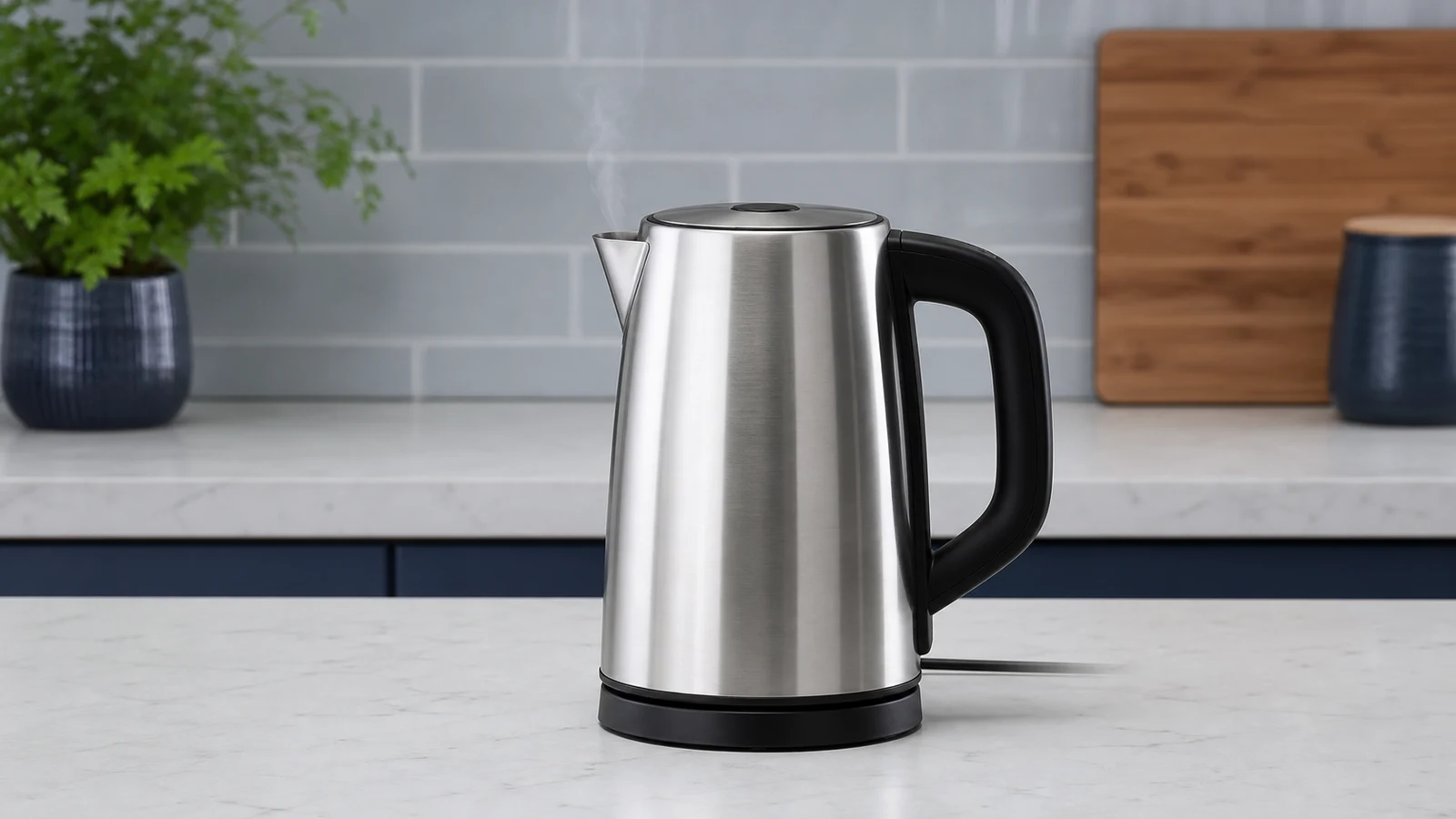
Step 03
Heat only when the model instructions require it
Heat only if the exact instructions require it and follow their sequence. Keep the lid closed, remain nearby and let shutoff operate. Stop for overflow, unusual noise, burning odour or failed shutoff.
-
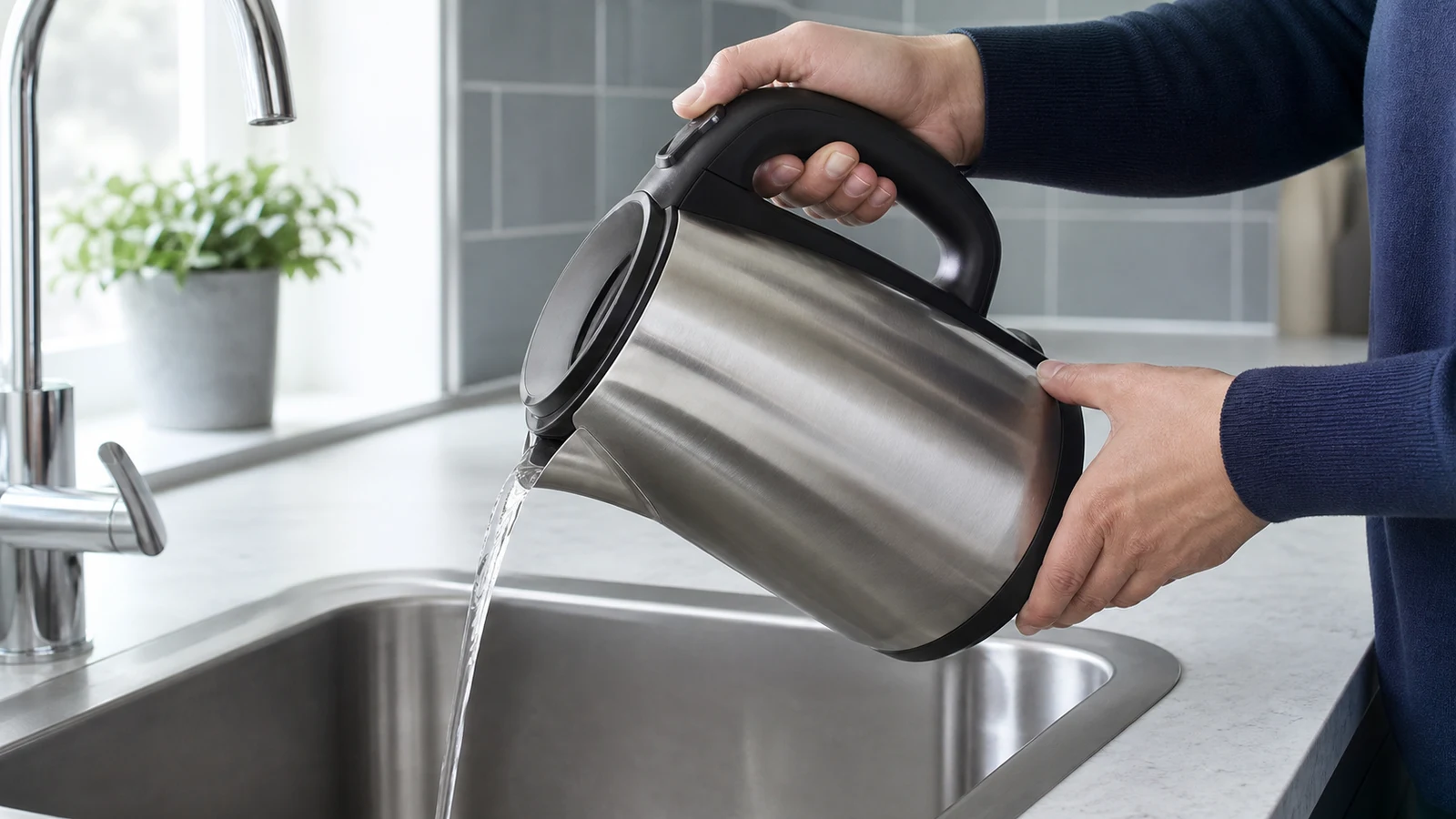
Step 04
Wait the stated time, then cool before emptying
Wait only the stated contact time. Let the solution cool to a safely handled temperature, then pour it away carefully without splashing the base or electrical connector.
-
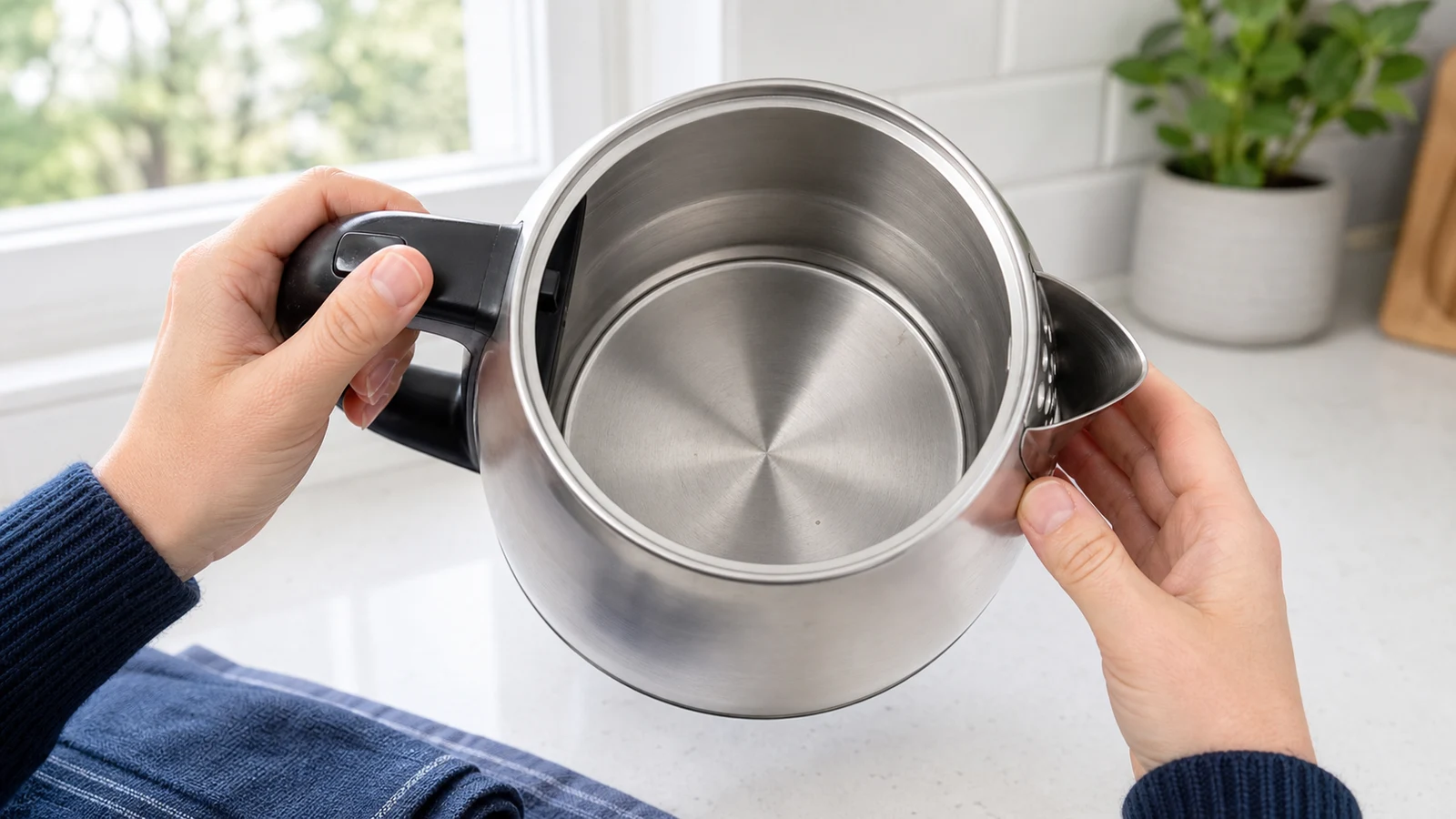
Step 05
Rinse, boil and discard exactly as directed
Rinse without immersing the kettle or base. Complete every fresh-water fill, boil and discard cycle required by the compatible instructions. Keep all connectors completely dry.
-
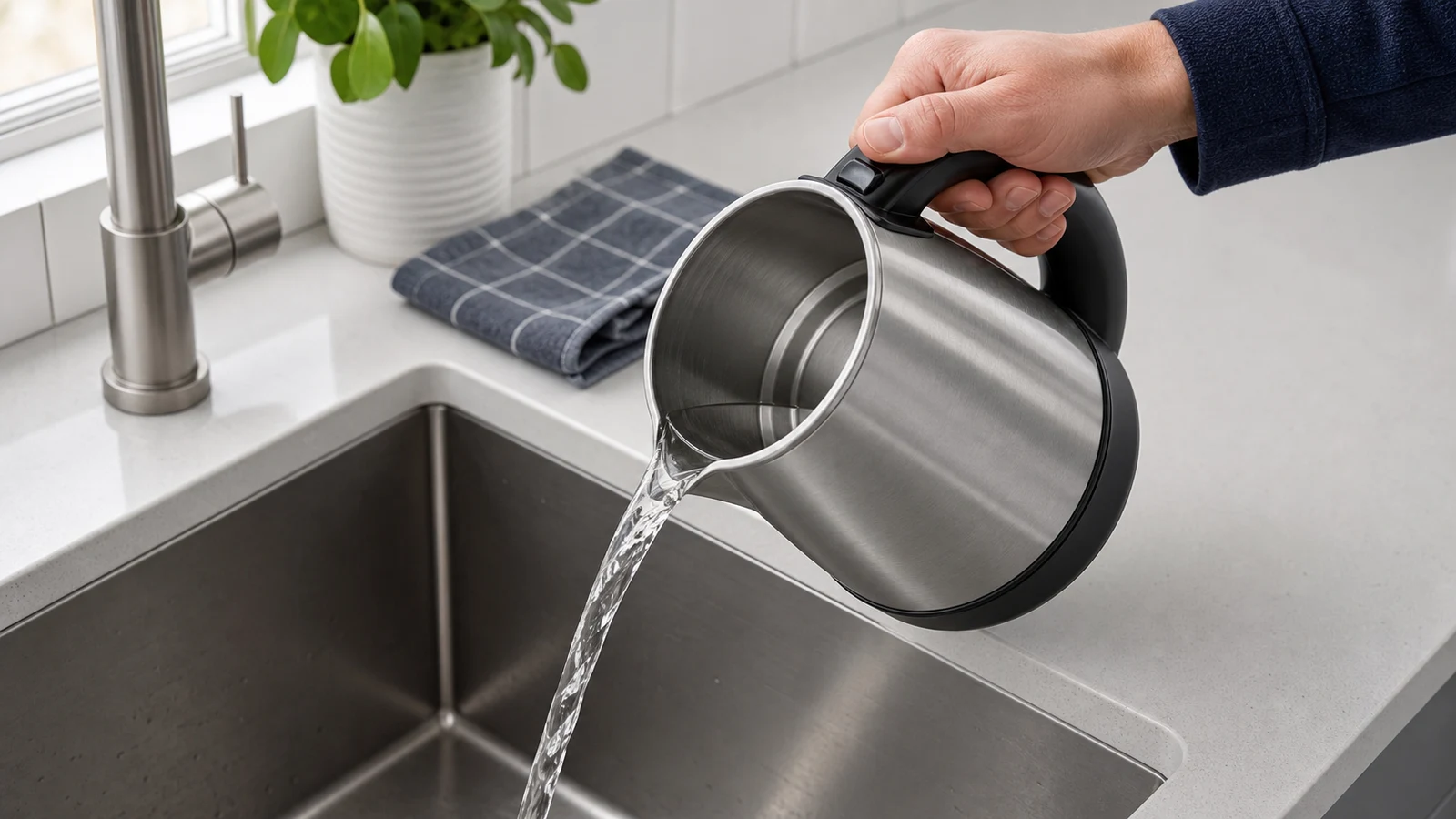
Step 06
Check for residue or appliance damage
Inspect the cool interior, filter, spout and base. Repeat only when instructions allow it. Do not drink from the kettle if residue, acid odour, coating damage, leakage or unreliable shutoff remains.
Quick answers
Frequently asked questions.
Is citric acid or vinegar better for descaling?
Neither acid is universally better for every kettle. Some manufacturers specify citric acid, some a proprietary kettle descaler and some vinegar. Use the method for the exact model because dose, materials, heating and rinsing differ. Citric acid avoids vinegar odour only where it is expressly compatible and completely rinsed.
How often should you descale a kettle?
Follow the interval in the exact kettle manual and adjust only for its stated water-hardness or visible-scale conditions. Manufacturer examples range from monthly in hard water to every three months elsewhere. Do not descale more often or use a stronger dose than instructed, because product materials and coatings vary.
Is limescale in a kettle harmful?
Kettle scale is mainly mineral deposit from water, but a heavy layer can affect performance and release particles. Focus on appliance condition rather than a universal toxicity claim. Use the approved method and stop using the kettle if coating flakes, it leaks, smells electrical or fails to switch off.
Sources and review notes
- Philips HD9303 Kettle Support - Current manufacturer support page with model-specific manuals, cleaning guidance and safety documentation.
- Russell Hobbs Multi Purpose Descaler - Manufacturer product guidance for kettle compatibility and two complete rinses.
- DeLonghi Kettle Manual KBOV2000 - Manufacturer instructions for a suitable kettle descaler, repeated boiling and rinsing, and dry electrical parts.