
DIY / Appliances
Smelly Washing Machine: Clean the Gasket, Drum and User Pump Filter
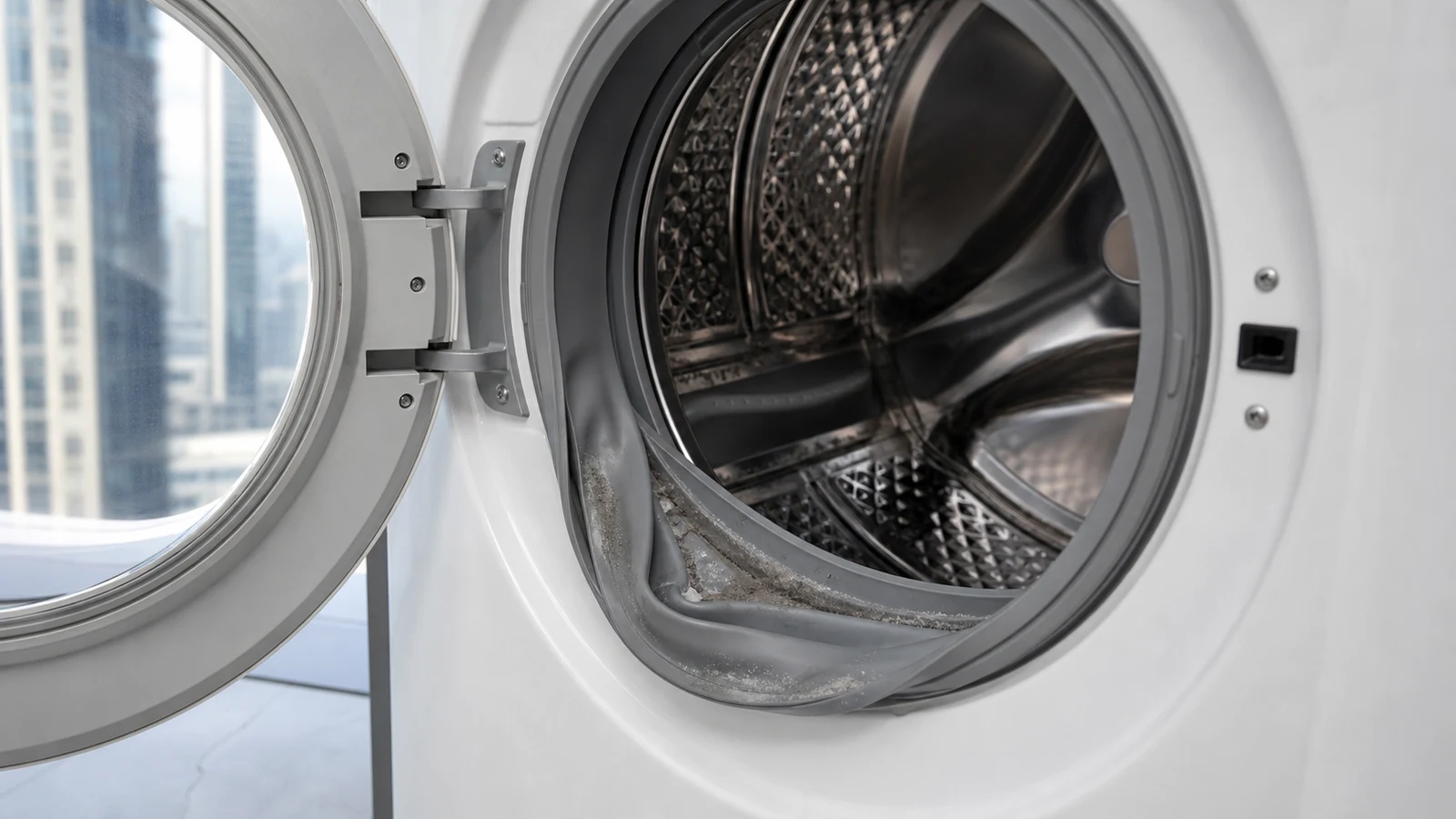
Odour in a front-load washer often comes from retained moisture, detergent residue or debris at the door seal, dispenser or pump filter. The safe routine is model-specific: wipe user-accessible surfaces, run the named maintenance cycle with an approved product, and open the pump filter only when the manual provides a resident procedure.
Quick answer
Why does my washing machine smell like drains?
Check the exact washer manual. Wipe the door gasket and dispenser with its approved cleaner, run the named empty maintenance cycle using only the specified product, then clean the pump filter only if the manual gives a user procedure. Unplug before filter access, drain slowly, and stop for leaks, damage, error codes or trapped water.
Front-load washers with a manual-documented door-seal routine, maintenance cycle and user-accessible pump filter
Top-load or compact washers with different maintenance systems / Sealed or service-only pump filters / Machines with active leaks, electrical damage, error codes or failed drainage / Torn, displaced or mould-stained gaskets that remain damaged after approved cleaning
What you need
What you need
Do not substitute vinegar, citric acid, bleach or a homemade mixture. The exact manual and cleaner label control the cycle, product, dose, placement and filter-drain sequence.
- Difficulty
- Easy to moderate
- Active time
- About 30 minutes
- Total time
- Depends on the model maintenance cycle
Exact washer model manual
One digital or printed copy
Soft microfibre cloth
Two
Manufacturer-approved washer cleaner
One labelled dose, only if the manual requires it
Shallow tray and absorbent towels
One tray and two towels for a documented pump-filter procedure
Typical UAE retail ranges. Prices vary by pack and store, and your total is lower when you already own the reusable tools.
Step by step
How to clean a smelly front-load washer by model
Work from cleanest to wettest: inspect the seal, wipe approved surfaces, run the documented empty cycle, then service a user pump filter only after the machine has cooled and been unplugged.
-
Step 01
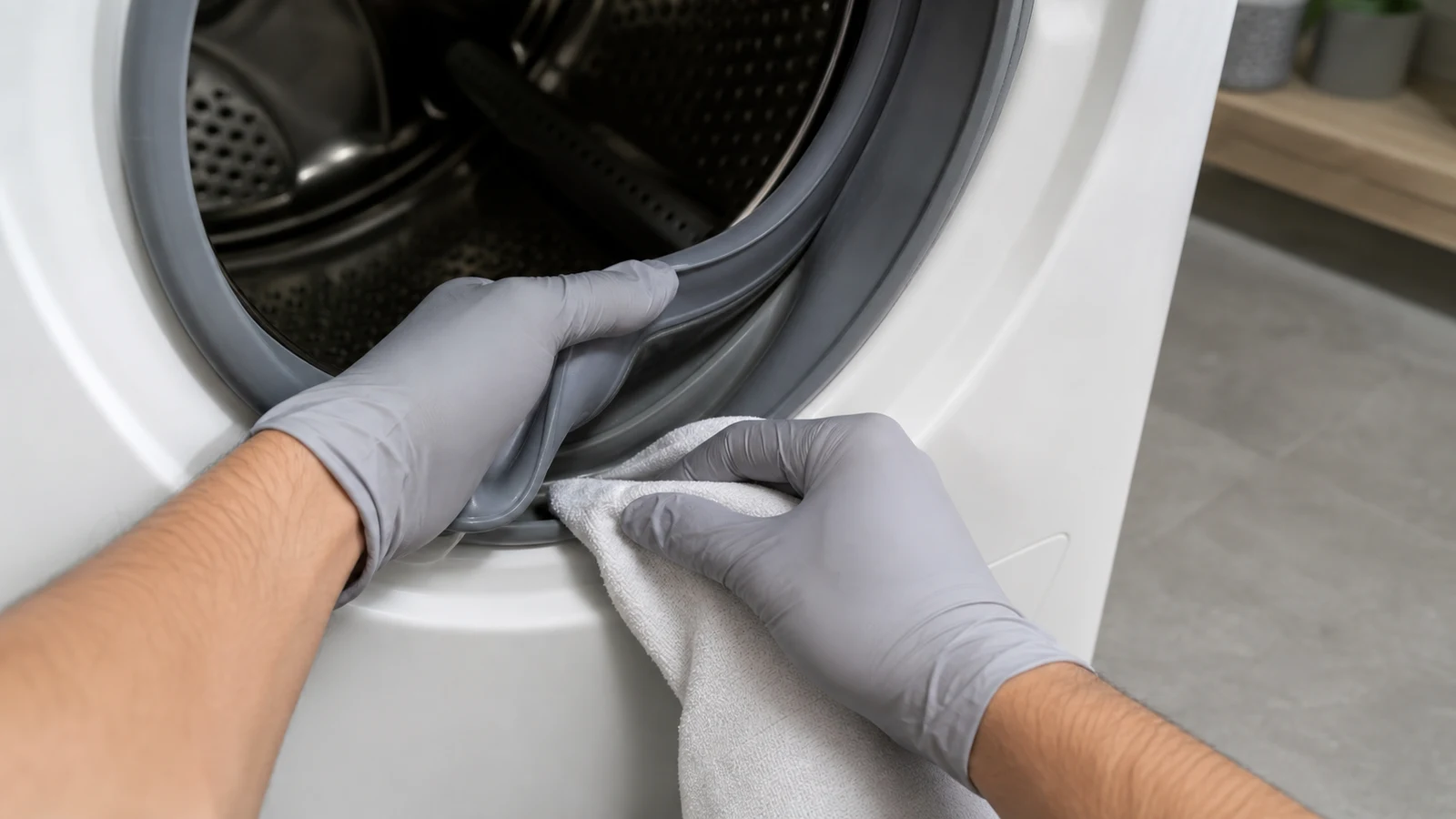
Inspect the seal, door and dispenser
Empty the drum and use good light to inspect the door glass, gasket folds and detergent dispenser. Remove loose lint with gloved fingers or a soft cloth. Stop if the gasket is torn, displaced, deeply cracked or leaking. Do not use a sharp object or pull the rubber beyond its natural movement.
Check pockets of the gasket for small objects before wiping.
A persistent dark stain or damaged seal may need manufacturer service rather than stronger cleaner.
-
Step 02
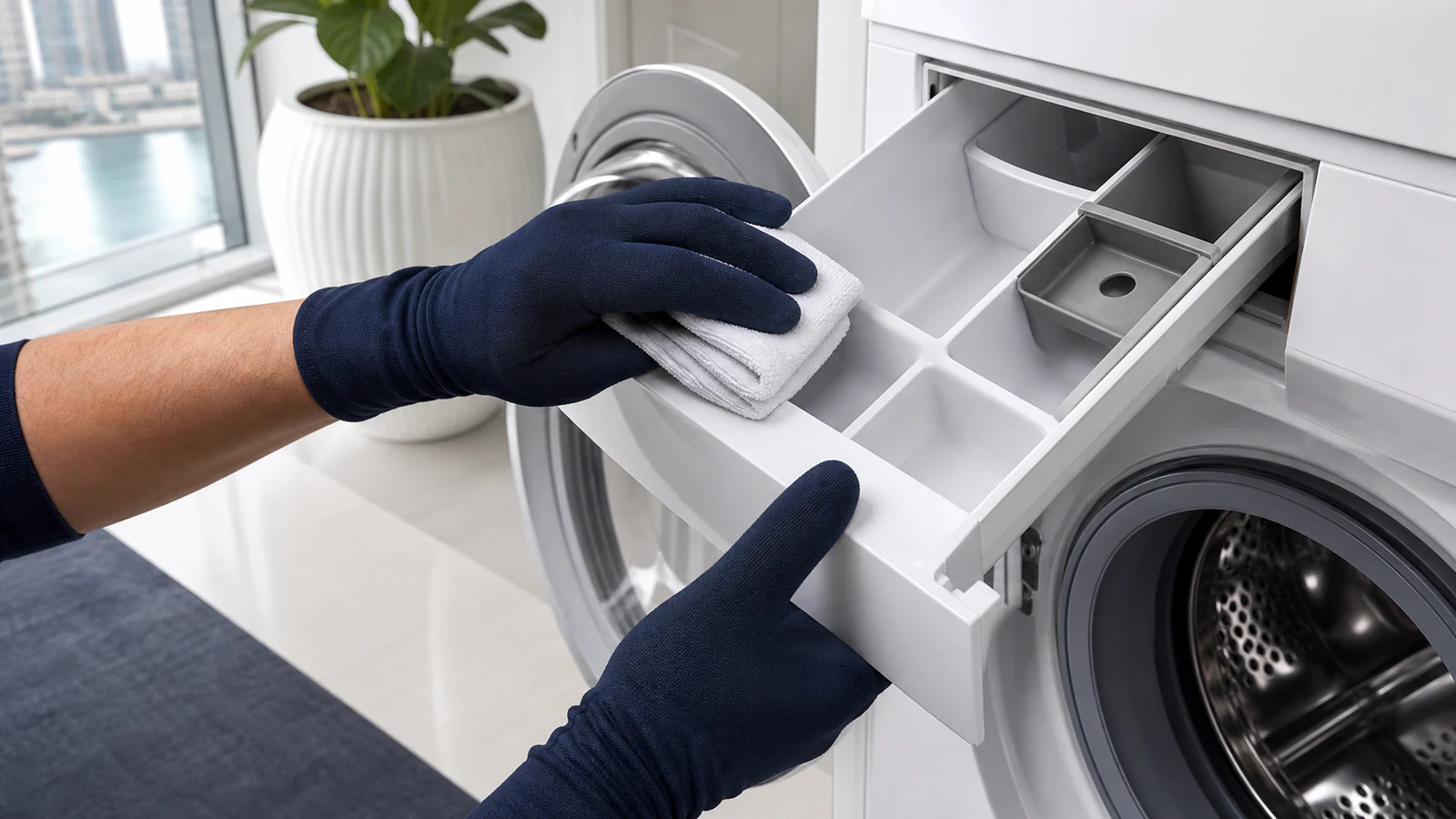
Wipe user-accessible parts with the approved method
Follow the exact manual for the gasket and dispenser. Apply any approved appliance cleaner to the cloth, not into seams or openings, unless the instructions say otherwise. Wipe residue, then dry the surfaces. Do not mix cleaning products or use an acid, abrasive, solvent or unapproved disinfectant.
Remove the dispenser only if the manual describes user removal.
Rinse and refit removable parts exactly as shown.
-
Step 03
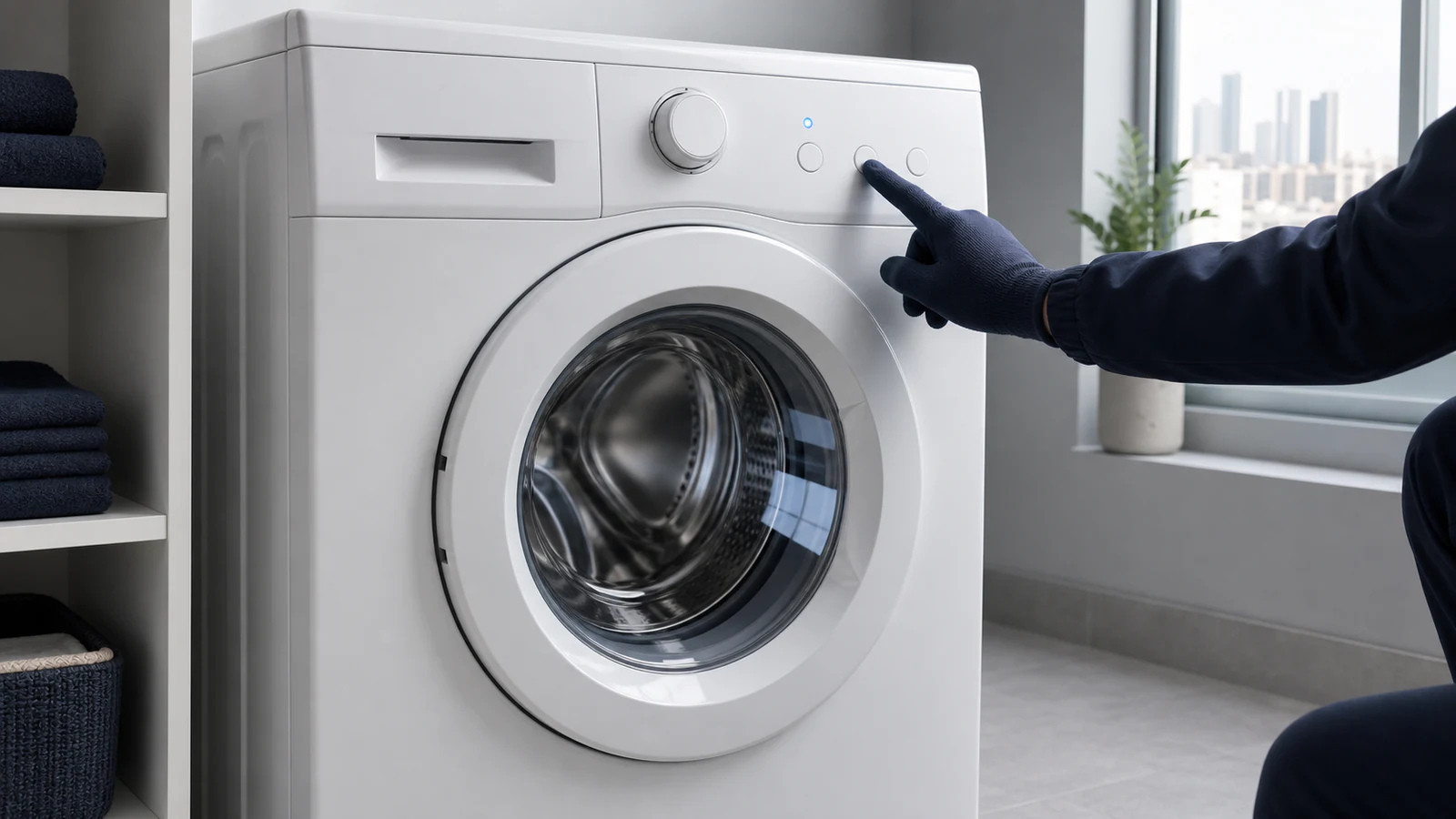
Run the named empty maintenance cycle
Select Clean Washer, Drum Clean, Tub Clean or the exact equivalent named in the manual. Add only the specified cleaner, in the stated dose and location. Keep the drum empty and let the complete programme finish. Do not choose a universal hot temperature or add normal detergent to the maintenance cycle.
Different models permit different cleaners; the label and manual must agree.
Stop for an error code, burning odour, leak or abnormal noise.
-
Step 04
Prepare for a documented pump-filter drain
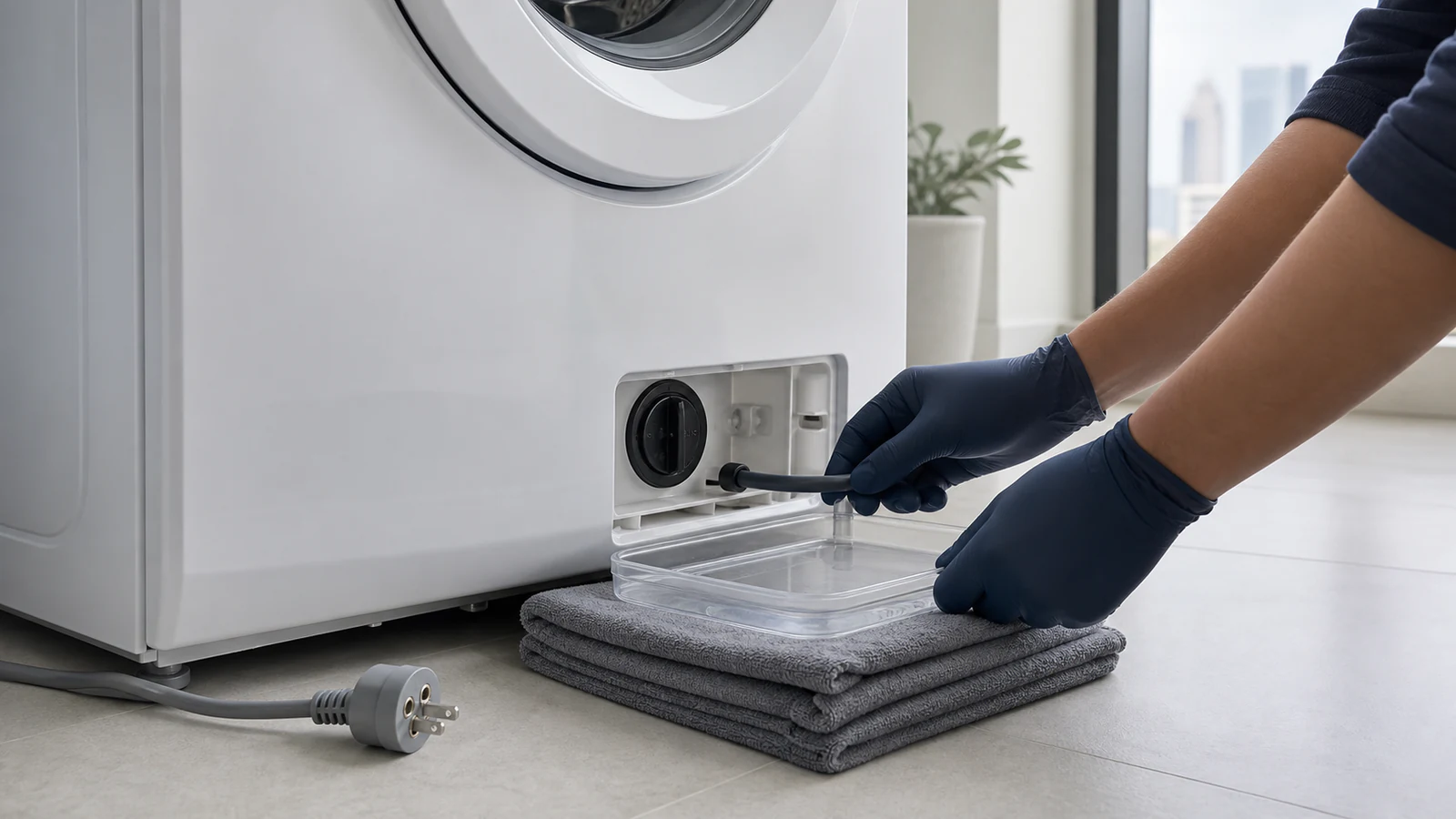
After the cycle, let the washer and water cool. Switch it off and unplug it. Continue only if the manual identifies a user pump filter and gives a drain sequence. Place towels and a shallow tray at the access door, then release residual water slowly through the emergency hose or filter method shown.
Expect more water than the small filter cap appears to hold.
Do not force a cap or open a service panel.
-
Step 05
Clean and refit the user pump filter
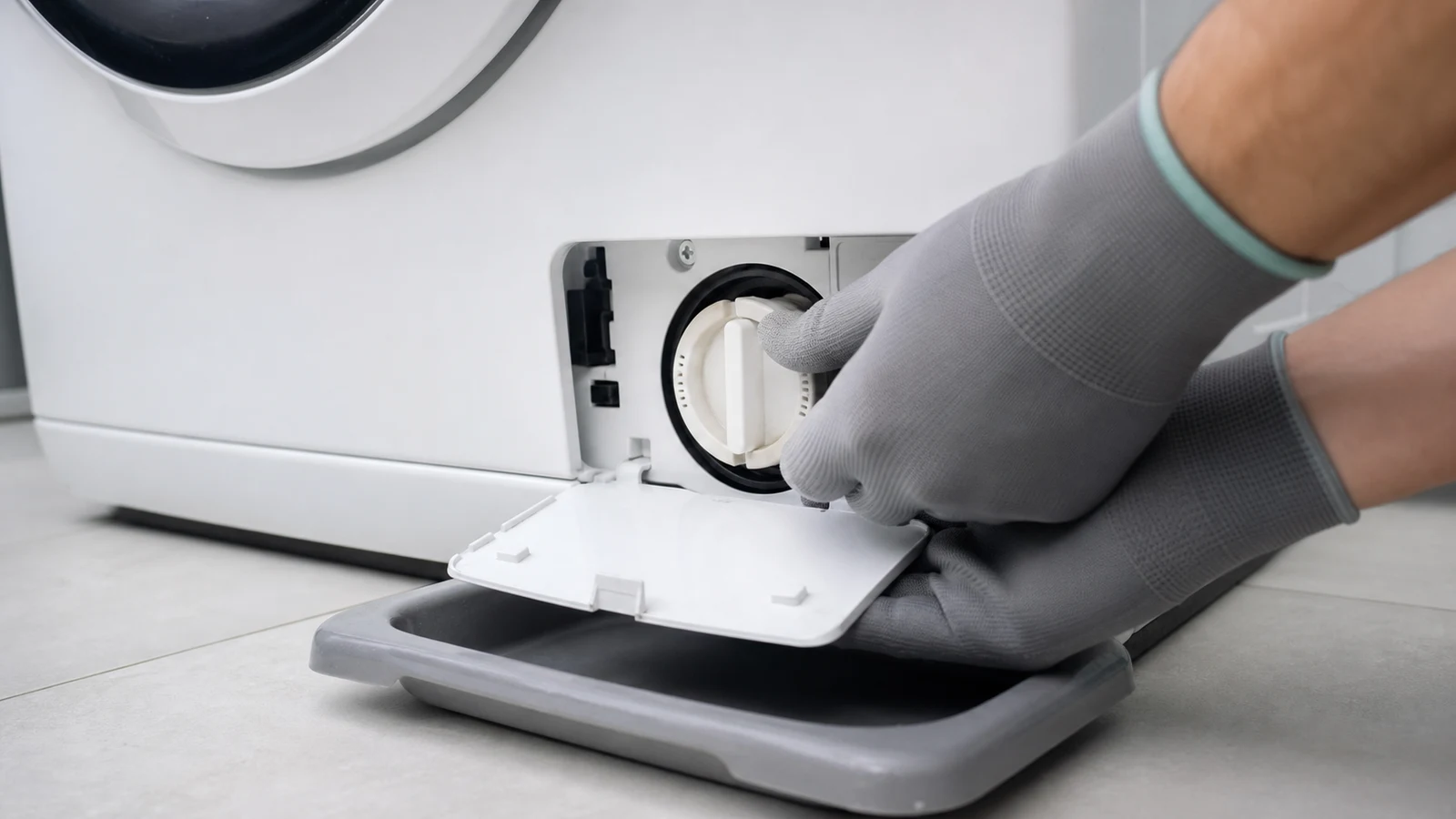
When drainage has stopped, turn and remove the filter exactly as shown. Clear loose lint and objects, rinse the removable part with clean water, and wipe the accessible recess without reaching deeper into the pump. Inspect its seal, then refit and tighten only to the manual-defined position.
Stop for a cut seal, cracked filter, seized cap or object beyond safe reach.
Never run the machine with the filter loose or access flap open.
-
Step 06
Test for leaks, then ventilate the washer
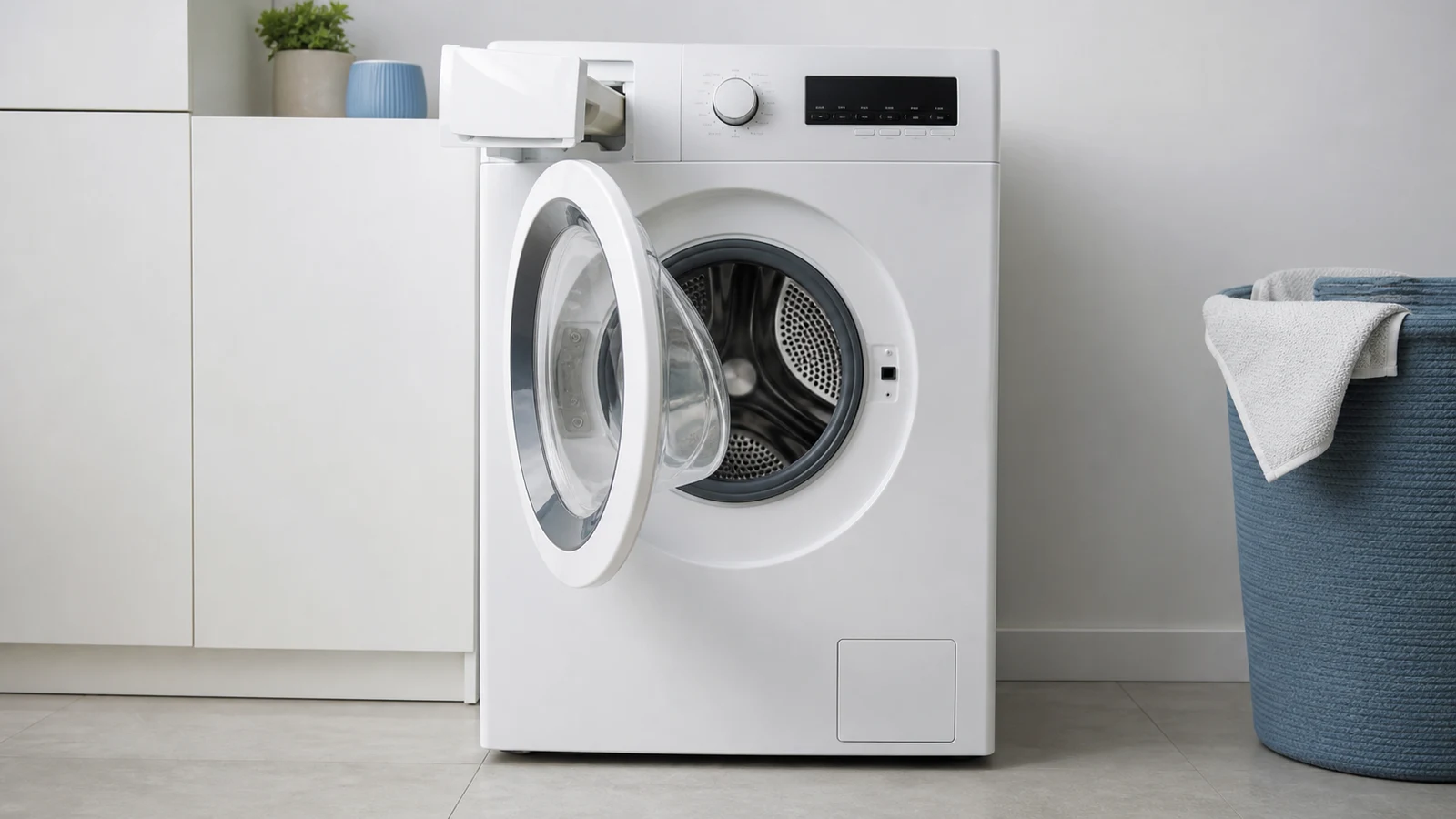
Close every access point, reconnect power and run the short verification programme named in the manual. Watch the filter door, inlet and door seal. Stop and unplug for any leak. When the test ends, dry the gasket and leave the main door and dispenser ajar only as the manufacturer permits.
Keep the open door from becoming a trip or child-access hazard.
Recurring drain odour can come from plumbing and needs separate assessment.
Finished result
What success looks like
After cleaning the gasket, running a descaler cycle and servicing the pump filter, your machine will smell fresh, drain efficiently and reduce the risk of odour returning.
No musty or drain-like odour when the door is opened
Gasket is visibly clean with no black spots or slime
Machine drains completely after a cycle with no pooling water
Pump filter chamber is clear of debris and hair
Main door and filter door close and seal firmly
Quick answers
Frequently asked questions.
Why does my washing machine smell like drains?
Residue and moisture in the gasket, dispenser, drum or pump filter can smell musty, while a drain or installation fault can create a sewer-like odour. Follow the model cleaning cycle and user-filter procedure. If smell returns quickly, drainage is poor or water leaks, arrange appliance or plumbing service.
Where is the filter on a front-load washer?
Many front-load washers place a pump-filter access door near the lower front panel, but location and user access vary. Check the exact model manual before opening anything. A sealed filter, missing drain procedure, seized cap or service panel is not a DIY task and should go to authorised service.
What temperature kills washing machine mould?
Do not rely on a universal temperature to kill mould. Washer maintenance programmes vary in heat, water level, cleaner and duration, and residue or moisture can remain afterward. Use the exact empty cleaning cycle and approved product, then dry accessible surfaces. Persistent growth, odour, leakage or gasket damage needs service.
Can I use vinegar to clean my washing machine?
Use vinegar only if the exact washer manual explicitly approves it for that task and gives a dose. Acid may be unsuitable for some components, and it must never be combined with bleach or another cleaner. The safer default is the manufacturer-named maintenance product and cycle, followed exactly.
Sources and review notes
- Whirlpool: Cleaning a Front Load Washer Door Seal - Manufacturer guidance for approved seal cleaning and complete air drying.
- Whirlpool: Cleaning the Interior of a Front Load Washer - Manufacturer guidance for the model maintenance cycle, approved products and ventilation.
- Whirlpool: Cleaning the Pump Filter on a Front Load Washer - Model-specific procedure for unplugging, controlled drainage, filter removal and refitting.