
DIY / Appliances
Water Under Fridge Drawers? Check the Model-Specific Defrost Drain
Water under refrigerator drawers can come from a spill, seal problem, temperature issue or blocked defrost drain. Drain access varies and may sit behind service panels. Continue only when the exact model manual identifies a visible user-serviceable opening.
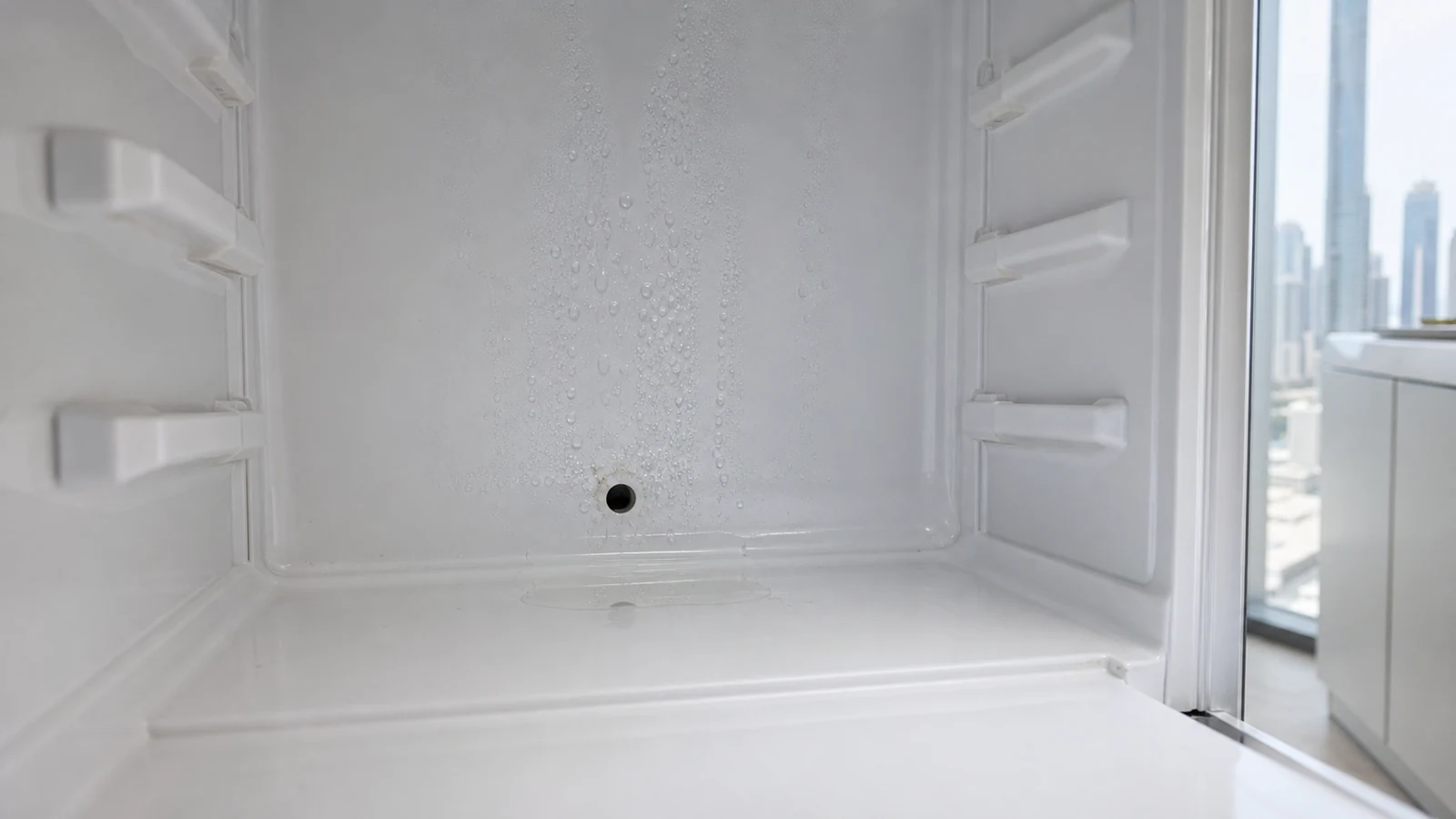
Quick answer
Why is there water under my fridge drawers?
Check the exact refrigerator manual before touching a drain. Keep food at 4 C or colder, unplug as directed, remove only user parts, and use the model-specified thaw or flush method on a visible accessible opening. Never probe blindly. Stop for hidden access, firm resistance, recurring water, damaged seals, electrical moisture or poor cooling.
Self-defrost refrigerators whose exact manual gives a resident procedure for a visible, user-accessible drain opening
Compact or manual-defrost models without a drain tube / Drain access behind a screwed, wired or service-only panel / Units with poor cooling, electrical moisture, floor leakage or damaged door seals / Unknown blockage, firm resistance or recurring water after one approved procedure
What you need
What you need
Do not substitute a toothpick or pour from a bowl. Use only the model-specified tool, solution, volume and drain procedure.
- Difficulty
- Easy only with documented access
- Active time
- About 20 minutes
- Food limit
- Keep perishables at 4 C or colder
Exact refrigerator model manual
One digital or printed copy
Insulated cool box with ice packs
Enough capacity for perishable food
Manufacturer-approved drain-flush tool and solution
Only the tool, volume and mixture specified for the model
Soft cloth and approved interior cleaner
As specified by the refrigerator manual
Typical UAE retail ranges. Prices vary by pack and store, and your total is lower when you already own the reusable tools.
Step by step
How to check a refrigerator drain without concealed damage
Protect food temperature, confirm that the model has an accessible drain, then follow only its illustrated method.
-
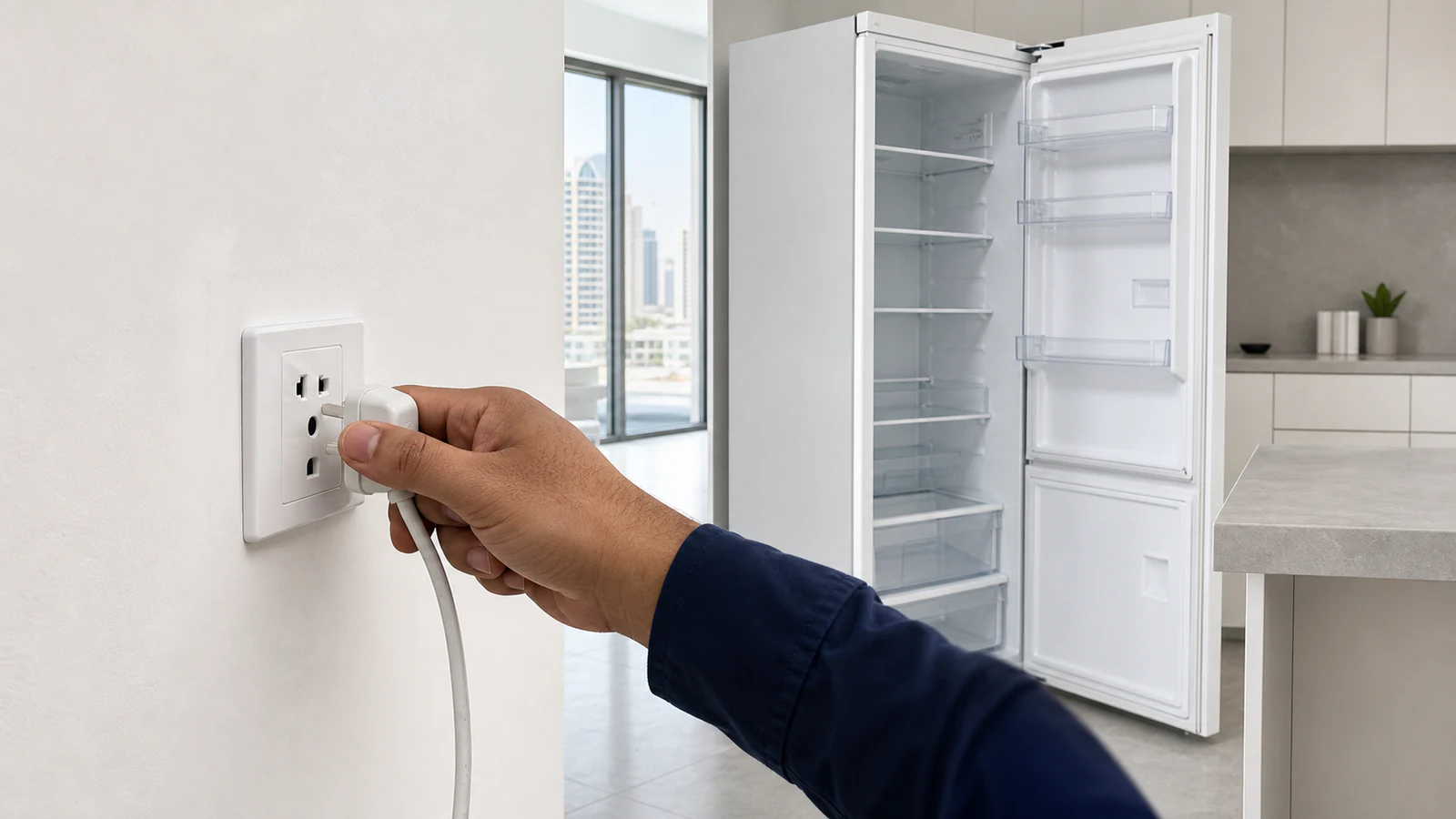
Step 01
Protect food and isolate power as directed
Move perishables to an insulated cool box and keep them at 4 C or colder. Switch off and unplug as directed. Stop if the plug is inaccessible or moisture is near electrics.
-
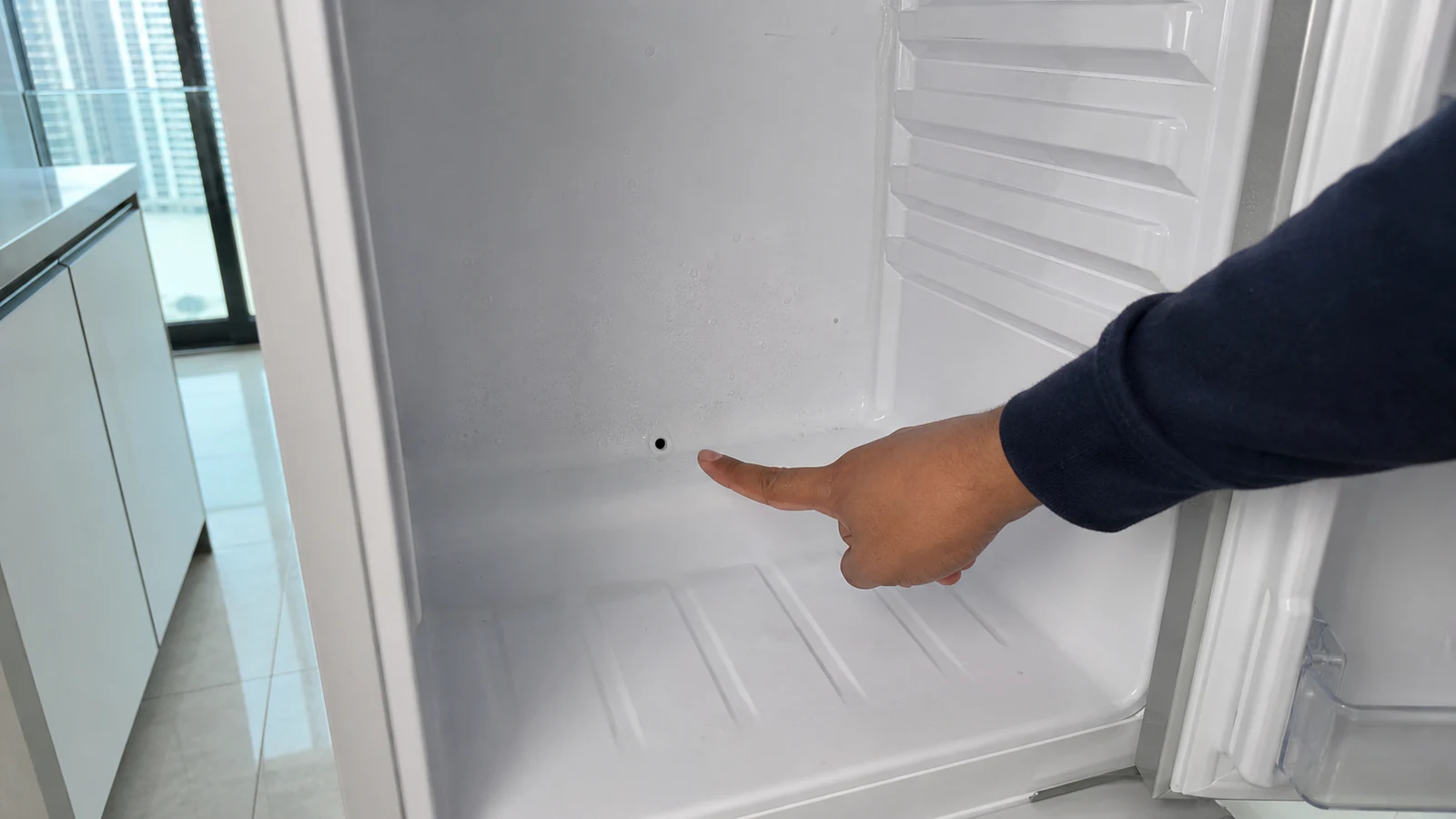
Step 02
Confirm the drain location and user access
Use the model diagram to locate the drain. Continue only when it is directly visible after removing user parts. Do not unscrew a panel or guess from a generic image.
-
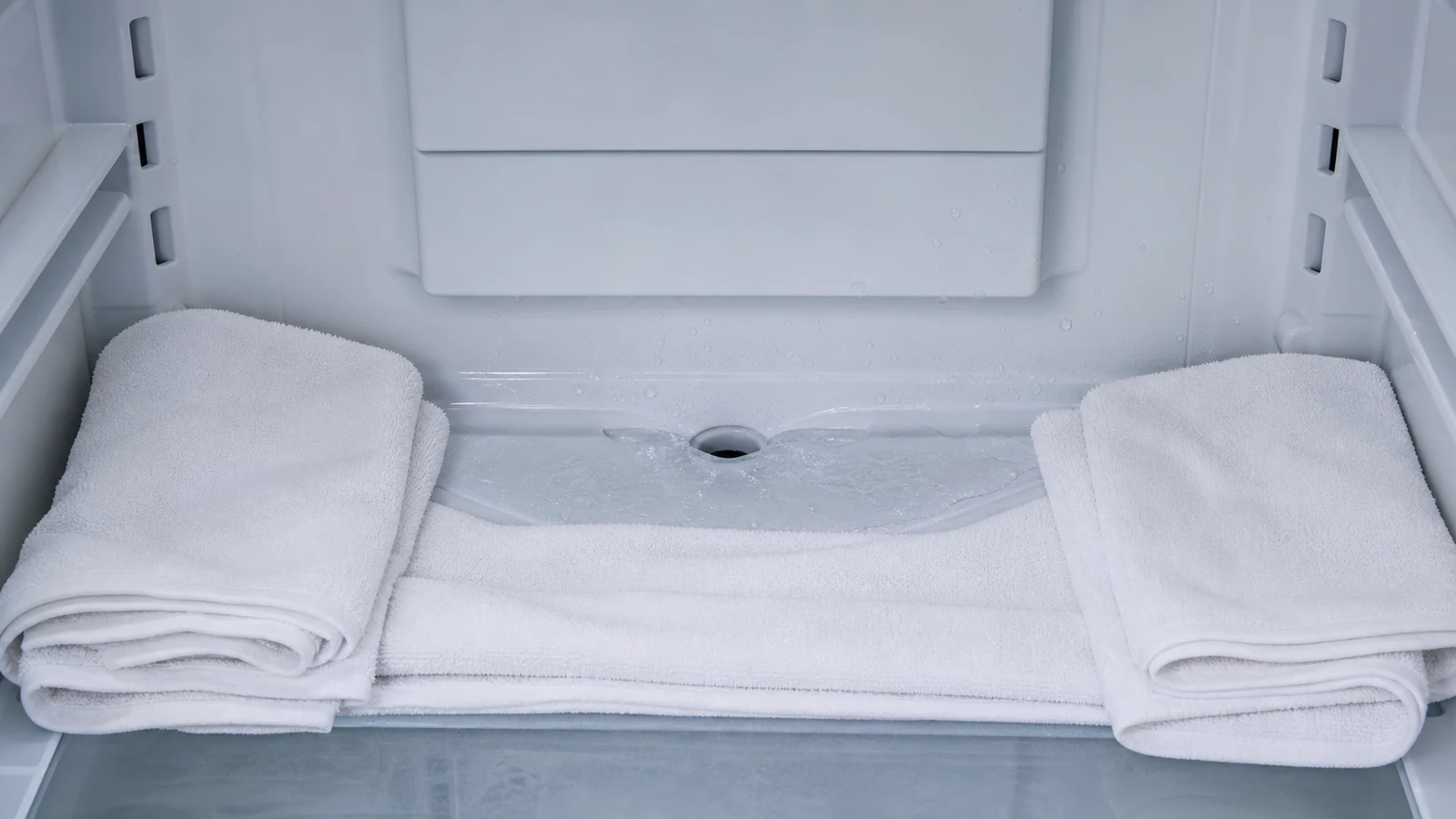
Step 03
Let documented ice thaw without probing
If documented ice covers the drain, use passive thaw instructions and towels. Do not chip ice or use a toothpick, wire, knife, hair dryer or boiling water.
-
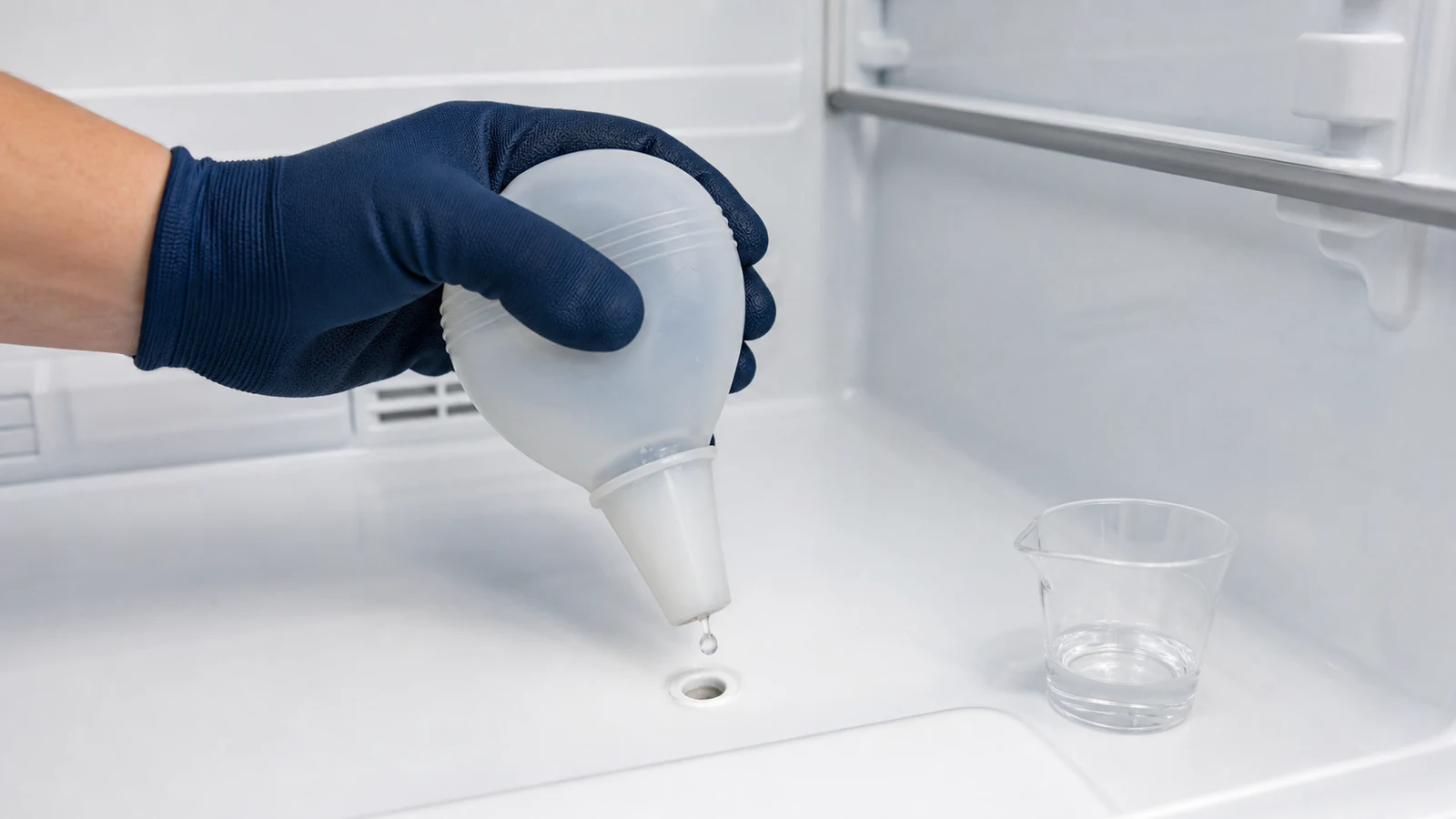
Step 04
Flush only with the model-specified tool and solution
Use only the specified solution and tool, such as a bulb baster on covered GE models. Flush gently without pressure. Stop for resistance, backflow, leakage or a blockage that remains.
-
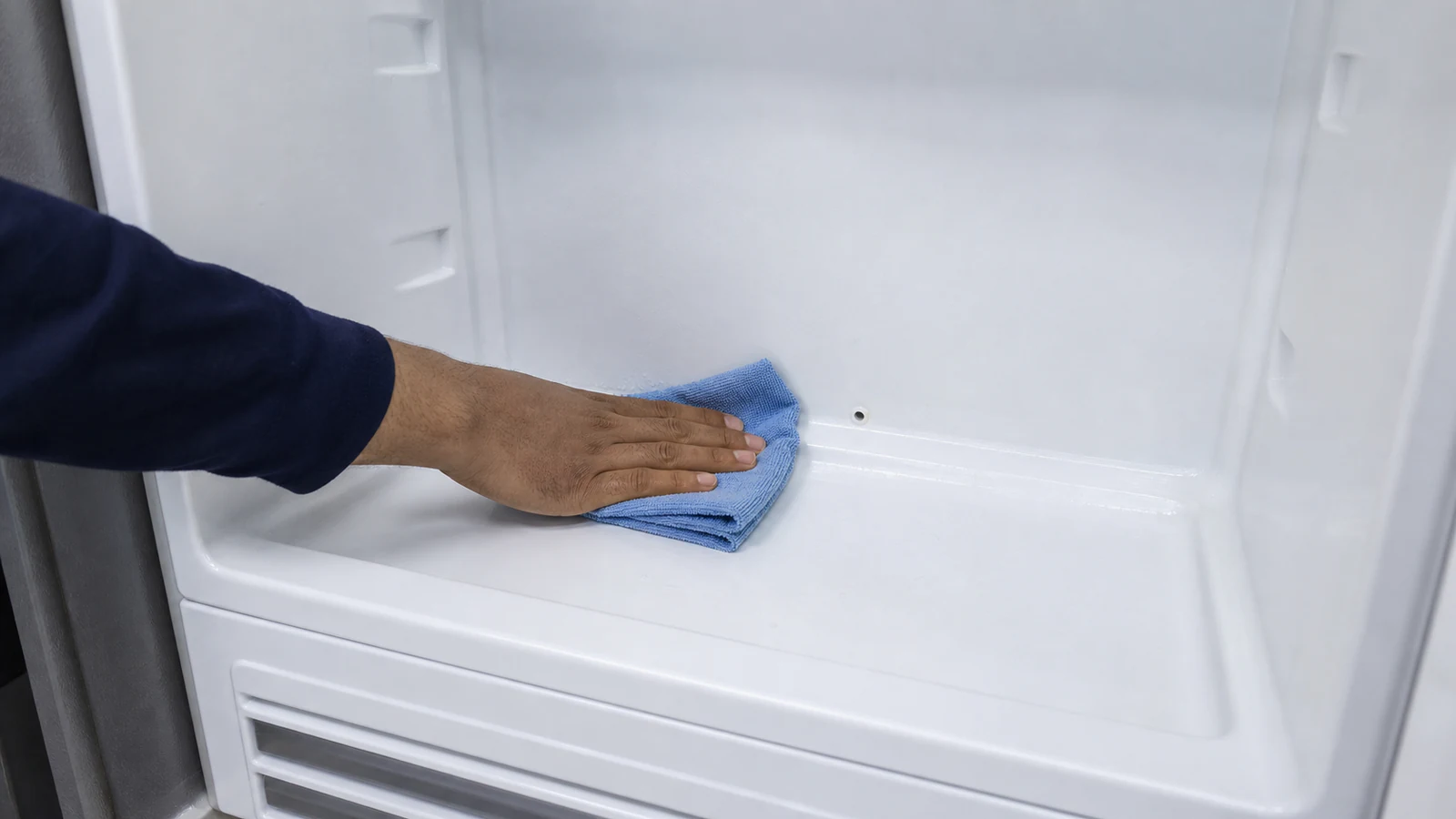
Step 05
Clean and dry only approved interior surfaces
Clean shelves and accessible surfaces with the approved cleaner on a soft cloth. Keep liquid from vents and lights, rinse food-contact parts as required, and dry fully.
-
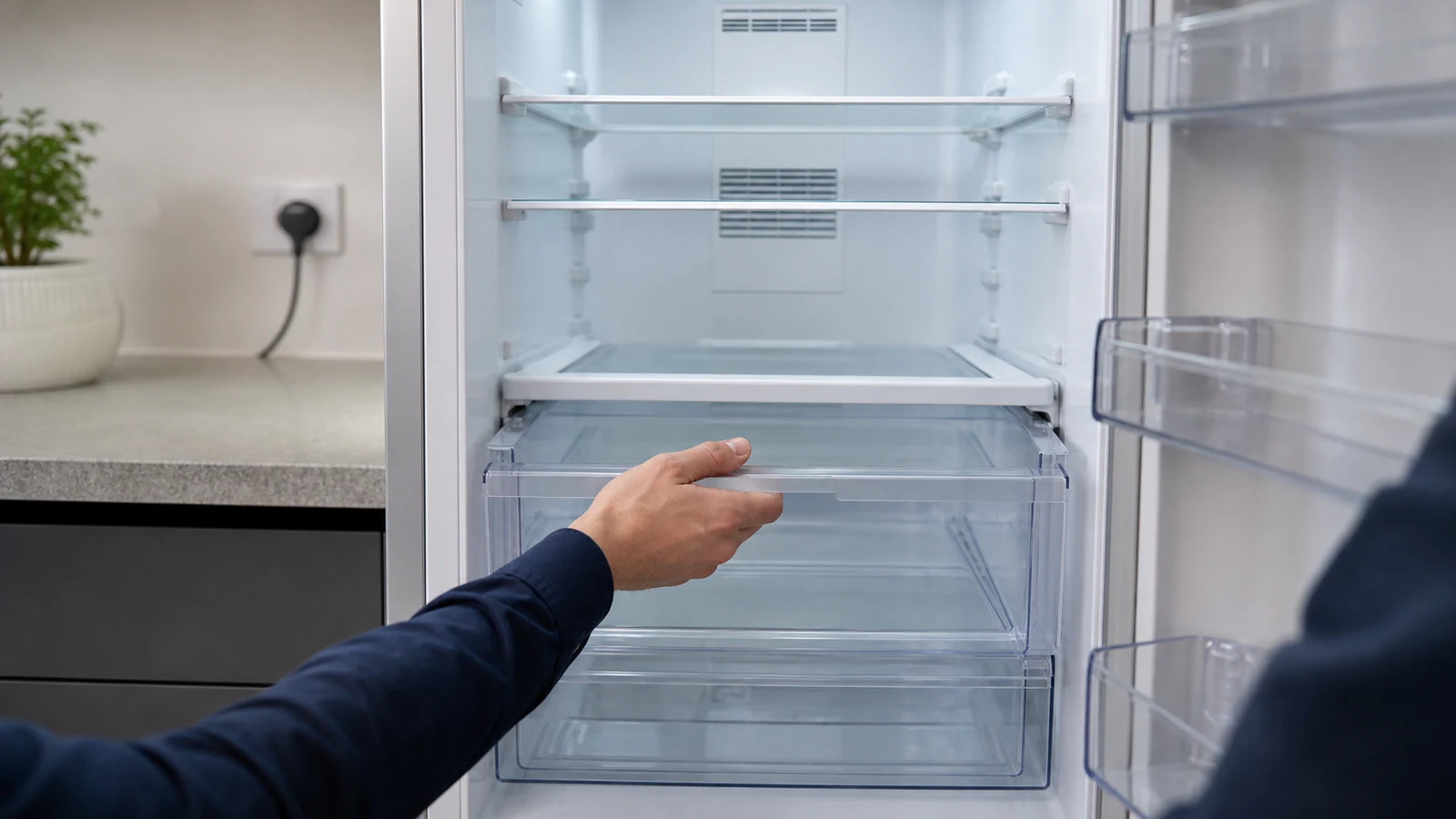
Step 06
Reassemble and return the refrigerator to temperature
Refit user parts, dry the plug area and restore power. Confirm 4 C or colder before returning perishables, subject to food-safety time limits. Keep vents clear.
-
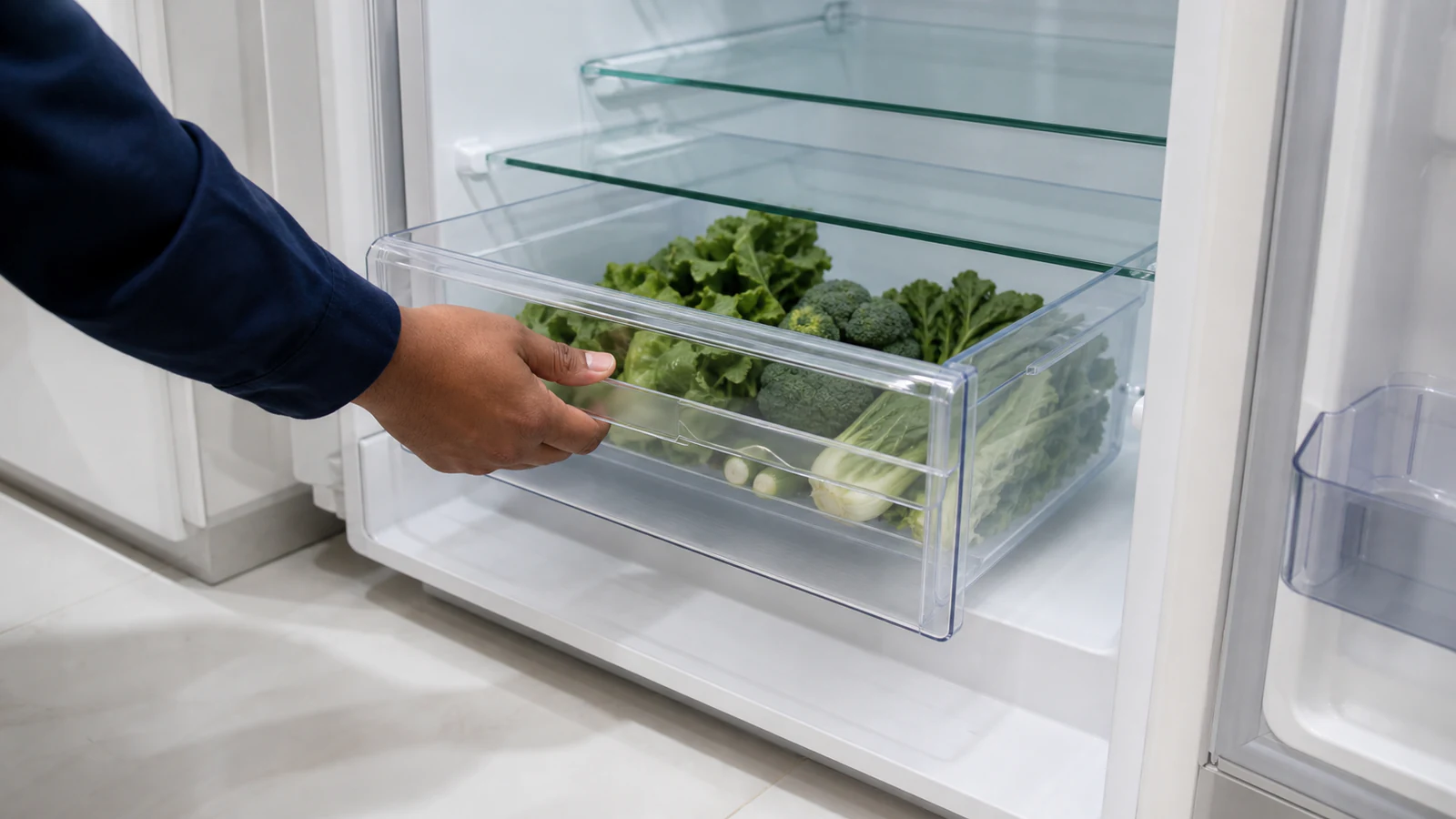
Step 07
Monitor once and escalate recurrence
Check after the next defrost period. Recurring water, resistance, warm temperature, damaged seal, floor leakage or electrical moisture requires qualified service, not repeated flushing.
Quick answers
Frequently asked questions.
Why is there water under my fridge drawers?
A blocked defrost drain is one possibility, but spills, a door-seal leak, temperature problems or a different model layout can also cause water. Check the exact manual and inspect only a visible user drain. Recurring pooling, poor cooling, floor leakage or concealed access requires qualified appliance service.
Where is the fridge drain hole?
There is no universal location. Some self-defrost refrigerators place a drain opening on the lower rear freezer wall, sometimes behind a panel; compact or manual-defrost models may differ or have no tube. Use the exact model diagram. Do not remove a service panel or probe a guessed opening.
What absorbs fridge smells best?
First remove spoiled food, spills and standing moisture using the refrigerator care guide. Baking soda may reduce some odour only if the manufacturer permits it, but no absorber fixes a blocked drain, damaged seal or warm cabinet. Persistent odour needs source investigation, cleaning and possibly appliance service.
Sources and review notes
- GE Appliances: Side-by-Side Refrigerator Drain Tube - Manufacturer guidance that only some models expose a drain and that the exact owner manual determines whether and how it may be flushed.
- GE Appliances: Refrigerator and Freezer Drain Tubes - Manufacturer explanation of which refrigerator types have defrost drain tubes.
- USDA: Refrigeration and Food Safety - Primary food-safety guidance for keeping refrigerators at 40 F / 4.4 C or below and managing perishable food.