
DIY / Kitchen
How to Remove Limescale From a Tap Without Damaging the Finish
Do not tie neat vinegar around an unidentified tap. Some makers permit brief, diluted vinegar contact; others prohibit acetic acid. Identify the brand and finish, then follow its approved cleaner, dilution, application method and contact time.
Quick answer
How do I remove limescale from a tap using vinegar?
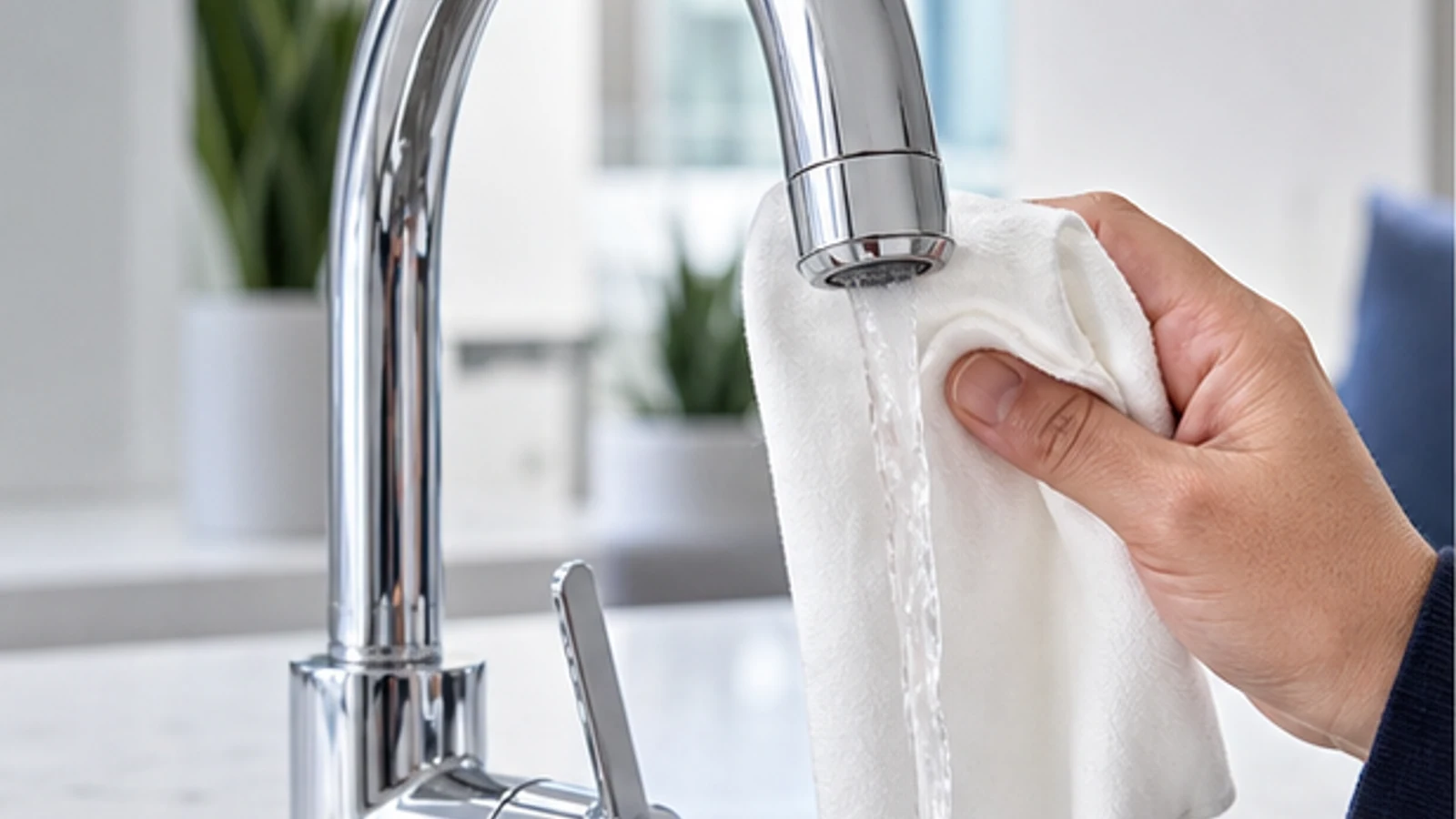
Check the exact faucet care guide before using vinegar. If it permits vinegar, use its stated dilution and contact time; Kohler specifies a 50/50 white-vinegar-and-warm-water solution on a soft cloth for about 5–10 minutes. Rinse immediately and dry. If the maker prohibits acetic acid or the finish is unknown, use its approved cleaner instead.
Faucets whose exact manufacturer care guide permits diluted white vinegar / Removable aerators whose model instructions permit soaking / Flexible anti-limescale nozzles designed to be rubbed clean
Unknown brands, models or finishes / Any finish whose care guide prohibits vinegar or acetic acid / Gold, nickel, bronze, brass, black, PVD or lacquered finishes unless expressly approved / Leaking, loose, blistered, flaking or corroded faucets / A fixed aerator that needs force or metal tools to remove
What you need
What you need
Use the cleaner and dilution in the exact faucet care guide. Buy vinegar only when that guide permits it; never substitute neat vinegar.
- Difficulty
- Easy
- Active time
- 10 minutes
- Total time
- 15–25 minutes (including the maker-approved contact time)
White vinegar (5% acetic acid, only if maker-approved)
50 ml, mixed with 50 ml warm water unless the maker specifies otherwise
Soft, lint-free cotton cloth
2
Small bowl
1
Manufacturer-approved limescale cleaner (alternative to vinegar)
As directed on label
Clean water
1
Rubber gloves
1 pair
Typical UAE retail ranges. Prices vary by pack and store, and your total is lower when you already own the reusable tools.
Step by step
How to Remove Tap Limescale With a Finish-Safe Method
The maker's care guide controls. This workflow uses brief cloth contact, not an uncontrolled full-strength soak.
-
Step 01
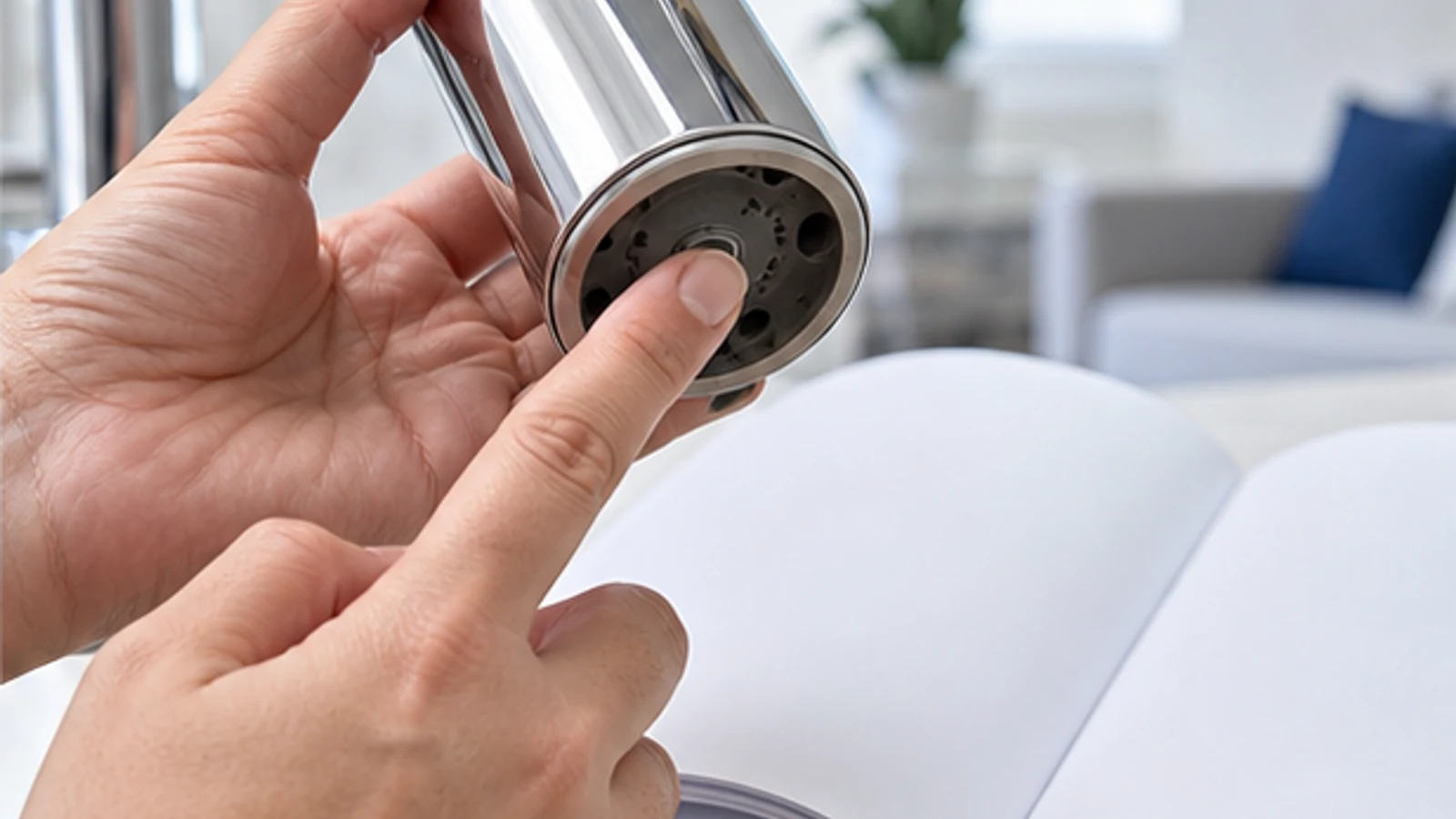
Identify the faucet and read its care guide
Find the brand, model and finish in the purchase record, manual or maker website. Confirm the cleaner, dilution, method and maximum time. If the finish remains unknown, use only a water-dampened soft cloth.
-
Step 02
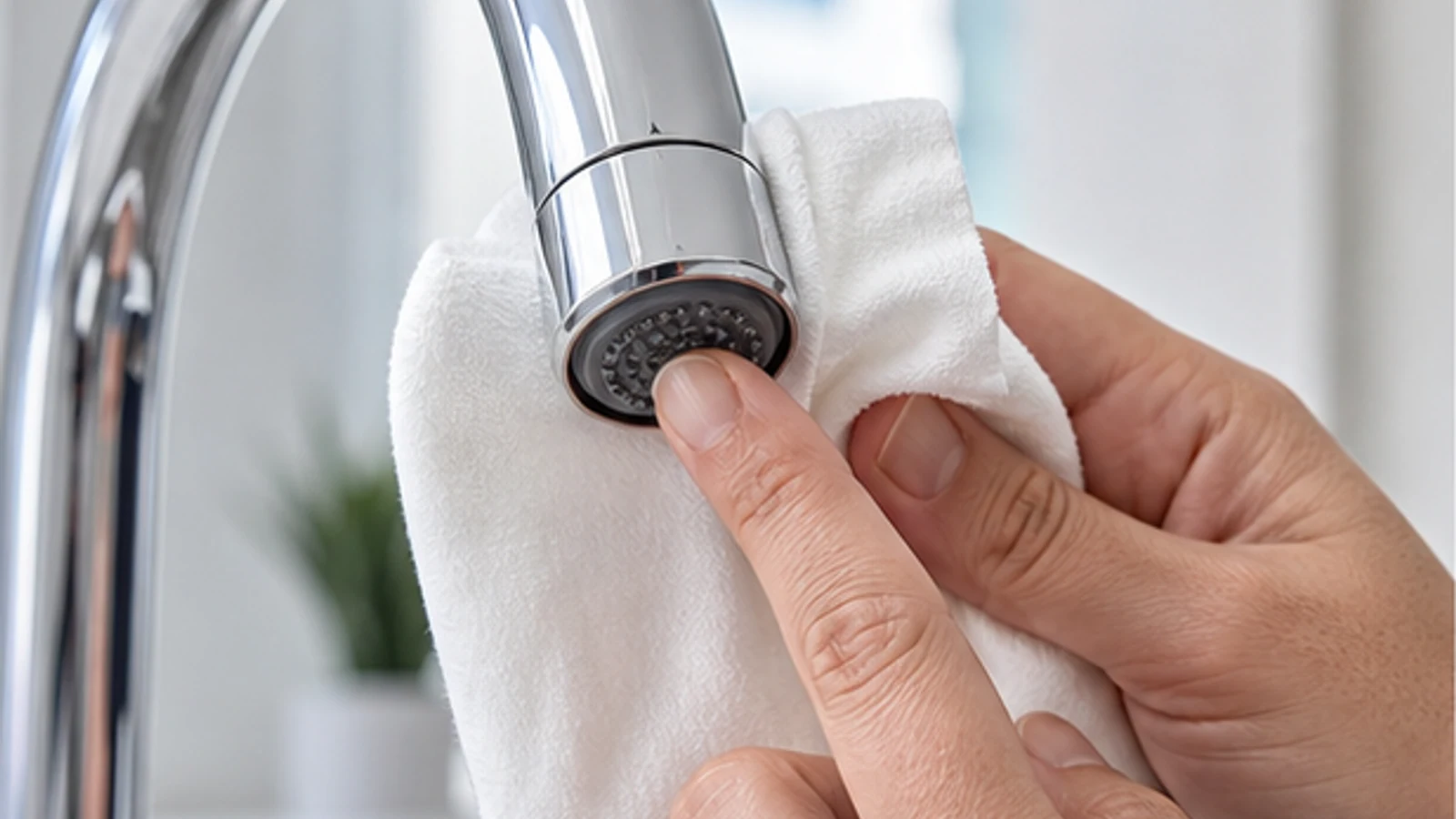
Try the non-chemical method first
Wipe with a soft cotton cloth dampened with water. Rub flexible anti-limescale nozzles gently with a finger only when the guide identifies that feature. Do not brush, scour or scrape.
-
Step 03
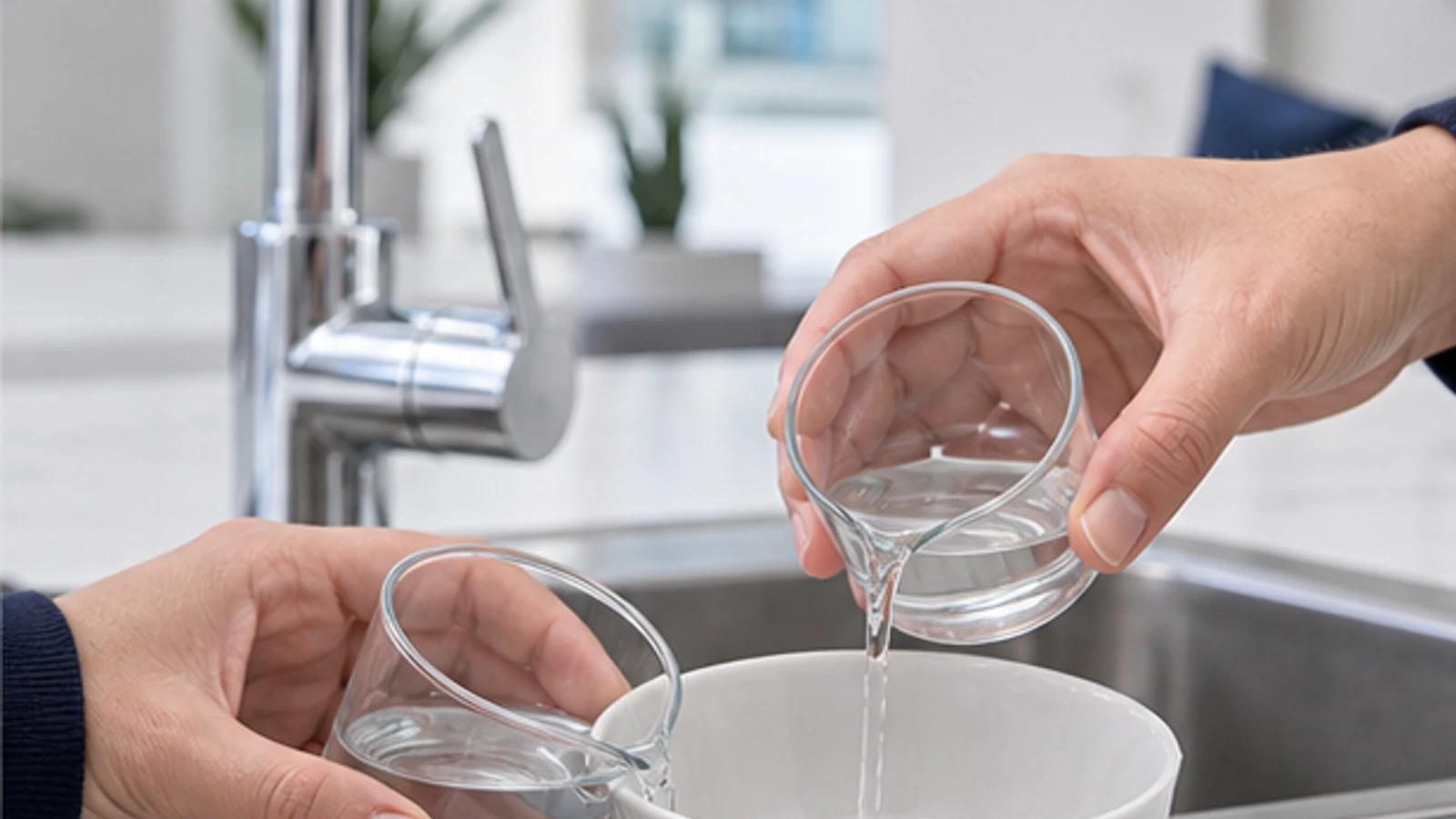
Prepare only the maker-approved solution
If permitted, mix 50 ml white vinegar with 50 ml warm water. Otherwise prepare the named cleaner exactly as labelled. Never combine vinegar with bleach, descaler or another cleaner.
-
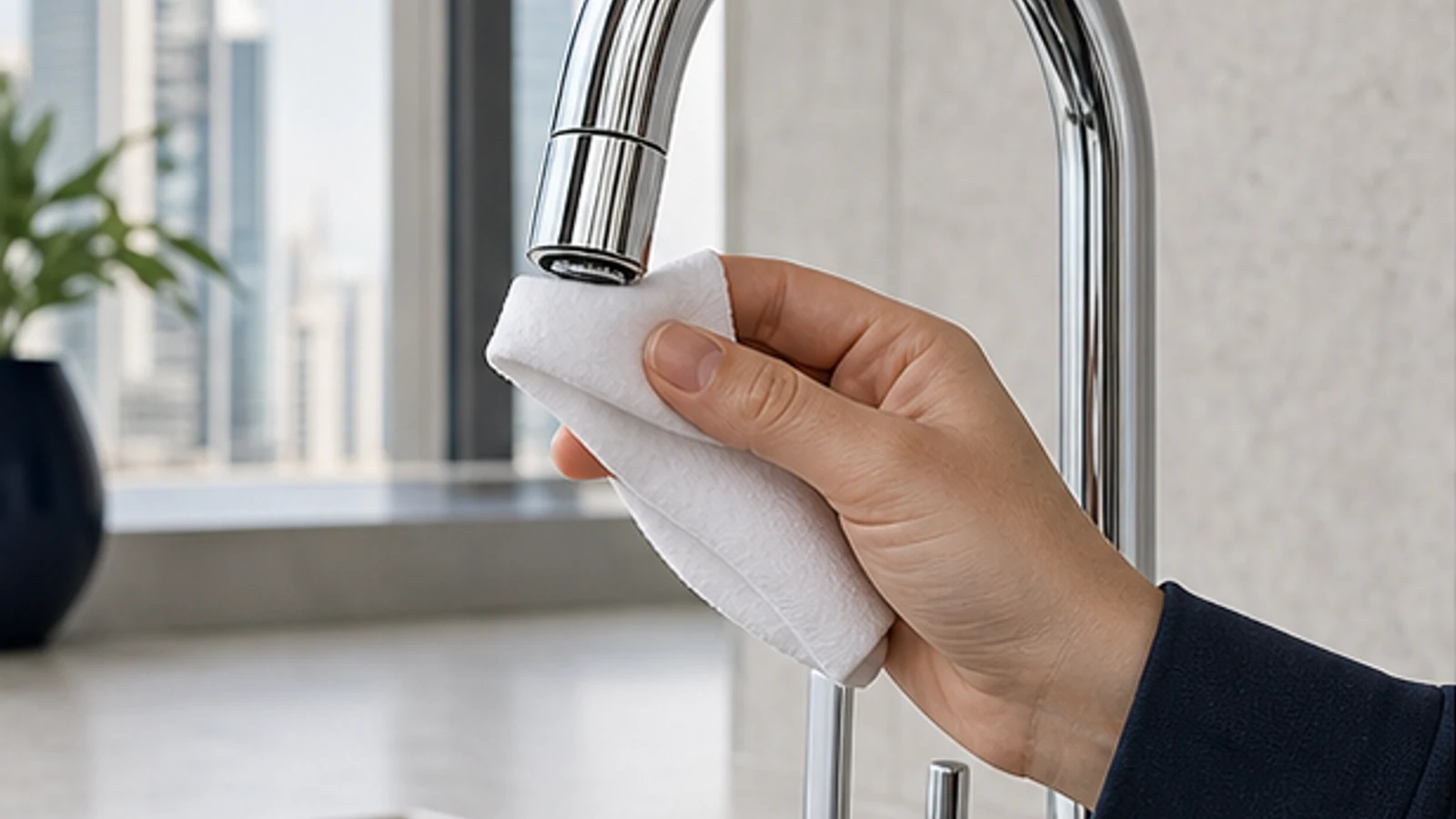
Step 04
Treat only the deposit for the approved time
Hold an approved-solution-dampened cotton cloth against the deposit for the stated time; Kohler specifies about 5–10 minutes. Keep liquid from seams and controls. Stop for any colour or sheen change.
-
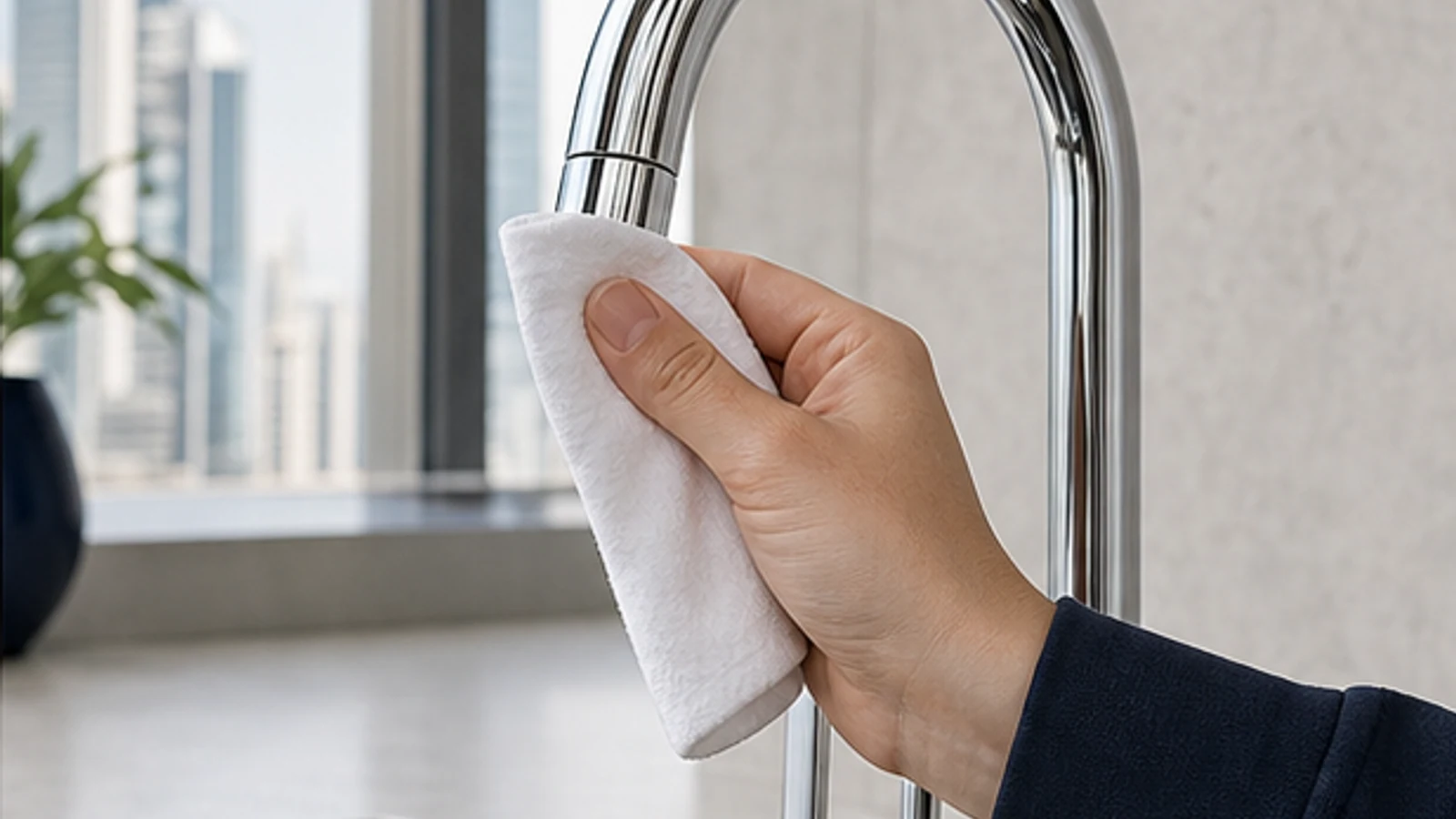
Step 05
Wipe without abrasive scrubbing
Lift softened residue with a second soft cotton cloth and light strokes. Do not scrape, brush, polish or extend contact time. Repeat only when the model guide explicitly permits it.
-
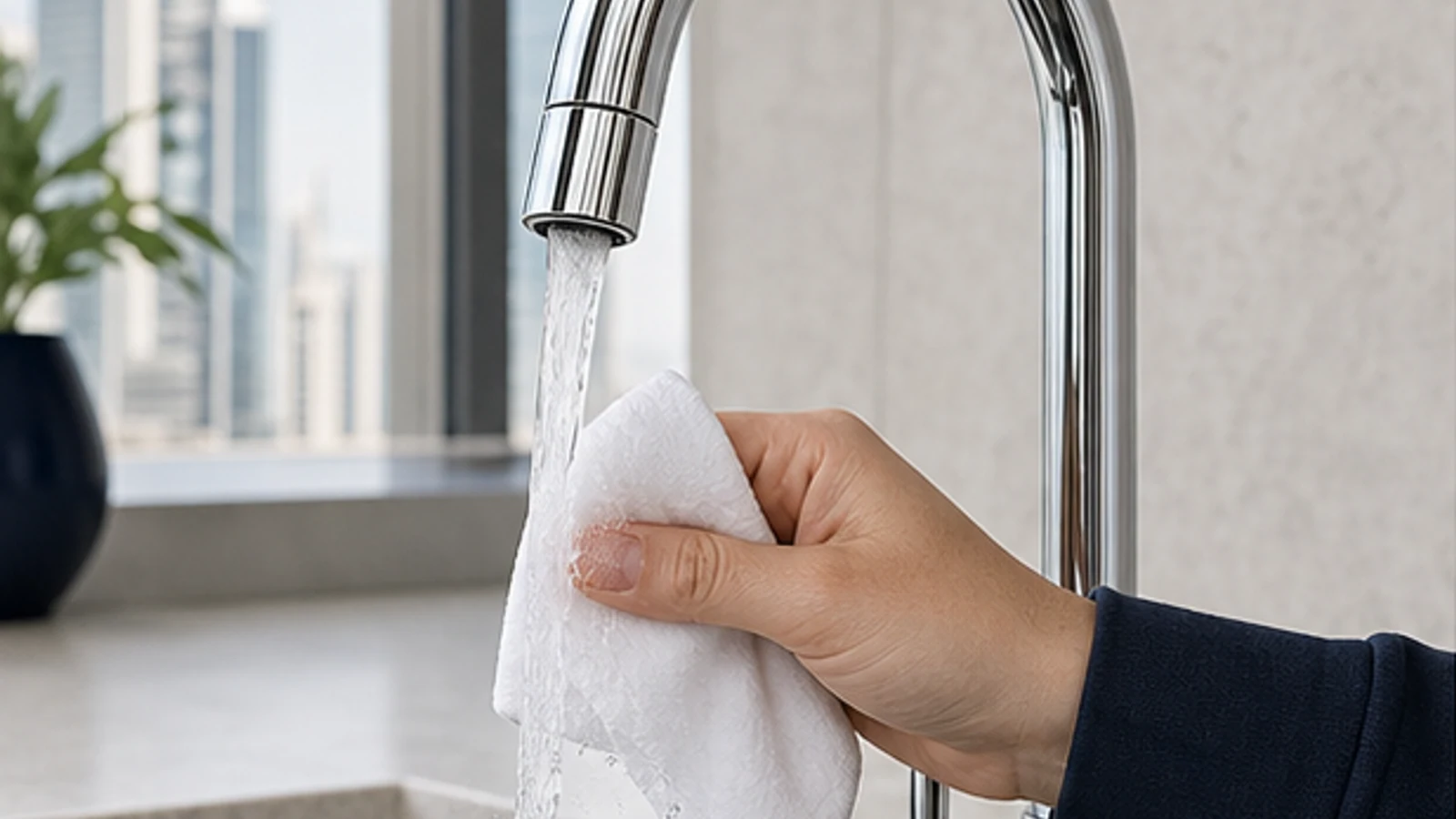
Step 06
Rinse thoroughly and dry the tap
Rinse treated surfaces when the approved time ends, run cold water briefly and dry with soft cotton. Contact the maker if flow stays restricted or documented aerator removal fails.
Quick answers
Frequently asked questions.
How long should vinegar sit on a tap?
There is no universal safe time. Kohler describes about 5–10 minutes with a 50/50 white-vinegar-and-warm-water solution, while hansgrohe advises against acetic-acid cleaners and specifies citric-acid products instead. Follow the exact faucet care guide, then rinse immediately. Never assume a 30-minute bag soak is finish-safe.
Does vinegar damage chrome taps?
It depends on the manufacturer and finish, not only on whether the faucet looks chrome. Some makers allow briefly applied diluted vinegar; others prohibit acetic acid because it can damage the surface. Identify the model, follow its care guide and rinse fully. Use water only when the finish is unknown.
Why is water pressure low in one tap only?
A restricted aerator can cause low flow at one faucet, but a closed valve, kinked hose or cartridge fault can look similar. Clean or remove the aerator only by the model's instructions and with its approved cleaner. Call a plumber for leaks, sudden pressure loss or unchanged flow after cleaning.
Sources and review notes
- Kohler: Hard Water, Calcium or Mineral Buildup on Faucet - Manufacturer instructions for a brief 50/50 white-vinegar-and-warm-water treatment.
- hansgrohe: Care and Cleaning Guide for Faucets and Bathroom Products - Manufacturer guidance requiring soft cotton, clean-water rinsing and citric-acid products instead of acetic acid.
- Moen Faucet Finish Care and Cleaning - Manufacturer finish-specific restrictions and limited diluted-vinegar guidance.