
DIY / Kitchen
Sticky Grease on Kitchen Cabinets: Clean It Without Ruining the Finish
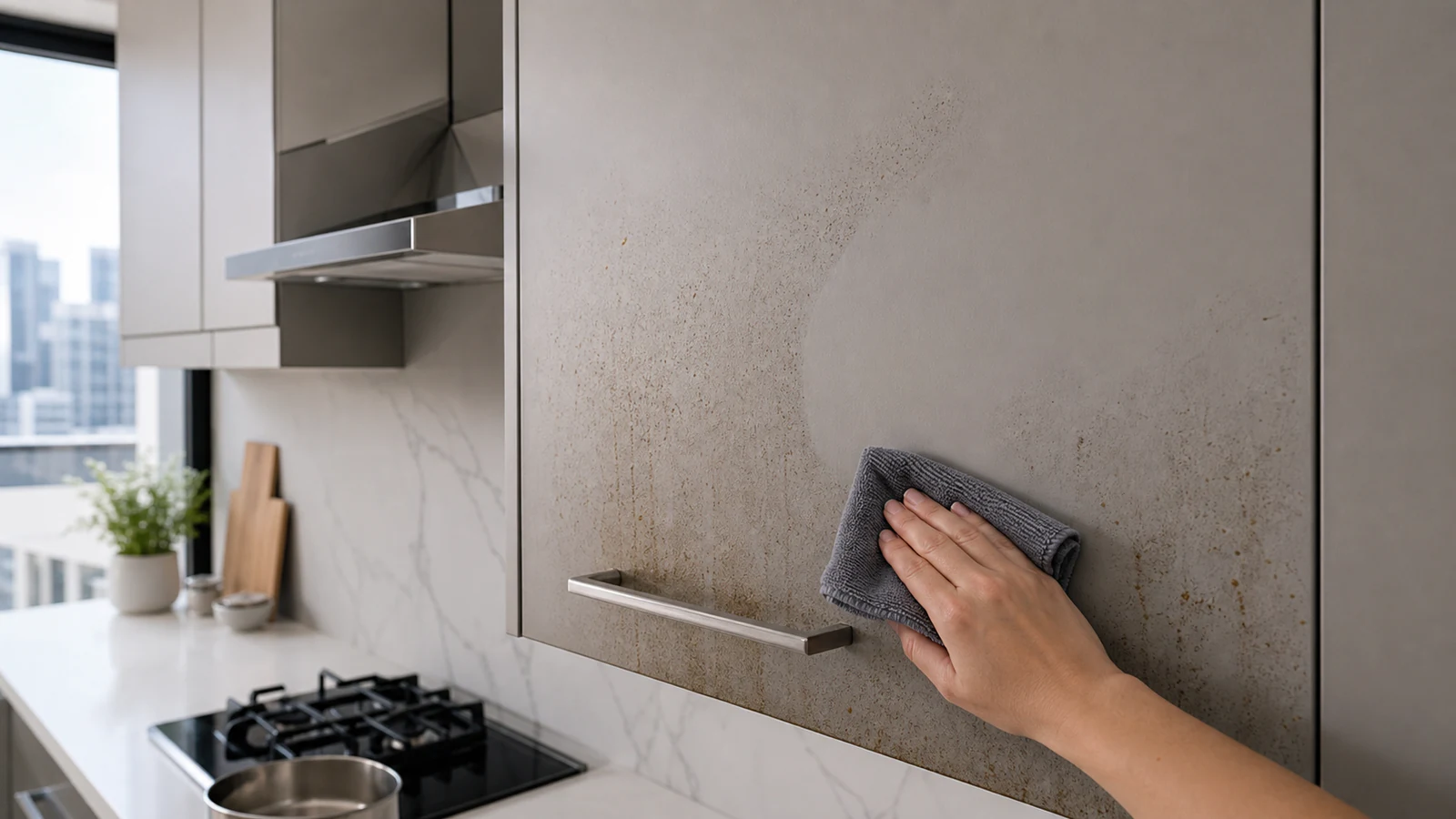
Sticky grease creates a dull film on cabinets above cooktops. Start with a barely damp cloth, then treat stubborn spots cautiously to protect the finish.
Quick answer
How do you remove sticky grease from cabinets?
Identify the cabinet finish and check its care guide. Start with a soft cloth barely dampened with warm water; use only the maker-approved dilution of mild dish soap if needed. Apply liquid to the cloth, not the door, then wipe with clean water and dry immediately. Stop for colour transfer, tackiness, swelling or sheen change.
Intact cabinet fronts whose material, finish and care method are known
Unfinished or raw wood / High-gloss lacquer (without manufacturer approval) / Antique or hand-applied finishes / Unknown cabinet finish types
What you need
What you need
Gather the materials first.
- Difficulty
- Easy
- Active time
- 20–30 minutes
- Total time
- 45 minutes (including drying time)
Microfibre cloth (pack of 3)
1 pack
Mild dish soap only when the cabinet maker approves it
maker-approved dilution
Warm water
500 ml
Small mixing bowl
1
Typical UAE retail ranges. Prices vary by pack and store, and your total is lower when you already own the reusable tools.
Step by step
How to Remove Sticky Grease on Kitchen Cabinets Without Ruining the Finish
Work in order and check each result.
-
Step 01
Test on a hidden area first
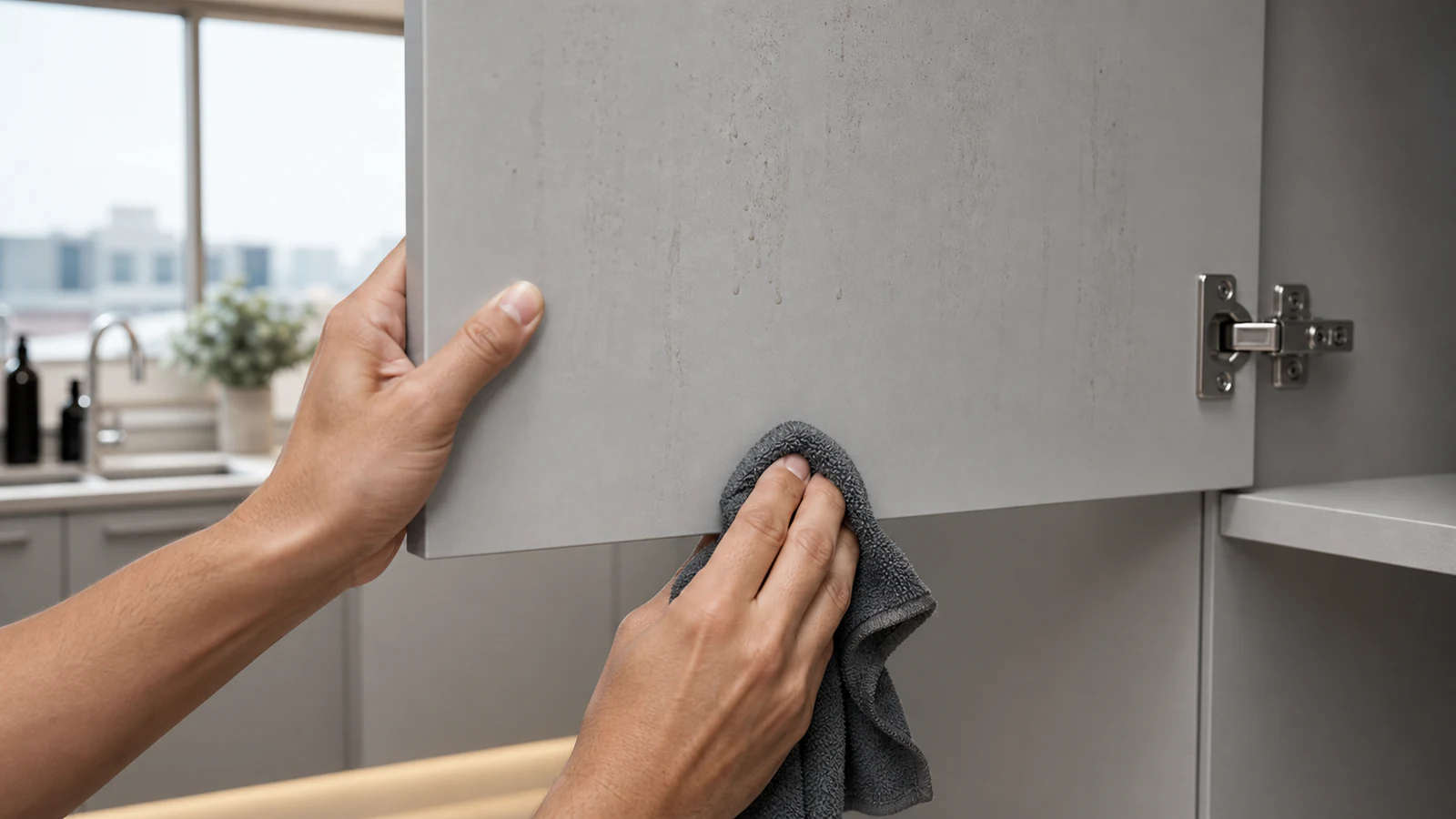
Open a lower cabinet door or test on the inside edge of an upper door. Apply a small amount of your cleaning solution to the microfibre cloth and rub gently for five seconds. Check for colour transfer, dullness or finish change. If unchanged, proceed.
-
Step 02
Prepare your cleaning solution
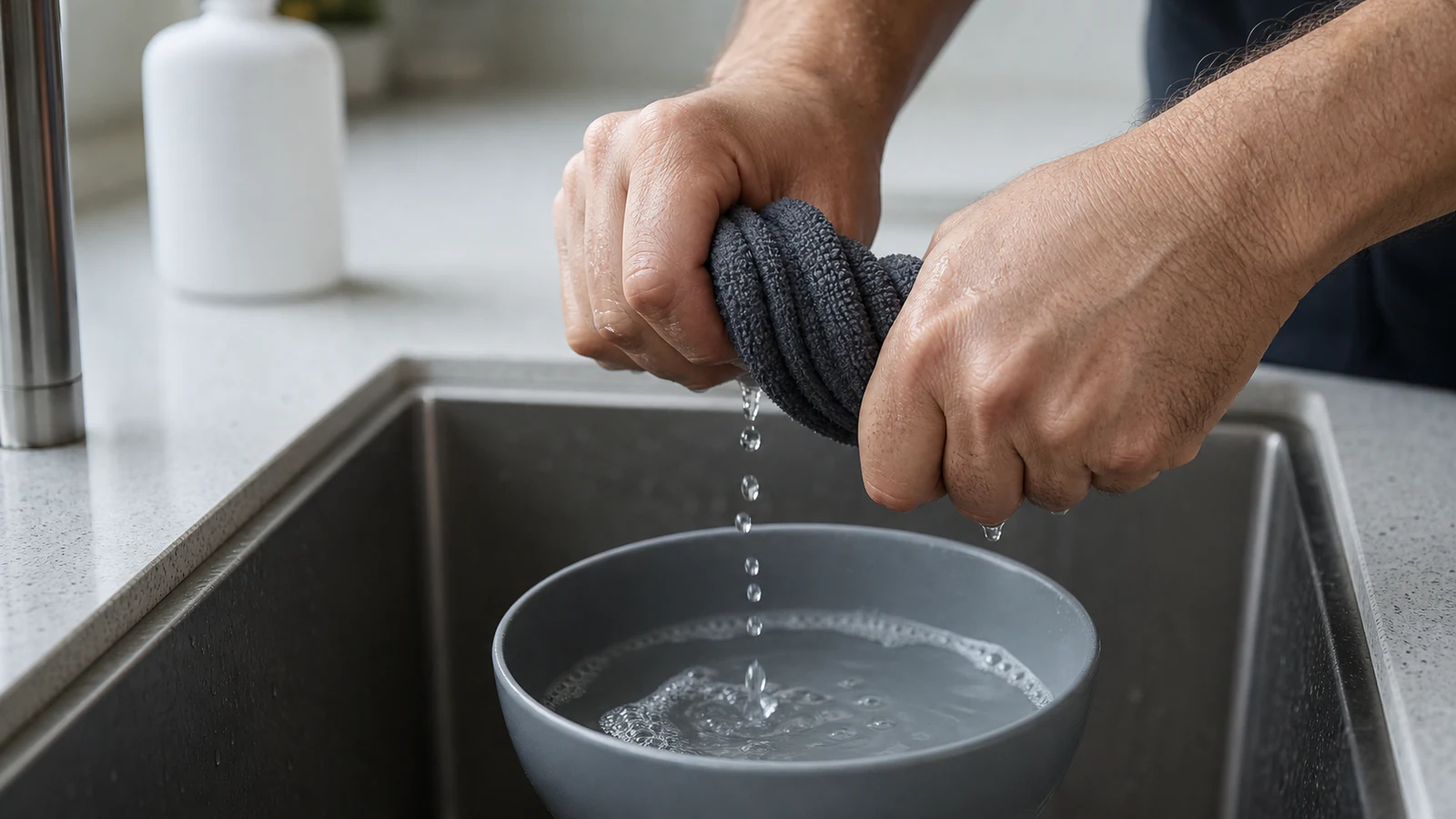
Follow the cabinet maker's care guide. Start with warm water; add only the stated amount of mild dish soap when approved. Dampen the microfibre cloth and wring it until barely damp. Do not spray the door or soak the cloth, because liquid can enter seams and swell the core.
-
Step 03
Wipe the cabinet surface with gentle circular motions
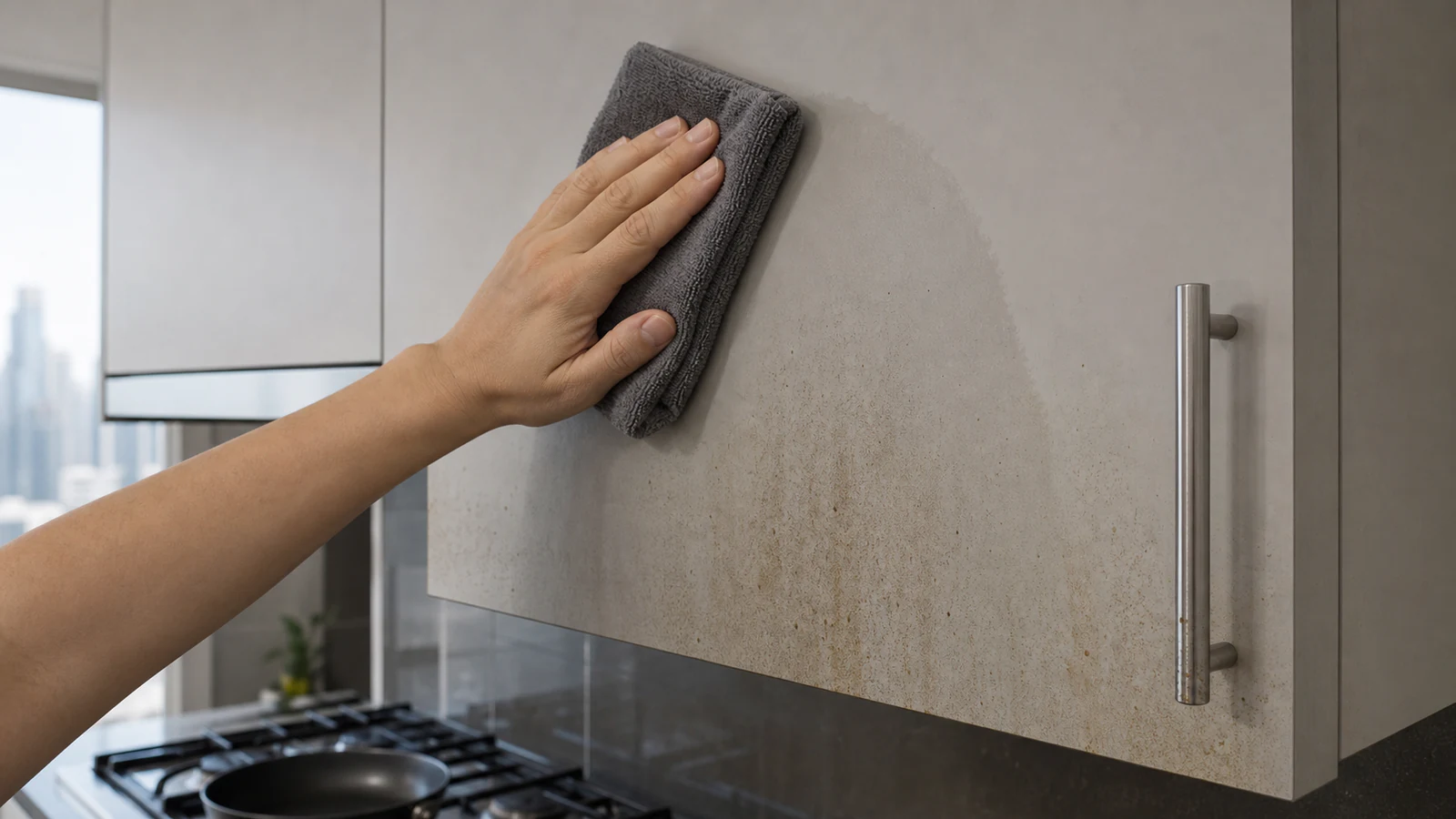
Starting at the top of the cabinet door, use light pressure and small circular motions. Work downwards to catch grime runoff. Focus on the centre, then edges and corners. Light pressure is key — wipe, do not scrub.
-
Step 04
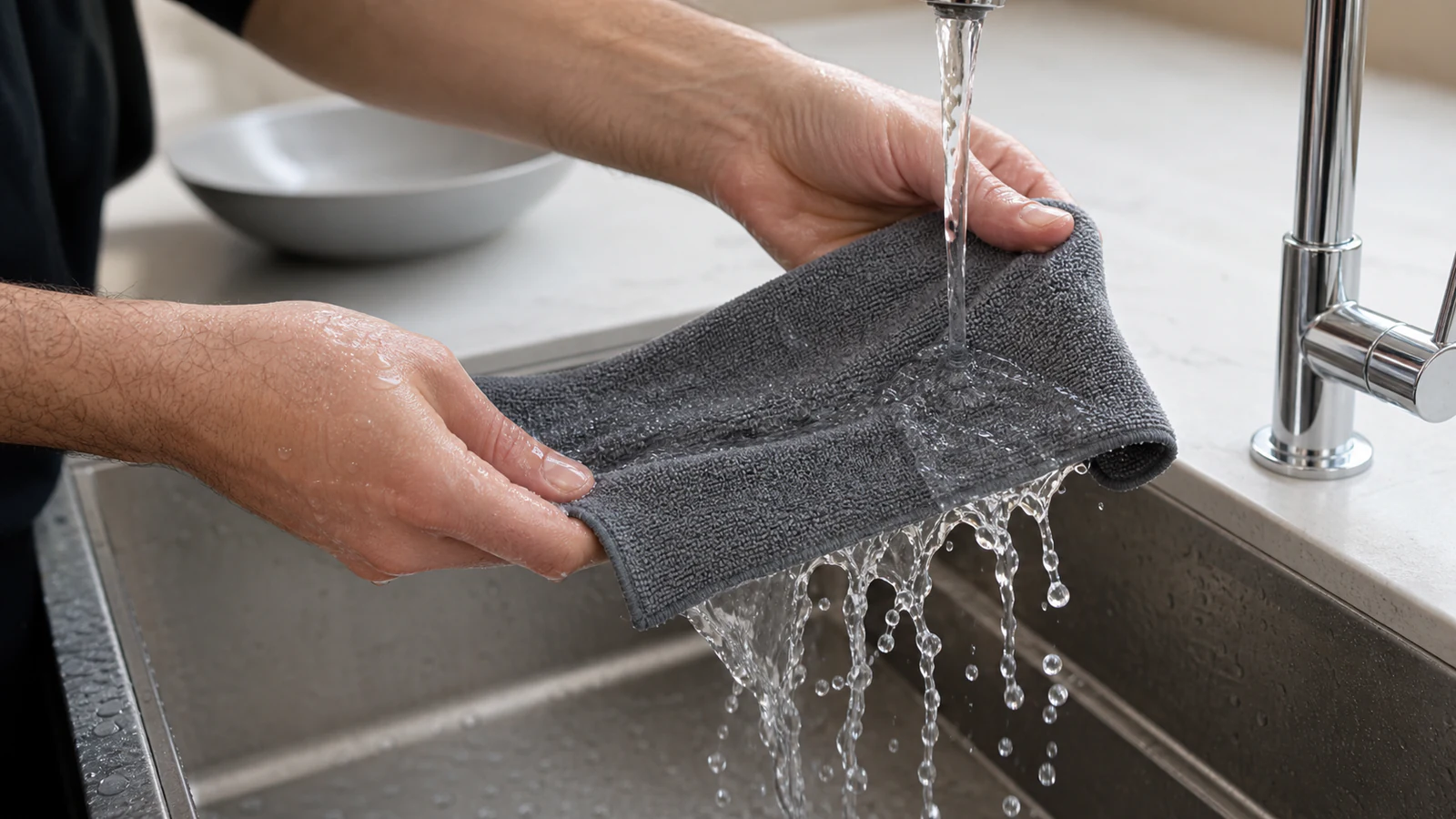
Rinse the cloth and make a second pass
Rinse the microfibre cloth in clean water and wring to barely damp. Make a second pass over the cabinet to remove soap residue. Soap left on the finish can dull it or become sticky as it dries. Use a clean cloth.
-
Step 05
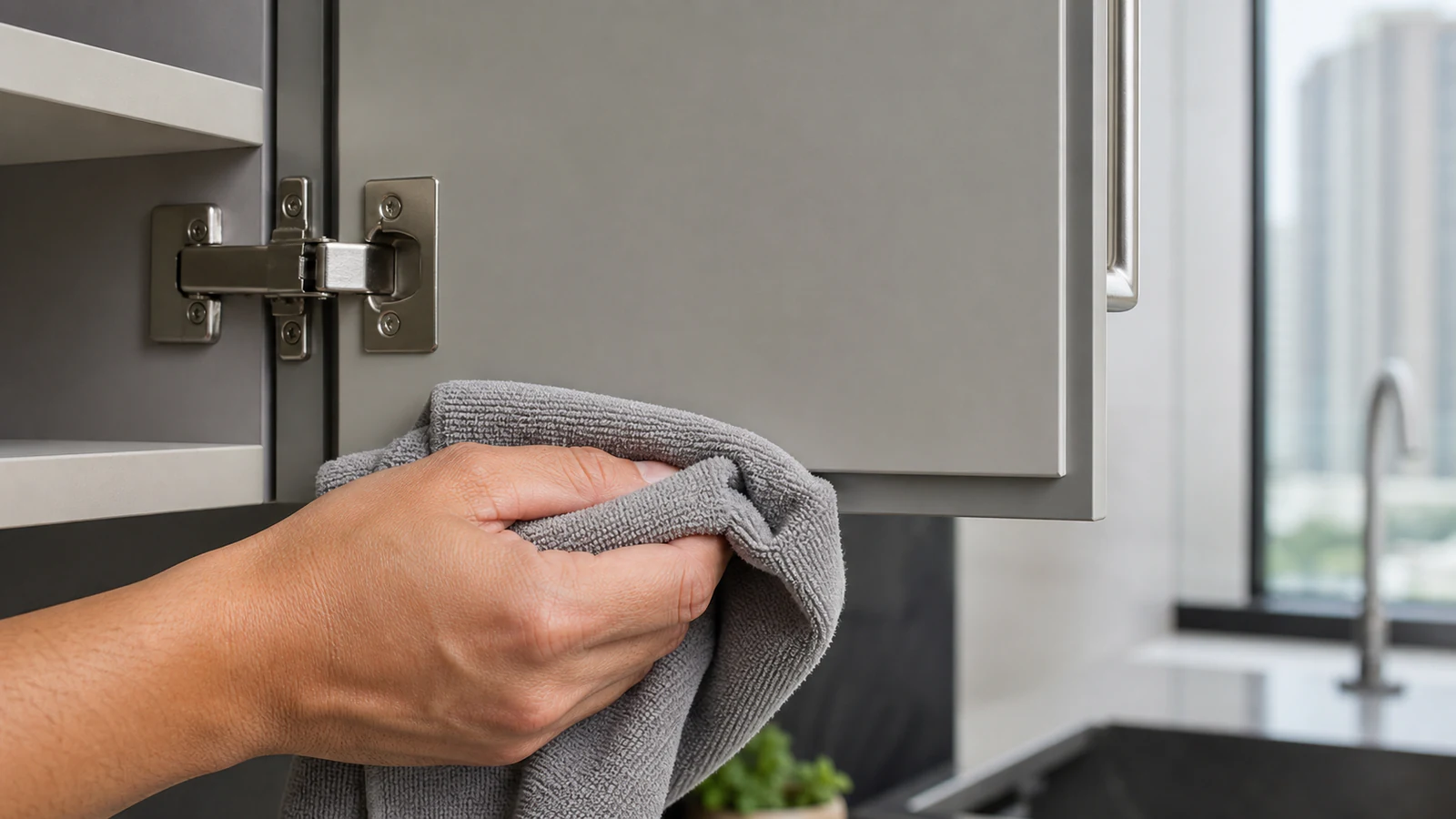
Dry the cabinet immediately
Use a dry microfibre cloth to remove all moisture from the surface and edges. Pay attention to seams, hinges and the bottom edge. Prompt drying prevents moisture seeping into laminate or particleboard cores, which causes swelling and warping.
-
Step 06
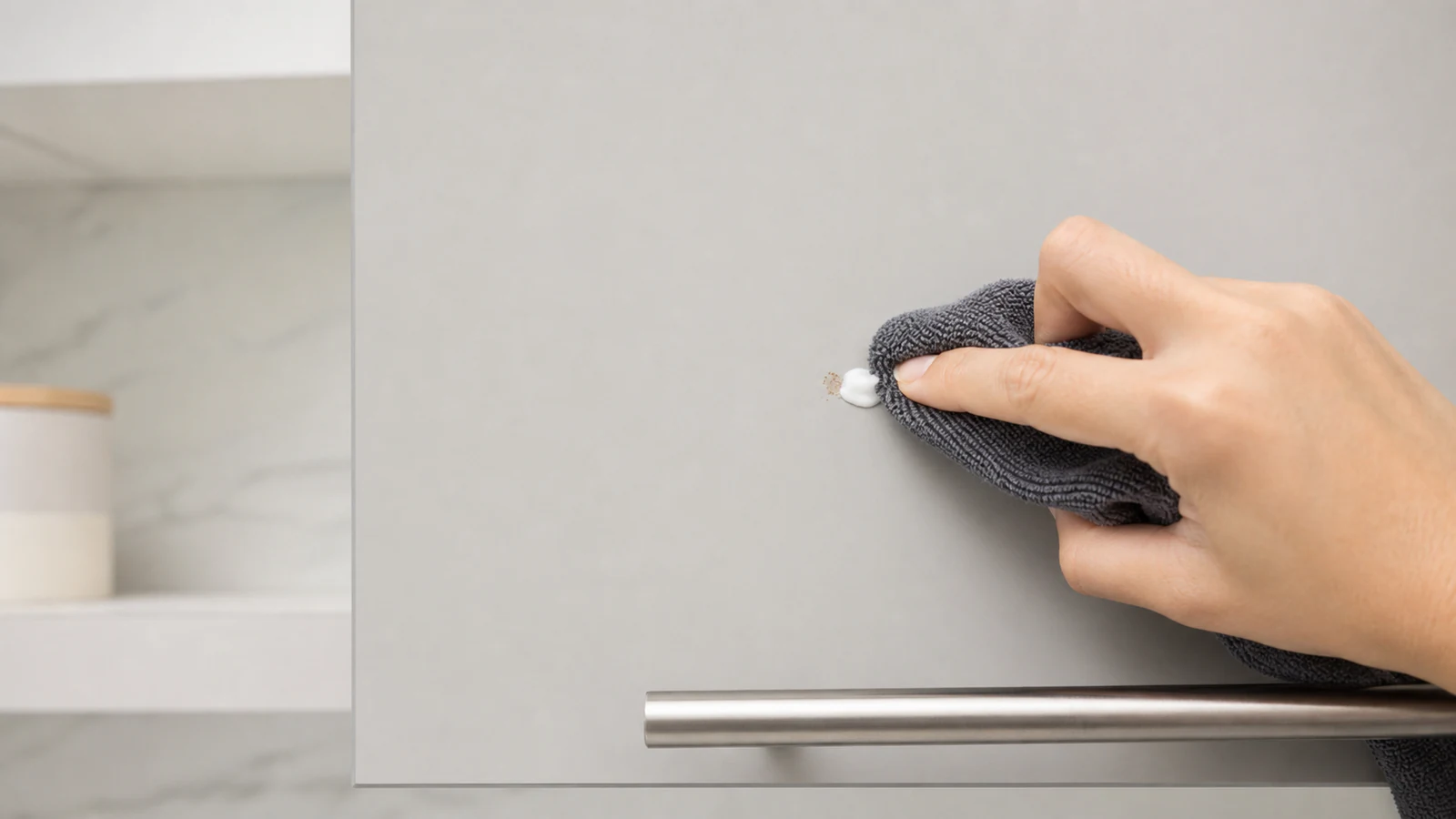
Stop or use only a finish-approved spot cleaner
If grease remains after one soap-and-water pass, do not use baking soda, a scouring pad, steam or an unspecified degreaser. Check the exact finish guide for an approved spot cleaner, patch-test it, apply it to the cloth and follow its label. Otherwise stop and ask the cabinet supplier.
Quick answers
Frequently asked questions.
Will a magic eraser damage kitchen cabinets?
Yes. Magic erasers are mildly abrasive and break down protective coatings on laminate, thermofoil and gloss finishes, causing permanent dullness and peeling. Use only soft cloths and gentle pressure. Stop if you find finish softens, becomes tacky, changes sheen or transfers to cloth.
What dissolves old kitchen grease?
Warm water on a soft cloth is the lowest-risk start. Where the maker permits it, use its stated mild-soap dilution, then rinse and dry. Old grease may have altered the finish; do not substitute baking soda or an unspecified degreaser. Stop for tackiness, colour transfer, swelling or sheen change.
Can I use vinegar to clean kitchen cabinets?
Avoid vinegar on lacquered, thermofoil or sealed cabinet finishes. The acidity can dull coatings and seep into seams. Stick with mild dish soap and water, tested on a hidden area first. Stop if you find finish softens, becomes tacky, changes sheen or transfers to cloth.
Sources and review notes
- MasterBrand cabinet care and cleaning - Manufacturer guidance for soft cloths, mild dishwashing liquid, prompt rinsing and drying, and products to avoid.
- KraftMaid cabinet care and cleaning - Manufacturer guidance on moisture control, mild cleaners, applying products to a cloth and avoiding abrasives.