
DIY / Bathroom
Slow Bathroom Drain: Remove Accessible Hair With a Plastic Hook
A flexible plastic hook can remove hair sitting just below an accessible bathroom drain opening. This narrow method does not treat a deep blockage, standing sewage or a shared building drain. Before inserting anything, rule out chemical cleaner, a fixed cover and symptoms at other fixtures.
Quick answer
How do you get hair out of a shower drain?
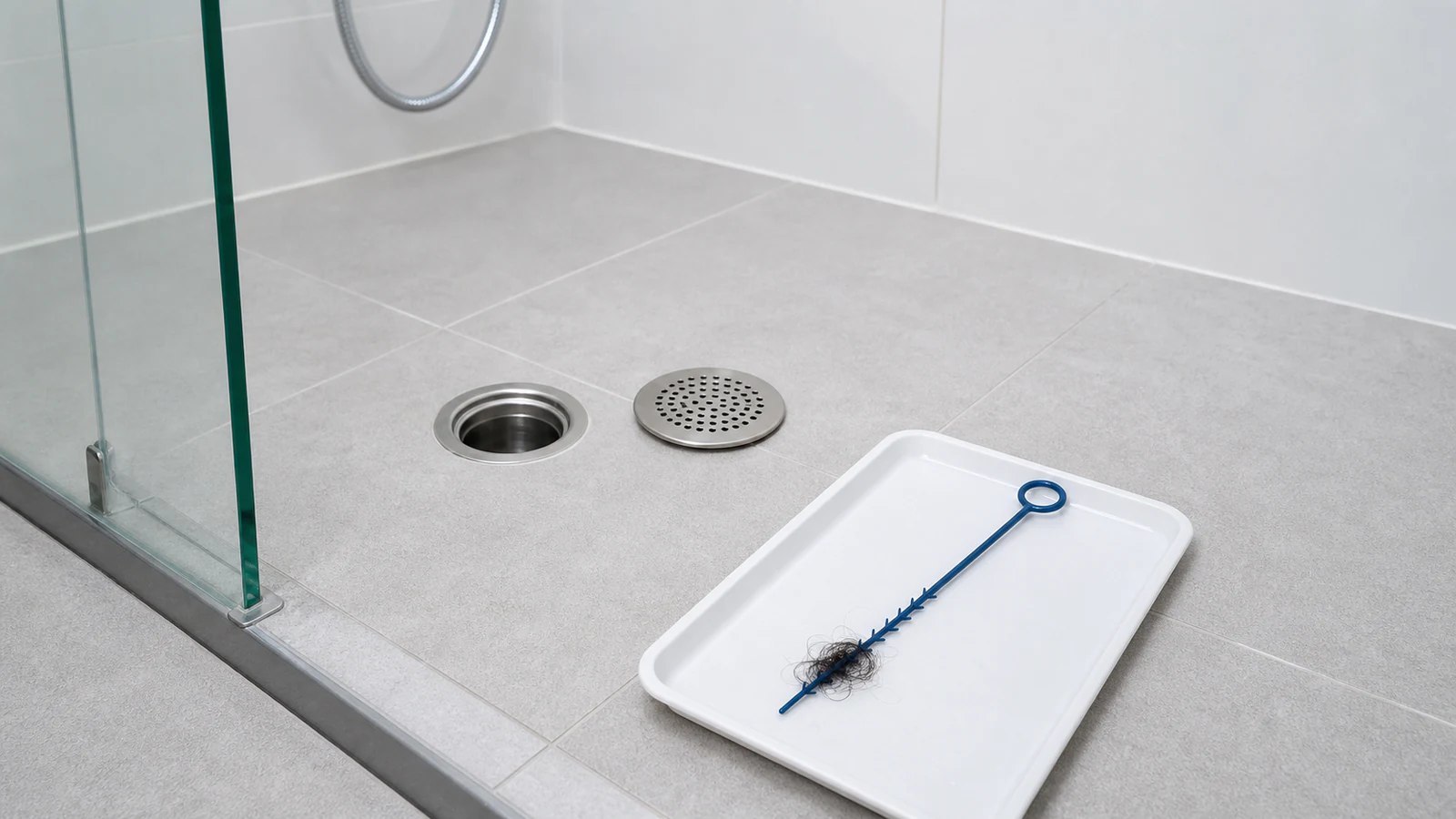
For visible hair just below an accessible cover, wear gloves and eye protection, lift the cover only as designed, insert a flexible plastic drain hook without force and withdraw slowly into a lined bin. Do not proceed after chemical cleaner, with standing sewage, or when several fixtures gurgle or drain slowly; call maintenance or a plumber.
Shower drains with loose, removable strainers / Bath drains with tool-free covers and visible surface hair / Simple basin drains with a removable strainer and no pop-up linkage
Any drain treated with chemical cleaner or an unknown product / Standing sewage, foul backflow or contaminated floodwater / Fixed, screwed, sealed or corroded drain covers / Pop-up basin wastes, macerators and inaccessible mechanisms / Several slow or gurgling fixtures, which can indicate a shared blockage
What you need
What you need
Use a flexible plastic tool made for surface hair, a lined bin and protective equipment. Do not add drain cleaner before or after mechanical removal.
- Difficulty
- Easy
- Active time
- 5–10 minutes
- Total time
- 10–15 minutes including cover removal and strainer installation
Plastic drain hook tool (drain zip)
1
Hair-catching drain strainer
1
Disposable gloves
1 pair
Eye protection (safety glasses)
1
Typical UAE retail ranges. Prices vary by pack and store, and your total is lower when you already own the reusable tools.
Step by step
How to Remove Hair From a Slow Bathroom Drain
Continue only for visible hair close to a simple accessible opening. Stop before tool use when chemicals, sewage, a fixed mechanism or shared-drain symptoms are present.
-
Step 01
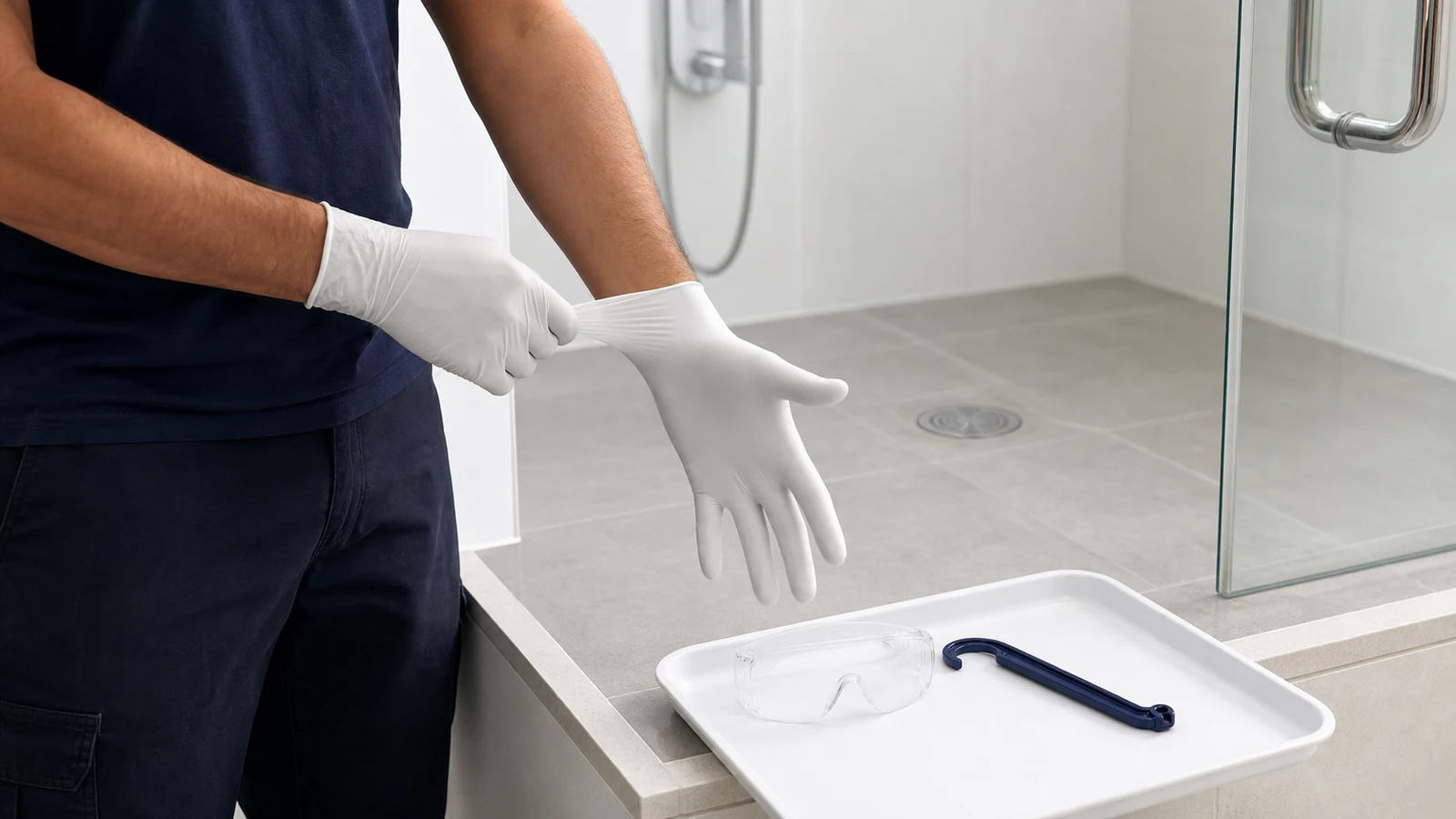
Put on protective equipment
Ask whether any drain cleaner, bleach, acid or other product was used. If yes or unknown, do not insert a tool because trapped liquid can splash. Stop for standing sewage, backflow, several slow or gurgling fixtures, a strong sewer smell, contaminated floodwater or a cover with sharp corrosion. Arrange maintenance or plumbing service.
-
Step 02
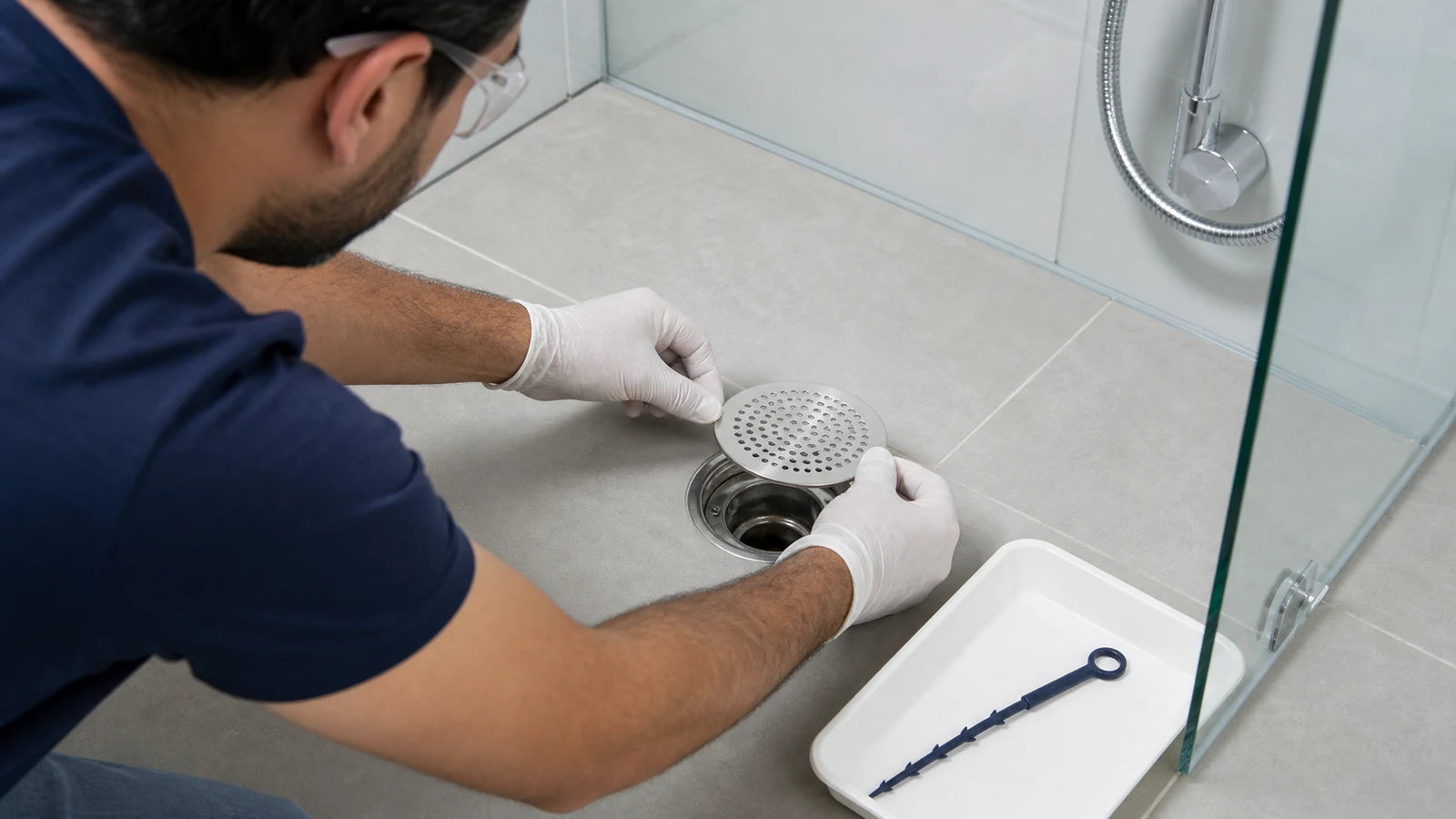
Lift the drain cover or strainer
Put on disposable gloves and close-fitting eye protection. Lift only a loose strainer or a cover whose manufacturer instructions show tool-free removal. Do not guess a turning direction. If it is screwed, sealed, corroded, connected to a pop-up mechanism or does not lift easily, stop without prying or using metal tools.
-
Step 03
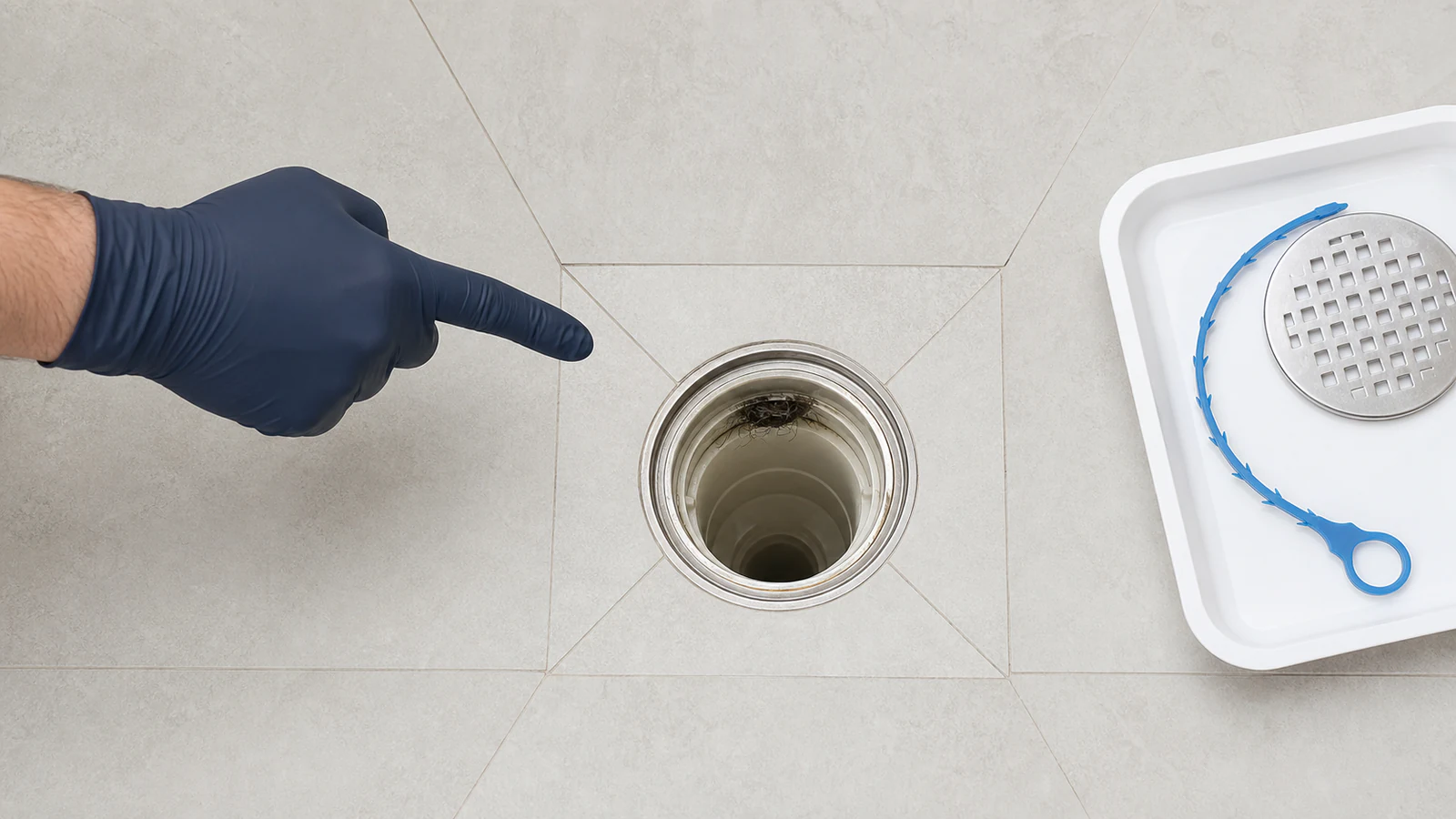
Inspect the drain cavity and identify the clog
Use good room lighting and look from a safe distance; never place your face over the opening or insert fingers. Continue only if hair is visible near the top and water is not backed up. A missing trap component, damaged pipe, solid object or blockage beyond the hook's easy reach needs a plumber.
-
Step 04
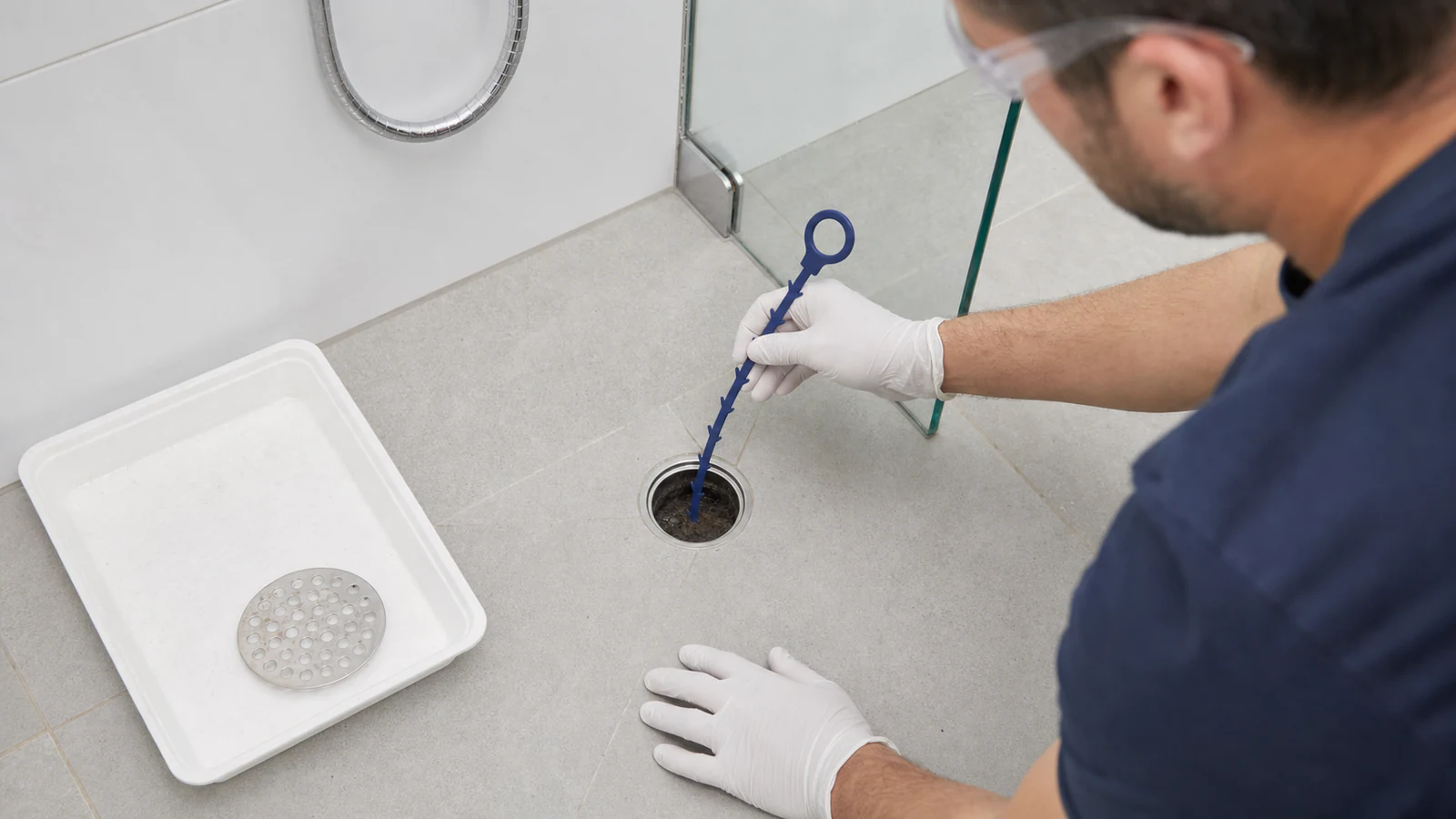
Insert and deploy the plastic hook tool
Feed a flexible plastic drain hook straight into the opening only until its barbs meet the visible hair. Do not force, rotate aggressively or push beyond the tool maker's marked limit. Keep the tool clear of seals and linkages. If it catches on a solid part, release pressure and withdraw it slowly.
-
Step 05
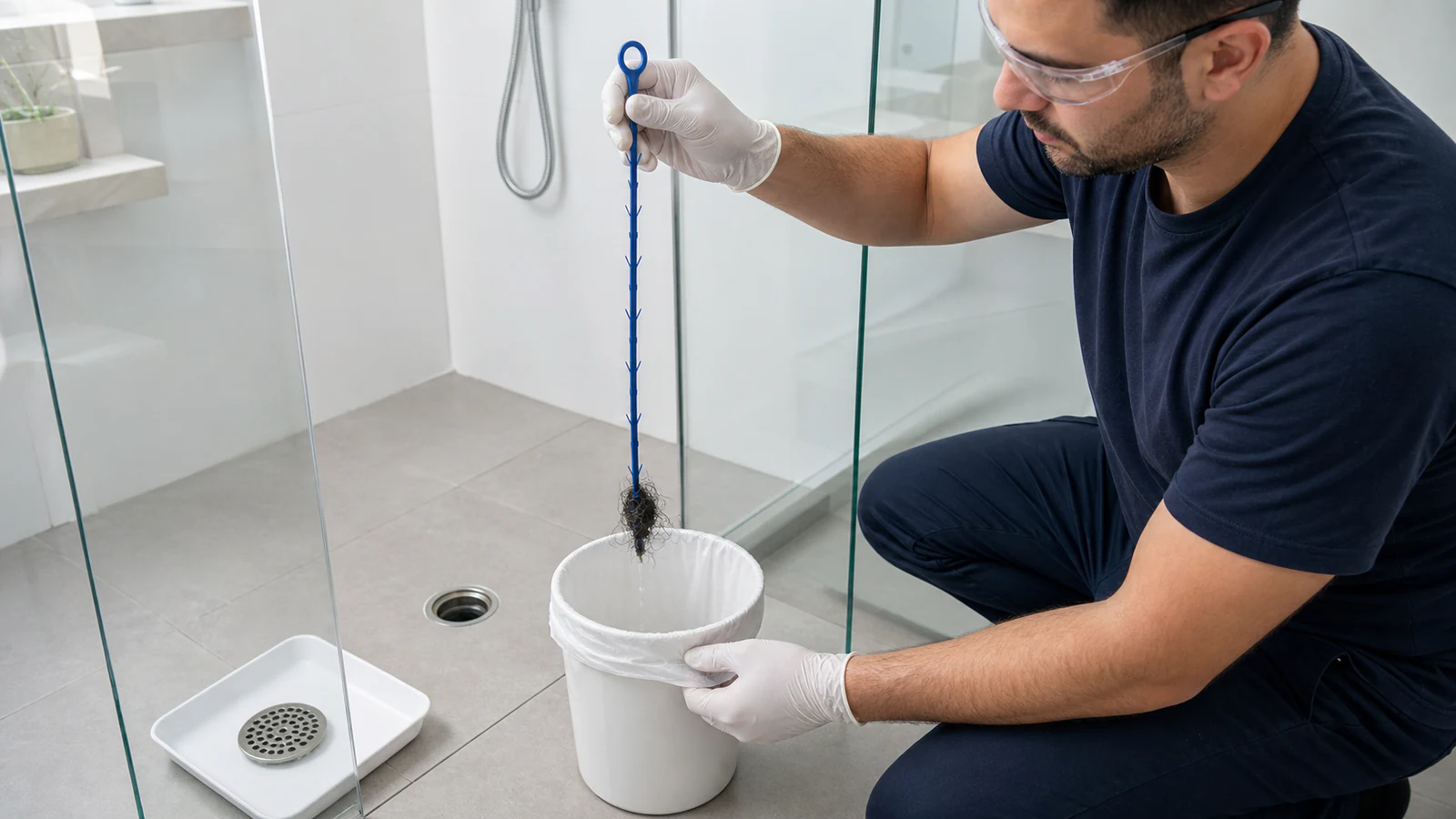
Extract and examine the extracted material
Withdraw the tool slowly while keeping it pointed away from your face and body. Lower removed hair directly into a lined waste bin; do not shake or squeeze it. Follow the tool instructions for disposal or cleaning. Wash reusable equipment away from food-preparation areas and clean any splashed surface before removing gloves.
-
Step 06
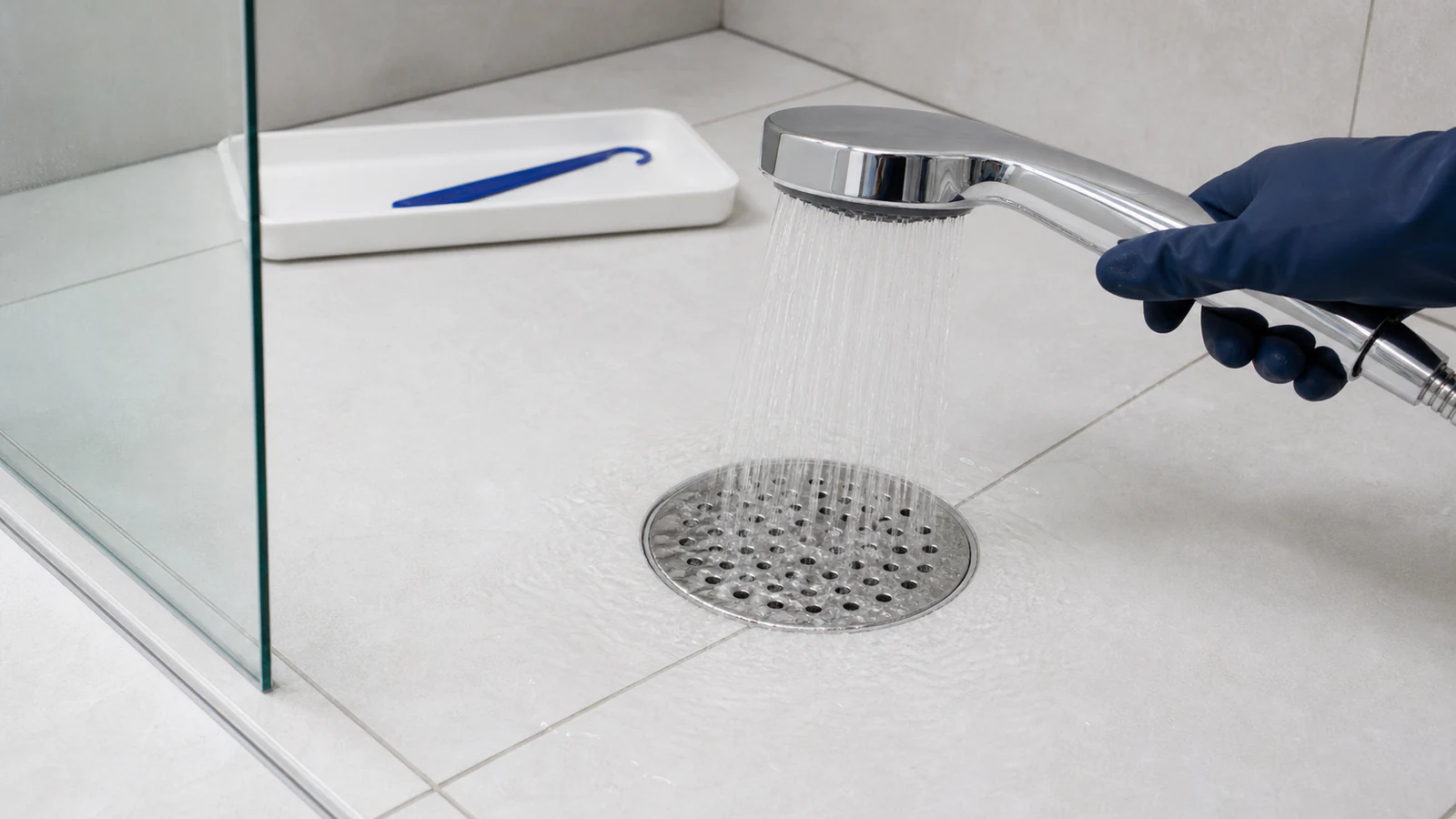
Test water flow and repeat if necessary
Replace the original cover as designed, then run cool water at low flow for ten seconds while watching the drain. Stop the tap if water rises. Make one further gentle extraction only when more hair remains visible near the opening. Persistent slow flow, leakage or gurgling needs maintenance or a plumber.
-
Step 07
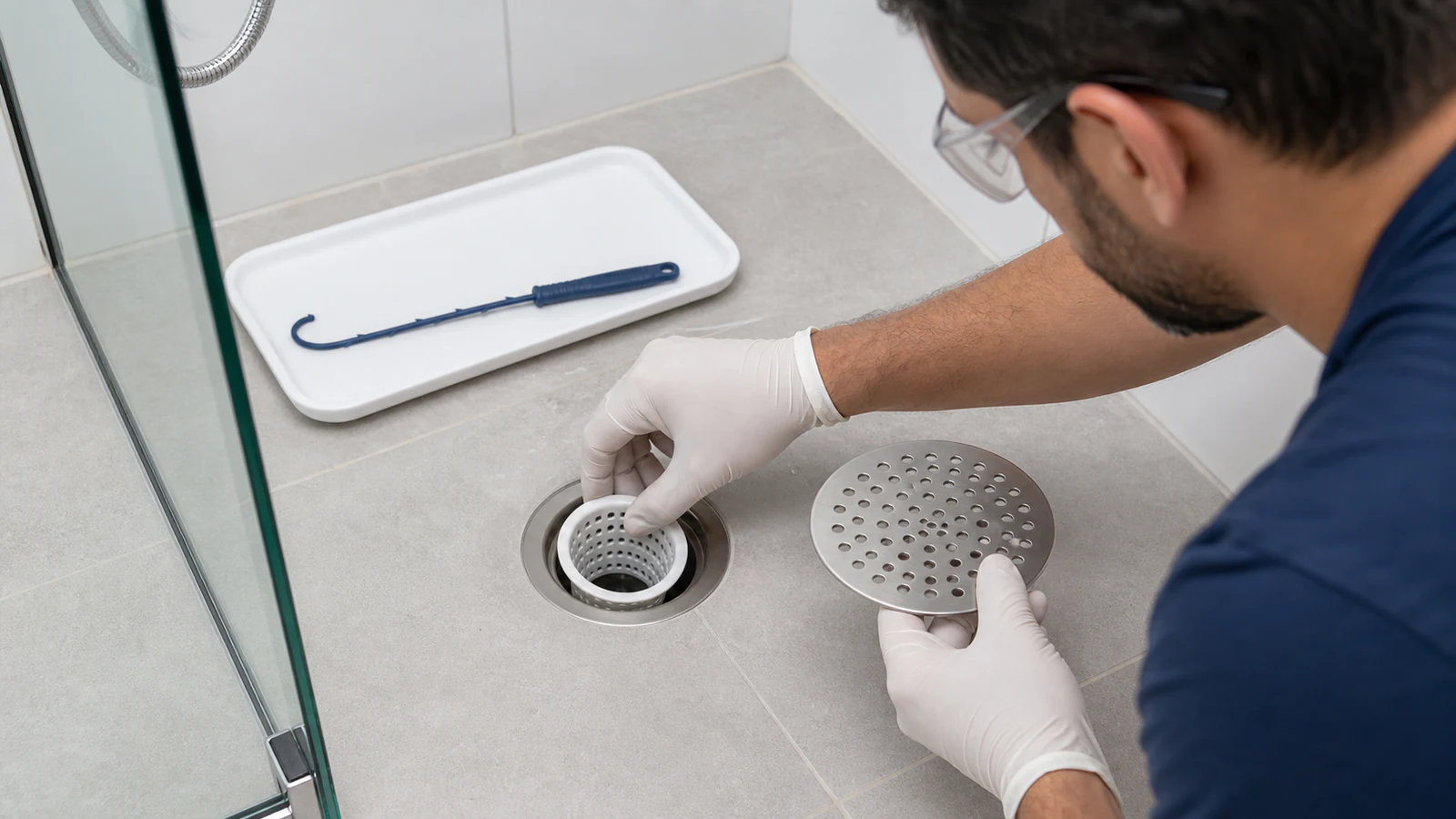
Fit a hair-catching strainer and replace the cover
Fit a removable hair strainer only if it sits flat without obstructing the original cover or creating a trip edge. Clean it with gloves before flow slows. Wash hands with soap and water after removing gloves. If the drain repeatedly slows despite surface-hair removal, stop repeated hooking and have the trap or shared line assessed.
Quick answers
Frequently asked questions.
What is a drain zip tool?
A drain zip is a flexible plastic strip with barbs intended to catch hair near a drain opening. Follow its manufacturer instructions and depth markings. It is not a substitute for a powered snake and should never be forced past resistance, into a pop-up linkage or through trapped chemical cleaner.
Is chemical drain cleaner bad for pipes?
Chemical drain cleaners may be caustic and create a splash hazard when a blockage or tool moves. Never mix cleaners or insert a tool after chemical use. EPA household-hazardous-waste guidance suggests a plunger or plumber's snake instead; use a professional when the blockage is not accessible surface hair.
How often should I clean the hair-catching strainer?
Inspect the strainer before flow begins to slow and clean it with gloves, following its instructions. The interval depends on use and hair load, so weekly is not universal. It must sit flat without obstructing the original cover. Repeated slow drainage despite a clean strainer needs plumbing assessment.
Sources and review notes
- US EPA: Household Hazardous Waste - Primary guidance on hazardous-product labels and using a plunger or plumber's snake instead of drain-cleaner chemicals.
- US Consumer Product Safety Commission: Drain Cleaners - Primary consumer-safety information documenting sodium-hydroxide drain-cleaner poison and labelling hazards.
Scope: This guide covers surface-hair removal, contamination controls, a low-flow test and prevention. It does not open a trap, diagnose a shared waste line, clear solid objects or make chemical residue safe; those situations require model-specific maintenance or a plumber.