
DIY / Bathroom
Cloudy Shower Glass: A Finish-Safe Hard-Water Cleaning Method
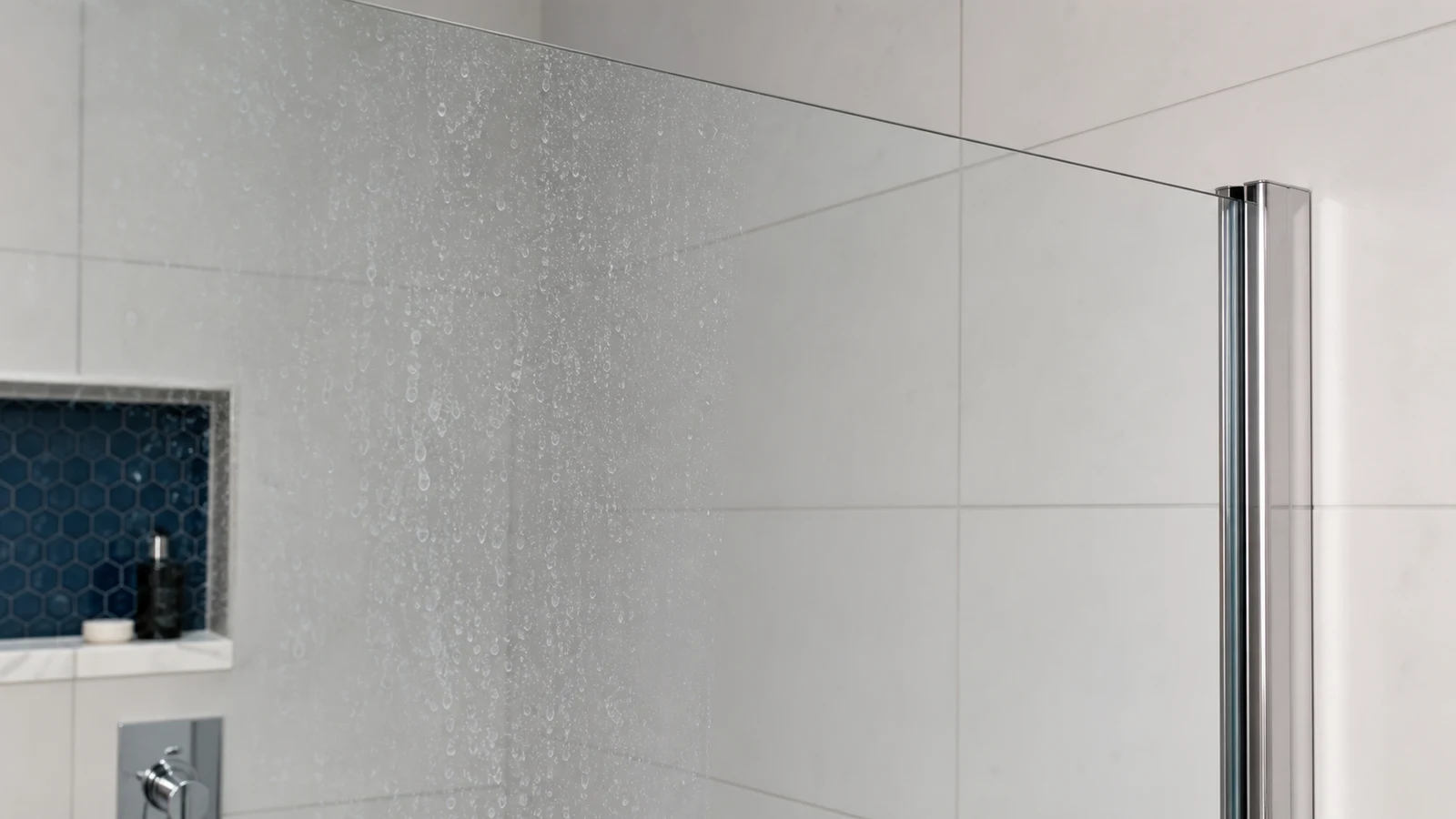
Cloudiness on shower glass may be soap film, mineral deposits or permanent surface damage. Because many enclosures have protective coatings and mixed hardware, begin with the maker's mildest approved method. Strong homemade acids are not a universal shortcut, even when the glass itself appears uncoated.
Quick answer
How do you remove hard water stains from glass?
Identify the enclosure and coating first. Wipe with a soft cloth and mild detergent diluted in warm water, then rinse and squeegee dry. Use a hard-water cleaner only when the glass manufacturer approves that exact product and dwell time. Stop for chips, cracks, coating changes or haze that remains after two gentle cleans.
Intact shower glass whose care guide permits mild detergent / Coated shower glass when cleaned exactly as its manufacturer directs / Frameless or framed screens with sound seals and hardware
coated or treated shower glass / marble, limestone or natural stone trim / Unknown coatings or aftermarket films / Chipped, cracked, etched or deeply scratched glass / Natural stone, grout, silicone, metal hardware or frames unless separately protected / Frosted, patterned or switchable privacy glass without its own care guide
What you need
What you need
Use a mild detergent approved by the enclosure maker, two soft cloths, a clean rubber squeegee and the protection required by the cleaner label. Do not substitute an acid, abrasive pad or stronger glass product.
- Difficulty
- Easy
- Active time
- 15 minutes
- Total time
- 45 minutes including dwell and drying
Mild liquid detergent approved by the enclosure maker
A few drops in 500 ml warm water, or the exact label dilution
Soft non-abrasive sponge or cloth
1
Small bowl or bucket
1
Rubber gloves
1 pair
Squeegee or microfibre cloth
1
Typical UAE retail ranges. Prices vary by pack and store, and your total is lower when you already own the reusable tools.
Step by step
How to remove hard water stains from shower glass
Begin with uncoated glass only; if your enclosure has a factory or aftermarket coating, check the manufacturer's care guide first.
-
Step 01
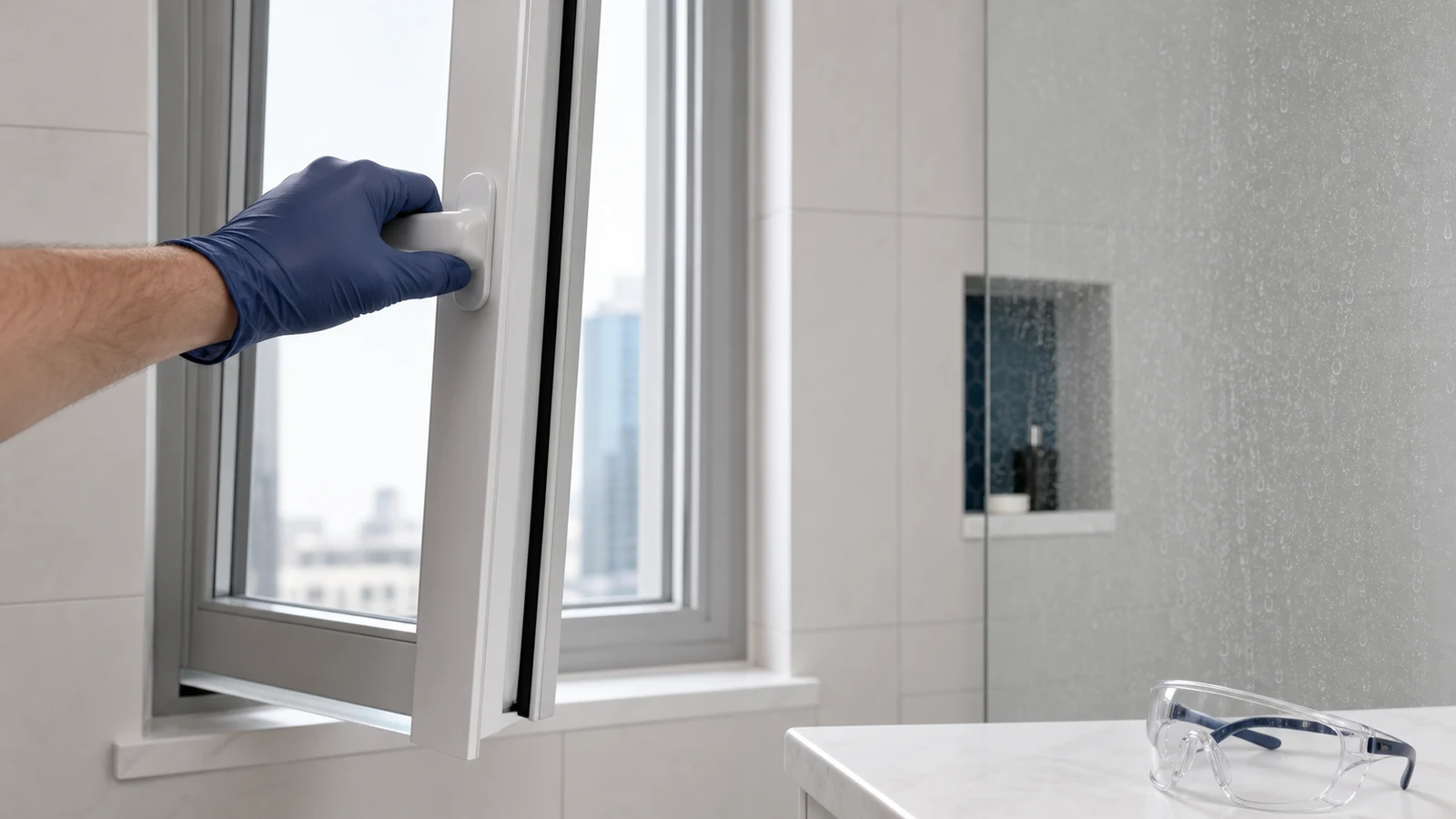
Ventilate the bathroom and prepare the area
Open windows or turn on the bathroom exhaust fan to ensure airflow. Put on rubber gloves and eye protection. Inspect the glass for chips, cracks or unknown coatings. Check silicone seals and stone or grout edges adjacent to the glass.
Exhaust fan is running or window is open
You are wearing gloves and eye protection
Glass is intact and its coating status will be checked
-
Step 02
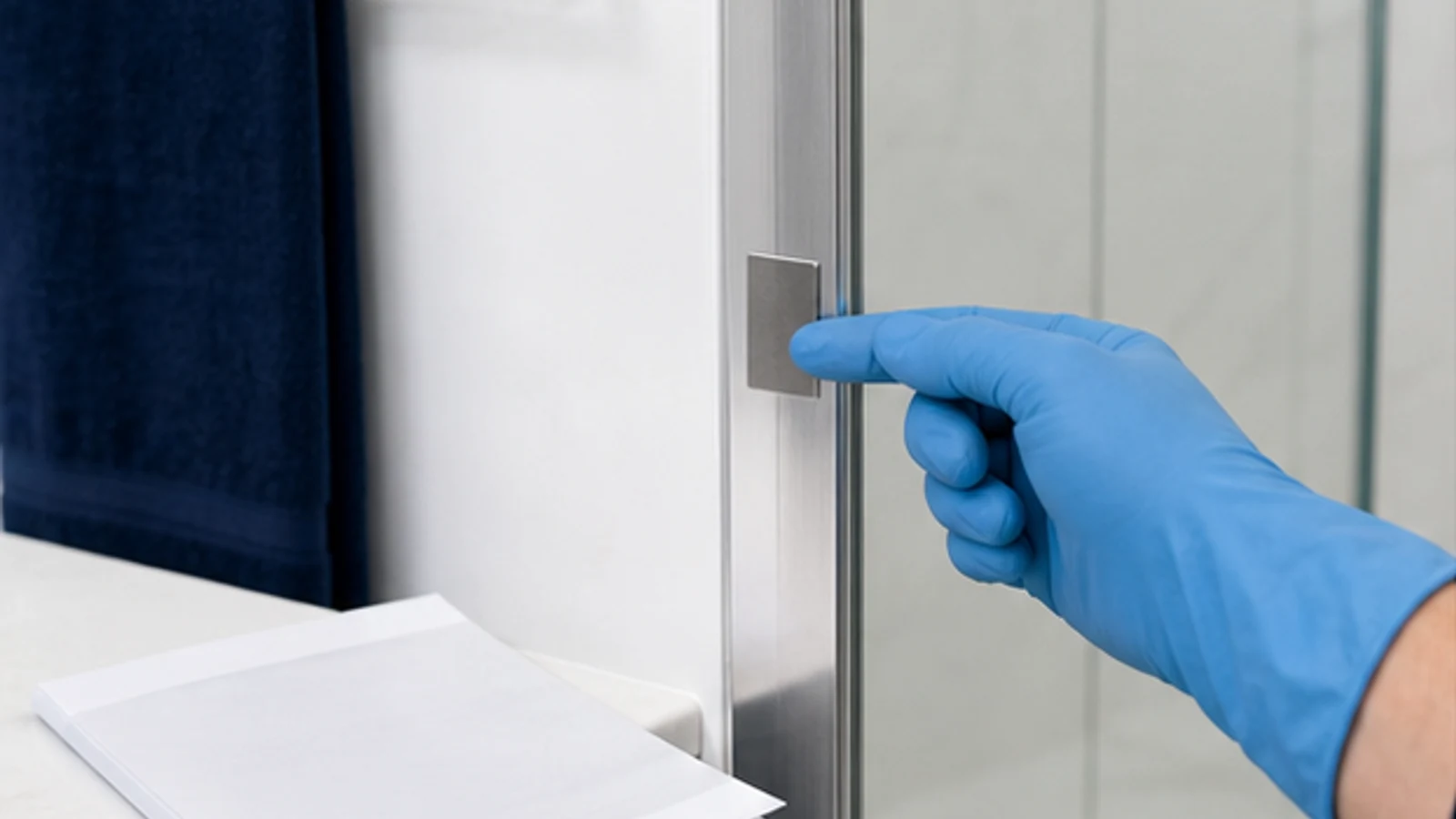
Identify the glass and read its care guide
Find the enclosure brand, installer paperwork or coating warranty. Confirm the approved detergent, tools and contact time. If the finish is unknown, limit cleaning to warm water and a soft cloth. Do not proceed on chipped or cracked glass, and do not lean body weight against a frameless panel.
The enclosure brand or installer guidance is identified
The coating status and approved tools are known
Cracked, chipped or loose glass is excluded
-
Step 03
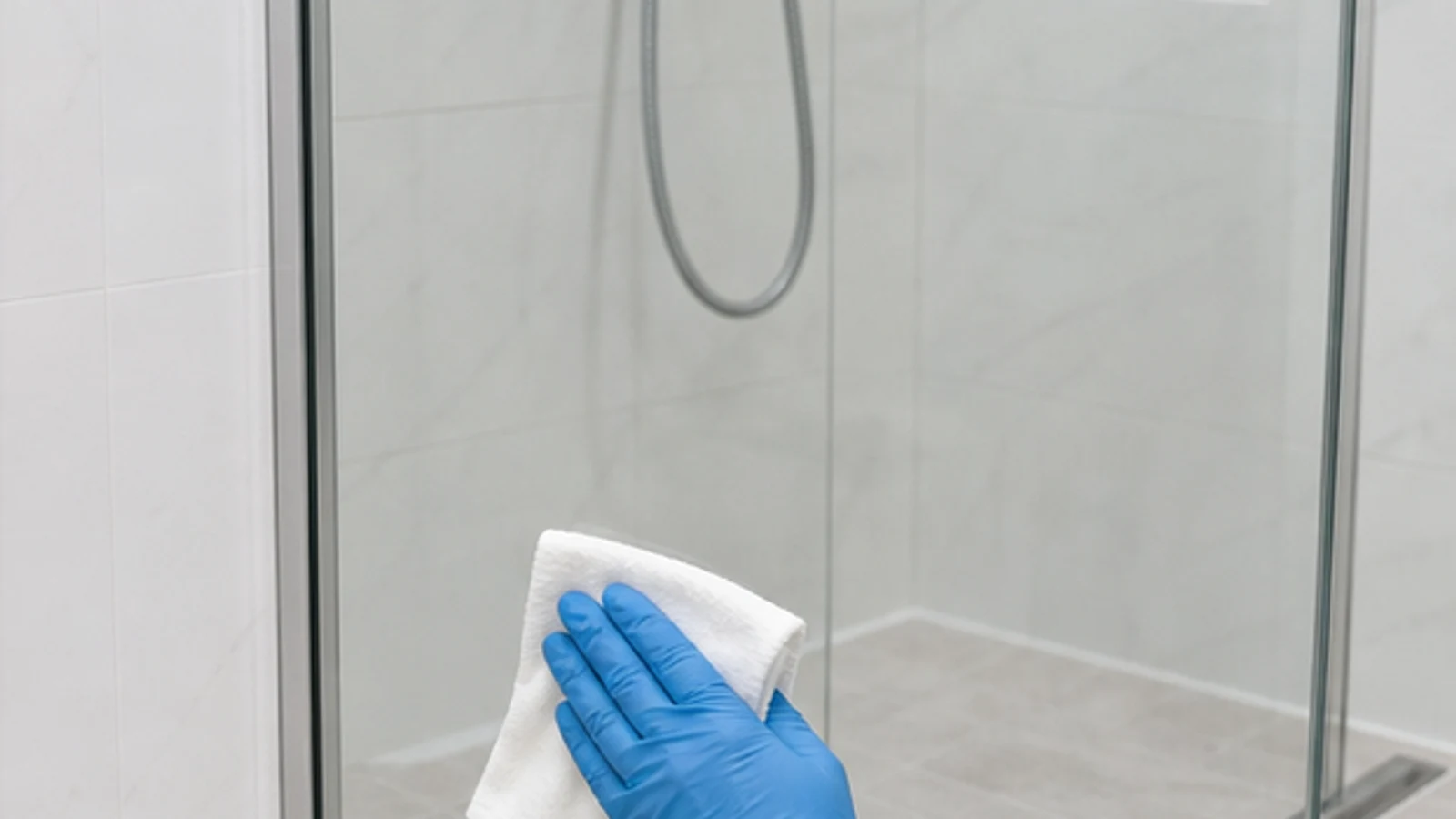
Patch-test the mild detergent solution
Add a few drops of the approved mild detergent to 500 ml warm water, or use the maker's exact dilution. Dampen a soft cloth rather than spraying the enclosure. Wipe a small lower corner, rinse immediately and dry. Continue only if the coating, gloss, colour and hardware remain unchanged.
A small lower corner is cleaned first
The patch is rinsed and dried immediately
Gloss, colour, coating and hardware remain unchanged
-
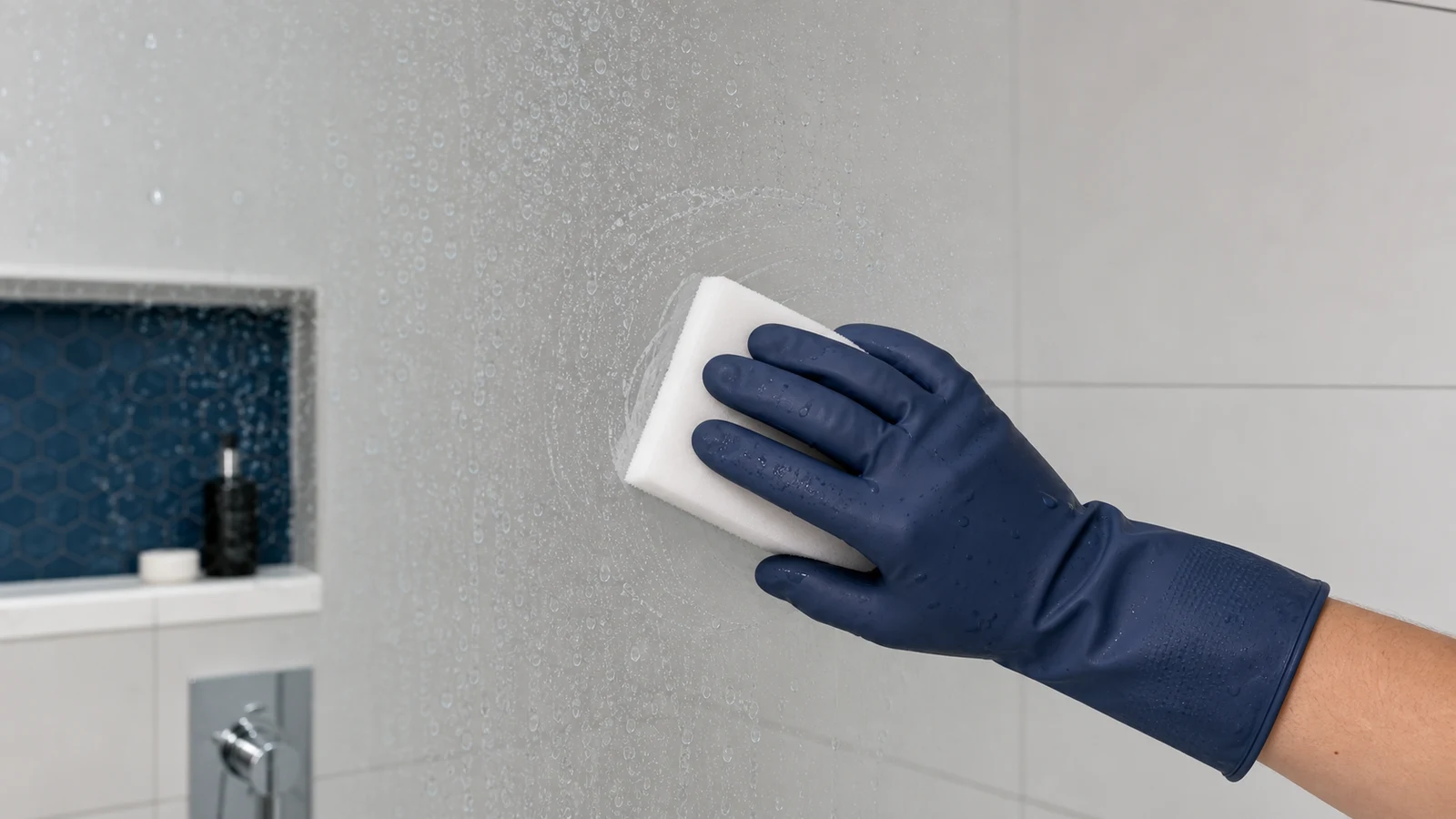
Step 04
Clean one section with light pressure
Working from top to bottom, wipe a manageable section with the damp soft cloth. Use light overlapping strokes and keep liquid from pooling at the frame, hinges, seals, stone or grout. Do not use razor blades, scouring pads, melamine foam, powders or powered tools; they may scratch glass or damage a coating.
The cloth is soft and damp rather than dripping
Only light overlapping strokes are used
Liquid does not pool on seals, stone or hardware
-
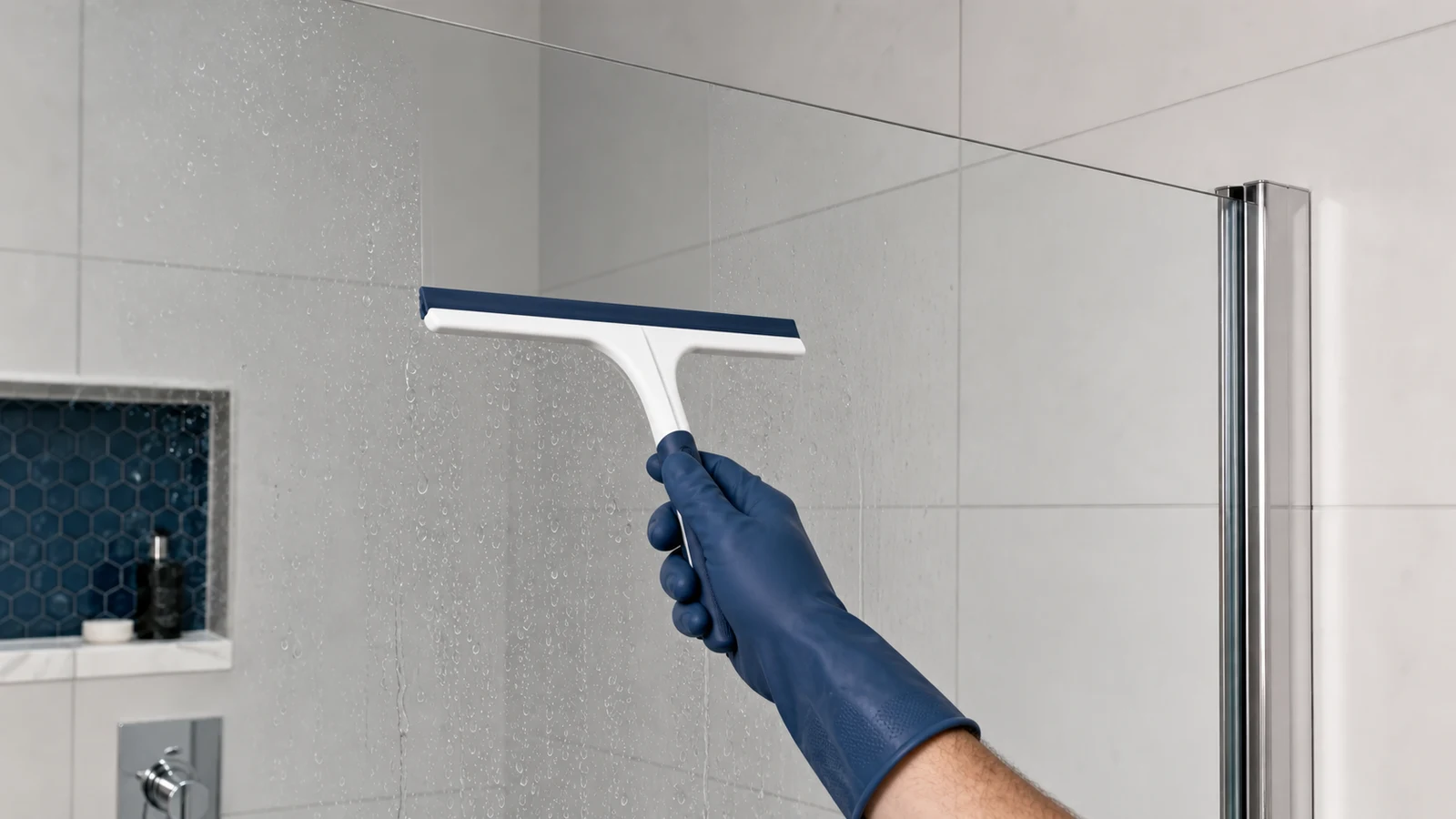
Step 05
Rinse thoroughly and dry the glass
Wipe the cleaned section several times with a second cloth dampened only with clean water. Remove all detergent from the glass, edges and hardware. Squeegee from top to bottom, then dry the frame, hinges and lower seal with a soft cloth so rinse water cannot sit against other materials.
All cloudy residue and liquid is rinsed away
No detergent residue remains
Glass is squeegeed or dried to prevent water spots
-
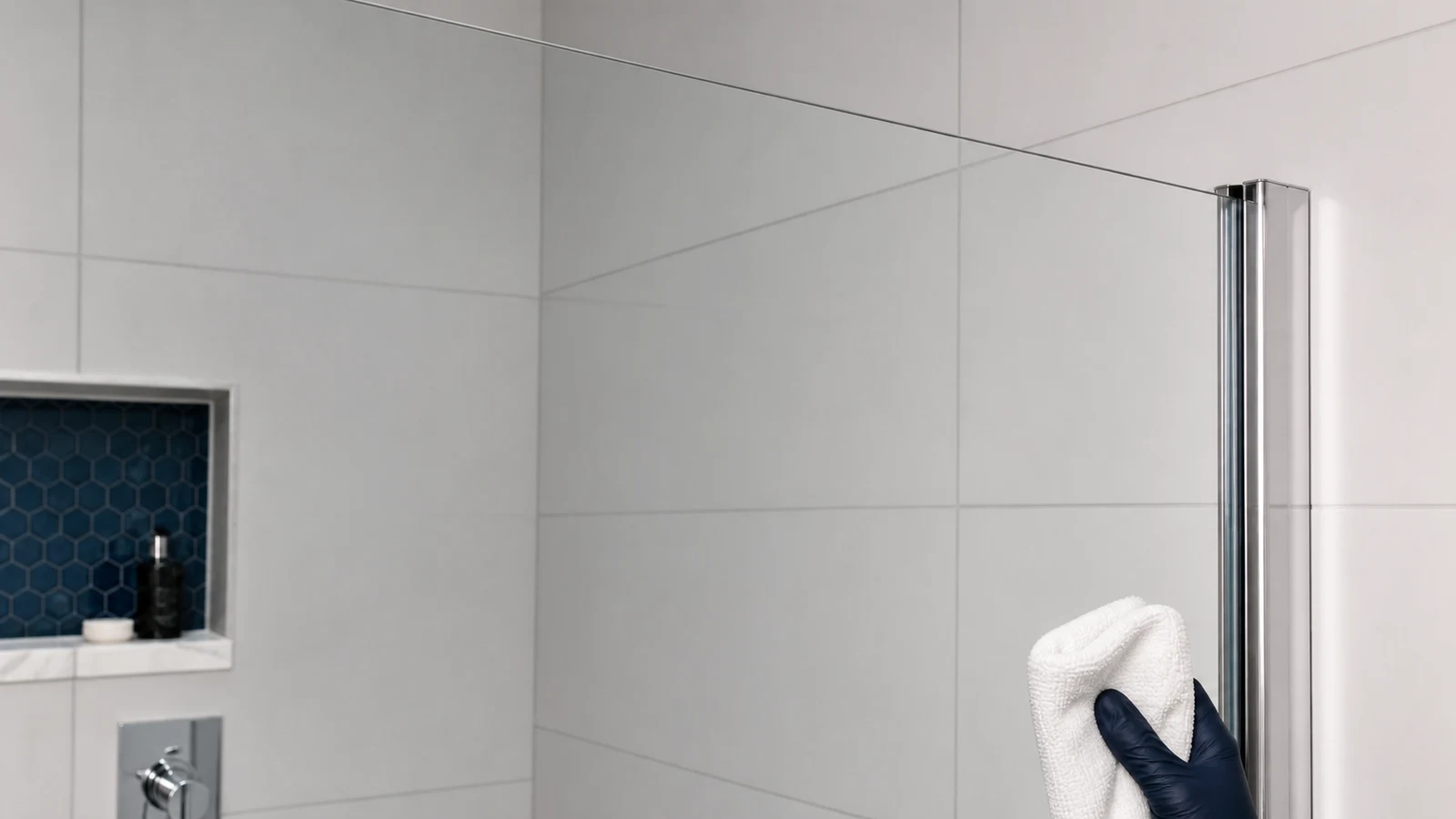
Step 06
Inspect the result and repeat if necessary
View the dry glass from both sides in indirect daylight. Repeat the same mild method once if film remains and the first pass caused no change. If haze remains after two gentle cleans, or rainbowing, scratches or coating changes appear, stop. Ask the enclosure maker or a glass professional to identify the surface.
Glass is completely dry and inspected in natural light
The cleaned area is compared from both sides
Persistent haze is left for professional identification
-
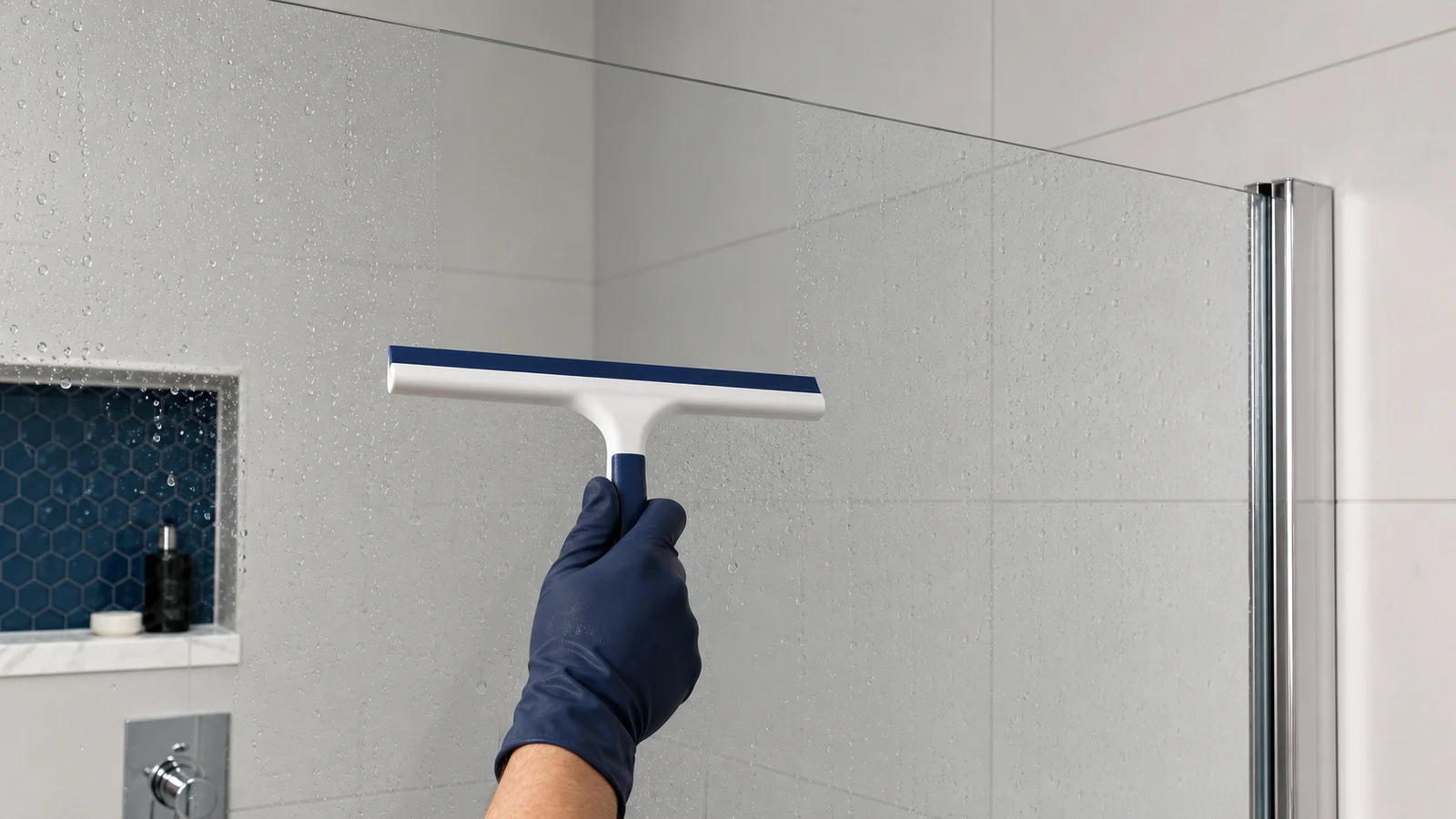
Step 07
Prevent re-soiling: squeegee after every use
After each shower, use a clean rubber squeegee from top to bottom without striking edges or hardware. Dry the lower seal and ventilate the bathroom. Kohler recommends squeegeeing and wiping doors dry to limit water spots and lime buildup. Follow the coating maker's own routine if it differs.
Squeegee is accessible near the shower
Water is removed before it dries on the glass
The lower seal and hardware are left dry
Finished result
What success looks like
A successfully cleaned shower glass is clear, transparent and reflects light sharply. Water droplets on dry glass should be visible as separate beads rather than a cloudy film.
Glass is transparent and reflects bathroom light without haze
No white, cloudy or dull coating is visible when lit from behind
Water droplets bead on the surface rather than spreading as a cloudy film
You can see through the glass clearly from both inside and outside the enclosure
Quick answers
Frequently asked questions.
How do you remove hard water stains from glass?
Start with the enclosure maker's mildest approved care: usually a soft cloth, warm water and mild detergent, followed by thorough rinsing and drying. Hard-water cleaners are finish-specific, so use one only when its label and the glass or coating guide agree. Never use blades or abrasive pads.
Is citric acid safe for shower glass?
Citric-acid compatibility varies by shower enclosure. The pane may have an unknown coating, while runoff can contact stone, grout, metal or silicone. Use it only when the glass or coating manufacturer explicitly approves the concentration and contact time. Never combine it with bleach or another cleaner.
How do you keep a shower door spotless?
Squeegee the glass from top to bottom after each shower, dry the lower edge and hardware, and ventilate the room. Removing droplets before they evaporate reduces water spots and lime buildup. Clean on the frequency stated by the coating maker, using only its approved soft tools and detergent.
Can you remove etching from shower glass?
Persistent haze may be mineral scale, coating damage or etched glass, and appearance alone does not prove which. Stop after two gentle, maker-approved cleans. A glass professional or enclosure manufacturer should identify the surface before polishing or chemical treatment; aggressive DIY work can worsen permanent damage or affect the warranty.
Sources and review notes
- KOHLER: How to Clean Glass Shower Doors - Manufacturer guidance for mild diluted detergent, squeegeeing and drying shower doors to limit water spots and lime buildup.
- Guardian Glass: ShowerGuard Cleaning Manual - Coated-glass manufacturer guidance showing that maintenance and accepted products depend on the specific protective surface.