
DIY / Furniture
How to Handle a White Ring on a Wood Table Safely
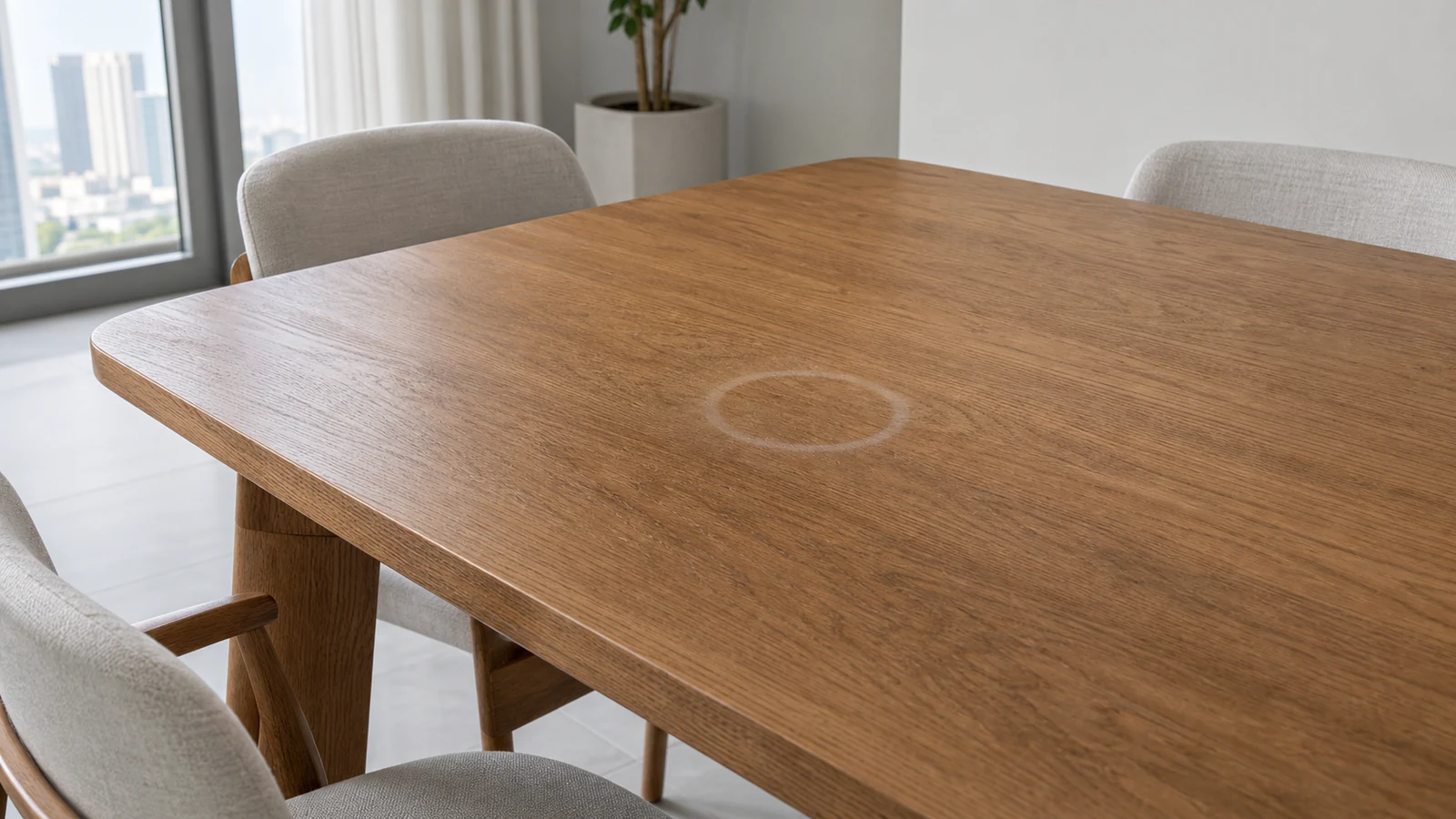
A white ring may be moisture haze in a clear finish, but appearance cannot identify the finish or damage depth. Start with natural drying and the furniture maker's exact care instructions. Heat, steam, mayonnaise and household oils are excluded.
Quick answer
How do you remove white heat marks from wood?
Blot a recent spill, leave the table undisturbed in normal ventilation and let the surface dry naturally. Identify the furniture and finish before applying anything. If the white ring remains, follow only a remedy explicitly approved by that furniture maker after a hidden test. Do not use an iron, steam, mayonnaise or oil.
A recent white surface haze on positively identified furniture / An intact finish whose maker provides a compatible care method
Antique or valuable furniture / Veneered surfaces / Unknown shellac, lacquer, oil, wax or polyurethane finish / Dark or penetrating stains / Lifted veneer or blistered finish
What you need
What you need
Begin dry. Add a care product only when the furniture maker confirms it for the exact finish and gives application instructions.
- Difficulty
- Easy
- Active time
- About 5 minutes
- Total time
- Until fully dry, then the maker's stated time
Soft cotton cloth or lint-free towel
1
Furniture-maker-approved care product (optional)
Only the label-directed amount
Typical UAE retail ranges. Prices vary by pack and store, and your total is lower when you already own the reusable tools.
Step by step
How to Handle a White Ring Without Heat or Oil
Rule out finish or veneer damage, allow natural drying and stop unless the exact maker supplies a compatible care method.
-
Step 01
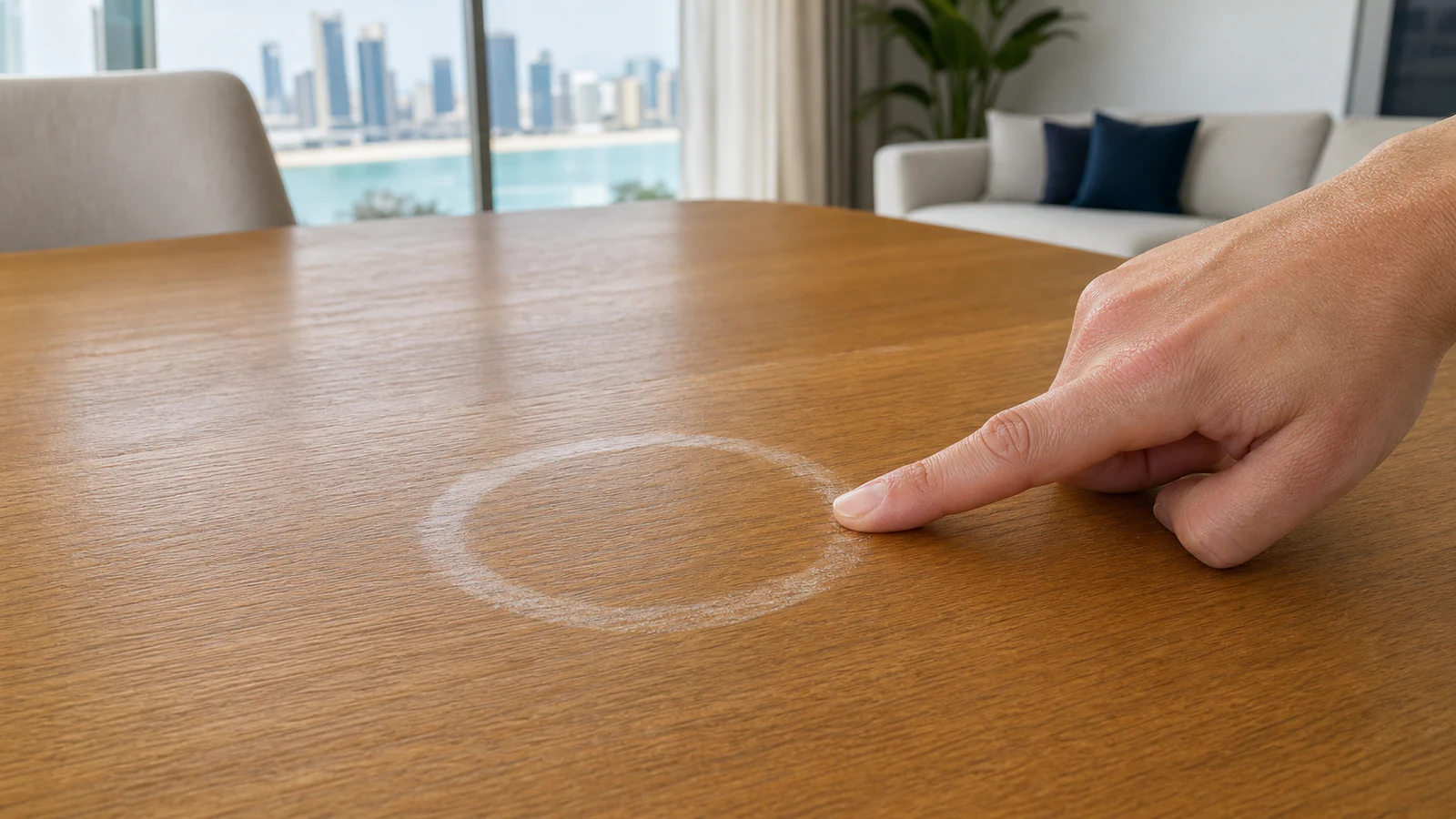
Identify the furniture and inspect without scraping
Find the table model, material and finish in its receipt, label or care guide. Inspect in side light without scraping. Stop for an unknown, valuable, antique or veneered piece, or any dark mark, lifting, blister, crack, softness, tackiness, roughness or odour.
-
Step 02
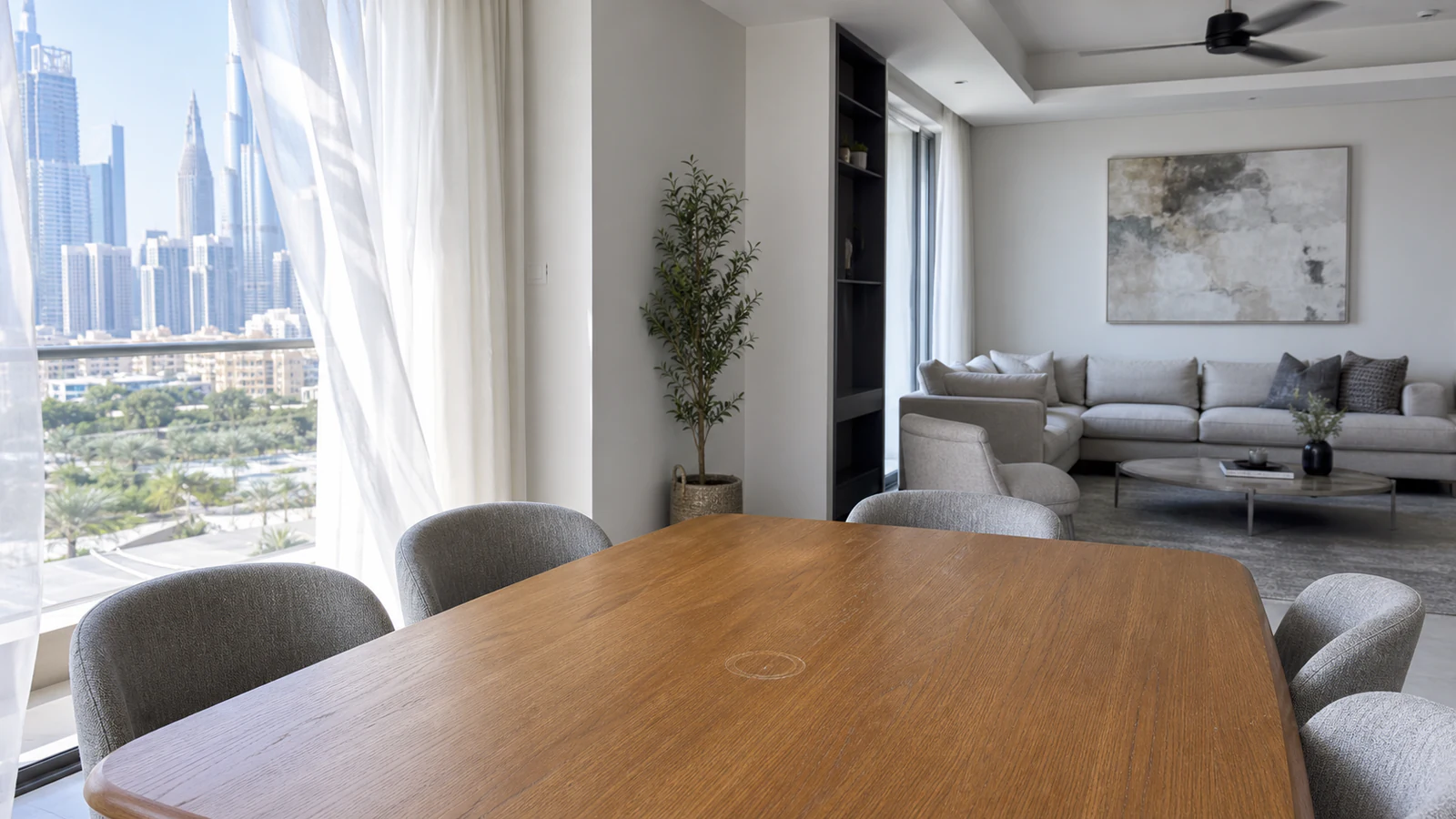
Blot a recent spill and let the finish dry naturally
If moisture remains, blot once with a clean dry cloth. Leave the table away from direct sun, heaters and air-conditioning discharge, with normal ventilation. Do not move it or aim a fan at the finish. Reassess only when fully dry.
-
Step 03
Check the furniture maker's approved remedy
If the mark remains, read the exact table or finish care guide. Continue only when it names a compatible product and method. Generic remedies are not substitutes. Without maker instructions, leave the mark alone and ask a furniture refinisher.
-
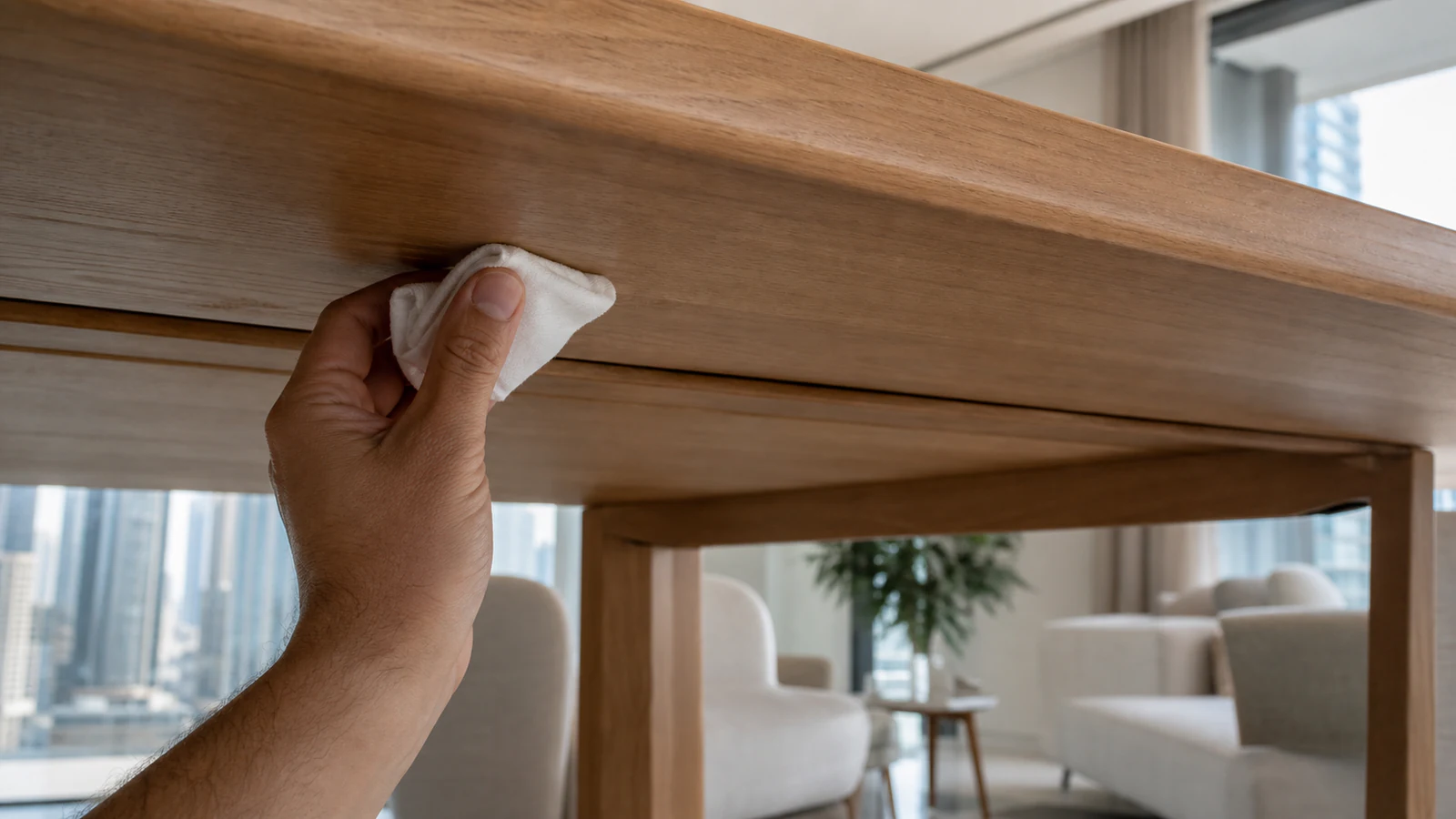
Step 04
Hidden-test the exact approved care product
Use the maker's smallest amount on an inconspicuous matching finished area. Observe the full label time, then check colour, gloss, texture and tackiness. Stop for any change. Do not test an underside with a different material or finish.
-
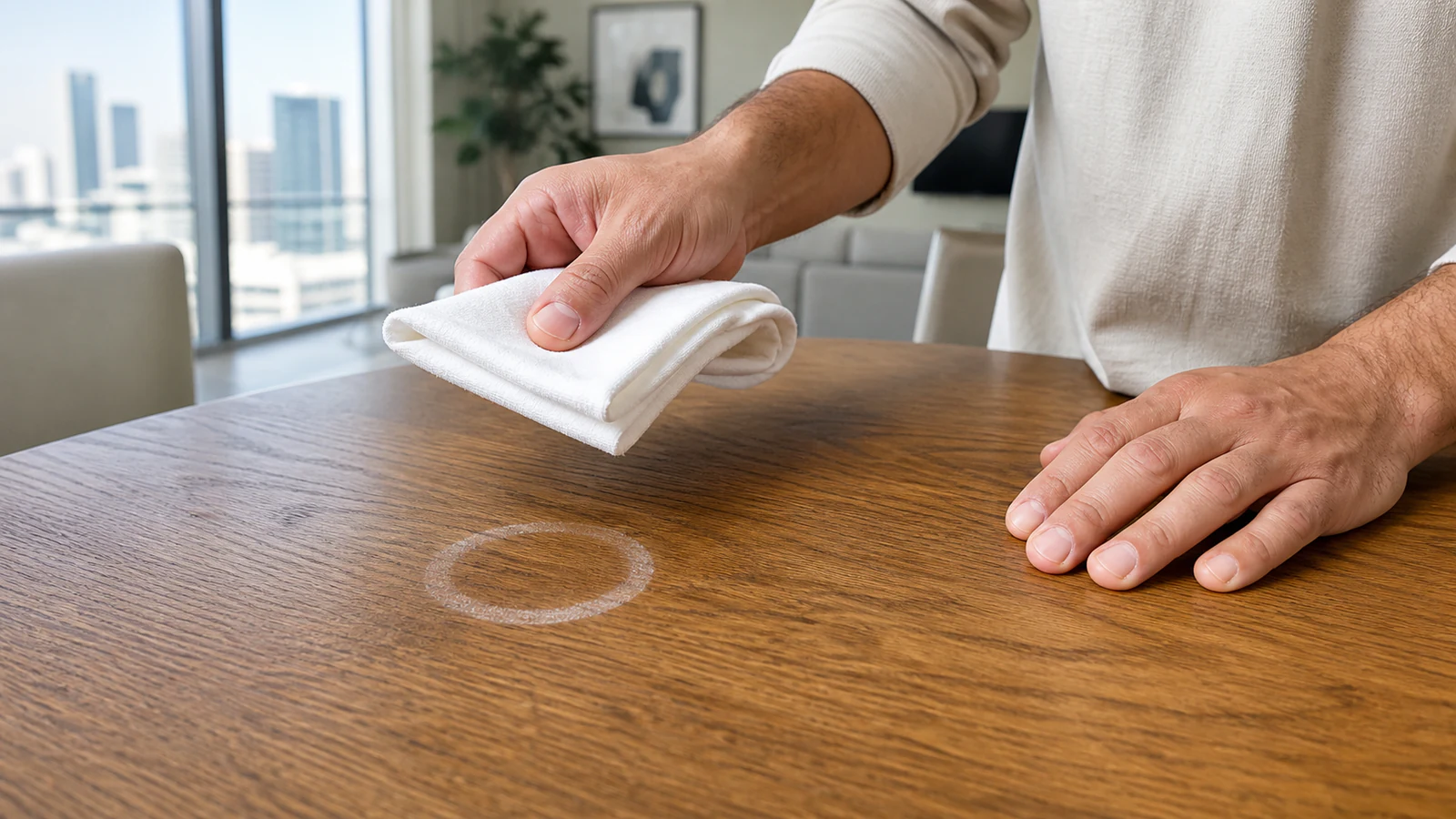
Step 05
Apply only the maker-approved finish care
After an unchanged hidden test, use only the named product, cloth, quantity, direction and contact time. Keep it off adjacent materials. Stop for spreading haze, colour or gloss change, tackiness, softening, lifting, blistering, roughness or odour.
-
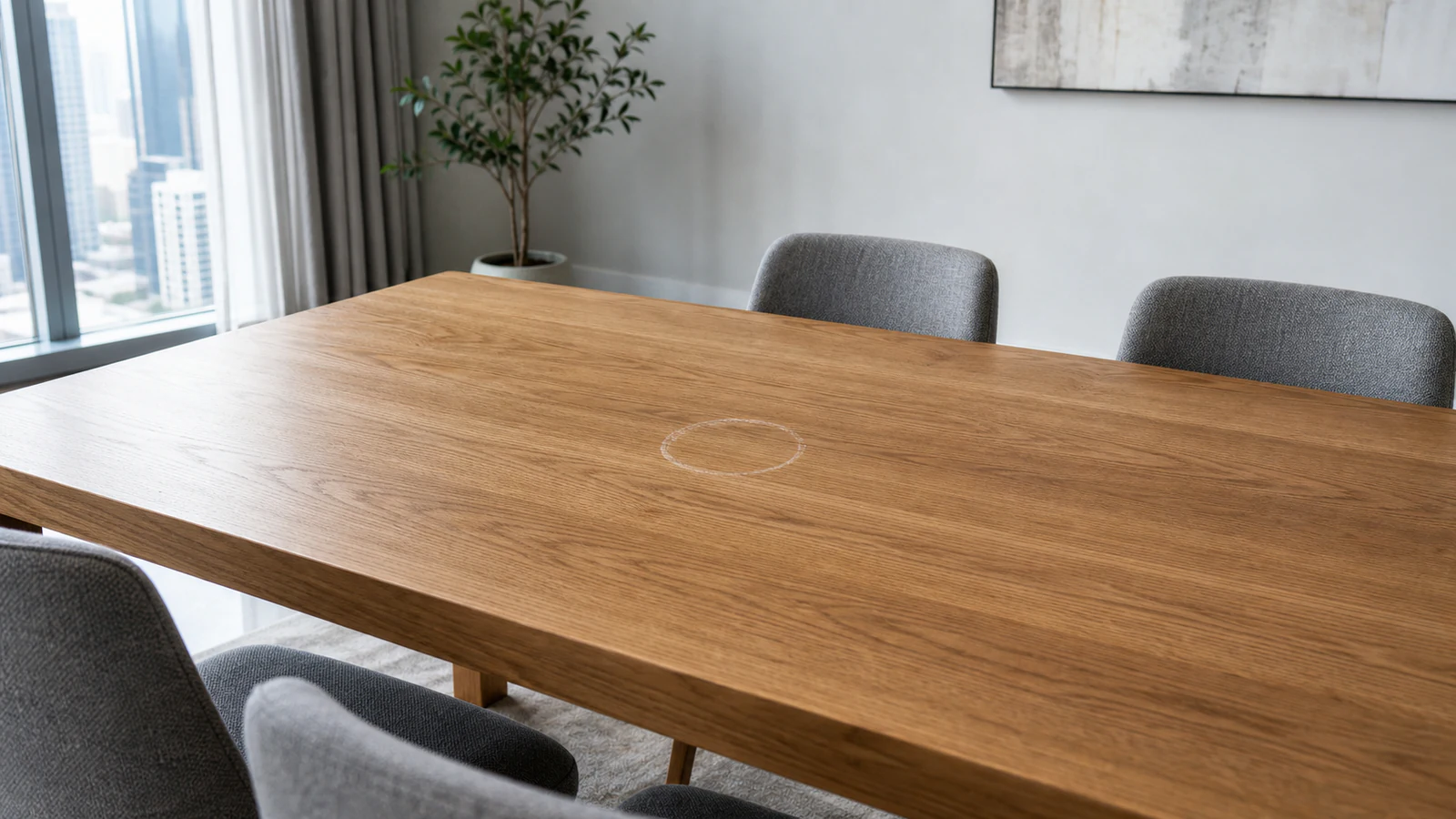
Step 06
Let the finish reach the maker's full dry time
Leave the area unloaded for the full time stated in the product instructions. Do not add or repeat treatment unless the maker permits it. If the ring or haze remains, or the finish changes, arrange a qualified refinisher's assessment.
Quick answers
Frequently asked questions.
How do you remove white heat marks from wood?
First let a recent white moisture haze dry naturally in normal ventilation. Identify the table and finish, then use only the furniture maker's compatible care product after a hidden test. A dark mark, lifted veneer, blister, softness, roughness, odour or unchanged ring needs a qualified refinisher.
Does mayonnaise really fix water rings?
Mayonnaise is not a finish-neutral repair. Its food oils can stain, leave residue, turn rancid or introduce allergens, and the result depends on an unknown coating. Keep it off the table. Use only care explicitly approved for that furniture finish, or ask a qualified refinisher.
Will an iron damage my table?
An iron can overheat a finish, affect veneer adhesive, scorch a barrier cloth or add steam, and a generic guide cannot verify the table's construction. Ironing is therefore excluded here even when the mark looks superficial. Let it dry naturally and request finish-specific care from the furniture maker.
Sources and review notes
- Stickley: Furniture Care Guide - Furniture-maker guidance on finish-specific products, avoiding mixed or excessive care products, temperature extremes and unnecessary oils.
- Herman Miller: Wood and Veneer Care and Maintenance - Manufacturer instructions for gentle wood care, immediate spill removal, approved cleaners and professional escalation for deeper damage.