
DIY / Furniture
How to Refresh a Fabric Sofa Without Steam or Soaking
Fabric, dye, backing and fill determine safe sofa care. Start with the furniture maker's instructions and dry vacuuming. Use liquid only when the exact upholstery guide permits it. Unknown fabric, dampness, contamination or broad soiling needs professional assessment.
Quick answer
How do you deep clean a sofa without a machine?
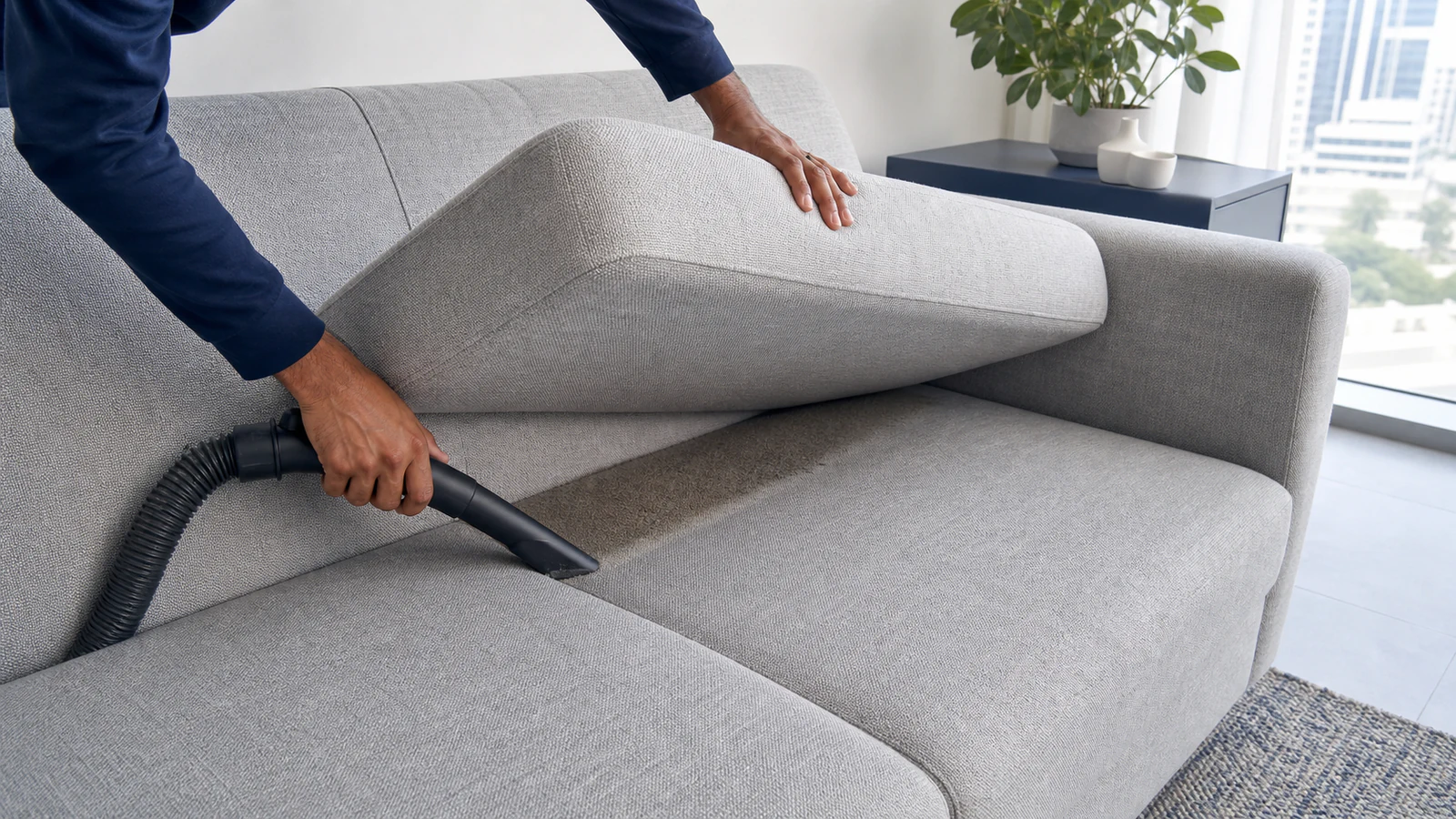
Read the sofa maker's care guide and upholstery code first. If permitted, vacuum dry fabric with its approved non-rotary attachment. Treat one ordinary identified spot only with the exact labelled method after a hidden colourfastness test. Never add baking soda, generic soap, steam or excess liquid. Keep the sofa unused until fully dry.
Intact dry upholstery with a legible care label / Fabric whose maker permits the stated vacuum or spot-care method
Code X, code S or unknown upholstery without professional guidance / Silk, velvet, leather or suede / Upholstery with unknown care tag / Cushions that cannot be fully air-dried / Mould, damp fill, pest residue, bodily fluid or unknown chemical stain
What you need
What you need
Use dry equipment first. Add a spot product and its label PPE only when the sofa maker and upholstery code both permit it.
- Difficulty
- Easy
- Active time
- 20–30 minutes
- Total time
- Maker-stated drying time
Maker-approved non-rotary upholstery vacuum attachment
1
Microfibre cloth, lint-free
2–3 cloths
Exact maker-approved upholstery spot product (optional)
Label-directed amount
Household vacuum with upholstery setting
1, already owned
Label-required gloves or eye protection (optional)
As specified by the product
Typical UAE retail ranges. Prices vary by pack and store, and your total is lower when you already own the reusable tools.
Step by step
How to Refresh a Fabric Sofa Using Its Care Code
Identify the exact upholstery, remove dry soil with approved equipment and use liquid only when the maker permits a specific spot method.
-
Step 01
Identify the sofa, upholstery and care code
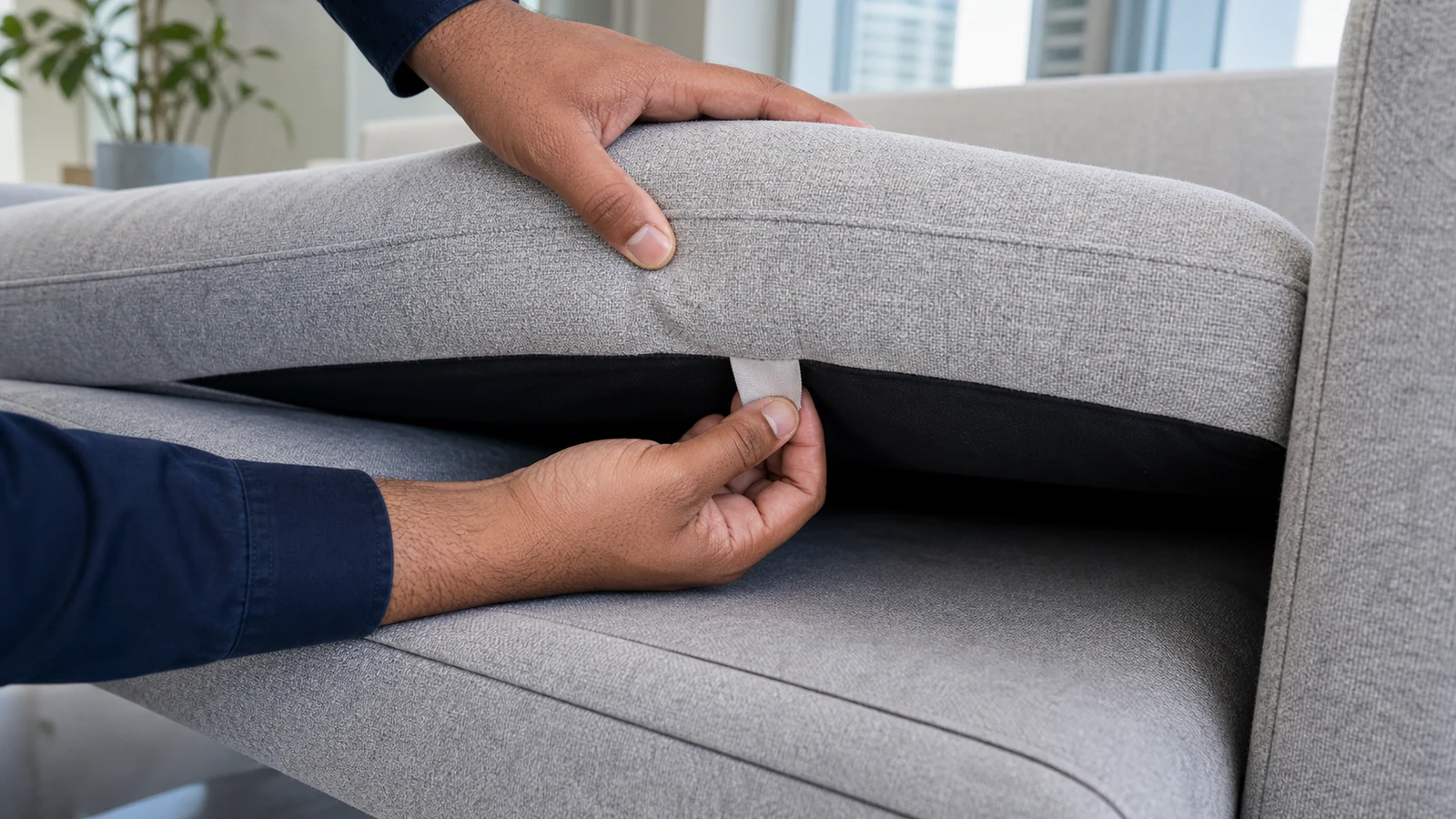
Find the sofa model, fabric and care label, then read the maker's instructions. W or WS does not approve every water-based product. Stop for S, X, a missing label, delicate fabric, leather, suede or conflicting guidance and seek upholstery-specific advice.
-
Step 02
Inspect for dampness, damage or contamination
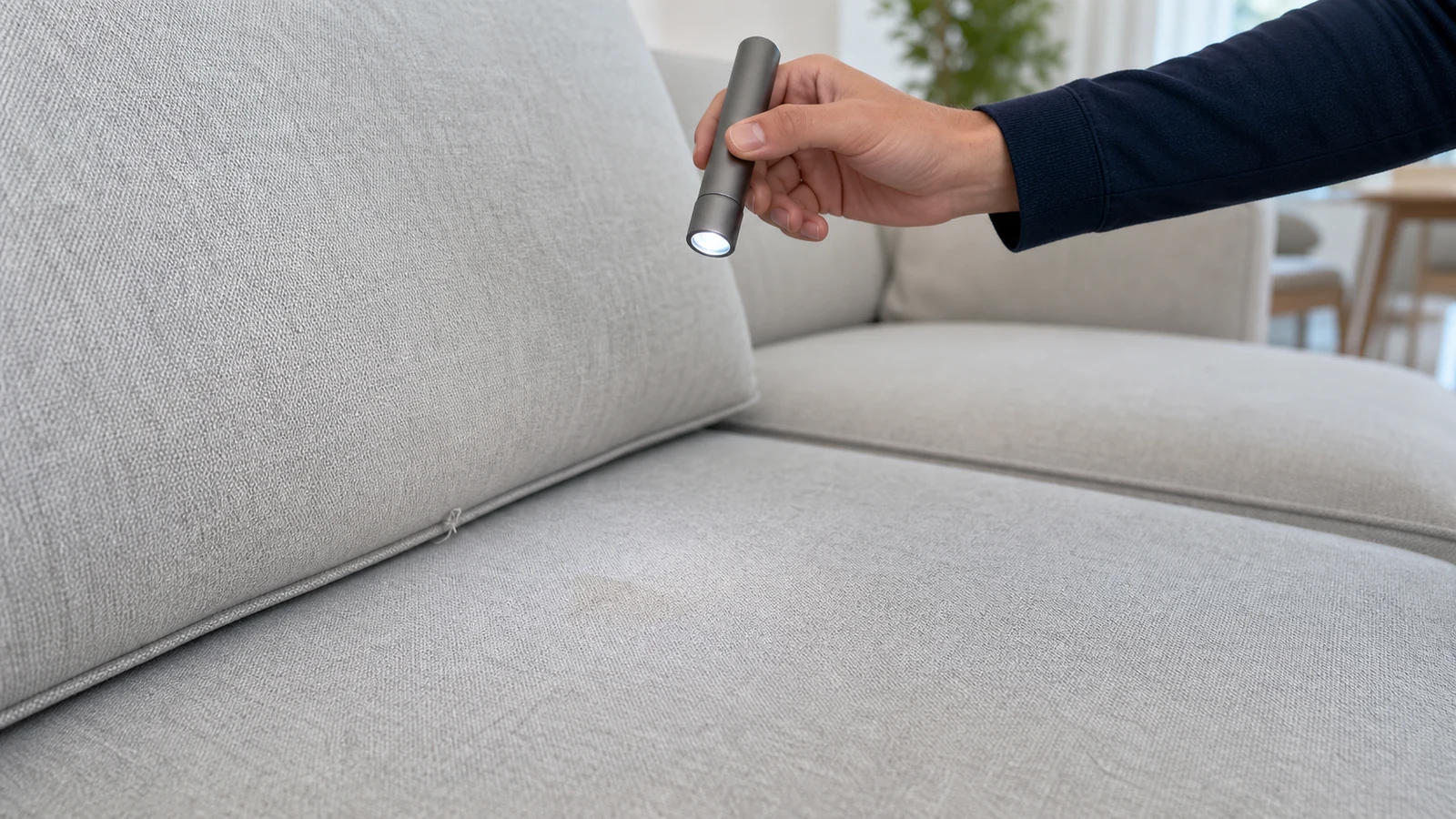
Inspect without smelling closely or pressing a stain. Stop for damp filling, mould, pest residue, bodily fluid, sharp debris, chemical odour, dye loss, a torn seam or unidentified stickiness. These need professional cleaning, contamination control or repair.
-
Step 03
Prepare the maker-approved vacuum attachment
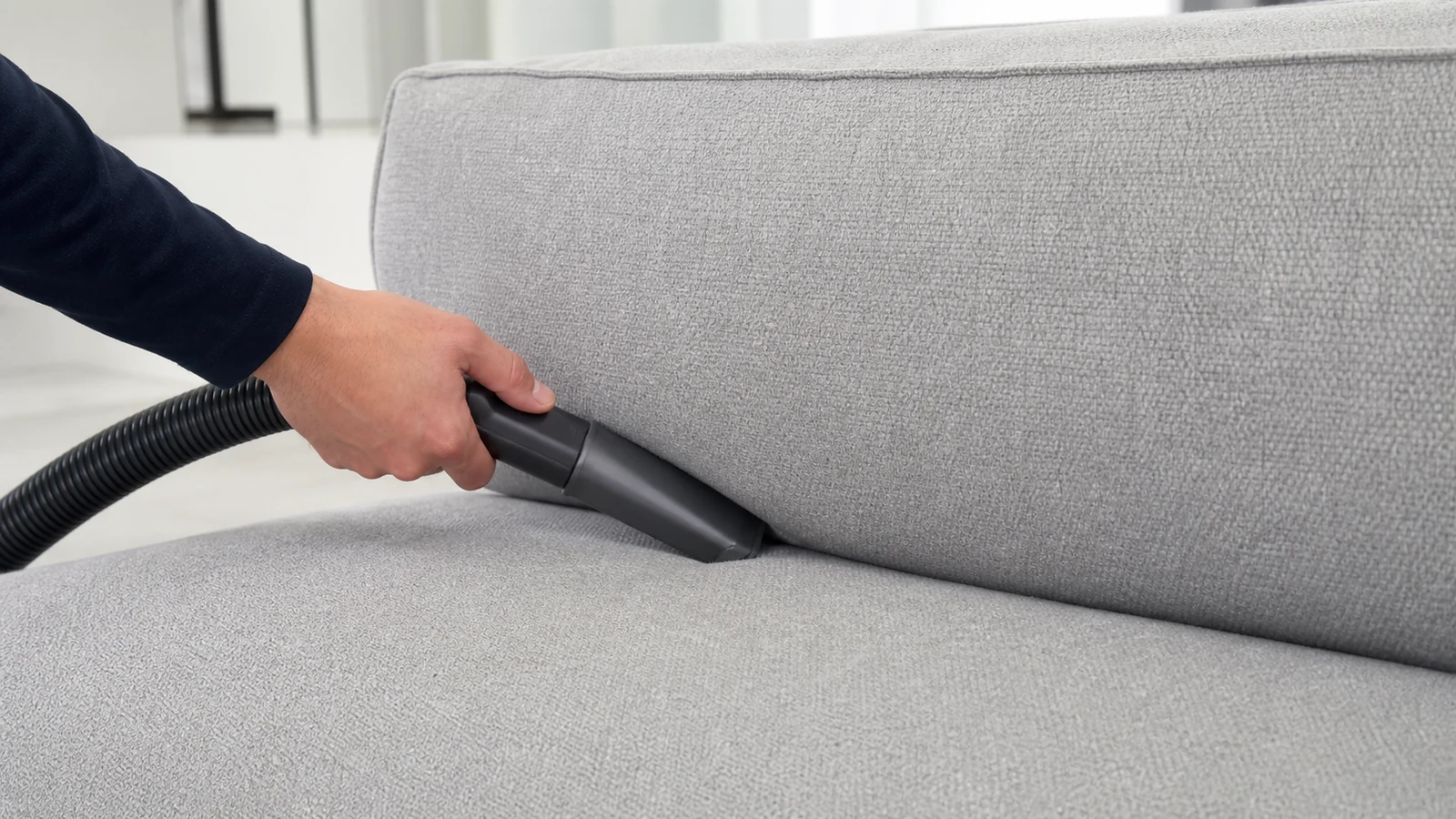
Use only the maker-approved clean attachment and suction setting. Exclude rotary brushes unless expressly permitted. Remove cushions or covers only as instructed. Hidden-test one dry pass; stop for pulling, pilling, nap change or loose fibres.
-
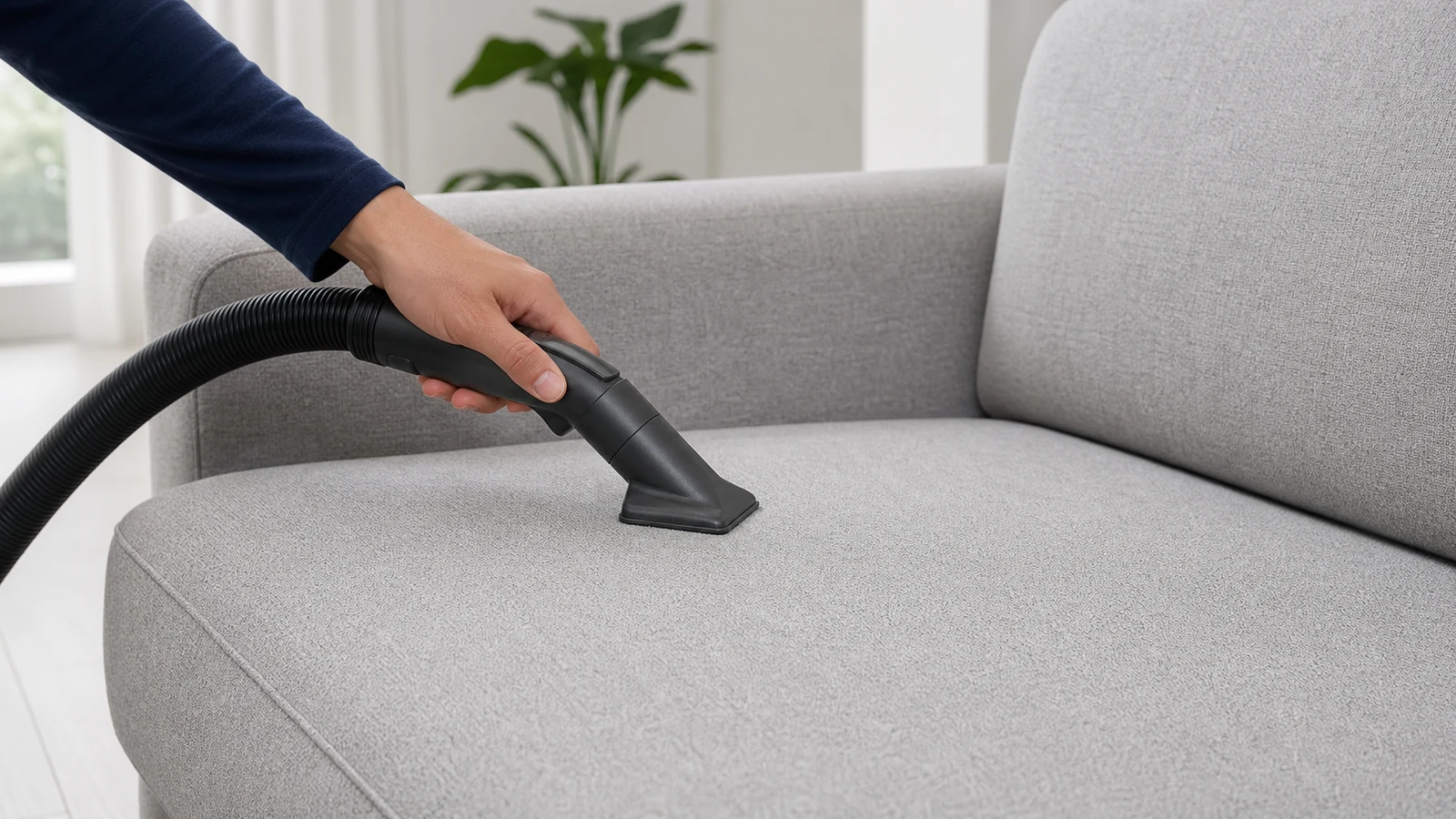
Step 04
Vacuum loose dry soil with controlled passes
Vacuum dry accessible surfaces at the approved setting with light passes in the permitted nap direction. Clean seams without forcing the nozzle. Do not add baking soda, deodorising powder or fragrance. Stop if fabric deforms or sheds.
-
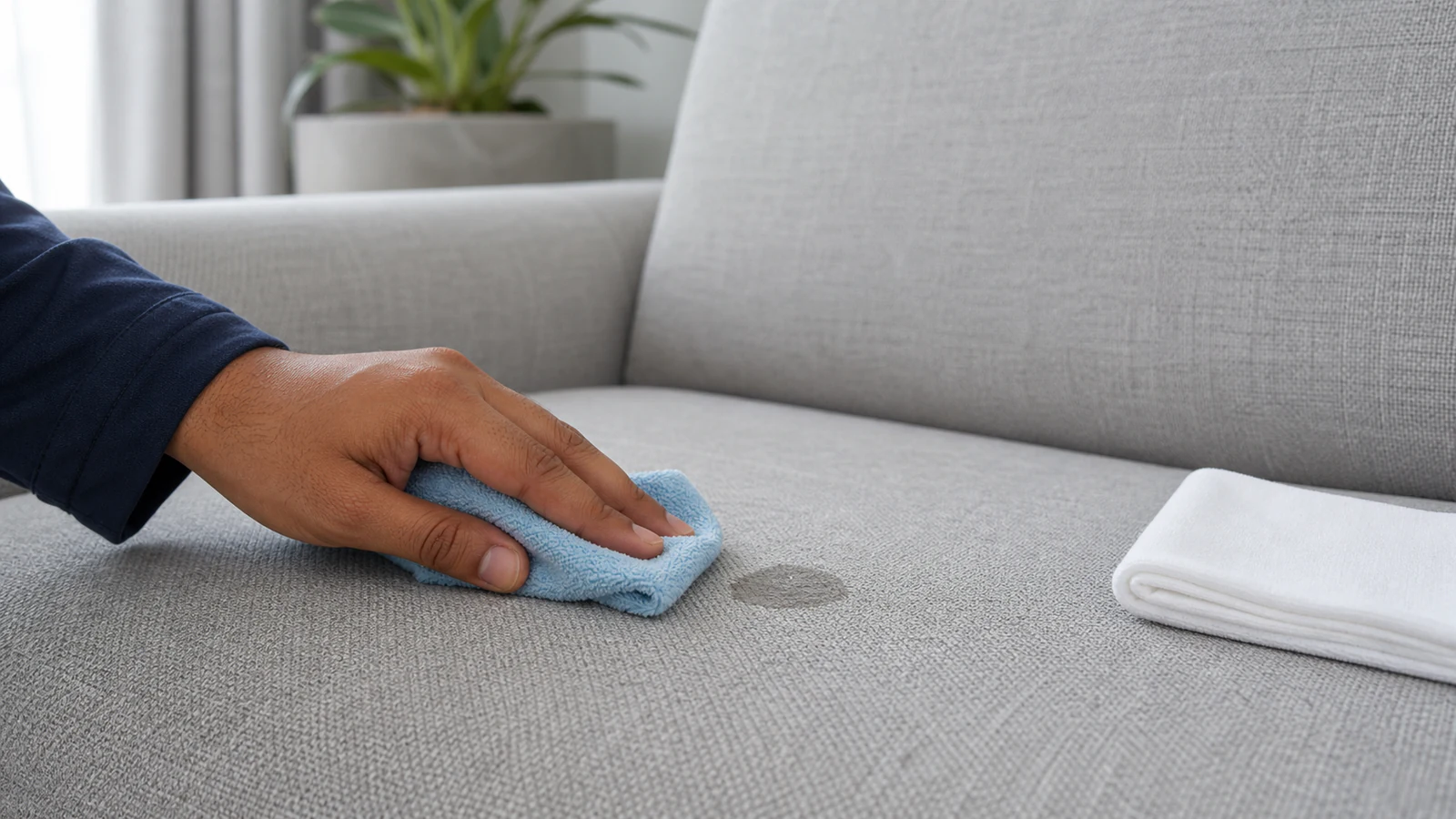
Step 05
Use an approved spot method only when specified
For one identified spot, use only the exact maker-approved product and method. Follow label PPE, ventilation, quantity and contact time. Hidden-test through full drying, then blot as directed without spraying, rubbing, mixing products or wetting filling.
-
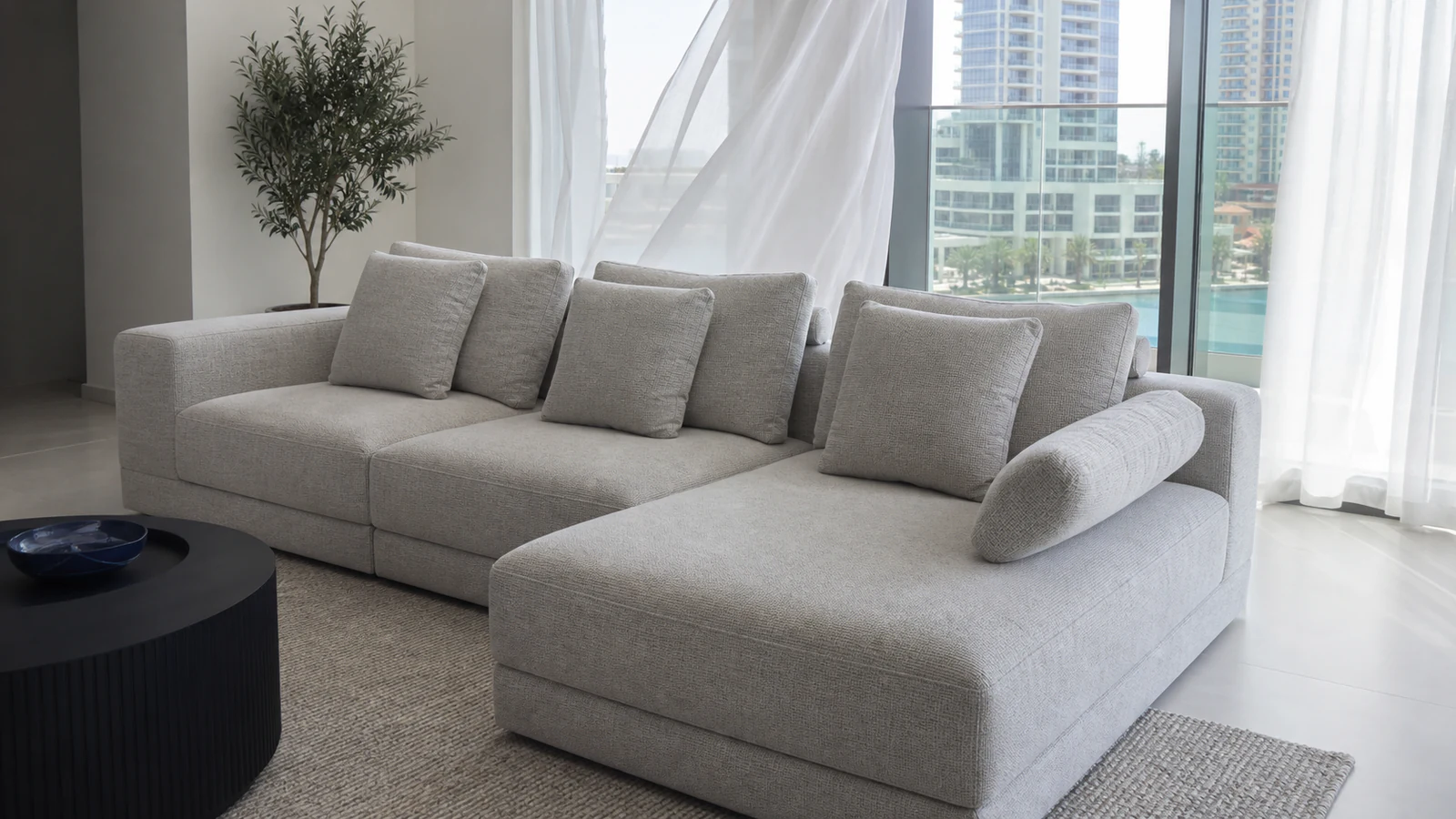
Step 06
Keep the sofa unused until completely dry
Follow the maker's drying instructions and use normal room ventilation. Keep permitted removable cushions separated until fully dry. Do not use steam, heaters or direct sun. Persistent dampness, a new ring, colour transfer, musty odour or recurring stain needs a qualified upholstery cleaner.
Quick answers
Frequently asked questions.
How do you deep clean a sofa without a machine?
Use the maker-approved non-rotary upholstery attachment on dry fabric. Treat one identified spot only when the care guide names an exact product and method, after a hidden test. Do not use baking soda, generic soap, steam or excess liquid. Arrange professional cleaning for broad soil or odour.
How long do you leave baking soda on a couch?
Do not put baking soda on a couch unless the furniture maker explicitly permits it. Powder can lodge in seams or filling, affect fabrics and complicate later cleaning. Follow the sofa care guide's approved dry vacuuming method or use a qualified upholstery cleaner.
Why does my sofa smell musty?
Musty odour can indicate retained moisture, contaminated filling or hidden microbial growth, not surface dust. Stop household cleaning, keep people and pets away from suspect contamination, and arrange upholstery assessment. Fragrance, powder or more liquid can mask the warning and delay drying or remediation.
Sources and review notes
- Herman Miller: Care and Maintenance of Textiles - Furniture-maker guidance on approved vacuum attachments, hidden testing, avoiding steam and oversaturation, complete drying and professional escalation.
- Steelcase Store: Fabric Care FAQs - Furniture-maker instructions for vacuuming, avoiding steam, using a labelled upholstery product and allowing fabric to dry fully.