
DIY / Kitchen
Stuck Kitchen Drawer? Identify and Clean the Runners Safely
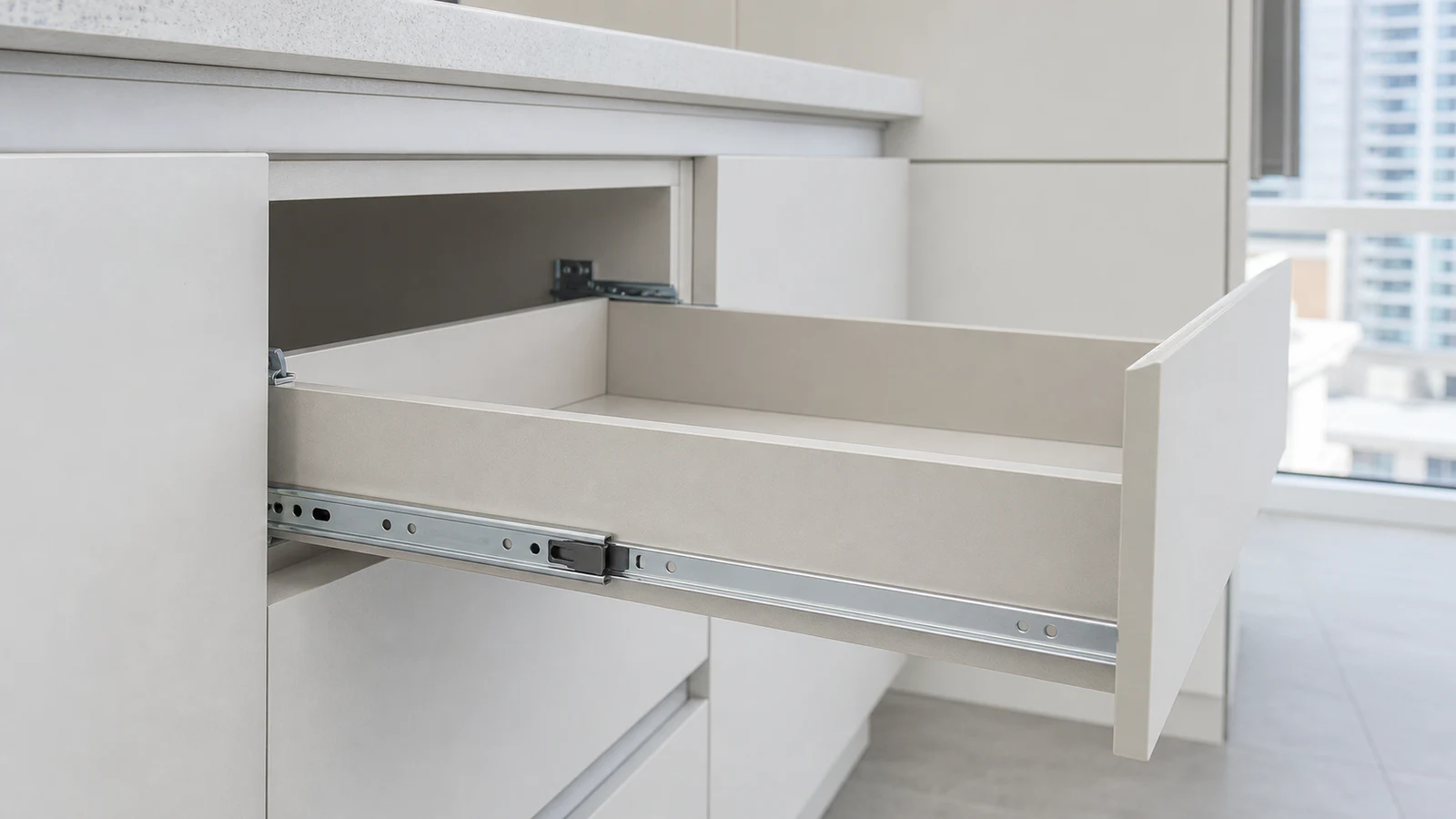
A drawer may stick because of debris, misalignment, swelling, a bent runner or a failed soft-close mechanism. Identify its runner and release method before lifting. Many runners rely on factory grease that must stay in place.
Quick answer
How do you fix a stuck kitchen drawer?
Empty and support the drawer, identify the runner model and follow its removal instructions. Vacuum accessible dust without removing factory grease, keep fingers clear and reinstall exactly as documented. Do not add wax, silicone spray or penetrating oil unless that runner's manufacturer explicitly specifies it. Stop for bent, broken, swollen or unsupported parts.
Identified manual drawer runners with a documented release method / Accessible runner profiles that the maker permits the user to vacuum
Soft-close drawers with visible hydraulic dampers / Bent or visibly broken slides / Sealed or integrated drawer systems requiring factory service
What you need
What you need
Use a narrow vacuum nozzle and the exact runner instructions. Do not buy lubricant by default: factory grease must remain, and mechanisms have model-specific maintenance rules.
- Difficulty
- Easy
- Active time
- 15–30 minutes per drawer
- Total time
- 30 minutes (one drawer with drying time)
Vacuum cleaner
as available
Lint-free cloth or soft brush
1
Screwdriver (Phillips or flat-head, as needed)
as required
Small plastic or wooden spacer (optional, for support)
1
Typical UAE retail ranges. Prices vary by pack and store, and your total is lower when you already own the reusable tools.
Step by step
How to Identify and Clean Kitchen Drawer Runners
Empty the drawer first, then support its weight as you locate and release it from the cabinet body.
-
Step 01
Empty and inspect the drawer
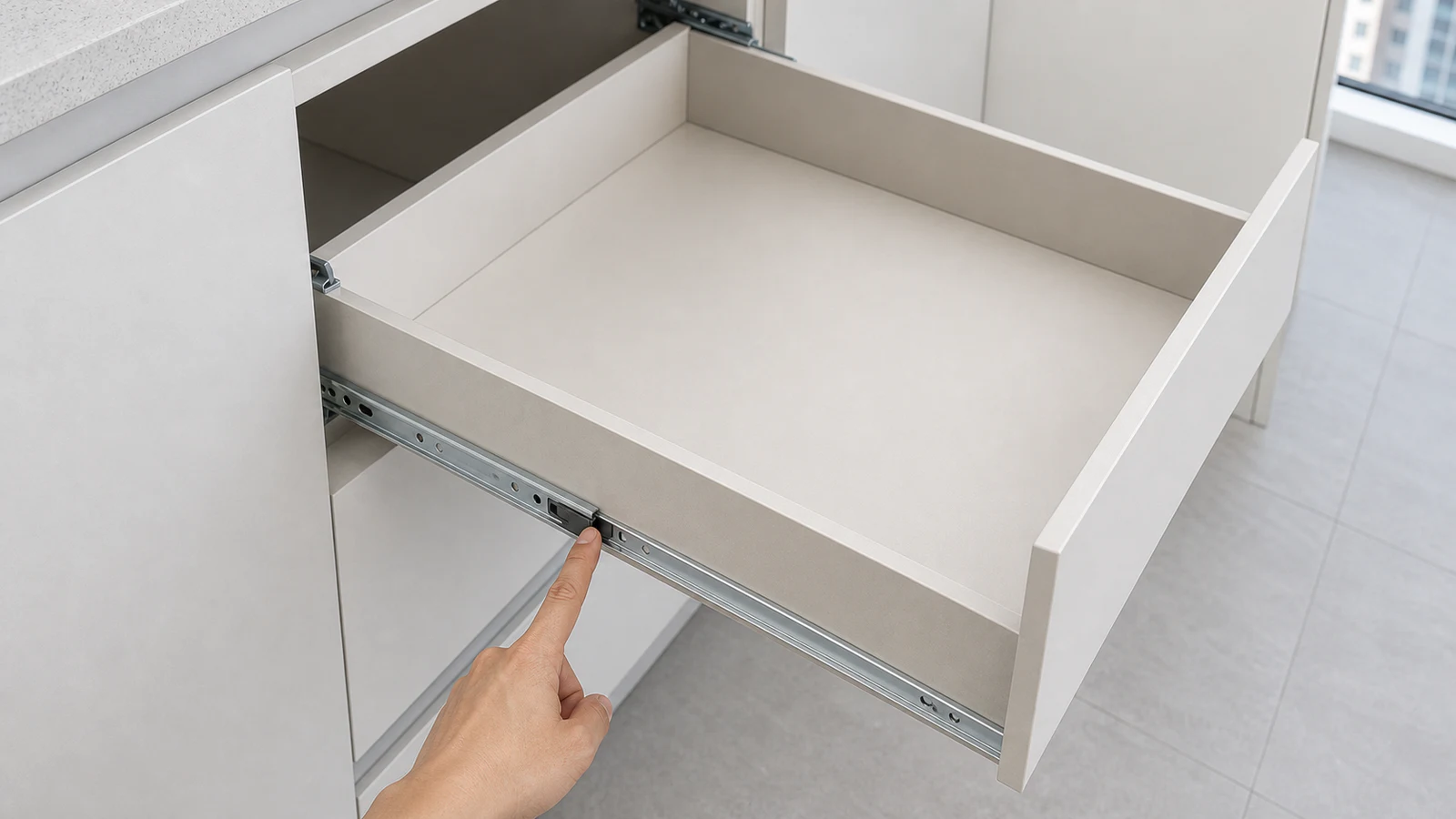
Empty and support the drawer. Photograph the runners and find their model instructions. Release tabs differ; use only the documented direction. If the drawer cannot be supported or the mechanism is unknown, do not remove it.
-
Step 02
Release and remove the drawer
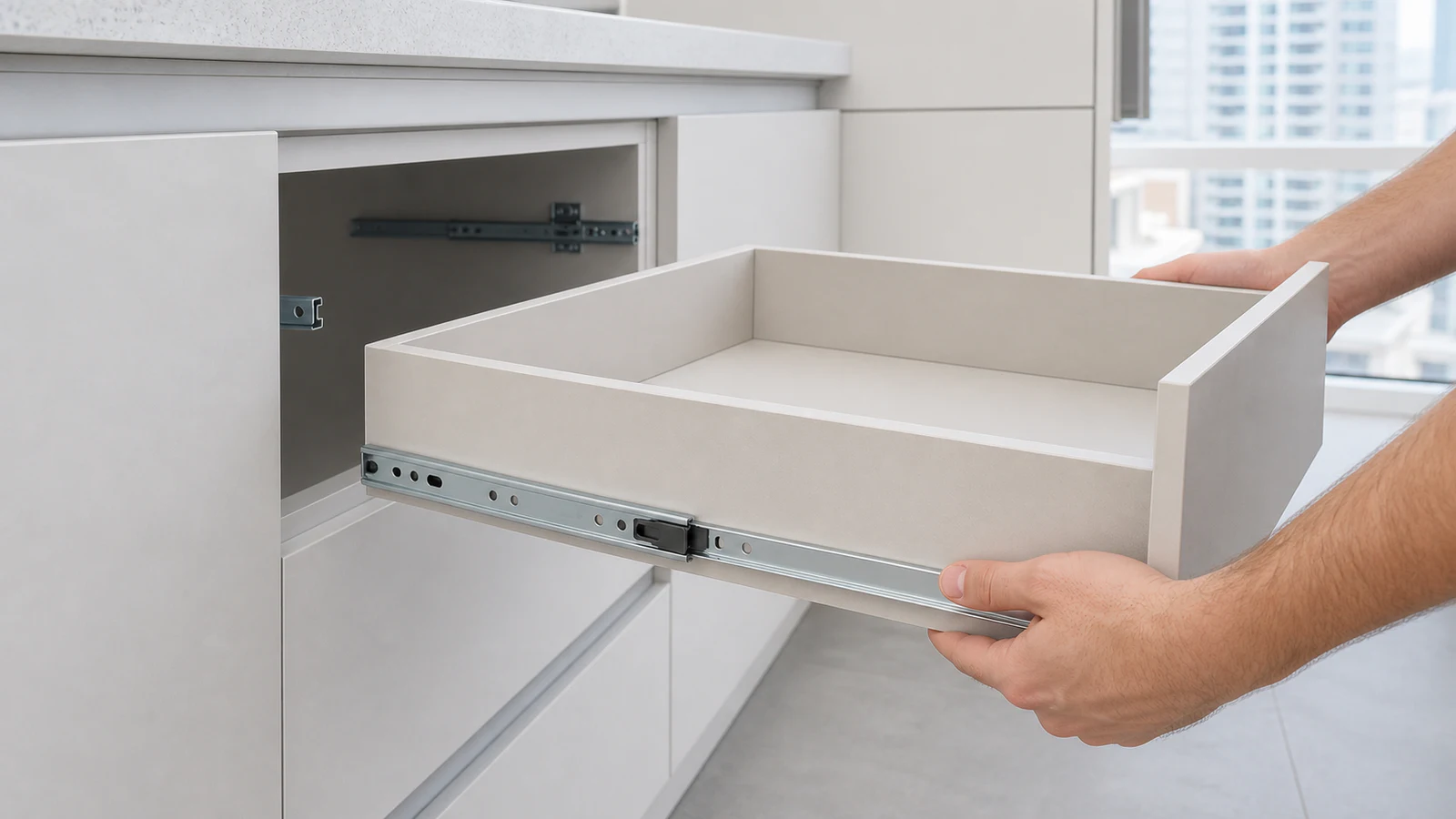
Have another adult support a large drawer. Operate the releases exactly as documented, withdraw it without force and set it on a stable surface. Keep fingers clear. Stop if a release binds, a runner bends or the drawer remains attached.
-
Step 03
Vacuum and wipe the cabinet runners
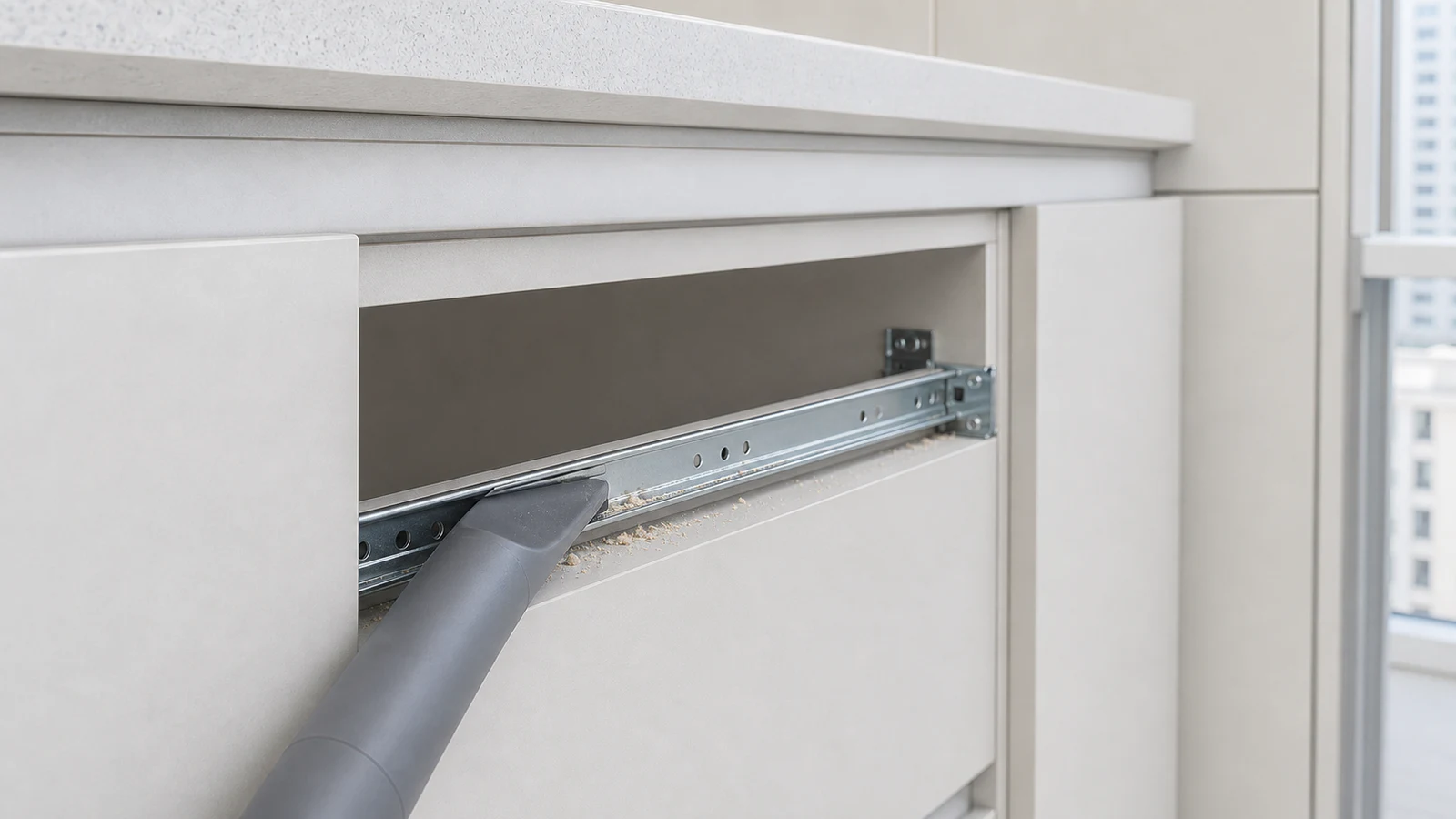
Use a vacuum nozzle to remove loose dust and crumbs from accessible runner profiles. Do not wipe, dissolve or scrape off factory grease, and keep liquid and spray away from food storage and soft-close parts. Follow the maker's care sheet if more than dry vacuuming is required.
-
Step 04
Inspect before adding any lubricant
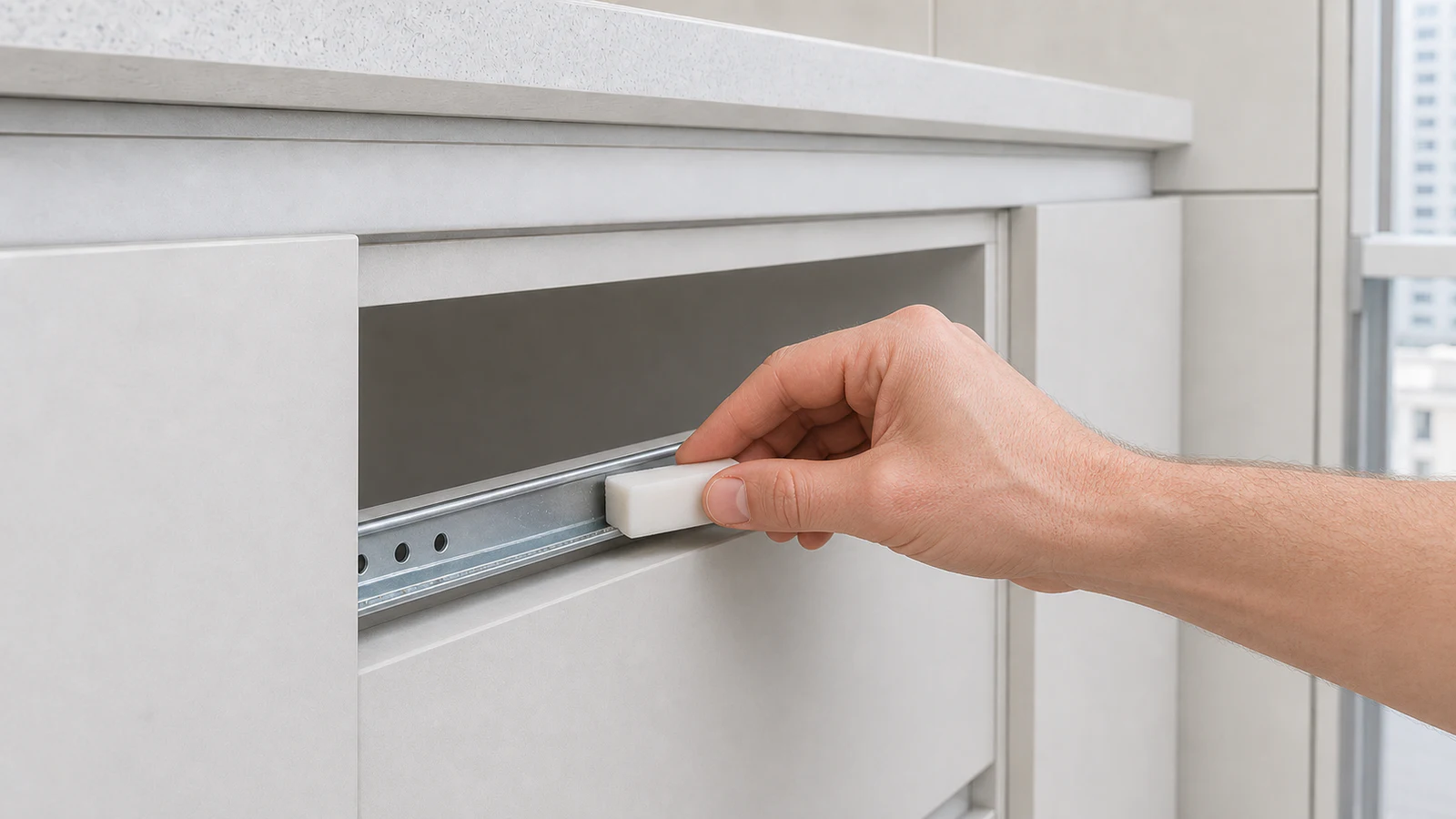
Check that screws are present and runner parts are straight, without adjusting them yet. Do not add paraffin wax, silicone spray or penetrating oil. Lubricate only if the exact runner manufacturer specifies a named product and application point; otherwise preserve the factory grease and continue to reinstallation.
-
Step 05
Reinstall and test the drawer
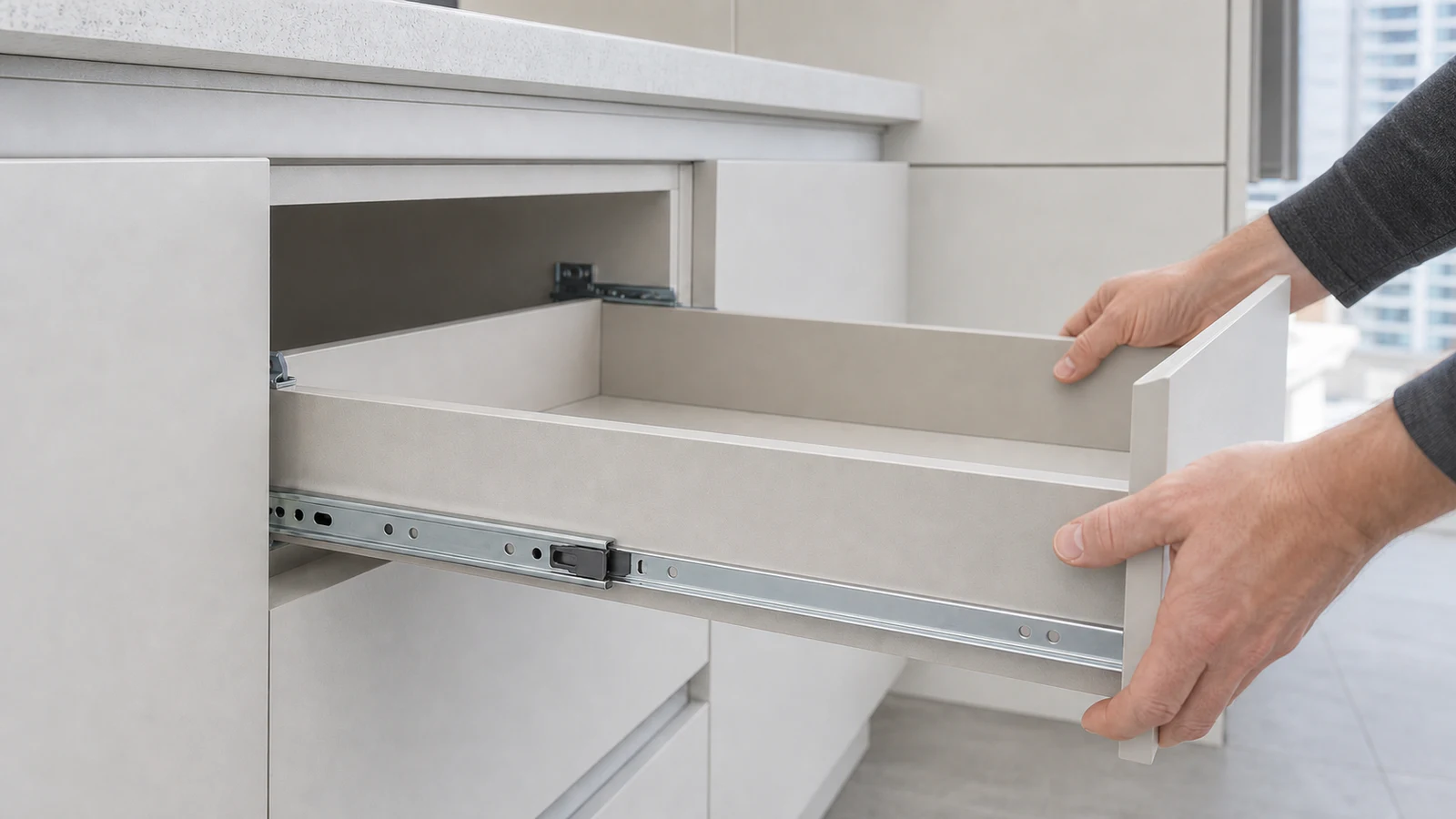
Reinstall the supported drawer exactly as the model instructions show and confirm both sides engage before releasing its weight. Test it empty. Do not tighten or adjust screws unless the instructions identify them. Stop for uneven travel, failed soft-close action, rubbing, looseness or a drawer that will not lock into both runners.
Quick answers
Frequently asked questions.
How do you remove a drawer from its slides?
Release methods vary. Empty and support the drawer, identify the runner model and follow its assembly instructions; tabs may press, pull or use locking devices in different locations. Never force an unfamiliar release. Stop if the drawer is heavy, unsupported, partly attached or fitted with an undocumented powered mechanism.
What can I use to lubricate drawer runners?
Do not choose a lubricant by category. Many furniture runners are maintenance-free and rely on factory grease that should remain in place. Use only the exact product and application point specified for the identified runner. Never substitute cooking oil, candle wax, silicone spray or penetrating oil.
Why does my drawer keep sticking?
Possible causes include debris, misalignment, swelling, overload, a bent runner or a failed damper; inspection cannot assume which. Vacuum accessible debris and test the empty drawer. Stop for bent or broken hardware, swollen board, failed soft-close action or persistent uneven travel and contact the maker or cabinet technician.
Sources and review notes
- Hettich care advice for furniture fittings - Manufacturer guidance to vacuum drawer runners and leave factory-applied grease on moving components.
- Blum runner assembly instructions - Model-specific removal and installation instructions for concealed runner systems.
- Blum cleaning and maintenance manual - Manufacturer care guidance for cleaning fittings without harsh chemicals or abrasives.