
DIY / Floors
Squeaky Floating Floor: Talcum Powder in the Seams
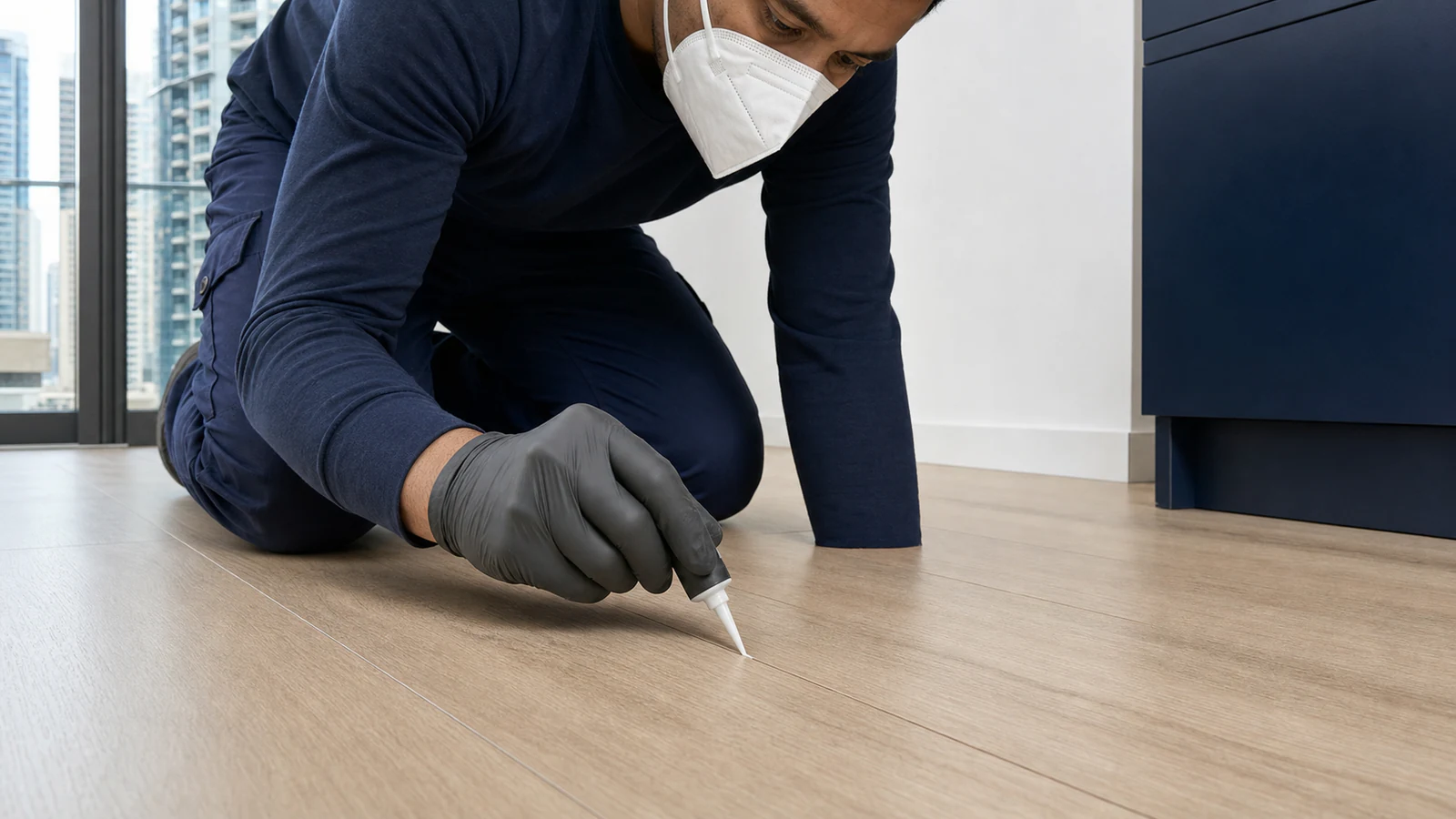
Squeaking floating floors are frustrating but usually fixable without professional help. Most creaks come from board movement against adjacent planks. This method uses a dry lubricant applied directly to the seams, reducing friction and often eliminating the noise.
Quick answer
Why does my laminate floor creak when I walk?
A floating floor may creak from plank friction, tight expansion gaps, uneven subfloor or moisture. Use dry seam lubricant only if the maker approves that exact product and method. Stop for sinking, lifting, separation, movement, dampness or noise near plumbing; those causes need inspection.
Laminate floating floors / Engineered wood floating floors / Click-lock or glue-down floating floors with dry joints
Solid hardwood nailed to subfloor / Wet or damp joints / Floors with visible separation or movement / Floors with warranty restrictions on treatment / Sealed or waterproofed seams
What you need
What you need
Use only a dry lubricant approved by your flooring manufacturer—check the warranty or installation guide first. Avoid perfumed cosmetic talc; purchase flooring-grade products or graphite powder instead.
- Difficulty
- Easy
- Active time
- 15 minutes
- Total time
- 20 minutes including drying and vacuuming
Floor-maker-approved dry seam lubricant only
Small original container with a narrow applicator
Soft-bristled brush (1–2 inches wide)
1
Handheld vacuum or microfibre cloth
1
Painter's tape (optional, for marking boards)
1 roll
Typical UAE retail ranges. Prices vary by pack and store, and your total is lower when you already own the reusable tools.
Step by step
How to Silence a Squeaky Floating Floor with Talcum Powder
First, ensure your floor is dry and check your warranty, then locate the squeaky board and apply the powder carefully to the seams.
-
Step 01
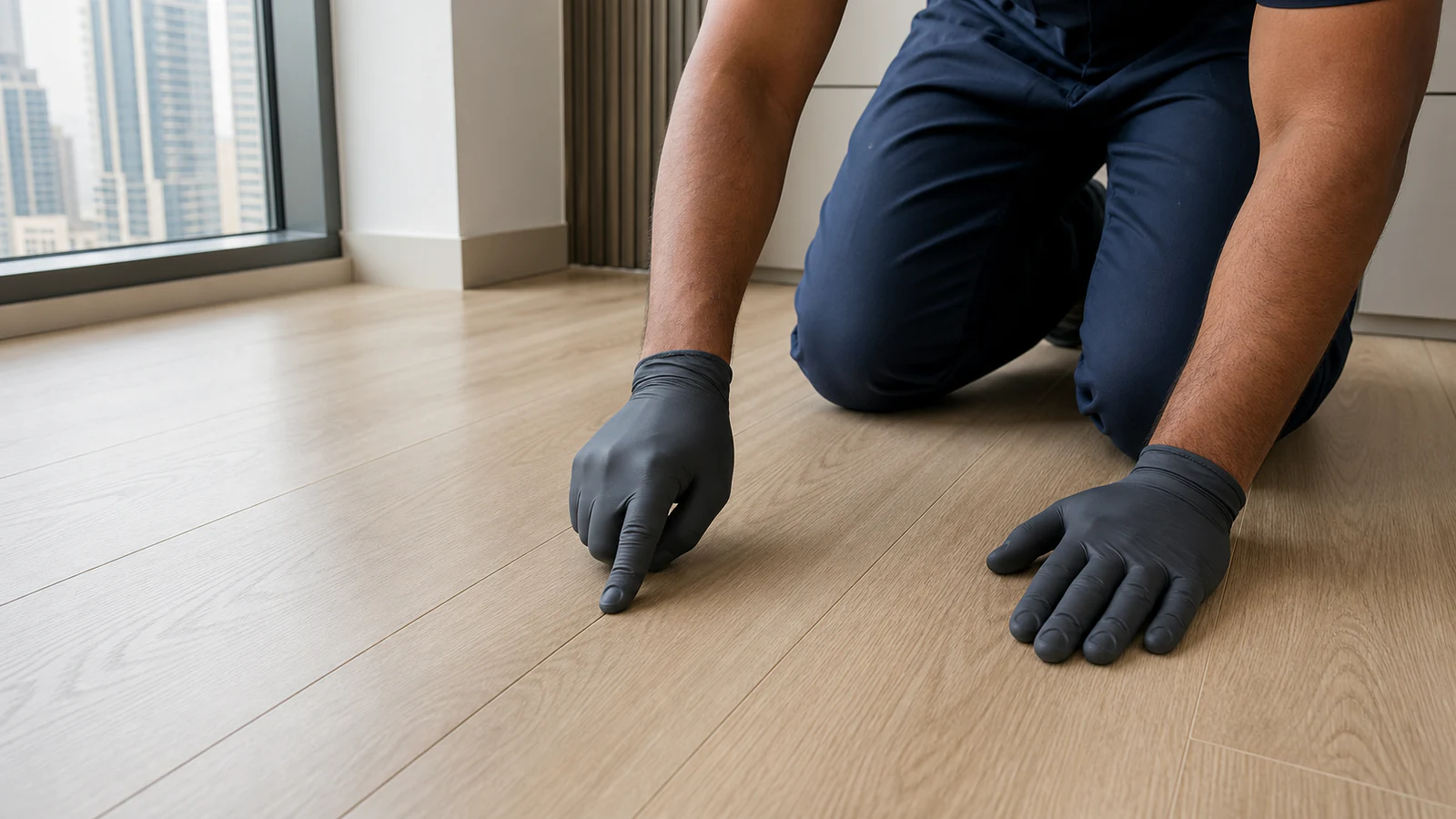
Check warranty and confirm dry conditions
Confirm the floor type, warranty and maker-approved dry lubricant. Check for dry joints with no movement, swelling, lifted edges, odour or nearby leak. If the maker gives no approved product and method, stop.
-
Step 02
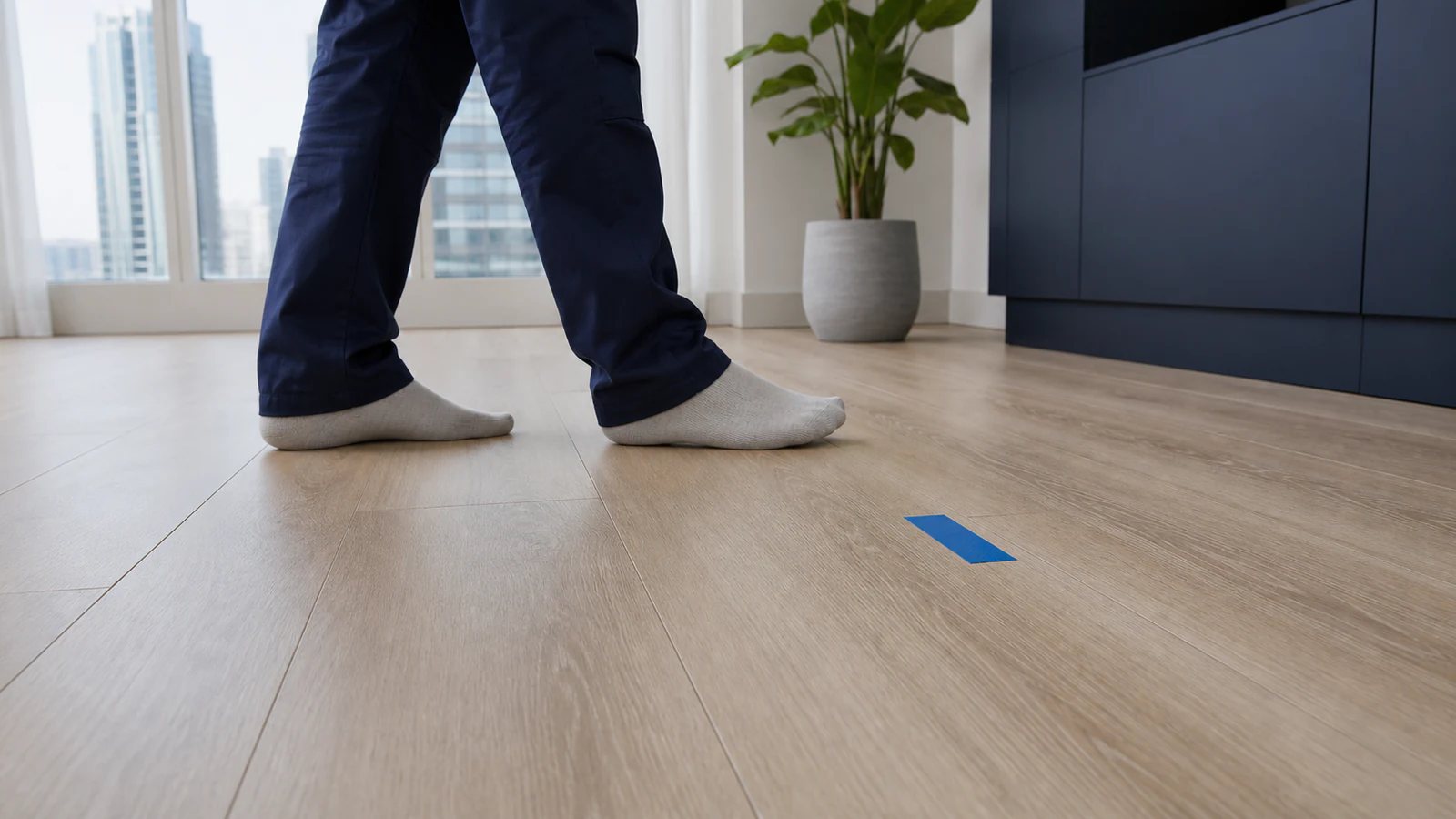
Locate the squeaky board by walking slowly
Walk slowly across the floor in socks or soft shoes, concentrating on the area where you hear noise. Pinpoint the exact plank by stepping on different boards methodically. When you isolate the squeaky board, mark it with painter's tape.
-
Step 03
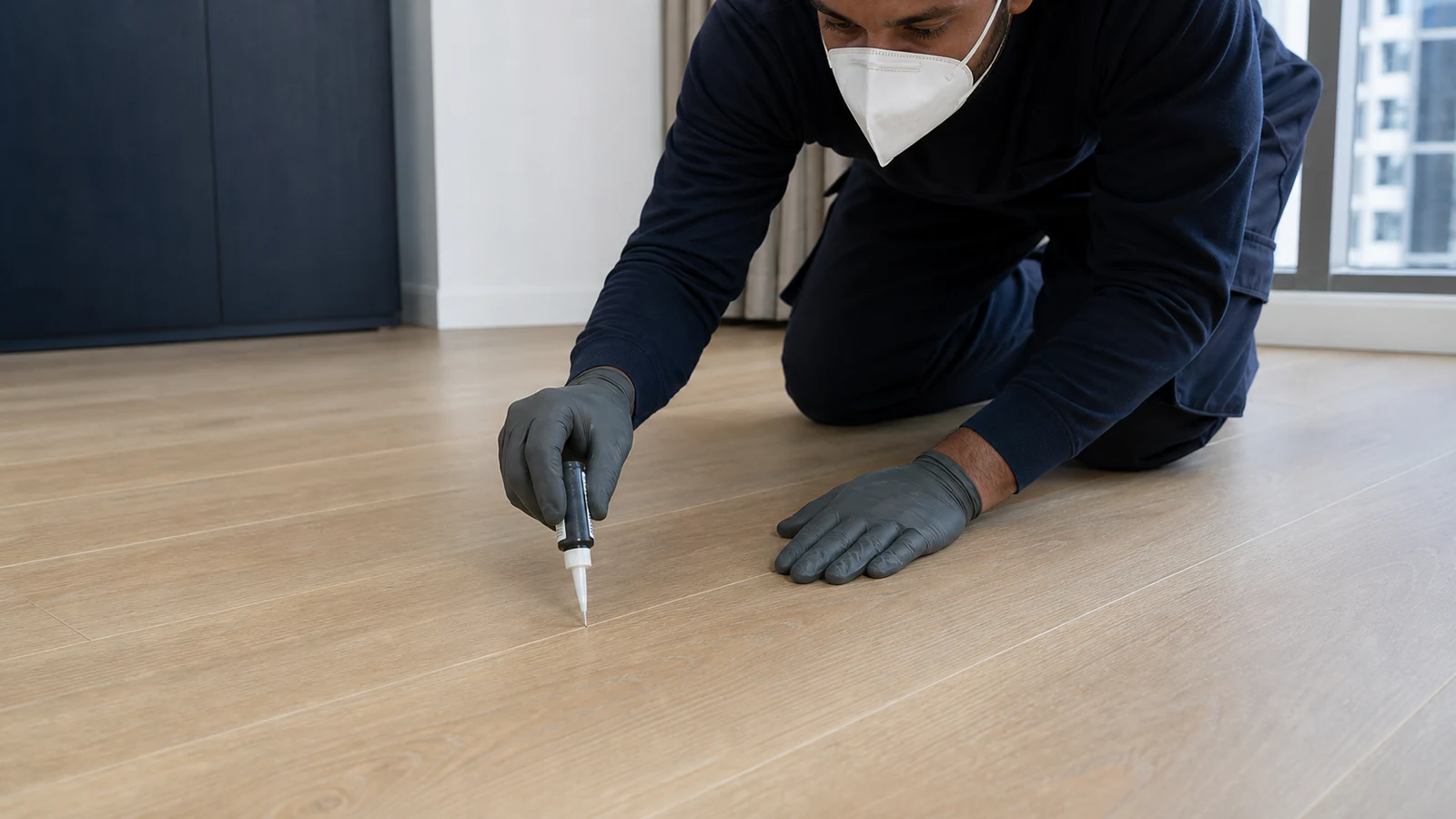
Apply a tiny controlled amount at the seam
Wear a well-fitted P2/N95 respirator and follow the label. Hold the original narrow applicator at one seam and release the smallest directed amount without airborne dust. Keep children and pets out, then close it immediately.
-
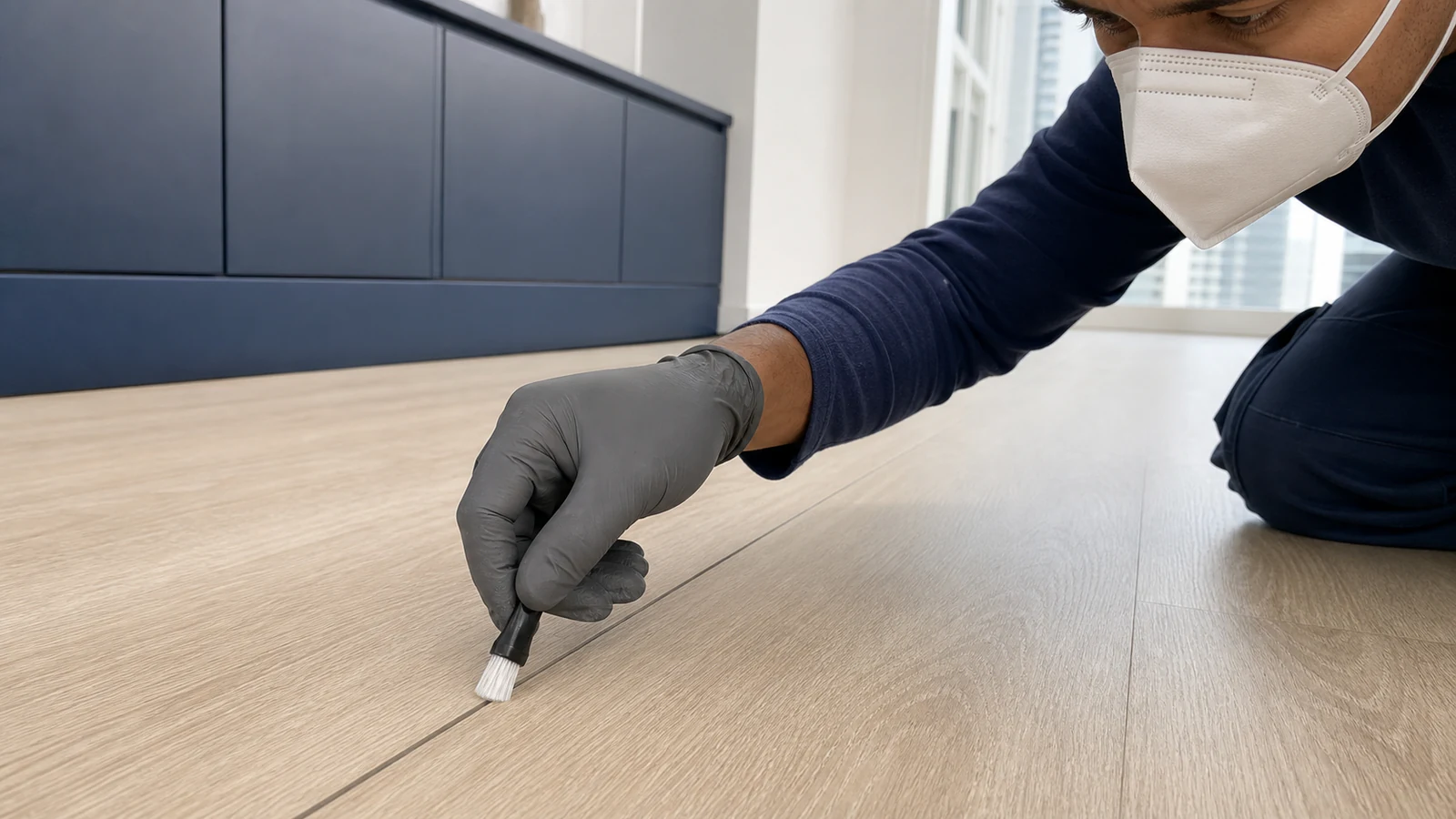
Step 04
Work the powder into the seam with a brush
Guide the tiny amount into the seam with one light pass of a soft brush. Do not scrub, widen the joint or add product while residue remains. Stop if the seam opens, chips or rejects the powder.
-
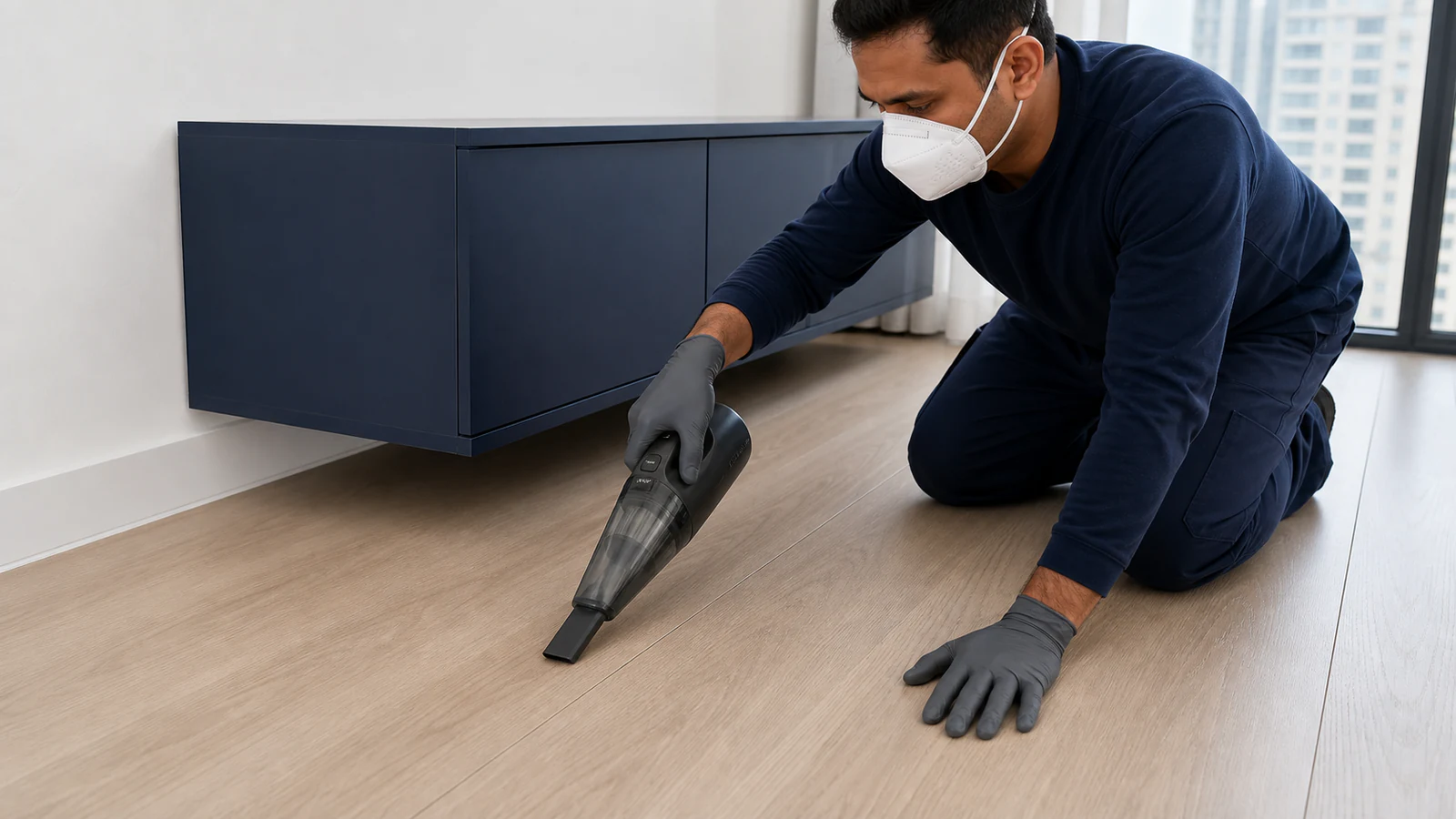
Step 05
Remove every trace from the walking surface
Follow the label's cleanup method. Lift residue with a dry microfibre cloth or a sealed HEPA vacuum approved for fine powder. Inspect from several angles; no slippery film or visible dust may remain.
-
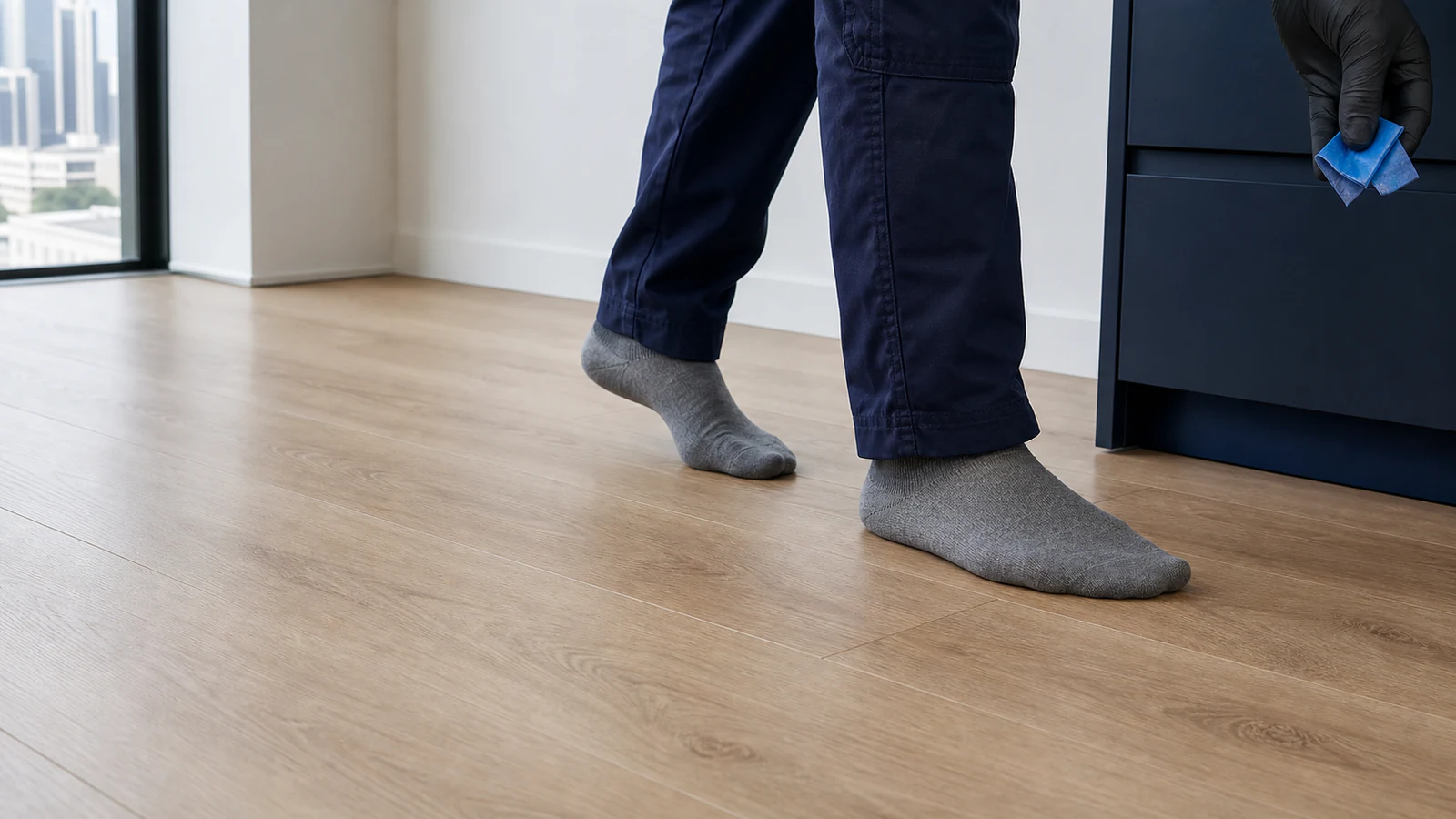
Step 06
Test the floor and note results
After cleanup, walk slowly across the board in soft shoes. Stop for slipping, sinking, lifting, separation or movement. Returning or unchanged noise needs flooring or building maintenance assessment, not repeated powder.
Quick answers
Frequently asked questions.
Why does my laminate floor creak when I walk?
Creaking can come from plank friction, tight expansion gaps, an uneven subfloor, a damaged locking edge or moisture. Sound alone cannot identify the cause. Stop for sinking, lifting, separation, movement, dampness, odour or noise near plumbing and ask flooring or building maintenance to inspect it.
Does talcum powder stop floor squeaks?
A maker-approved dry seam lubricant may reduce friction noise, but household talc is not a universal flooring product. Powder cannot correct moisture, subfloor movement, tight expansion gaps or damaged joints. Use only the exact original labelled product and method approved for the installed floor, and apply it once sparingly.
Is a creaking floor a problem?
An occasional sound may reflect normal movement, but persistent or changing creaks need context. Soft spots, sinking, lifting, opening seams, movement, damp odour or noise near plumbing can indicate installation or moisture problems. Stop using the area if it feels unstable and request an inspection.