
DIY / Floors
Dull, Filmy Floor Tiles? The Problem Is the Soap
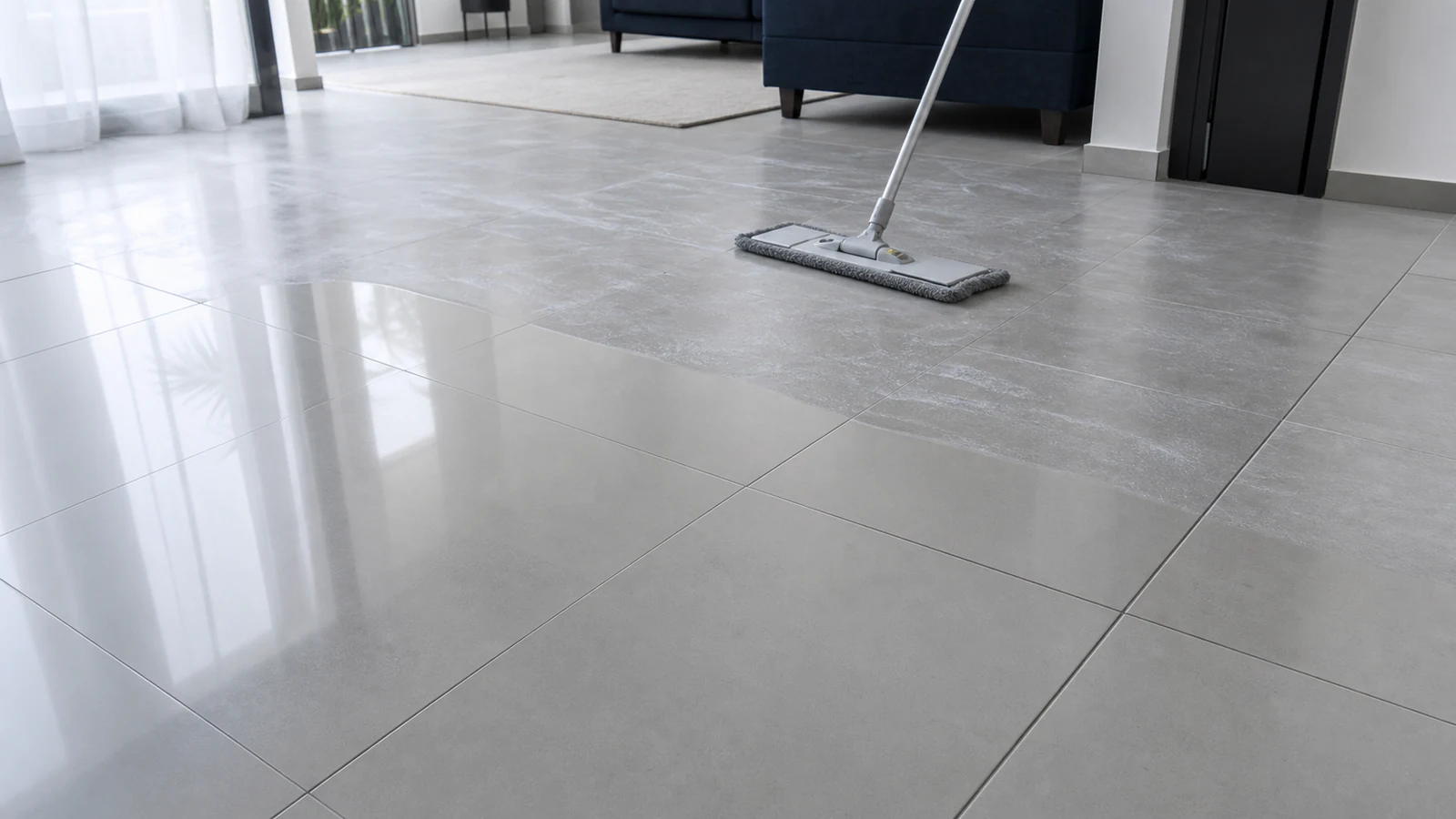
A dull floor that feels sticky or filmy isn't necessarily dirty. Years of standard mopping often leave behind layers of detergent residue that attract dust and dull the finish. The solution is a residue-stripping rinse, not more soap. This guide shows you how to identify the problem, test your floor safely, and restore clarity without damaging grout or sealers.
Quick answer
Why is my floor sticky after mopping?
Detergent residue builds up on tiles over time and traps dust, making floors dull and tacky. Remove it using the two-bucket rinse method with plain water or a neutral tile cleaner approved by your flooring maker. Test on a hidden corner first.
ceramic tiles / porcelain tiles
marble / limestone / terrazzo / travertine / cement tile / natural stone / sealed or unsealed stone with unknown composition / vinyl / unsealed grout sensitive to acid
What you need
What you need
Most residue removal can be done with plain water and a two-bucket system. If plain water doesn't clear the film, use a neutral pH tile cleaner from your flooring maker or a commercial residue remover. Do not use vinegar or acid unless you have confirmed your floor is ceramic or porcelain and grout is sealed or epoxy.
- Difficulty
- Easy
- Active time
- 30–45 minutes
- Total time
- 1 hour including drying
Two buckets (at least 10 litres each)
2 buckets
Microfibre mop head or lint-free mop pads
2 pads for rotation
Warm water
8–10 litres total
Neutral tile cleaner or residue remover (optional, if water alone is insufficient)
follow product label
Squeegee or clean dry towels
1 squeegee or 3–4 towels
Rubber gloves
1 pair
Typical UAE retail ranges. Prices vary by pack and store, and your total is lower when you already own the reusable tools.
Step by step
How to Remove Soap Residue and Restore Dull Floor Tiles
Begin by identifying your tile type and testing the cleaning method on a hidden corner before treating the whole floor.
-
Step 01
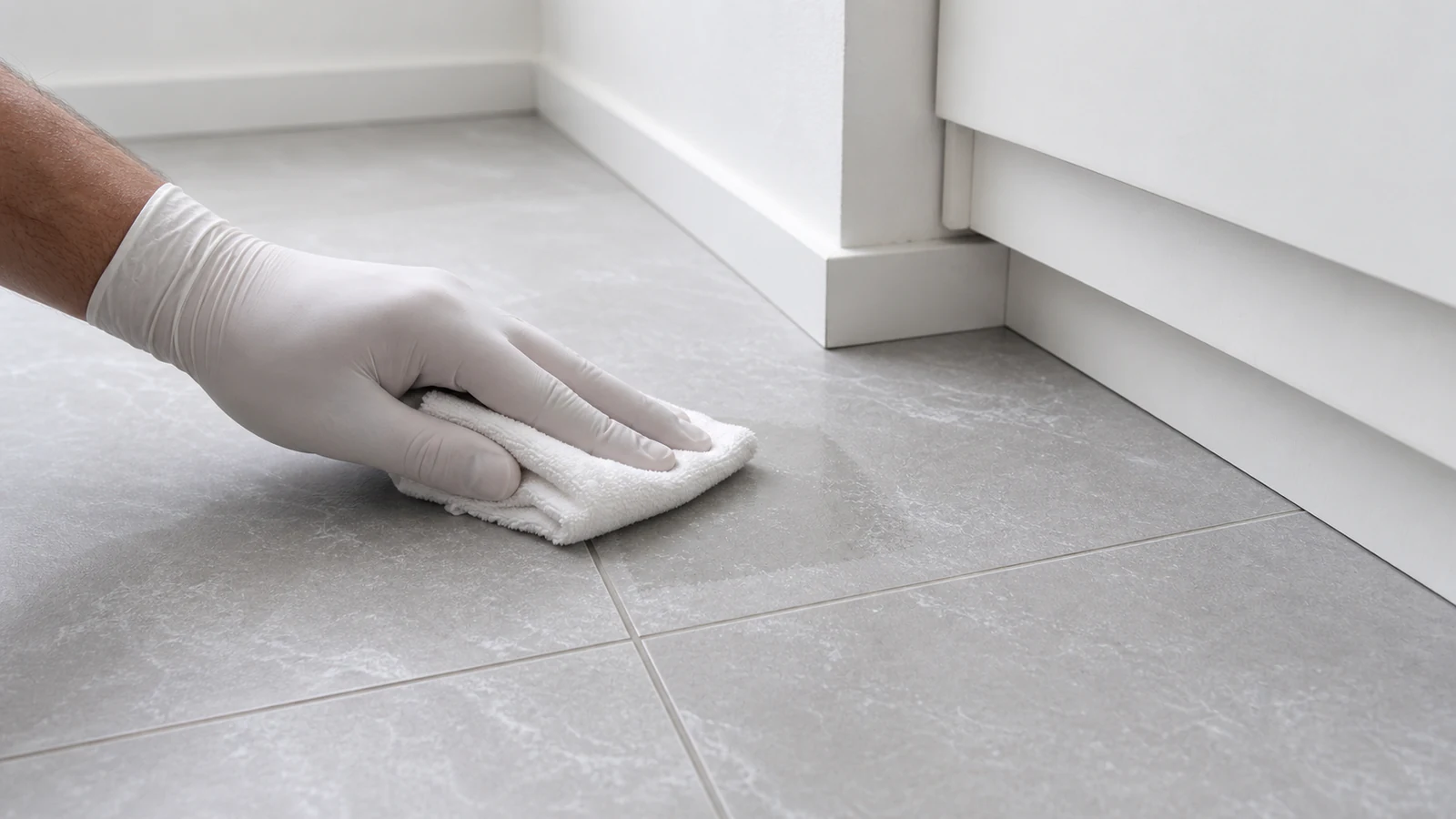
Identify your tile type and test compatibility
Look at an inconspicuous area of your floor or grout. Ceramic and porcelain are safe for water-based or neutral cleaners. If your floor is natural stone or you are unsure, do not use acid-based products. Test any cleaning solution on a small hidden corner first. Apply, wait 5 minutes, rinse and observe for discolouration.
-
Step 02
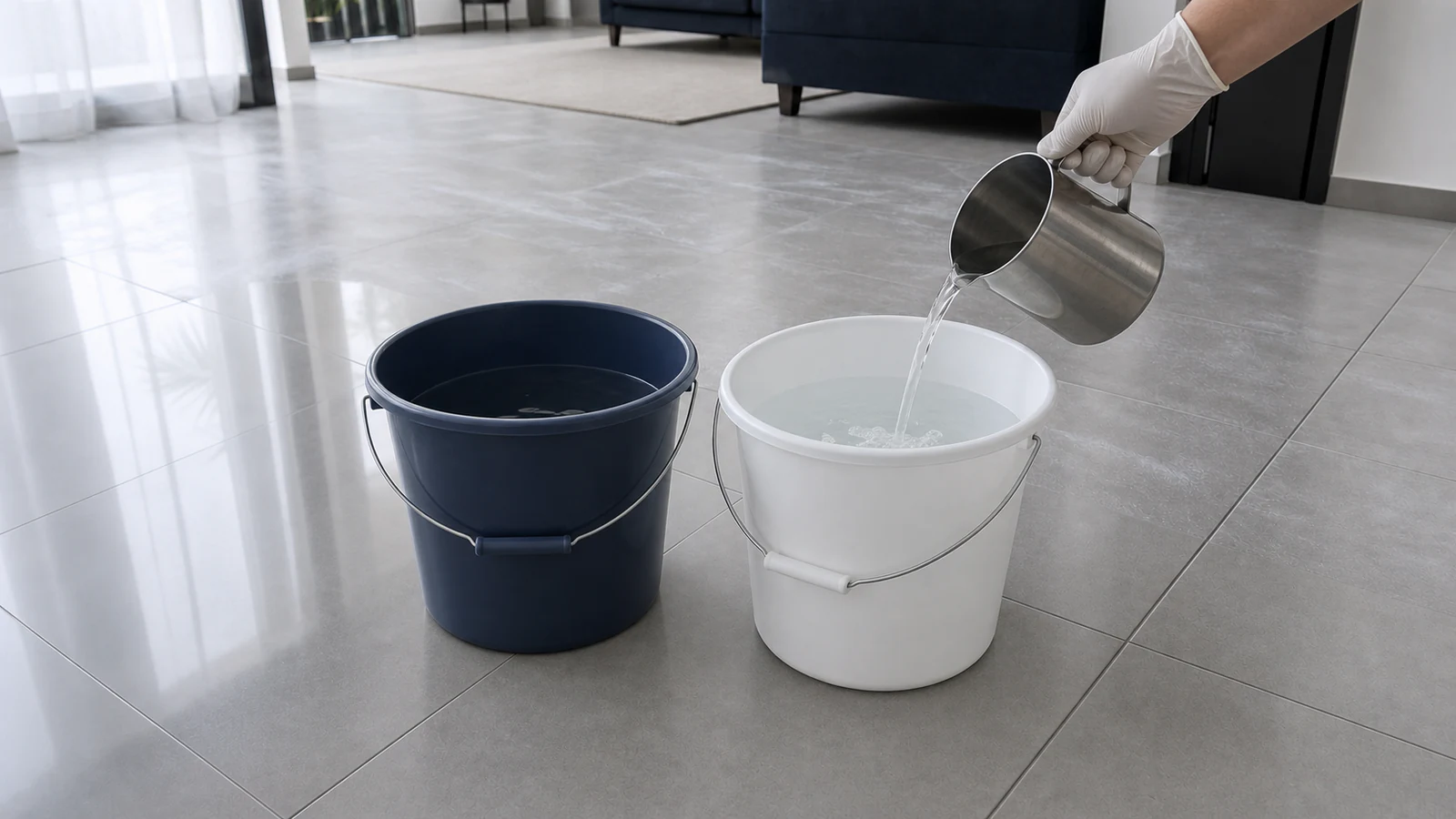
Fill two buckets with clean water and plain rinse system
Fill one bucket with warm water (approximately 40 °C—comfortable to touch but not hot). Fill the second bucket with the same warm water. This two-bucket method allows you to rinse your mop in clean water between passes instead of pushing dirty, soapy water around the floor.
-
Step 03
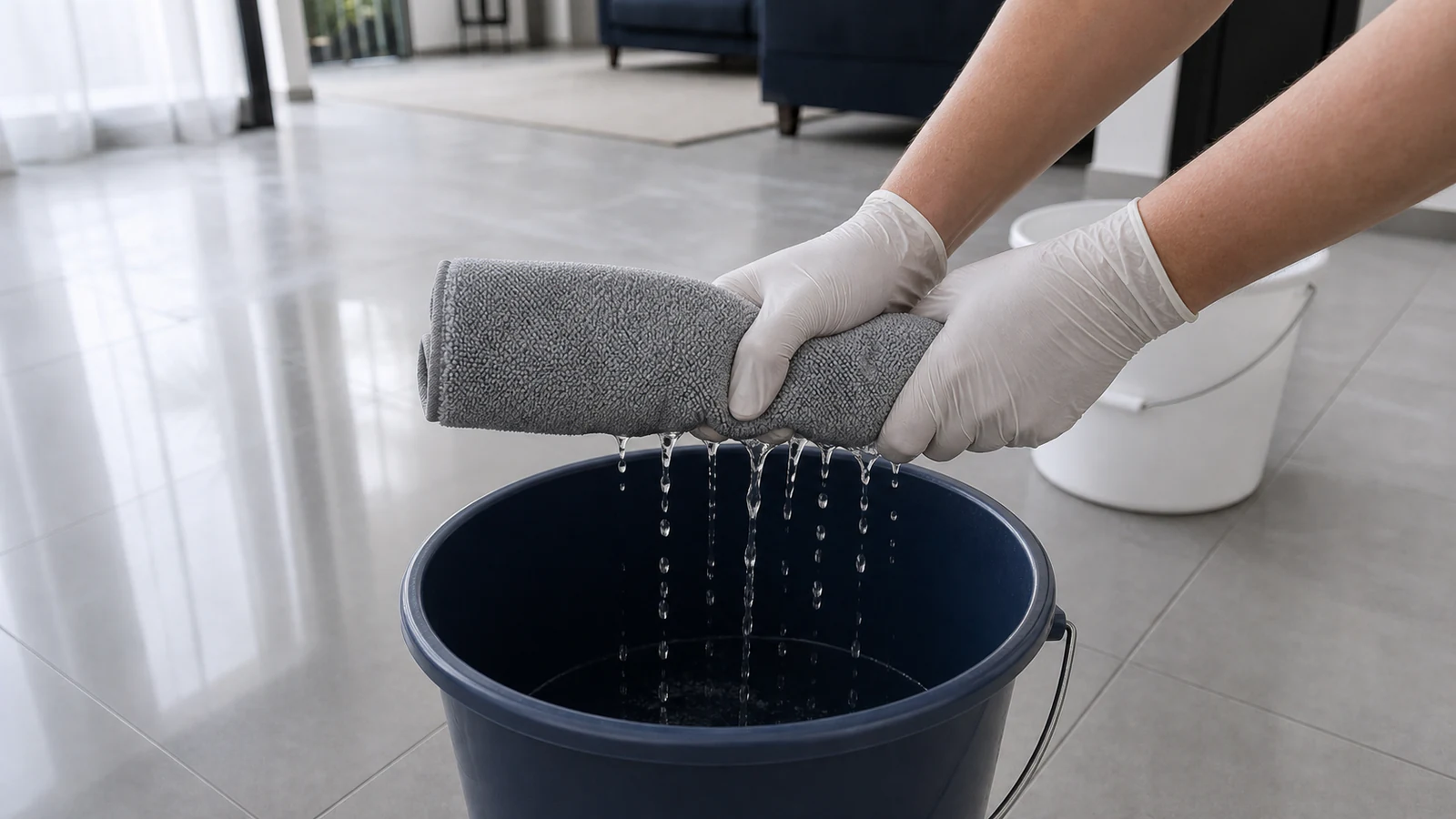
Dip and wring the mop in the first bucket
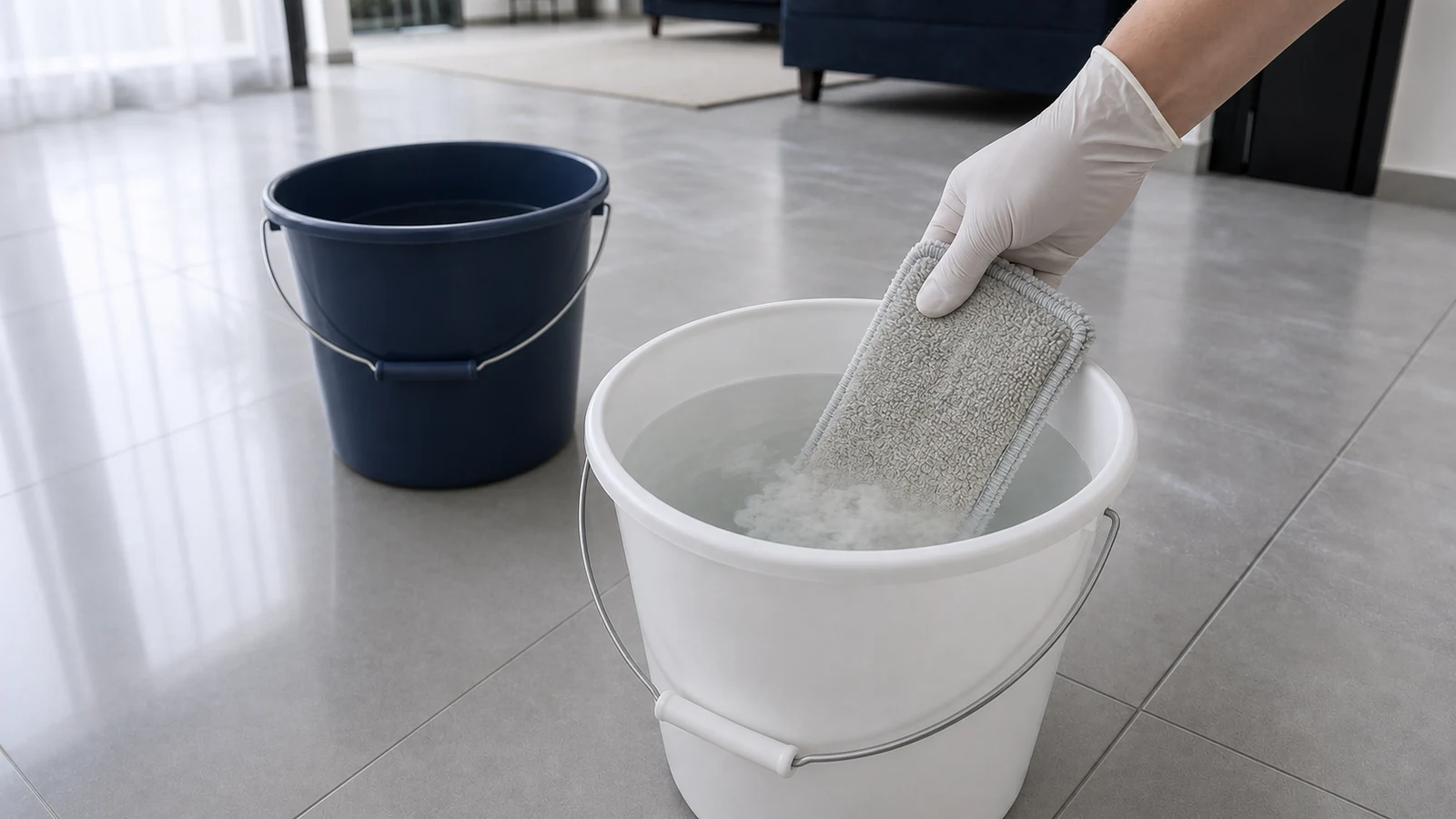
Immerse your microfibre mop pad in the first bucket. Wring it out firmly so it is damp, not dripping—excess water can puddle and take longer to dry. Begin mopping the floor in overlapping passes, working in one direction toward a door or exit. Do not let water sit on the floor.
-
Step 04
Rinse the mop in the second bucket between passes
After mopping a 1–2 square metre section, plunge the mop pad into the second bucket to remove loosened residue. Wring it out fully. This prevents you from redistributing old soap back onto clean tiles. Repeat: dip in cleaning bucket, mop section, rinse in clean bucket, wring, move next.
-
Step 05
Complete one full pass and inspect for remaining residue
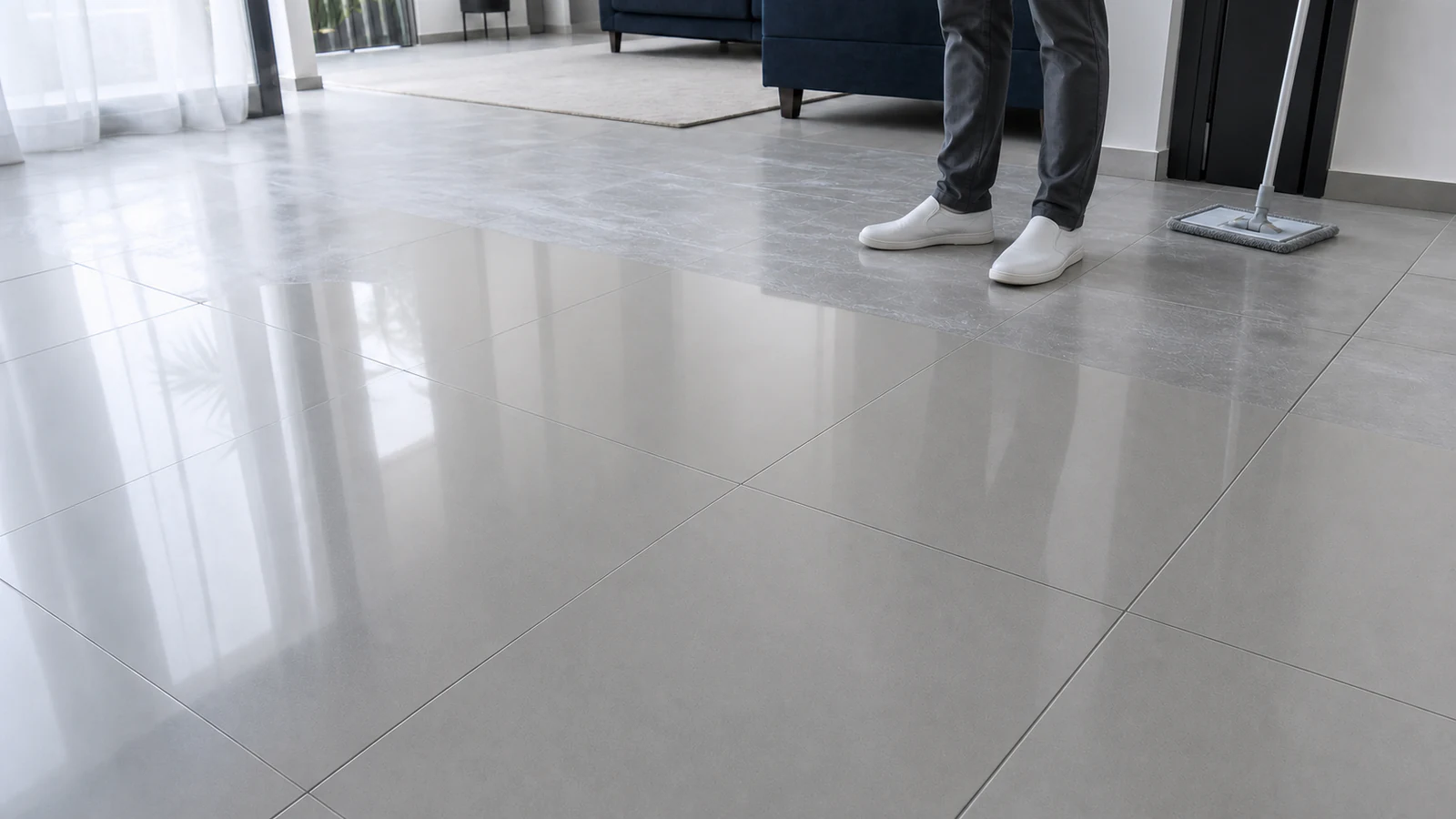
Finish mopping the entire floor using the two-bucket method. Once complete, walk across the floor and observe the shine. If tiles are still dull or feel sticky, residue remains. Empty and refill both buckets with fresh water and repeat one additional pass.
-
Step 06
Dry the floor to prevent slip hazard and water spots
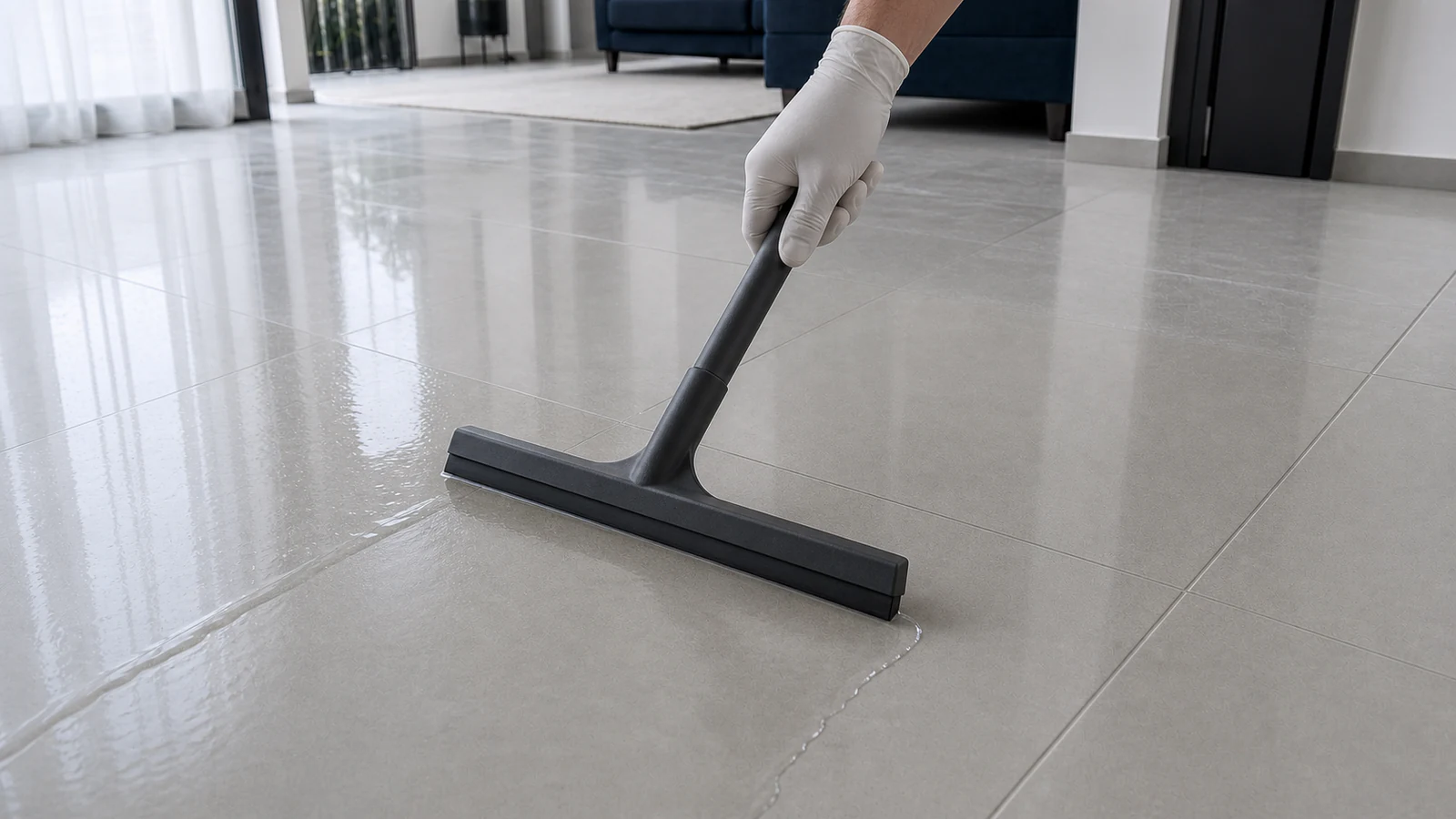
Once mopping is complete, use a squeegee or dry towels to remove standing water. Push water toward a drain or wipe systematically with clean, dry towels. Wet tiles are a slip hazard, and remaining water can leave mineral spots. Ensure the floor is visibly dry before allowing foot traffic.
Finished result
What success looks like
A successfully cleaned floor will feel smooth to the touch, not sticky or tacky, and will reflect light evenly without visible haze or cloudy patches.
Tiles feel smooth and dry, not slippery or tacky.
Light reflects evenly across the floor without dull patches.
No visible residue film or white haze on tile surface.
The floor is completely dry before foot traffic resumes.
Troubleshooting
When the first pass does not solve it.
Floor is still dull after two complete two-bucket passes
The dullness may be etching, wax or sealant buildup, embedded dirt, or wear from traffic rather than detergent residue.
Stop further cleaning attempts. Consult the flooring maker's care guide or a professional floor cleaner. Continuing to scrub may worsen etching or damage the sealer.
Tiles feel more slippery after cleaning
Residue buildup can grip feet; removing it reveals the natural gloss of the tile. This is normal. However, if the floor feels dangerously slippery, ensure it is fully dry before assessing.
Allow the floor to dry completely and keep people off it. If slipperiness persists, stop using the area and ask the tile or sealer maker or a qualified flooring professional to assess residue and slip resistance. Do not apply a coating or add soap.
Water seems to sit on the floor instead of absorbing or flowing
Hydrophobic residue or sealant on the tile surface is causing water beading, indicating detergent or wax residue remains.
Repeat the two-bucket rinse method using fresh water. If the problem persists after a third pass, consult the tile maker about sealant compatibility.
Quick answers
Frequently asked questions.
Why is my floor sticky after mopping?
Years of standard mopping leave detergent buildup on tiles, which traps dust and dirt. This residue film feels tacky and dull. It is not dirtiness; it signals too much soap in your cleaning routine. Stop if you find surface becomes more matte, tacky or slippery.
Can you mop tiles with vinegar?
Do not use vinegar as a general tile-floor cleaner. Tile Council guidance explains that acids attack cement grout, while stone and some sealers can also be etched or stripped. Use plain water or a neutral-pH cleaner approved by the exact tile, grout and sealer makers, then rinse completely.
How much detergent should go in the mop bucket?
Use the exact dilution printed on the approved cleaner label and measure it. More product leaves a film; less may not clean as tested. Do not improvise based on water hardness. If the floor system is unknown, start with a hidden plain-water test and obtain the maker's care instructions.
How do I know if my floor is ceramic or porcelain?
Porcelain is denser, less porous and more durable than ceramic. Both are safe for water and neutral cleaners. If unsure, contact your flooring installer or developer with a photo of a corner. Stop if you find loose or cracked tiles, crumbling grout or water ingress.
Sources and review notes
- Tile Council of North America: Cleaning Grout - Explains soap-film residue, thorough rinsing and why acids such as vinegar attack cement grout.
- MAPEI: UltraCare Concentrated Tile & Grout Cleaner - Manufacturer guidance for a neutral-pH cleaner on compatible tile, natural stone and grout when used as directed.