
DIY / Doors, Windows & Cabinets
Squeaky Door Hinges — and Why WD-40 Isn't the Answer
A squeaky door hinge is one of the easiest DIY fixes in any home. WD-40 is a cleaner and water displacer—not a lubricant—so the squeak returns within days. Machine oil or silicone spray applied to the hinge pin stops the noise permanently.
Quick answer
Is WD-40 good for squeaky hinges?
WD-40 is a brand with several products; its Multi-Use formula is not the same as a dedicated hinge lubricant and may only quiet noise temporarily. Check the door or hinge maker, then use one tiny drop of an explicitly approved lubricant. Stop for loose, worn, fire-rated, security or self-closing hinges.
Interior door hinges / Cabinet hinges / Any accessible standard hinge with a removable pin
Spring-loaded or concealed hinges / Fire-rated door hinges / Security hinges / Hinges on heavily sagging or misaligned doors
What you need
What you need
Gather the listed materials before you start.
- Difficulty
- Easy
- Active time
- 3–5 minutes per door
- Total time
- 5–10 minutes per door (includes drying)
Hinge-maker-approved lubricant with precision dropper
1 small original container
Lint-free cotton cloth
1
Typical UAE retail ranges. Prices vary by pack and store, and your total is lower when you already own the reusable tools.
Step by step
How to Fix Squeaky Door Hinges with Oil
Work in order and check the result after each step.
-
Step 01
Inspect the hinge type and test your lubricant
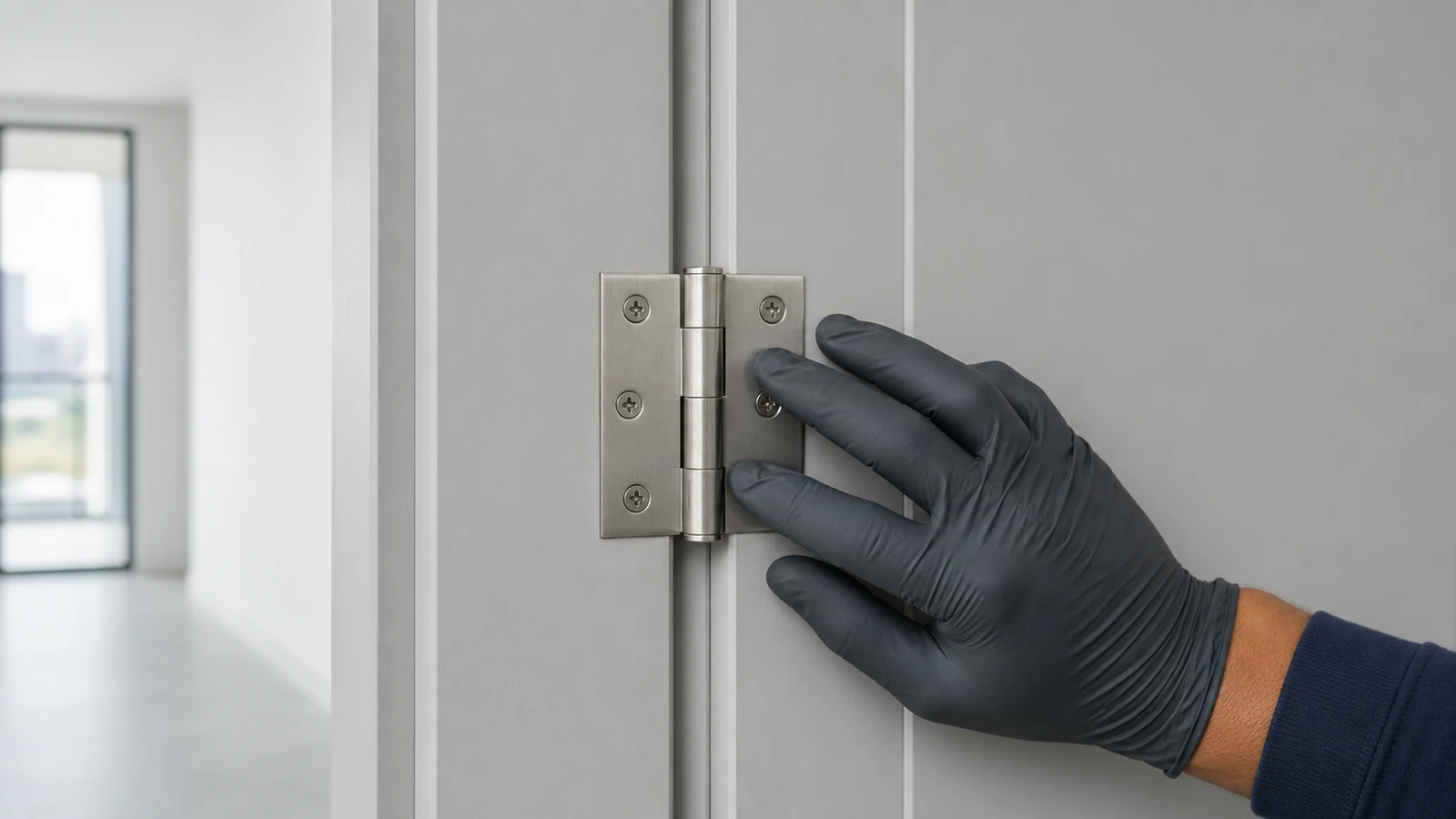
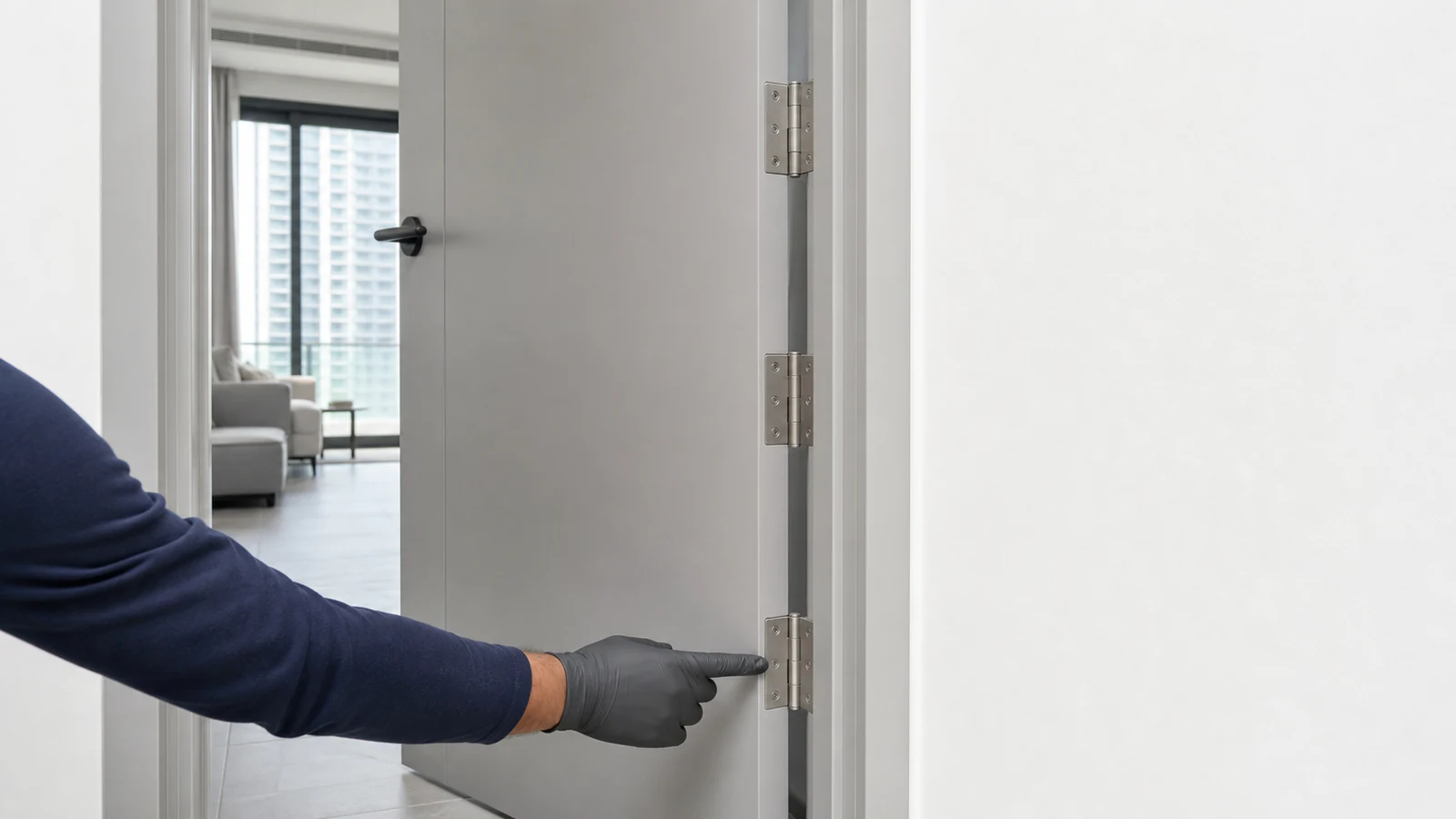
Confirm the door is not fire-rated, security, spring-loaded or self-closing. Check for loose screws, bent leaves, rust, pin movement or sagging. Stop if uncertain or damaged. Confirm the maker-approved lubricant and patch-test the finish with a cloth-applied trace.
-
Step 02
Open the door fully and support its weight
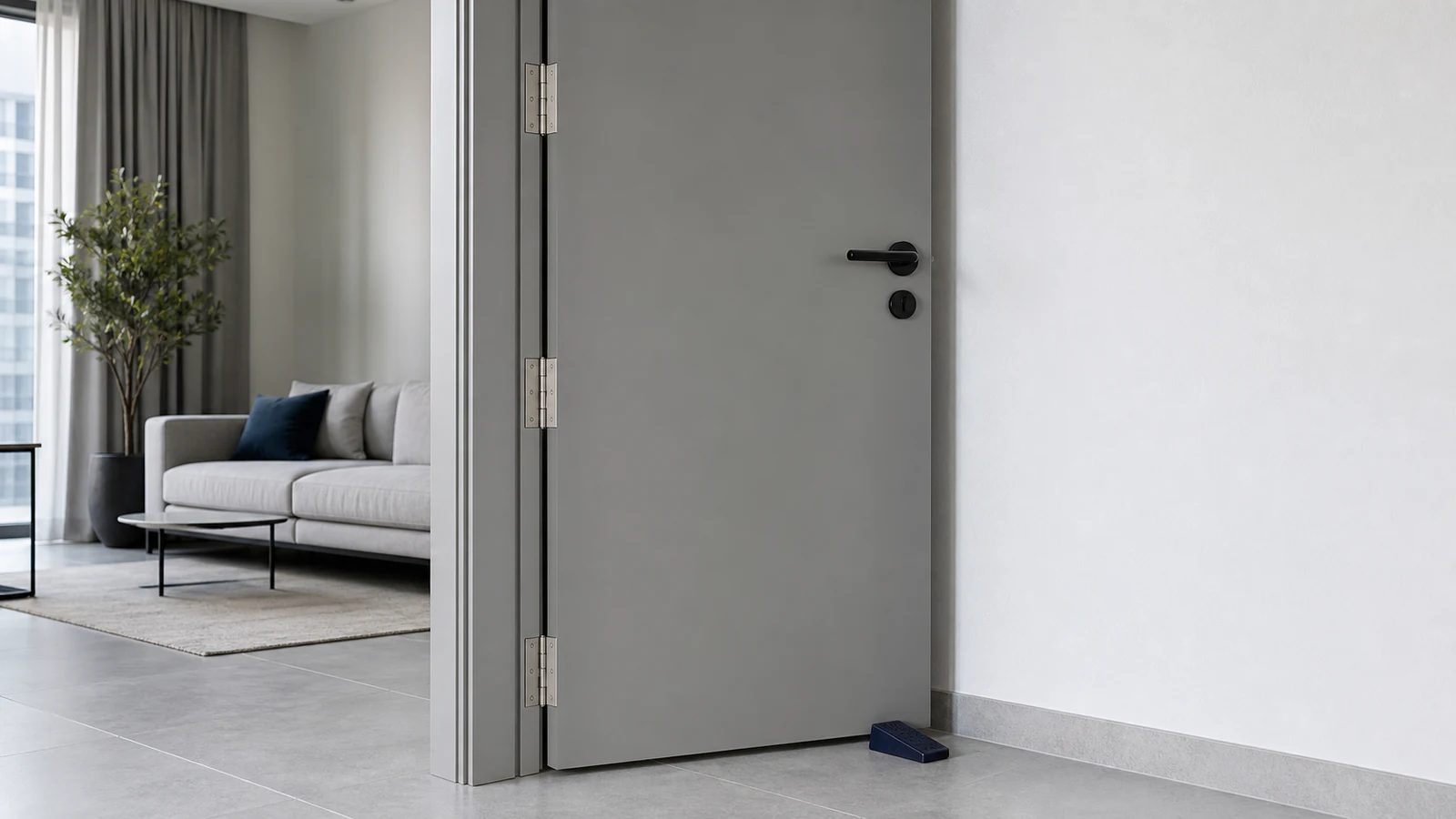
Open the door to 90 degrees. Place a wedge or door stop beneath the door edge to prevent it swinging shut. Keep hands and fingers clear of the hinge area. If the door is very heavy or feels loose on its hinges, do not proceed—have the hinge checked first.
-
Step 03
Clean the visible hinge without removing the pin
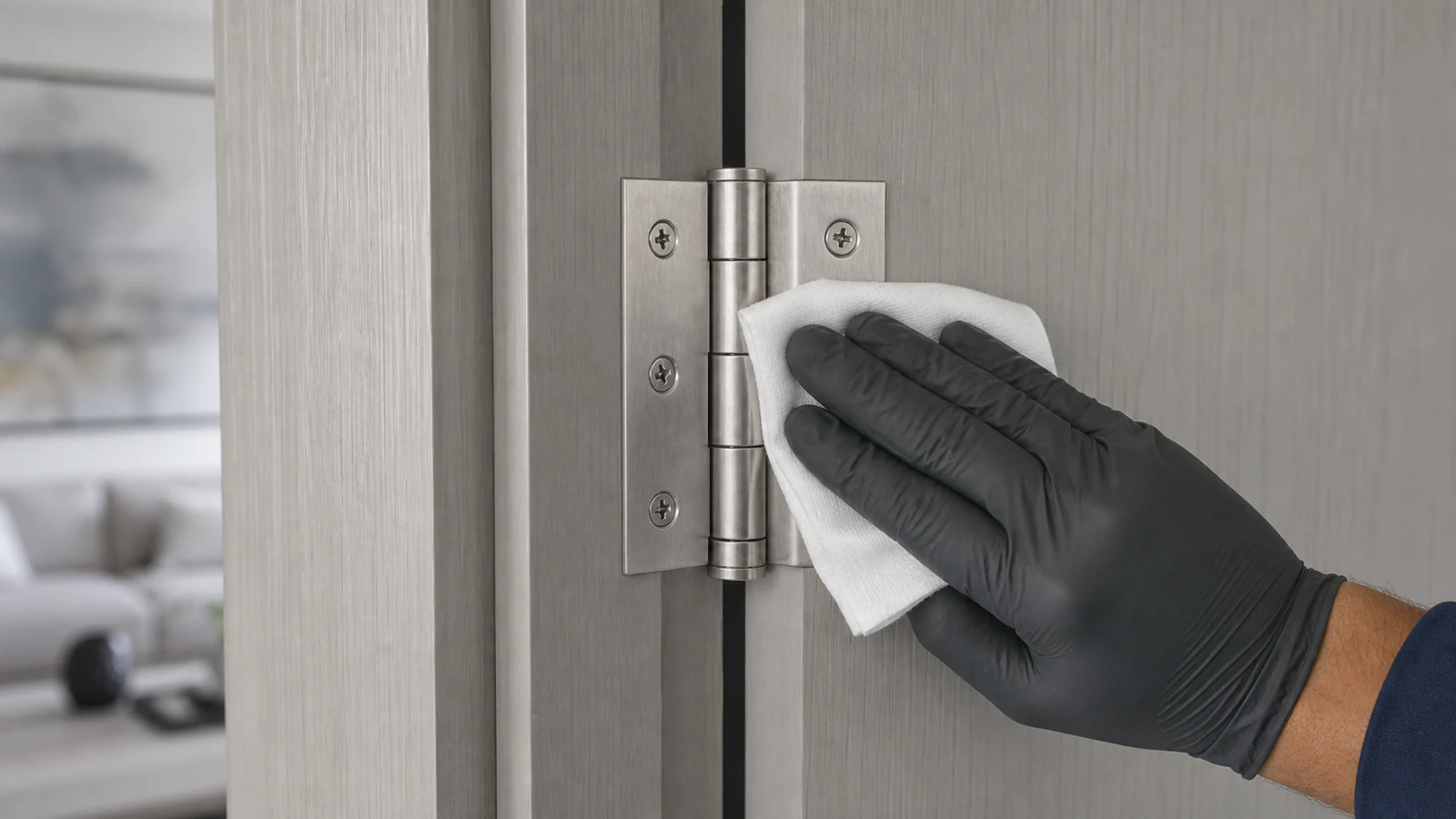
Keep the pin seated. Wipe dust from the hinge barrel, knuckles and frame with a dry lint-free cloth. Do not pry, hammer or lift the pin; removing it can destabilise the door or damage a rated assembly.
-
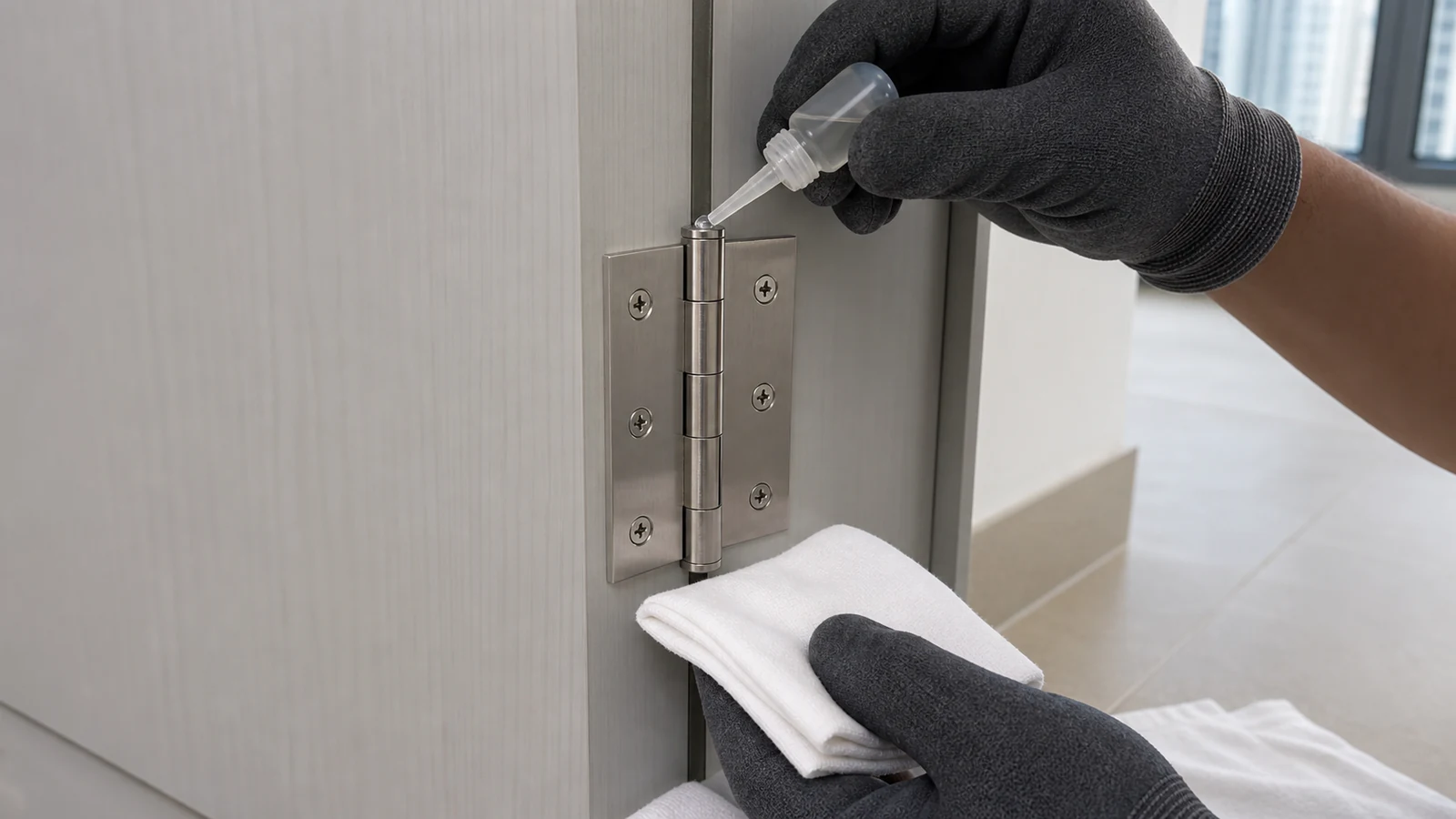
Step 04
Apply one drop of lubricant to the pin
Place a cloth beneath the hinge. Touch the precision dropper to the top knuckle and apply one tiny label-directed drop without spraying or flooding. Keep the product off paint, flooring and handles. Do not combine lubricants or use an aerosol where overspray cannot be contained.
-
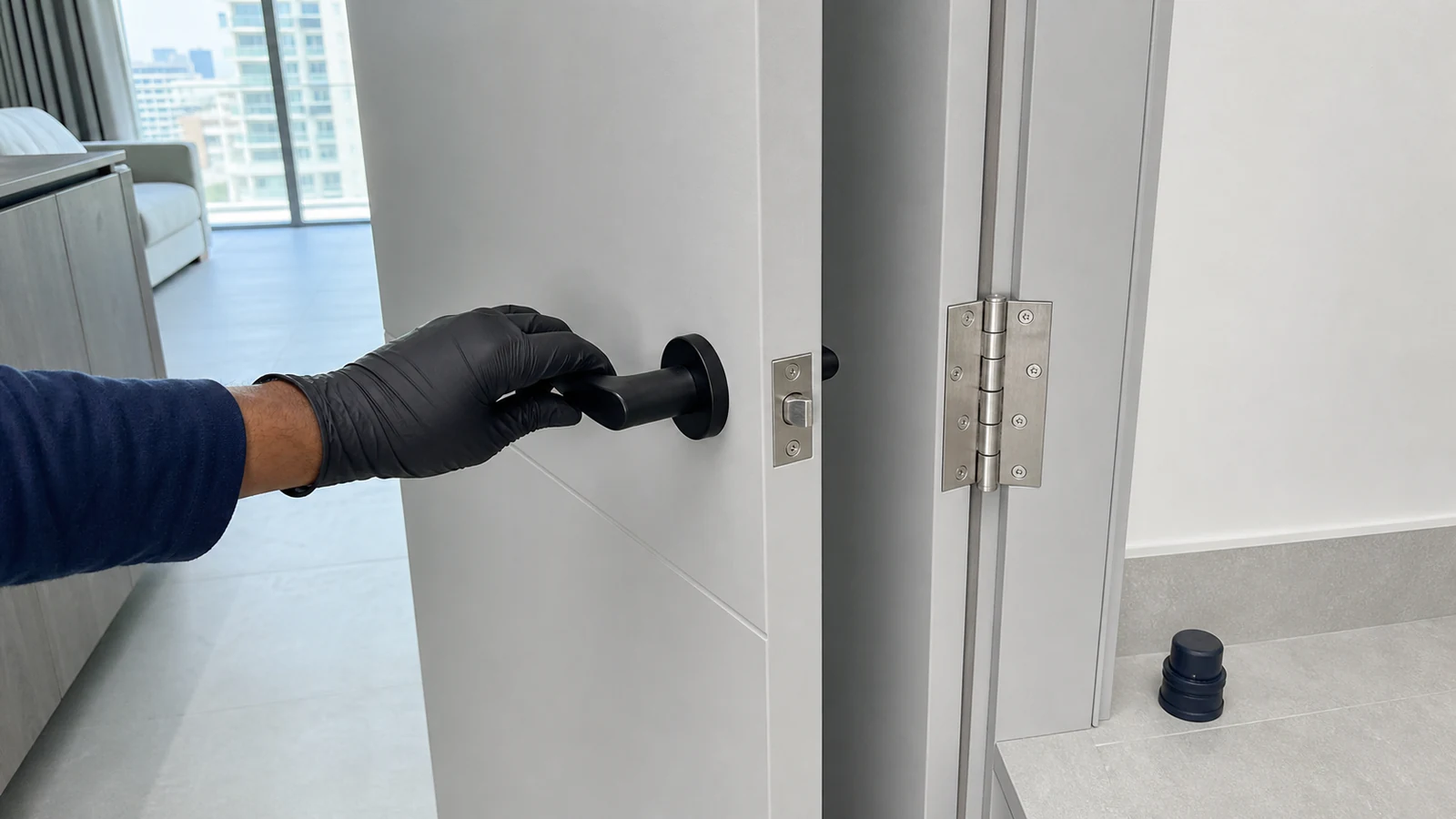
Step 05
Cycle the supported door slowly
With fingers clear of the hinge gap, open and close the supported door slowly three to five times to distribute the drop. Stop for binding, scraping, hinge movement, loose screws or a door that shifts on its frame; lubrication cannot correct alignment or worn hardware.
-
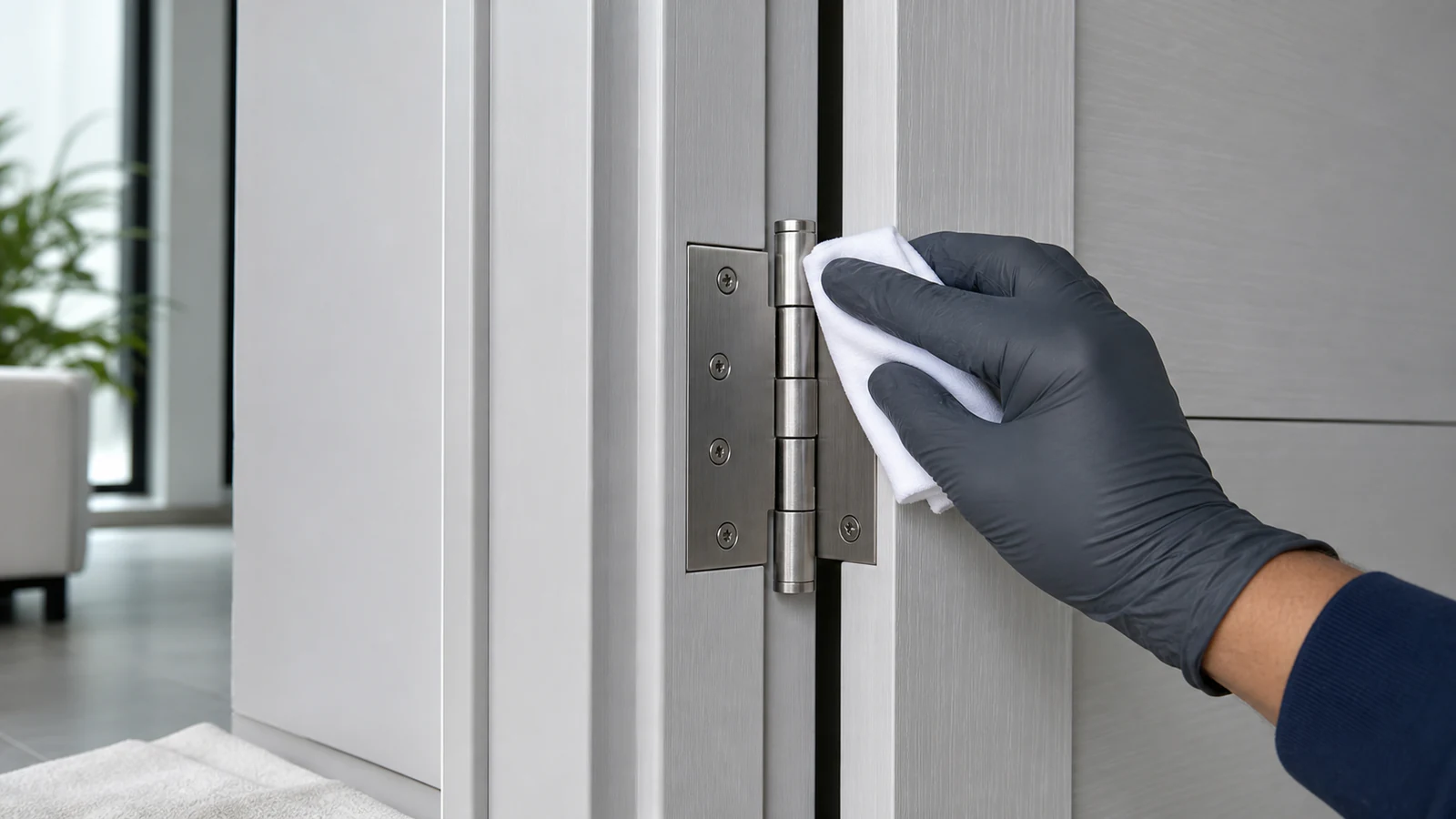
Step 06
Wipe away excess lubricant from the hinge
After ten full open-and-close cycles, use your lint-free cloth to wipe the hinge barrel, pin, and surrounding frame to remove any excess oil or spray. This prevents lubricant from transferring to your hands, clothes or floor during daily use.
Quick answers
Frequently asked questions.
Is WD-40 good for squeaky hinges?
WD-40 is a brand covering different formulas. The common Multi-Use product is not the same as a dedicated hinge lubricant and may provide only temporary quieting. Check the hinge or door maker and use one tiny drop of an explicitly approved product, without mixing lubricants or flooding the joint.
What is the best oil for door hinges?
There is no single best oil for every hinge. The maker may approve light machine oil, silicone or a dry lubricant depending on metal, bushings and finish. Use the original labelled product with a precision dropper. Do not improvise on fire-rated, security, spring or self-closing hardware.
Why does my door squeak again after oiling?
A returning squeak can indicate misalignment, loose screws, a worn pin or bushing, door sag or contamination inside the hinge. Repeated oil can attract dirt and hide the cause. Stop adding product, inspect visible fasteners without removing the pin, and arrange repair for movement, damage or heavy doors.