
DIY / Doors, Windows & Cabinets
Door Sticking or Rubbing the Frame: 3-Step Diagnosis
A door that sticks or rubs against its frame can be caused by loose hinges, wood swelling or frame movement. Before you remove material or call a carpenter, follow this three-step diagnosis to identify the real problem and know when the issue is beyond safe DIY repair.
Quick answer
How do I diagnose why my door sticks or rubs?
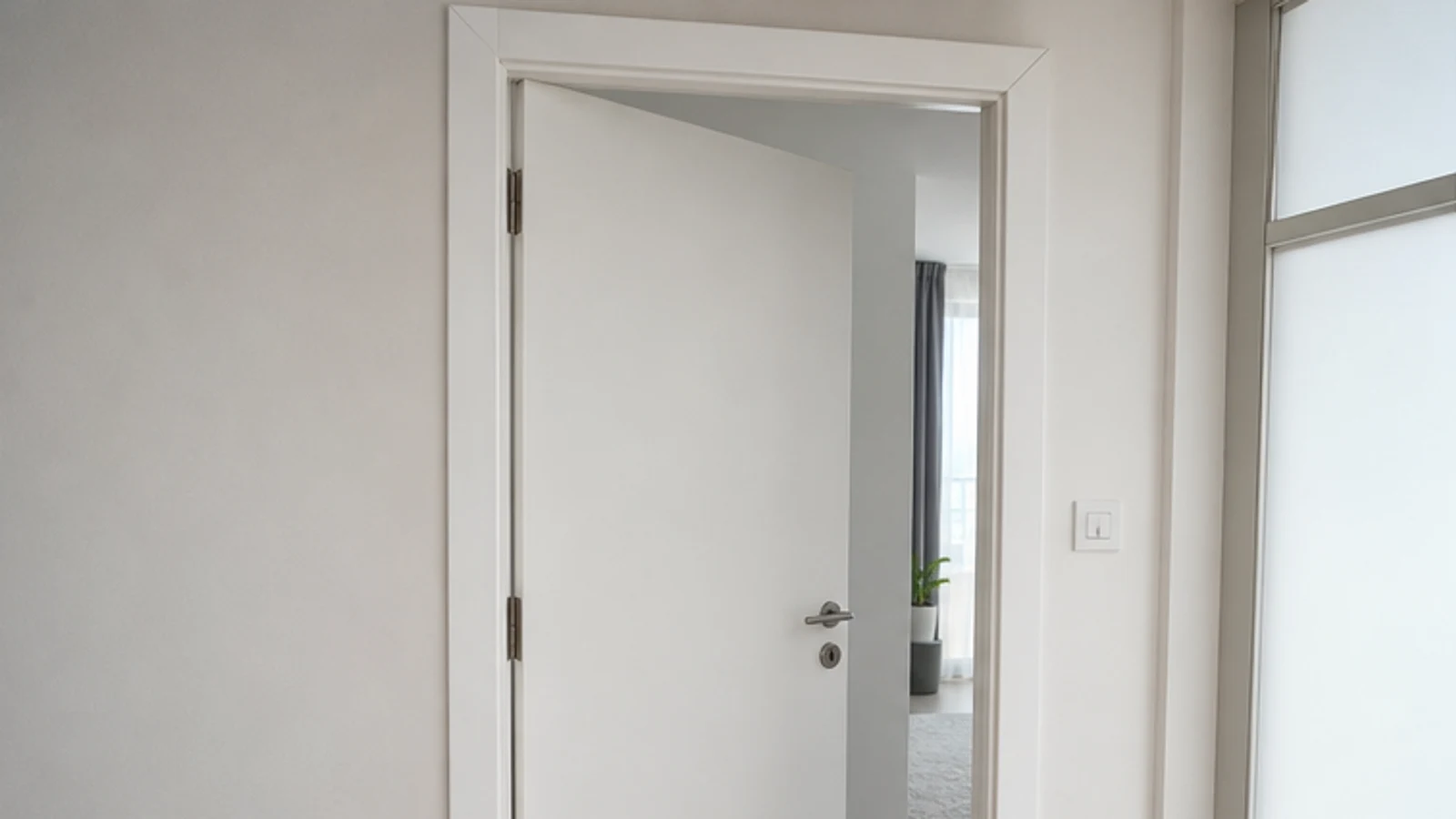
For an ordinary lightweight internal door, first exclude fire, security, glazed, exterior and self-closing doors. Support the open door and snug only visibly loose existing hinge screws with the correct hand screwdriver. Mark the rub point and stop. Do not install longer screws, plane or sand; unsafe latching, movement or recurrence needs a carpenter.
Wooden interior doors with metal hinges
Fire-rated doors / Security doors / Doors with concealed services in the frame / Doors that cannot latch safely
What you need
What you need
Use only a pencil, paper and the correctly fitting hand screwdriver for an existing visible hinge screw. No replacement fasteners or cutting tools are part of this guide.
- Difficulty
- Easy to Medium
- Active time
- 15 minutes
- Total time
- 20 minutes
Screwdriver (Phillips or slot, matching your hinges)
1
Pencil (HB or softer)
1
Typical UAE retail ranges. Prices vary by pack and store, and your total is lower when you already own the reusable tools.
Step by step
How to diagnose a door sticking or rubbing
Work through each step with the door fully open and close it gently between steps to observe the behaviour.
-
Step 01
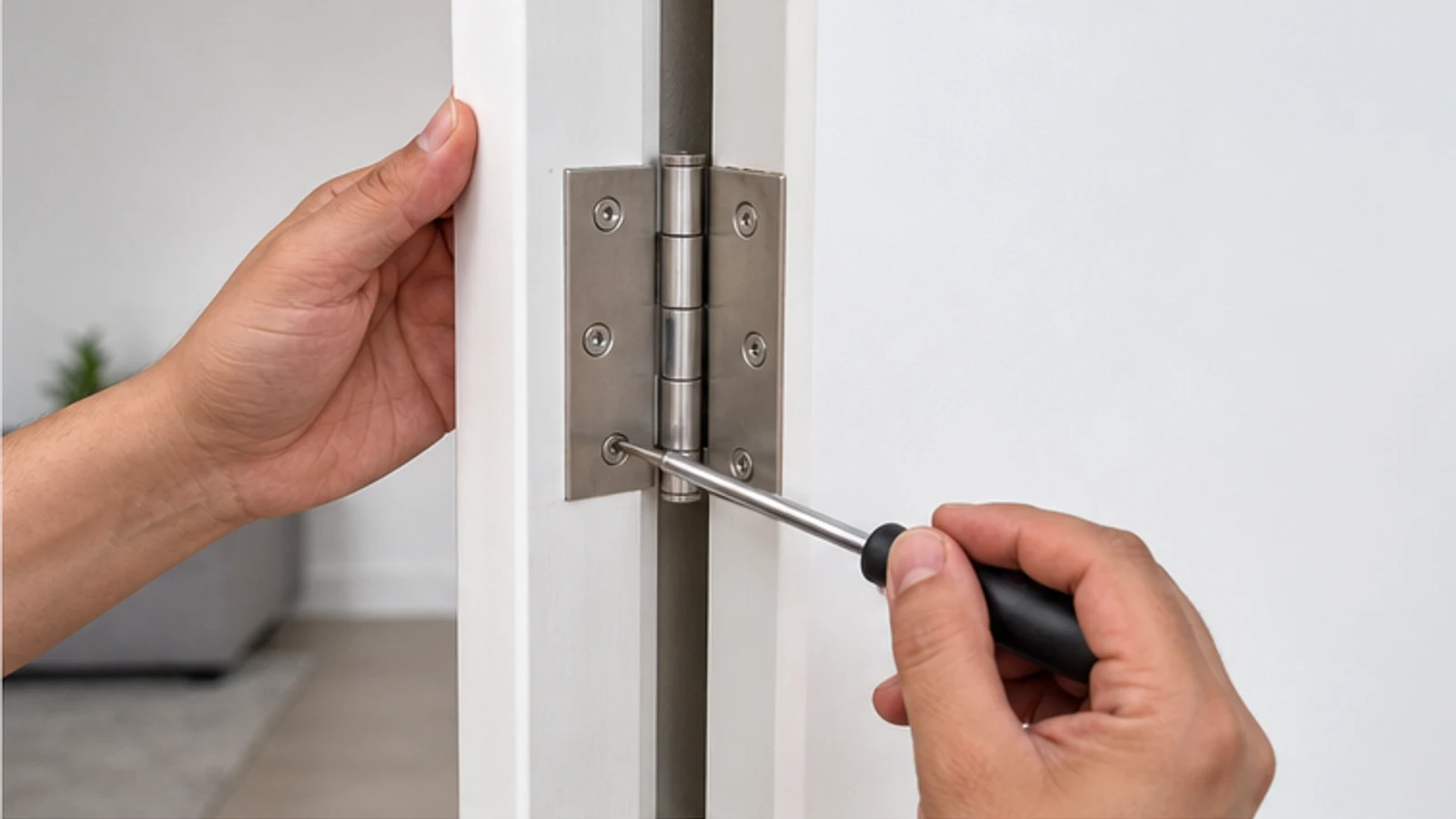
Check and tighten the hinge screws
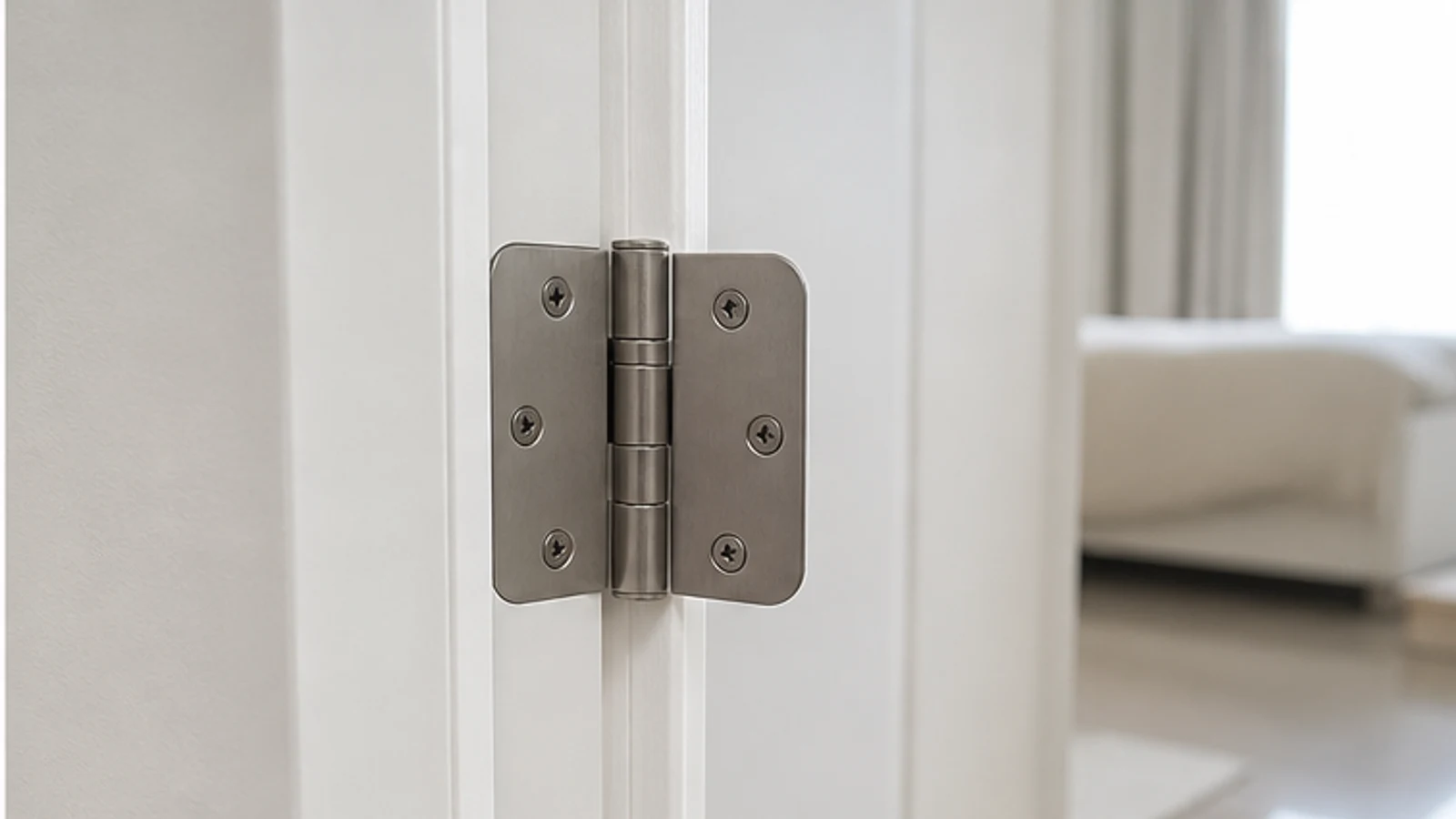
Continue only on an ordinary lightweight internal door. Have another adult support it in the open position, keep fingers out of hinge gaps, and use the correct hand screwdriver to turn only an existing visibly loose screw until snug. Stop if it spins, resists, strips or the hinge or frame moves.
All hinge screws should be snug—no play when you gently tug the hinge leaf
If a screw spins without tightening, it may be stripped; note which one and avoid forcing it
-
Step 02
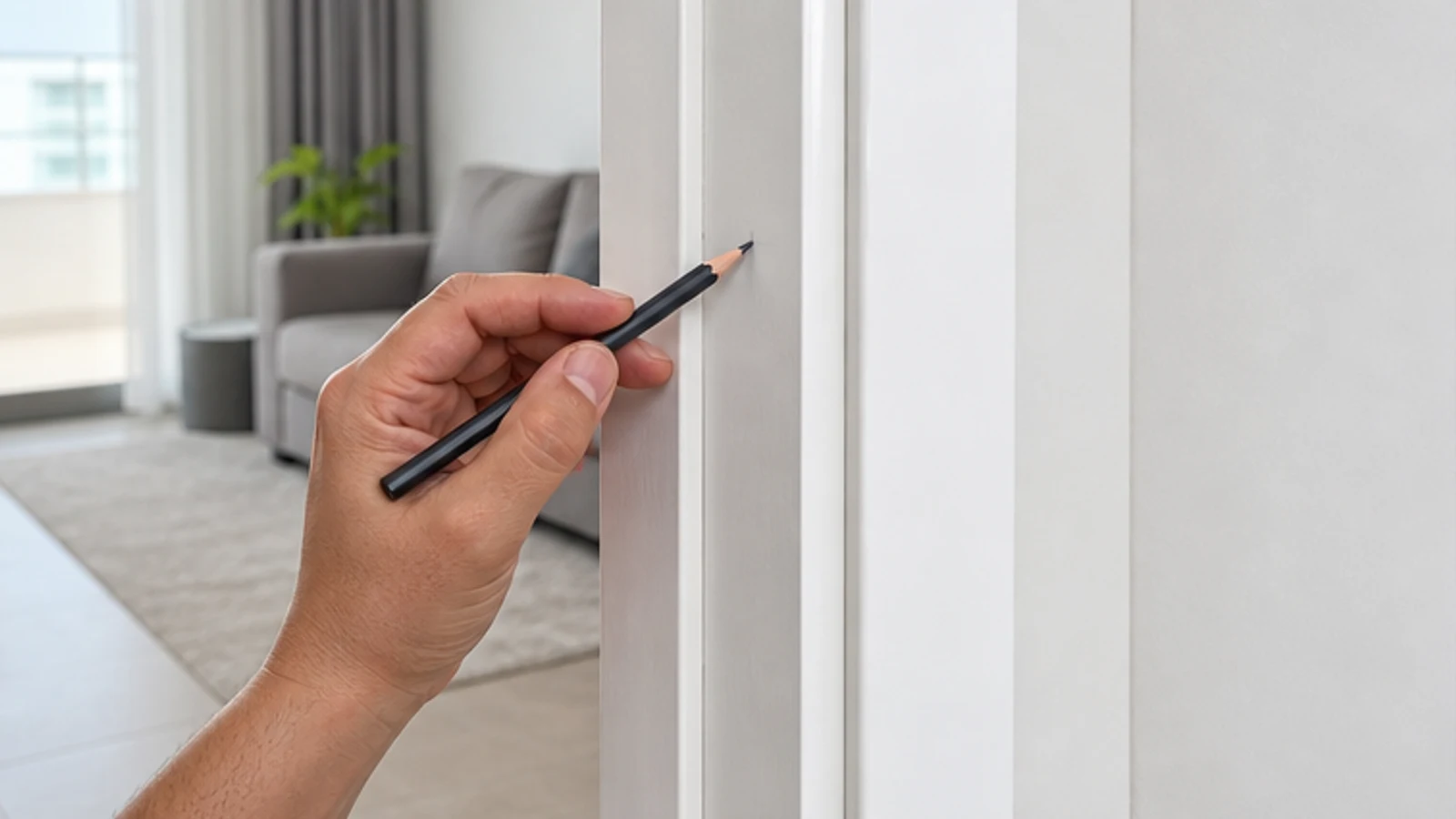
Mark the rub point with a pencil
Close the door slowly and listen or feel for where it catches or rubs. Stop before latching. Open the door and run a soft pencil along the full edge (top, side and bottom). Close the door again slowly. Where the graphite rubs off onto the frame, that is your contact point.
The pencil mark will be a grey smudge on the frame—not a straight line
Multiple rub points mean the door is twisted or the frame is out of square
Mark the frame, not the door face, to avoid marks on your finished surface
-
Step 03
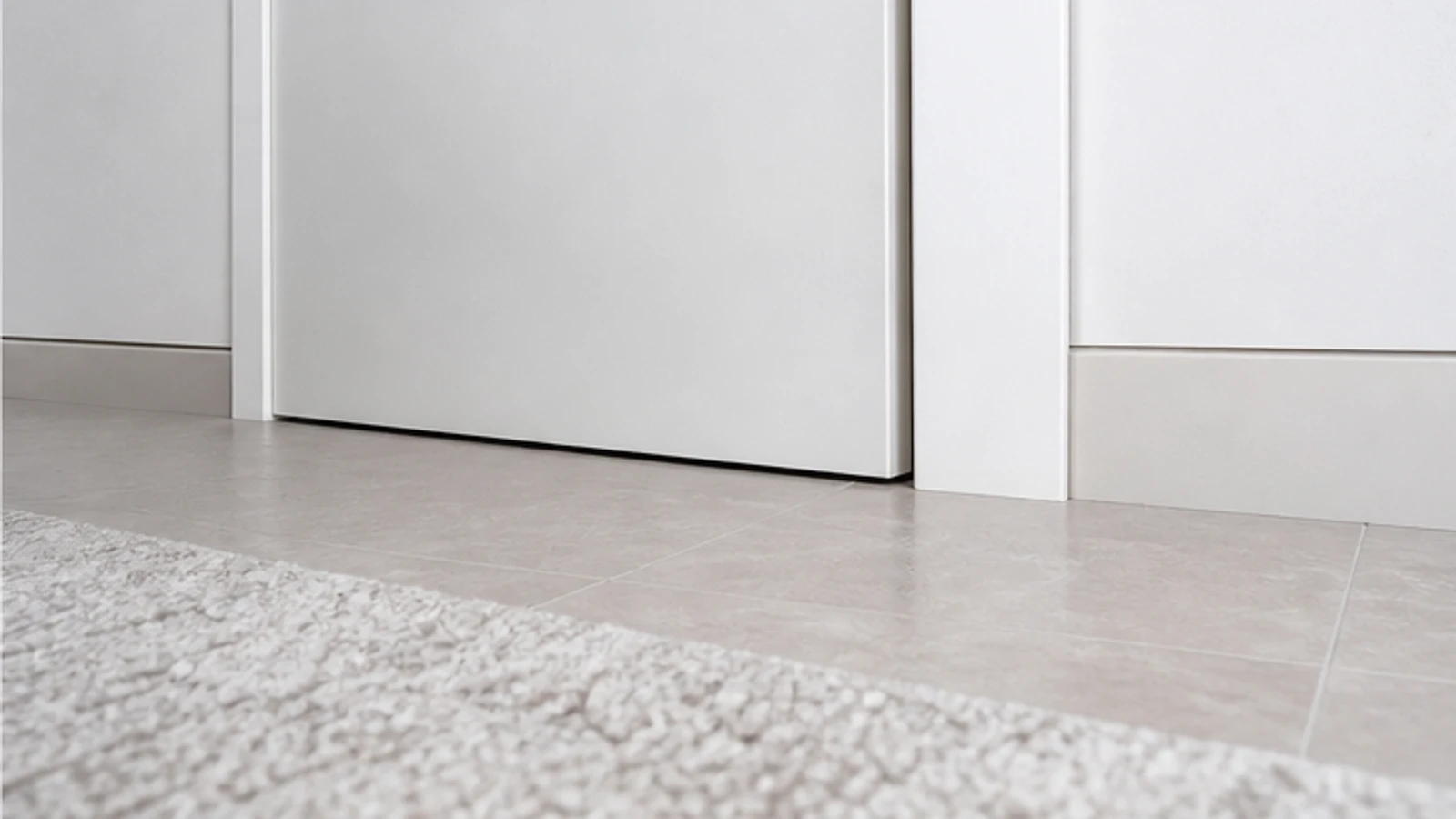
Compare the gap without adding a product
Look at the closed-door gap from the floor without forcing the latch. A changing or uneven gap may reflect humidity, hinge wear or frame movement, but appearance alone cannot diagnose the cause. Do not add wax or soap, and do not plane, sand or file the edge.
The gap can be inspected without forcing the latch
No wax, soap, oil or solvent is added
Uneven gaps or recurrence are documented for maintenance
-
Step 04
Recognise when to stop and call a professional
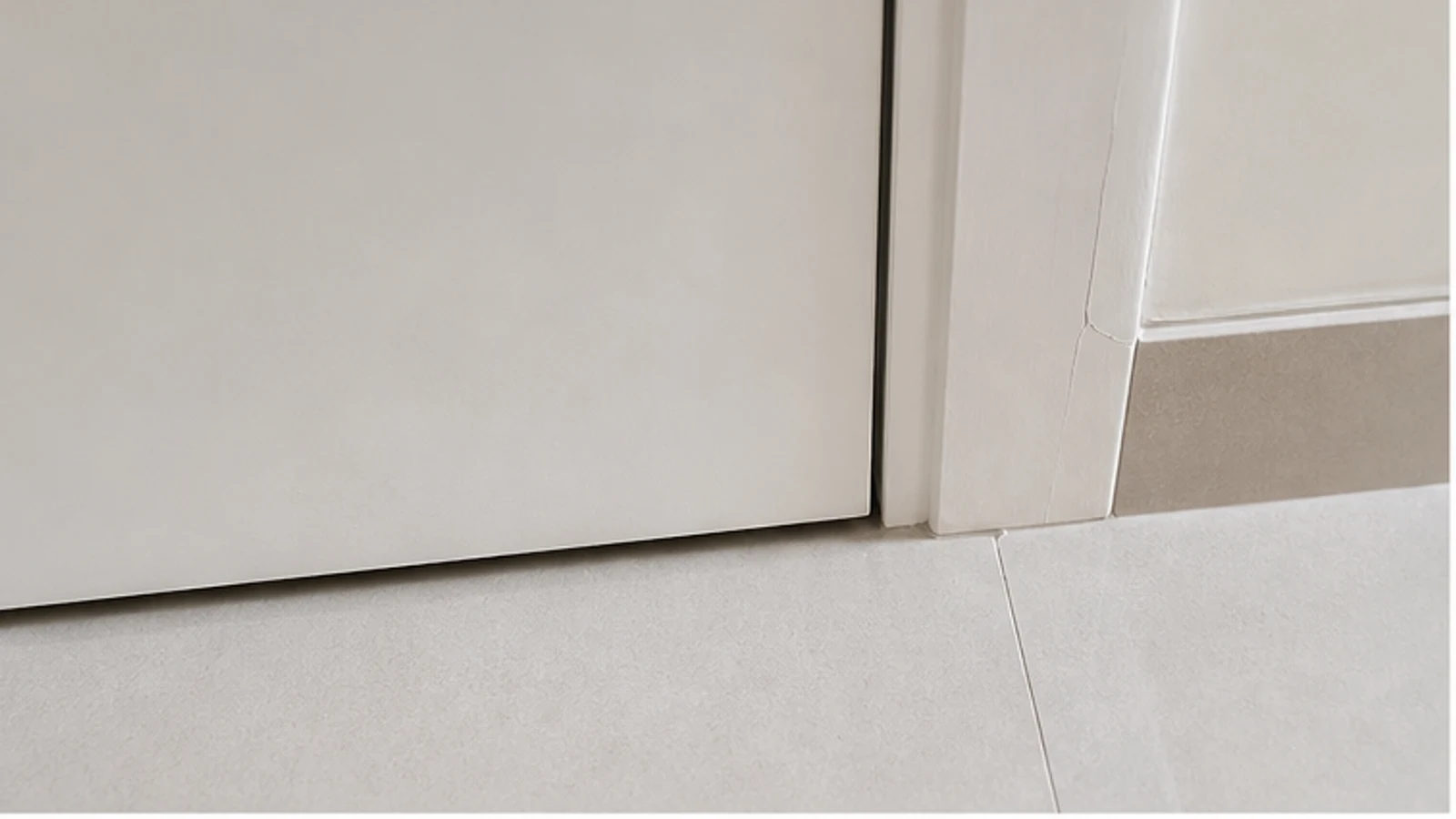
If you observe cracks in the plasterboard or frame around the door, uneven gaps between door and frame, floor movement underneath the hinges, or the door cannot latch safely, stop immediately. These signs indicate structural or frame movement beyond safe DIY diagnosis. Consult a surveyor or carpenter.
Frame cracks often form an angle away from the door—this shows the frame has shifted
Gaps wider than 5 mm at the top or uneven gaps indicate frame misalignment
A door that swings open on its own or won't stay closed is a safety issue
-
Step 05
Stop if tightening did not restore safe operation
If the door still rubs, will not latch, drops, moves at the frame or has a stripped screw, stop and arrange a carpenter or building-maintenance inspection. Do not substitute a longer screw: concealed services, frame construction and door certification are unknown in a general rental guide.
No replacement screw is installed
The door remains unused if it cannot latch safely
A carpenter or building-maintenance inspection is arranged
Finished result
What success looks like
After completing the diagnosis, you will know whether the problem is loose hinges, seasonal swelling, or structural movement—and whether DIY is safe or professional help is needed.
Door closes smoothly without resistance or rubbing sound
Door latches properly and does not swing open on its own
No new cracks visible in the frame or wall around the door
Gaps between door and frame are even (±2 mm) on all sides
Quick answers
Frequently asked questions.
Why does my door stick in summer?
Wood absorbs moisture in humid air and swells. In the UAE, summer humidity causes door wood to expand slightly, making it rub against the frame. This usually reverses when humidity drops. Loose hinges can worsen the effect. Stop if you find fire or security door.
How do you find where a door is rubbing?
Run a soft pencil along the full edge of the door while open. Close the door gently and open it again. Where the graphite has rubbed off onto the frame is the contact point. Stop if you find door cannot latch safely.
Do longer hinge screws fix a sagging door?
Not as a general rental DIY fix. Screw length depends on the door, jamb, frame and concealed services, and certified doors have approved hardware. This guide never substitutes a longer screw. If an existing screw spins or the door still sags after gentle snugging, call building maintenance or a carpenter.
When should I call a professional instead of diagnosing myself?
Stop and call a surveyor or carpenter if you see cracks in the frame, uneven gaps wider than 5 mm, floor movement, or the door cannot latch safely. Do not attempt repairs on fire-rated or security doors. Stop if you find fire or security door.
Sources and review notes
- Andersen: Clean and Care for Window and Patio Door Hardware - Manufacturer guidance supports periodic inspection and tightening of existing hinge screws when necessary.
- Masonite: Residential Support and Fire-Door Identification - Explains that fire-rated doors carry a hinge-side fire label and directs configuration questions to the dealer or building official.