
DIY / Doors, Windows & Cabinets
Loose Door Handle: The Hidden Set Screw
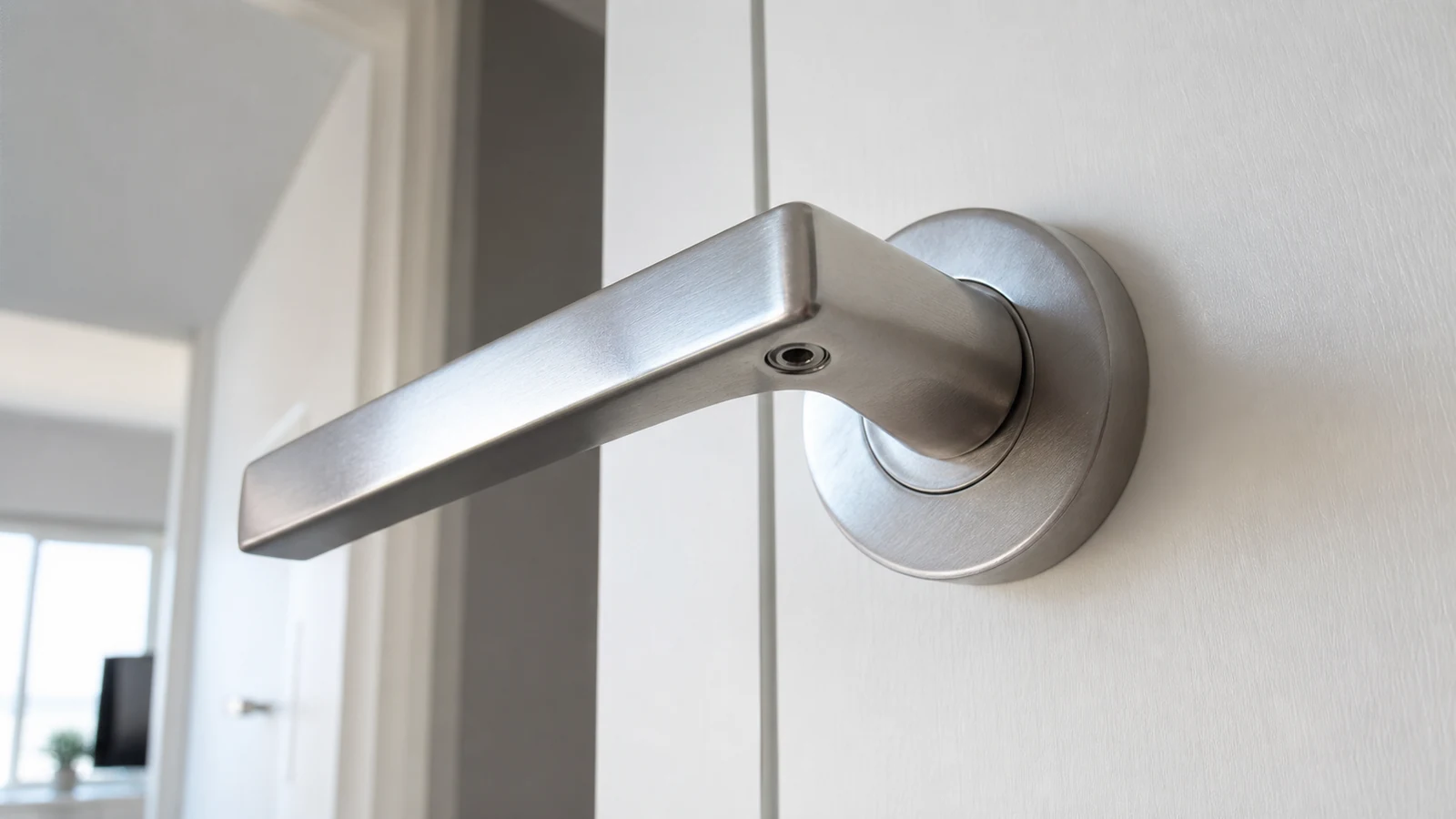
A spinning door handle that won't open usually means the set screw holding the handle to its spindle has loosened. Nearly all interior door handles conceal this screw in a small hole on the side or underside of the neck. Once you know where to look, the fix takes minutes and requires only a hand tool.
Quick answer
How do you tighten a loose door handle?
Locate the set screw hidden in a small hole on the handle neck, usually on the side or underside. Insert the correct-sized Allen key or screwdriver and turn clockwise until snug. Do not overtighten. Test the handle to confirm it engages the latch properly.
Standard interior door handles with visible set screw access / Simple lever and knob handles on interior doors / Handles with accessible spindle mechanisms
Fire-rated, emergency egress or security door hardware / Entrance doors or main external doors / Handles with cracked necks or stripped screw holes / Doors at risk of locking shut during repair
What you need
What you need
Most interior door handles use a 2 mm or 2.5 mm Allen key. Check your handle's set screw before buying. A small flat-head screwdriver works if the screw has a slot instead of a hex recess.
- Difficulty
- Easy
- Active time
- 2 minutes
- Total time
- 2 minutes
Allen key set (2–3 mm)
1 set
Small flat-head screwdriver (optional)
1
Typical UAE retail ranges. Prices vary by pack and store, and your total is lower when you already own the reusable tools.
Step by step
How to tighten a loose door handle
Keep the door open throughout this repair to avoid locking yourself in or trapping the mechanism.
-
Step 01
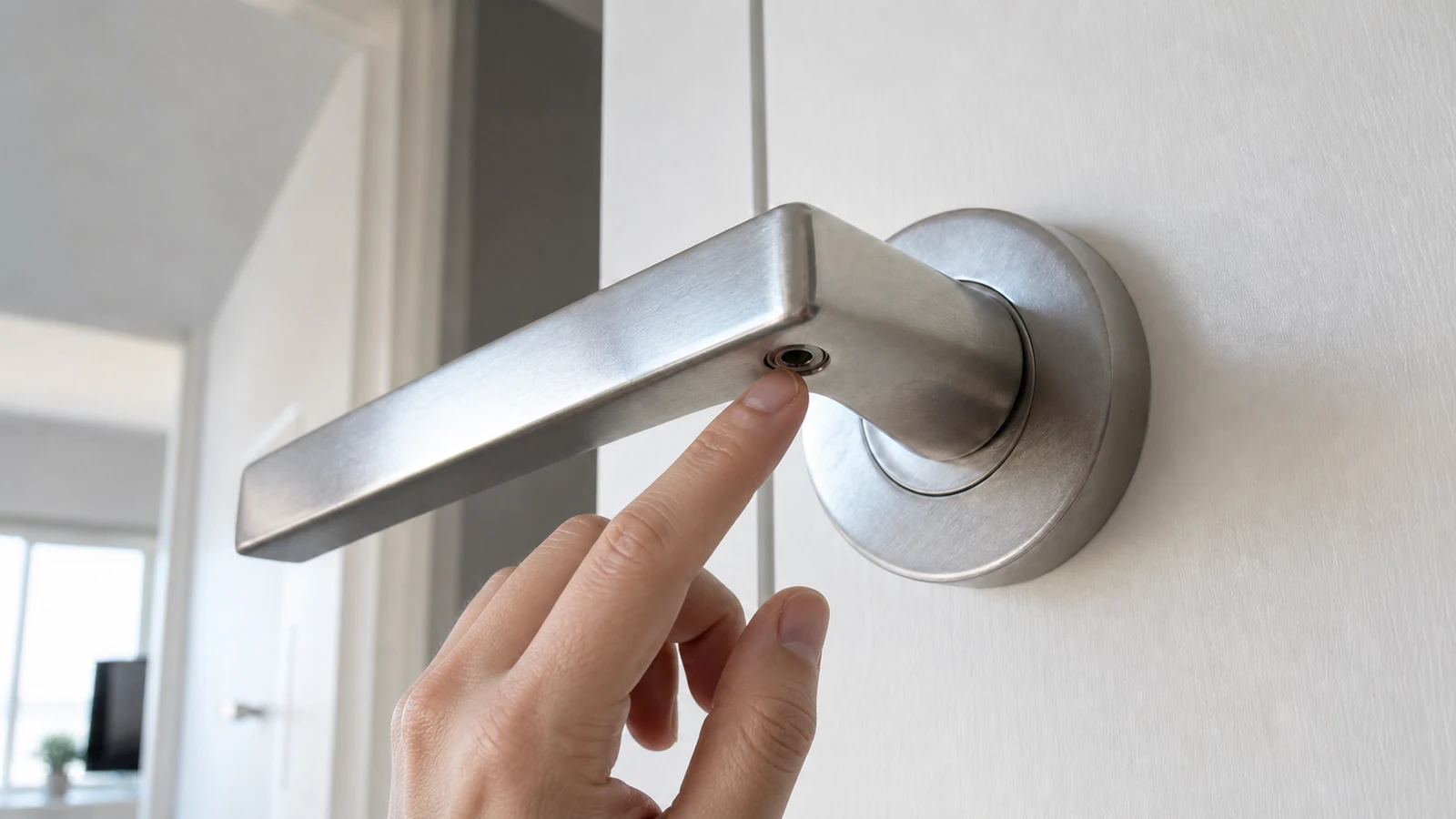
Locate the set screw hole
Look at the handle neck where it meets the door. Search for a small hole on the side, underside or back, usually 2–3 mm across. It may be barely visible. If you cannot find it, the handle may not have a traditional set screw.
-
Step 02
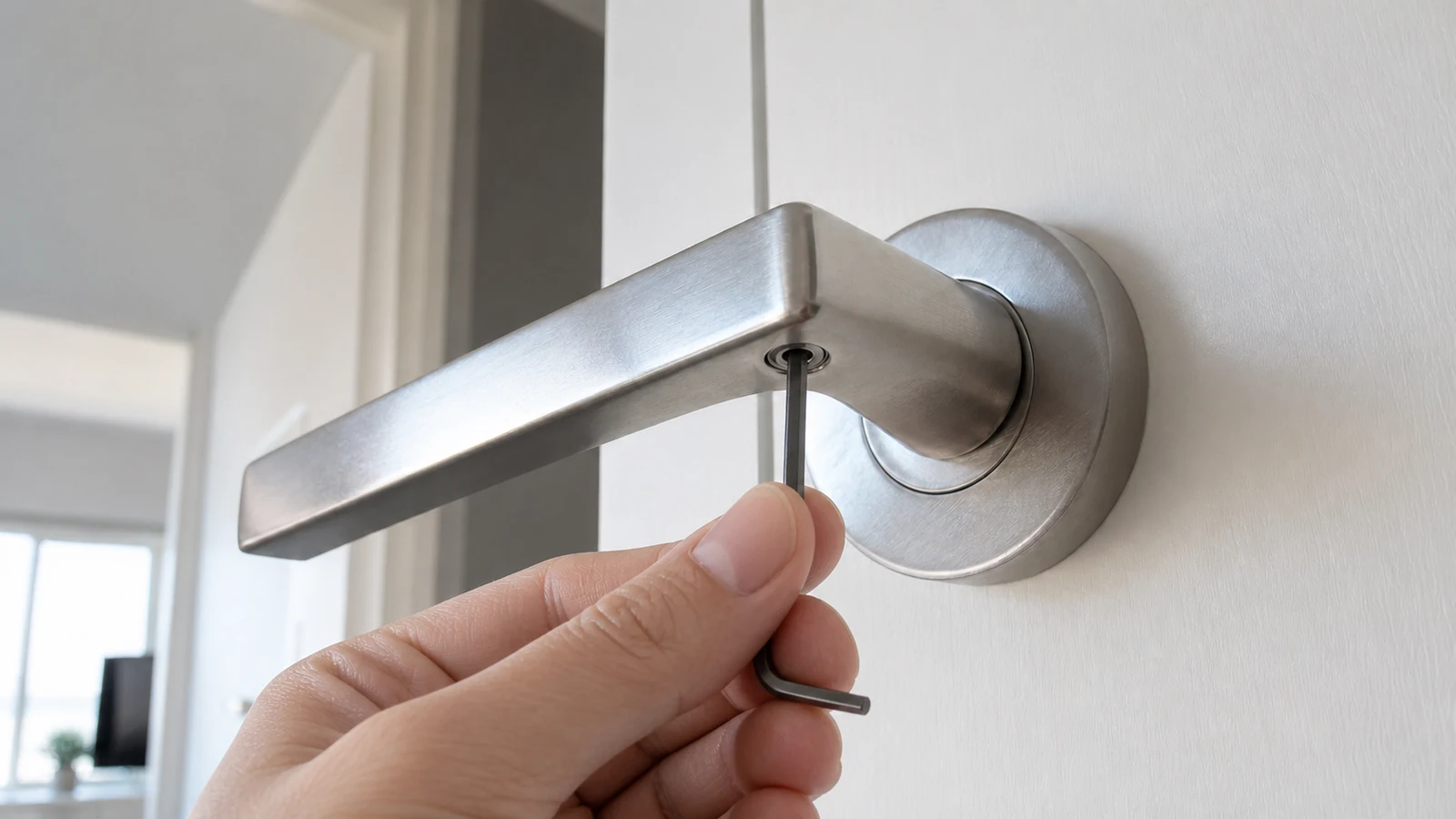
Select the correct Allen key or screwdriver
Test the 2 mm and 2.5 mm Allen keys by offering them to the hole. The correct size fits snugly without rocking or forcing. If the hole has a slot instead of a hexagon recess, use a small flat-head screwdriver.
-
Step 03
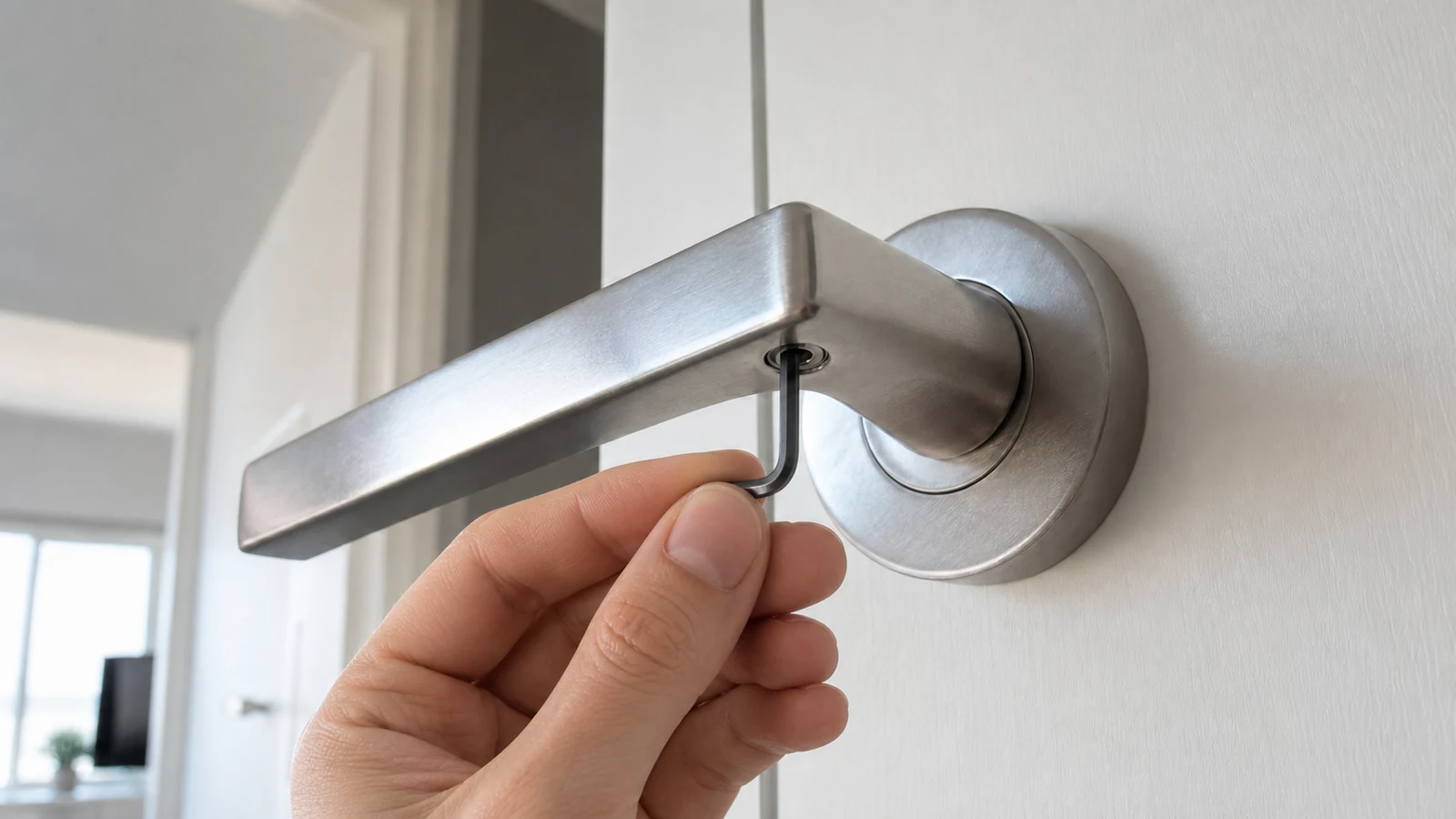
Insert the tool and turn clockwise
Push the Allen key or screwdriver fully into the hole and turn slowly clockwise. Feel for gentle resistance and stop as soon as you sense firm contact. Do not force or apply heavy pressure. One or two complete turns is usually enough.
-
Step 04
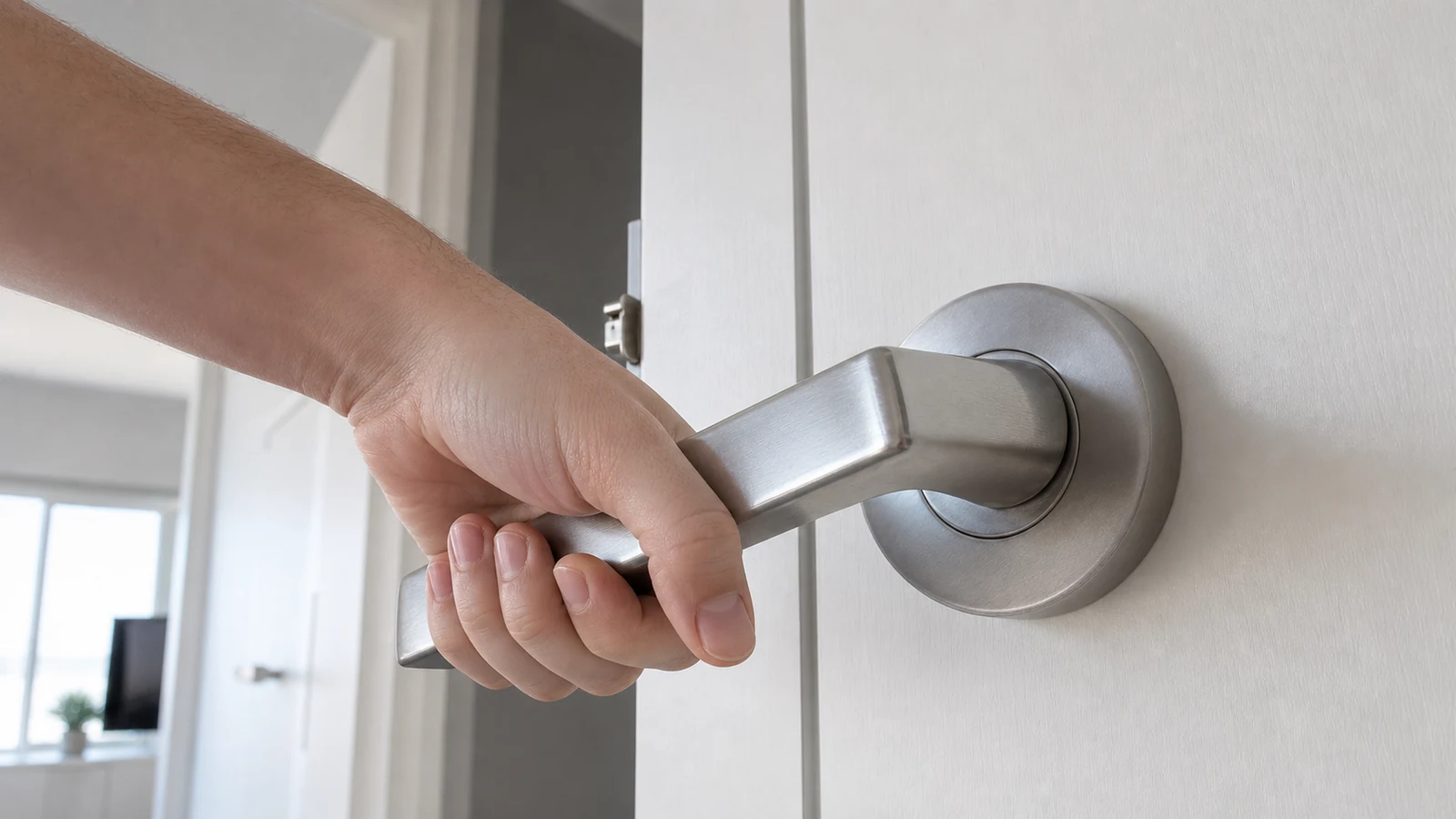
Test the handle for wobble and latch engagement
Withdraw the Allen key. Grip the handle firmly and try to wobble it left and right—it should not move. Now press the handle down or turn it and check that the latch engages inside the door. Push the door slightly to confirm the latch holds.
-
Step 05
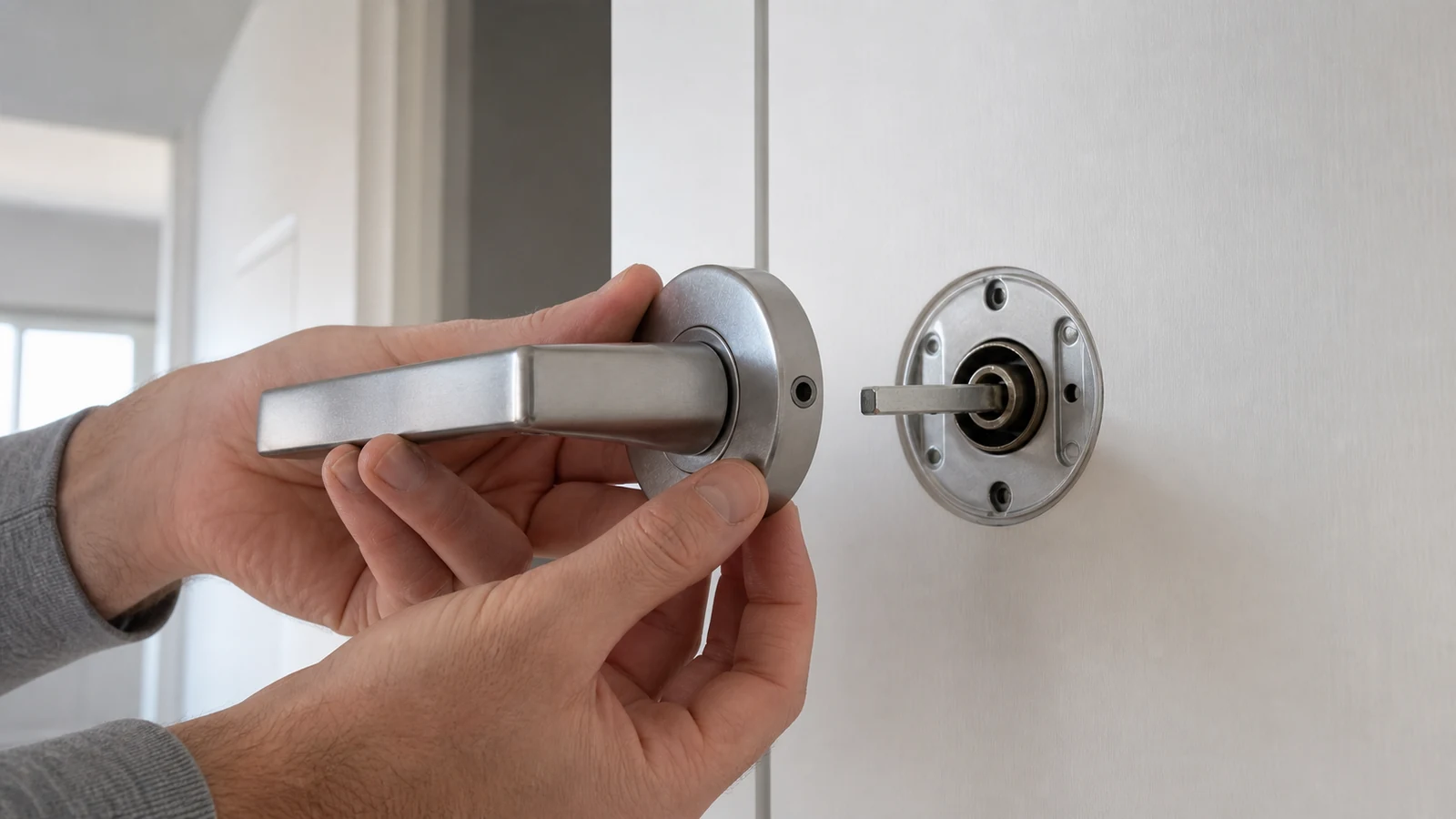
Test smooth operation and close the door
Press and release the handle several times from different angles whilst the door remains open. Action should be smooth with no grinding, clicking or looseness. Once confident the handle is secure, slowly close the door and test it from outside.
Quick answers
Frequently asked questions.
Why does my door handle spin without opening?
A spinning handle indicates the set screw anchoring the handle to the spindle has loosened. Tightening the set screw restores function. If the screw is already tight, the spindle or internal mechanism may be damaged and the handle may need replacement.
What size Allen key fits door handles?
Most interior door handles use a 2 mm or 2.5 mm hex key. Older handles may use 3 mm. The correct size fits snugly without rocking. Test sizes gently before force. Stop if you find latch binds, spindle or handle is cracked, or screws strip.
Can I repair a door handle with a cracked neck?
No. A cracked neck cannot safely support a tightened set screw and risks failure. Do not attempt repair. Replace the entire handle instead. Use this method only on standard interior door handles with visible set screw access. Stop if you find latch binds.