
DIY / Doors, Windows & Cabinets
Window Tracks Full of Sand and Dust: The Right Deep Clean
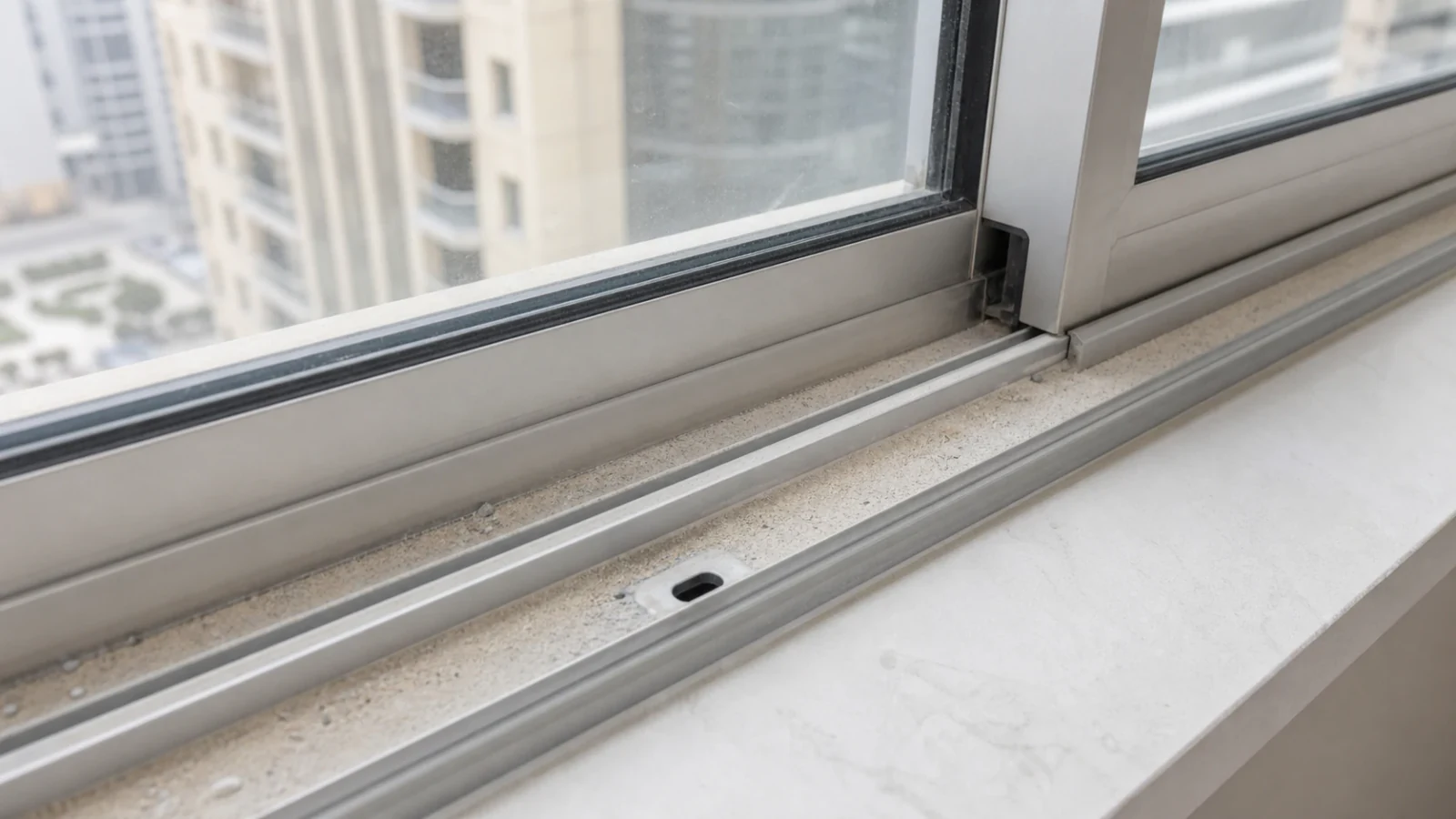
After each dust storm, window tracks become sand traps that make sashes stick and trap moisture. The sequence matters: dry removal first prevents mud from compacting into corners. Most people miss the drainage step—the small holes in the bottom of each track (weep holes) prevent condensation water from pooling on the sill.
Quick answer
What is the easiest way to clean window tracks?
Vacuum sandy tracks dry using a crevice tool, then wipe with a barely damp cloth. Gently clear visible weep holes at the bottom with a toothpick, never force. Avoid adding water to dry sand—it forms mud that blocks drainage. Avoid sealed, concealed drainage channels.
Aluminium sliding window tracks / Vinyl window tracks / Timber window tracks / Aluminium sliding door tracks
Broken or cracked glass or frames / Windows on exterior ledges or unsafe heights / Sealed, concealed drainage channels / Tracks with integrated electrical sensors or contacts
What you need
What you need
A vacuum with a crevice tool (the thin flat nozzle) is essential for dry removal. Toothpicks or flat wooden sticks clear visible holes without risk of enlarging them.
- Difficulty
- Easy
- Active time
- 15–20 minutes per window
- Total time
- 15–20 minutes per window (no drying time required)
Vacuum cleaner with crevice-tool nozzle
1
Soft-bristled toothbrush
1
Microfibre cloth or cotton cloth
1
Wooden toothpicks or flat sticks
5–10
Small container of water
250 ml
Typical UAE retail ranges. Prices vary by pack and store, and your total is lower when you already own the reusable tools.
Step by step
How to deep clean window tracks full of sand and dust
Always work on the inside first, then move to the outside track if accessible and safe.
-
Step 01
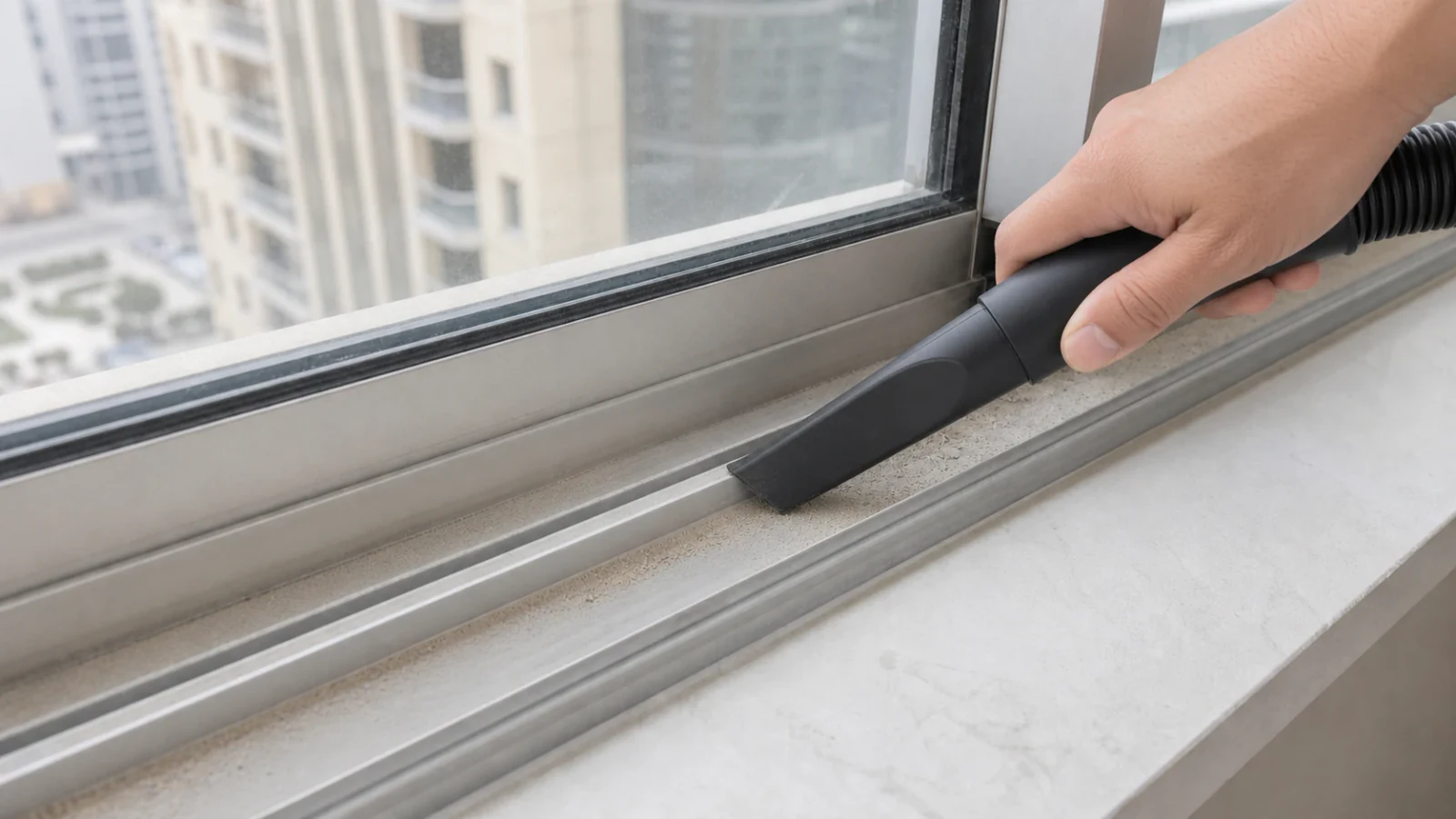
Vacuum the track dry with the crevice tool
Fit the narrow crevice-tool nozzle to your vacuum. Run it along the bottom groove of the track in one direction, pressing firmly to lift embedded sand. Work from one end to the other. Repeat in the opposite direction.
-
Step 02
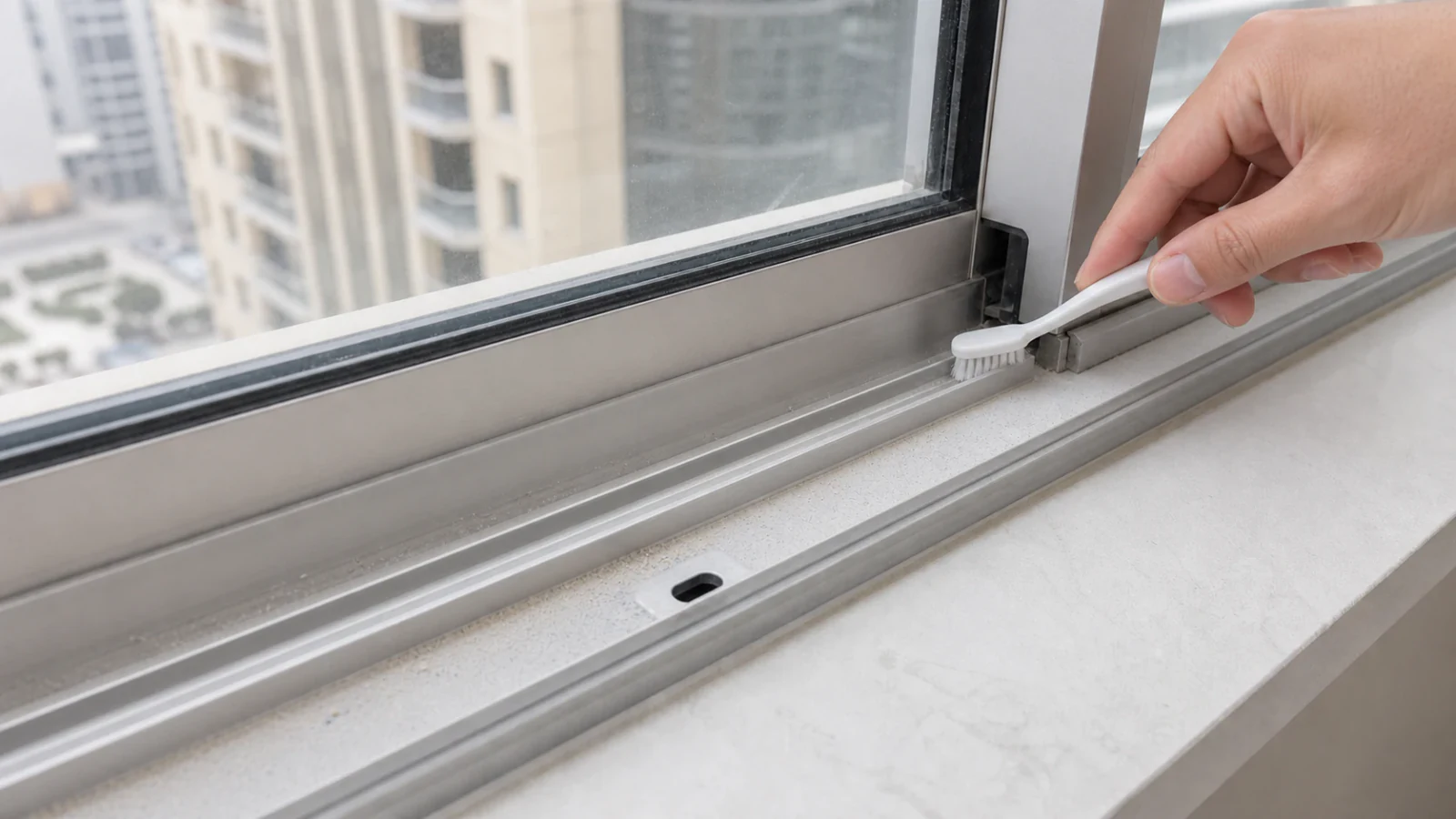
Brush out the edges and corners with a soft toothbrush
Wet the soft-bristled toothbrush slightly and scrub the edges where the track walls meet the groove floor using small circular motions. Focus on corners and seams. Drag the brush along edges to dislodge trapped sand. Do not soak the brush—excess water creates mud.
-
Step 03
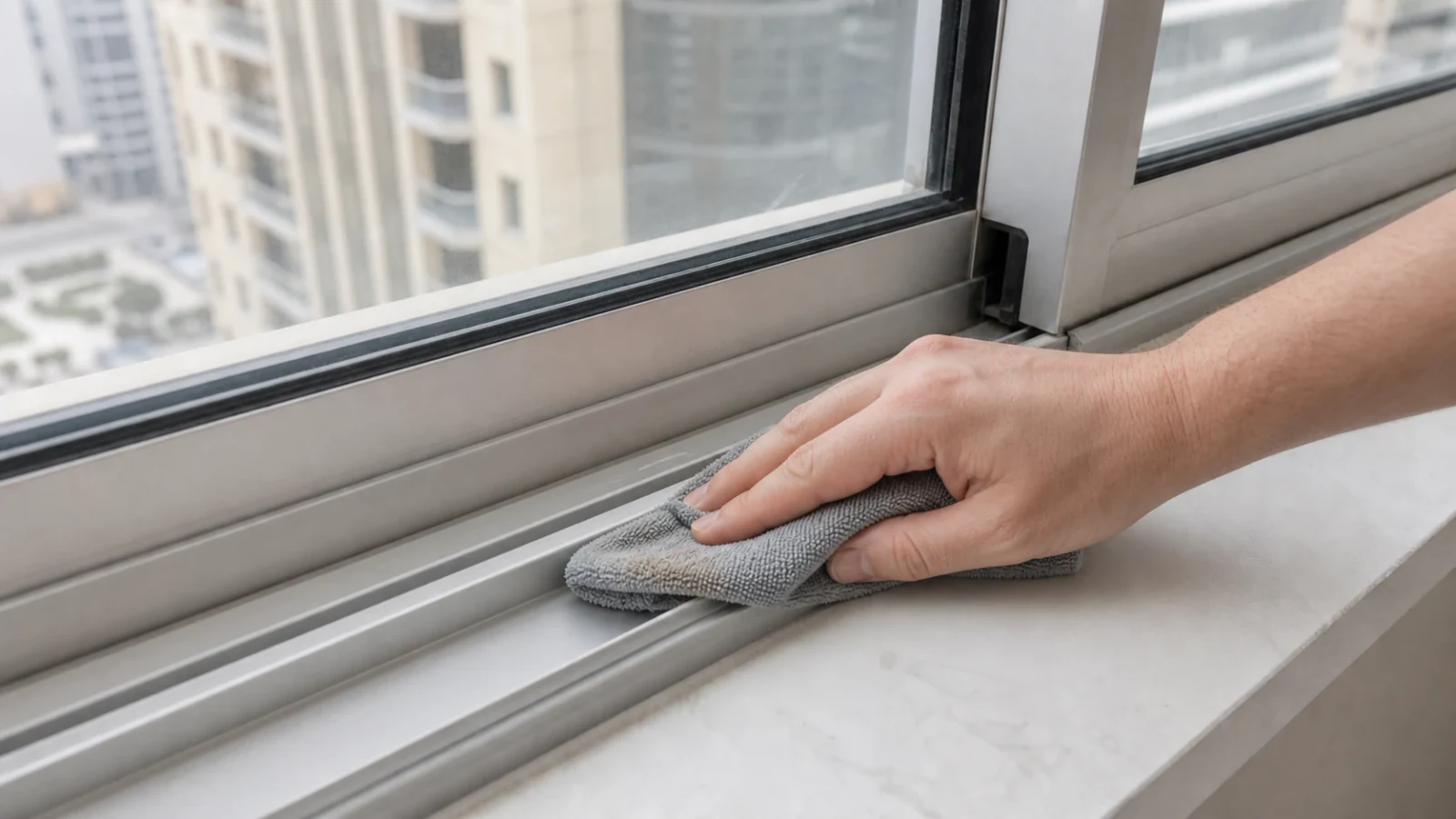
Wipe with a barely damp cloth to remove dust
Dip a microfibre cloth in water and wring it out thoroughly so it is nearly dry. Wipe the entire track length in one direction, pressing gently into the groove. Flip the cloth and do a second pass in the opposite direction. Do not pool water in the track.
-
Step 04
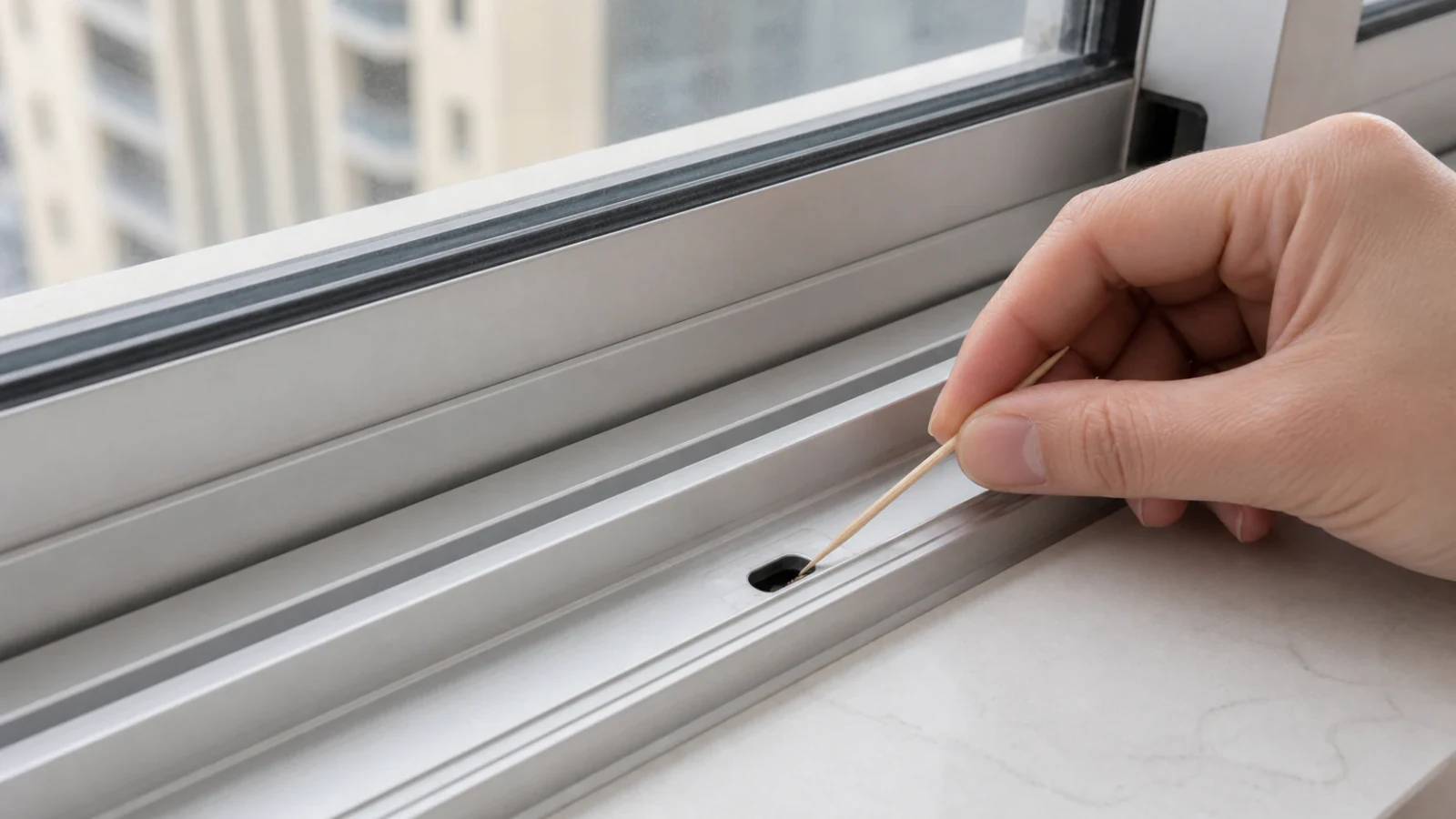
Locate and clear the weep holes at the base
Weep holes are small openings (3–5 mm diameter) in the bottom edge of the track, typically spaced 30–45 cm apart. Use side lighting to spot them. Gently probe each hole with a wooden toothpick to dislodge debris. Push debris outward, never inward. Do not enlarge or force.
-
Step 05
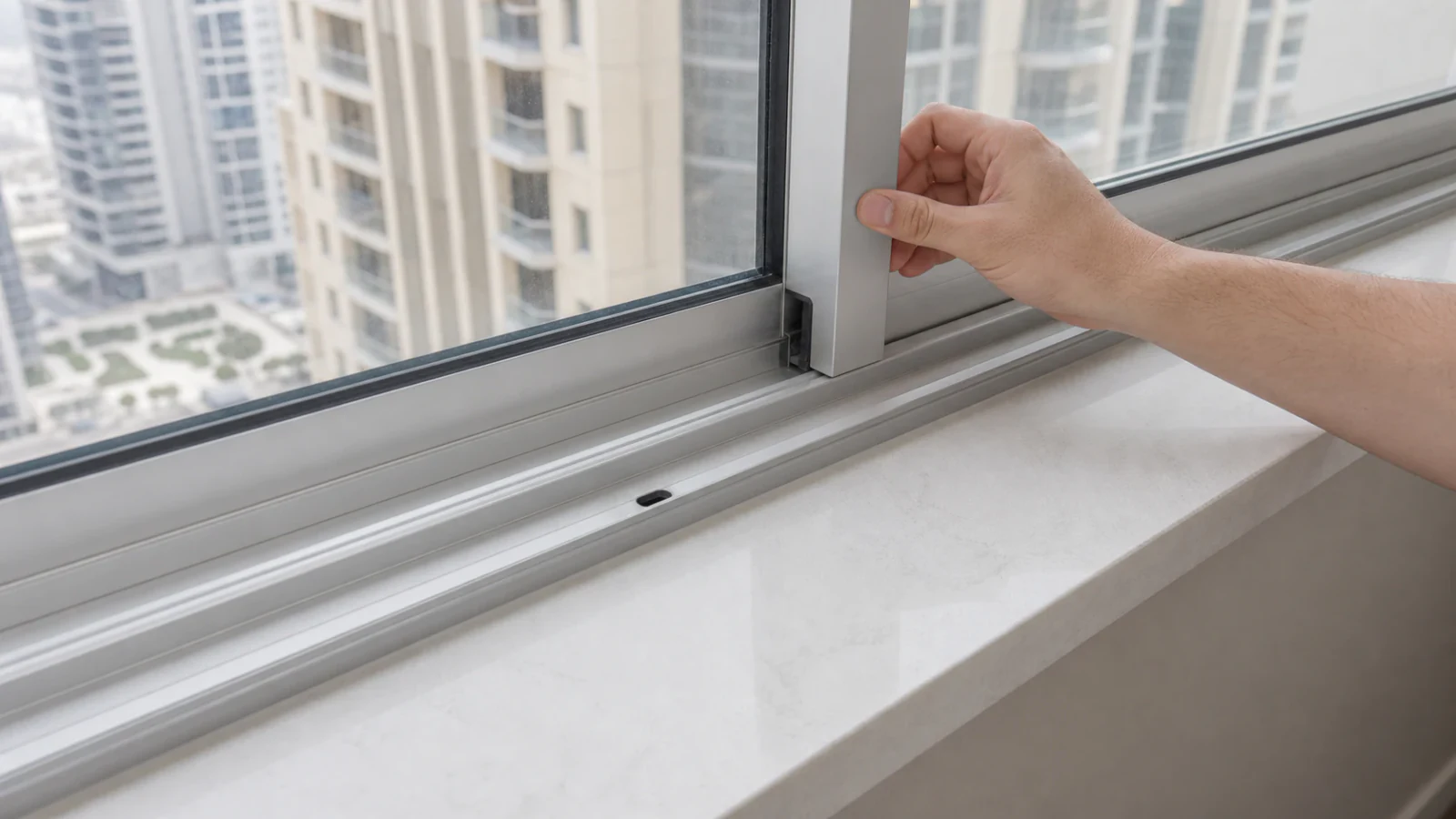
Test the window for smooth movement
Open and close the sash gently three times, moving slowly to feel for resistance or grinding. The window should glide smoothly without sticking, grinding sounds or jerky motion. If it still catches, stop and do not force it.
Quick answers
Frequently asked questions.
What are the small holes in window tracks for?
Weep holes are drainage openings at the base of the track. They allow condensation water and rain that seeps into the frame to drain outward instead of pooling on the sill. Without clear weep holes, trapped moisture causes wood rot, mould and water damage.
How do you stop windows sticking in their tracks?
Keep the track free of sand and debris by vacuuming weekly during dust season. Ensure weep holes are clear so moisture drains properly. Do not use oil or petroleum lubricants on tracks—they attract dust. If sticking persists after cleaning, have a glazier inspect it.
Can I use a pressure washer to clean window tracks?
No. Pressure washers force water and sand deep into the frame and seal weep holes with mud and debris. Use a vacuum first, then minimal water with a cloth. High-pressure water causes the water damage you are trying to prevent.