
DIY / Doors, Windows & Cabinets
Screw Spinning in Wood? The Toothpick Fix
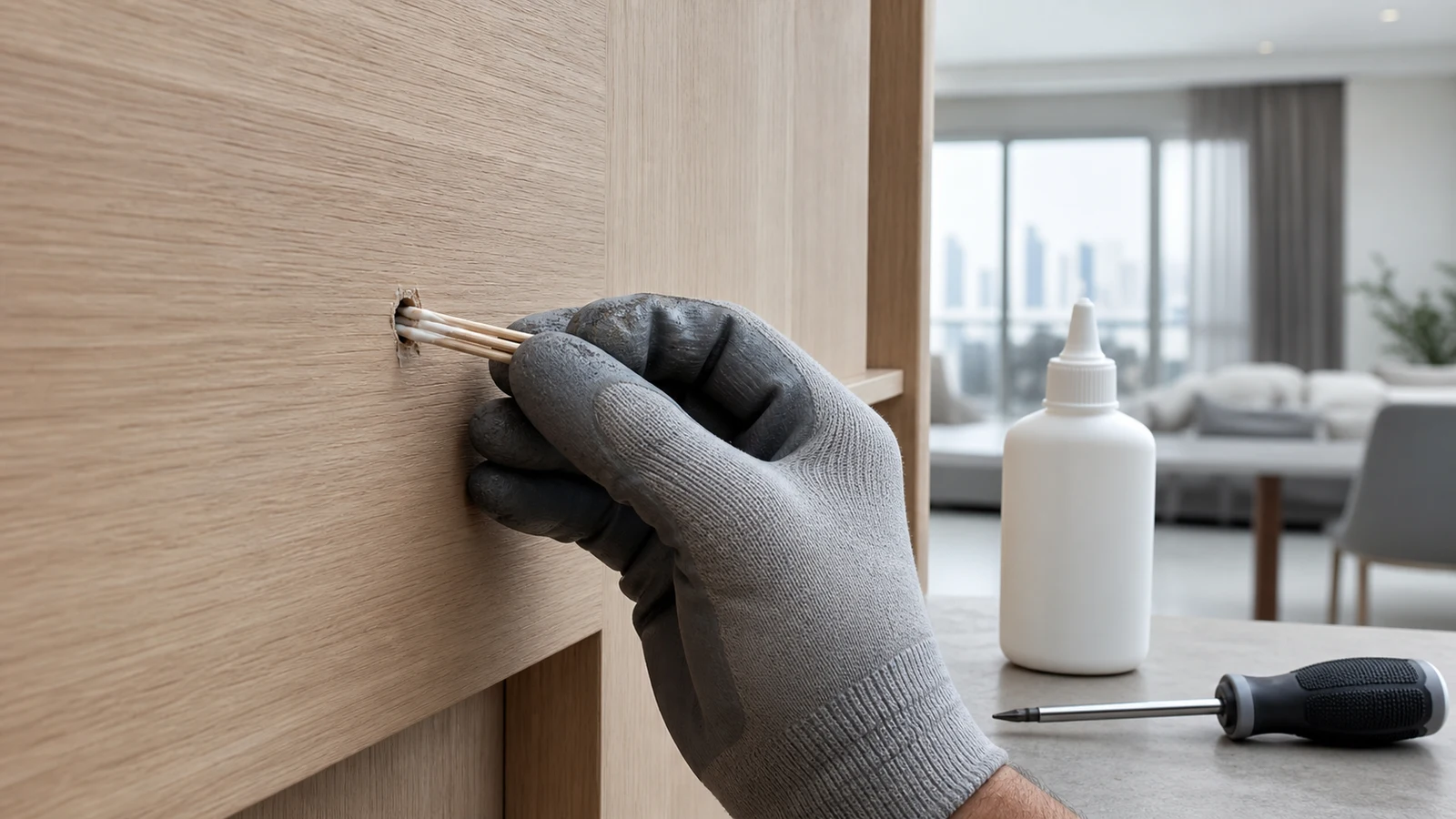
When a screw spins without grip, the hole has enlarged beyond the fastener's bite. This method restores wood density in small, non-structural holes by filling them with toothpicks and adhesive.
Quick answer
How do you fix a screw hole that's too big?
Fill the hole with wooden toothpicks dipped in wood glue, pack them tightly, trim flush after cure following the label, then re-drive the screw. For larger holes, use a wooden dowel instead of toothpicks. Stop if you find fire, security door, handrail or load-bearing or safety-critical fixing.
Solid hardwood (oak, pine, ash) / Solid softwood / Cabinet hinges and mounting points / Drawer slides and rail fixings / Door handles and knobs
Crumbling, wet or swollen particleboard / Veneer over hollow core / Fire doors or security hardware / Structural fixings or load-bearing handrails / Hinges subjected to repeated heavy impact / Safety-critical fixings (fall arrest, electrical mounting) / MDF, particleboard, veneer and hollow-core panels
What you need
What you need
Wooden toothpicks are usually free in the kitchen. Wood glue costs AED 8–15 and is widely available. A correctly sized screwdriver completes the job.
- Difficulty
- Easy
- Active time
- 10–15 minutes
- Total time
- 15 minutes + wood glue cure time (see label)
Wooden toothpicks or matches
4–8 per hole
Wood adhesive (PVA or polyurethane)
1 small bottle (50 ml) covers multiple repairs
Screwdriver (correct size for fastener)
1
Gloves (nitrile or latex)
1 pair
Typical UAE retail ranges. Prices vary by pack and store, and your total is lower when you already own the reusable tools.
Step by step
How to fix a stripped screw hole with the toothpick method
This repair suits small holes in hinges, handles and slides where the screw has lost grip but the wood structure remains sound.
-
Step 01
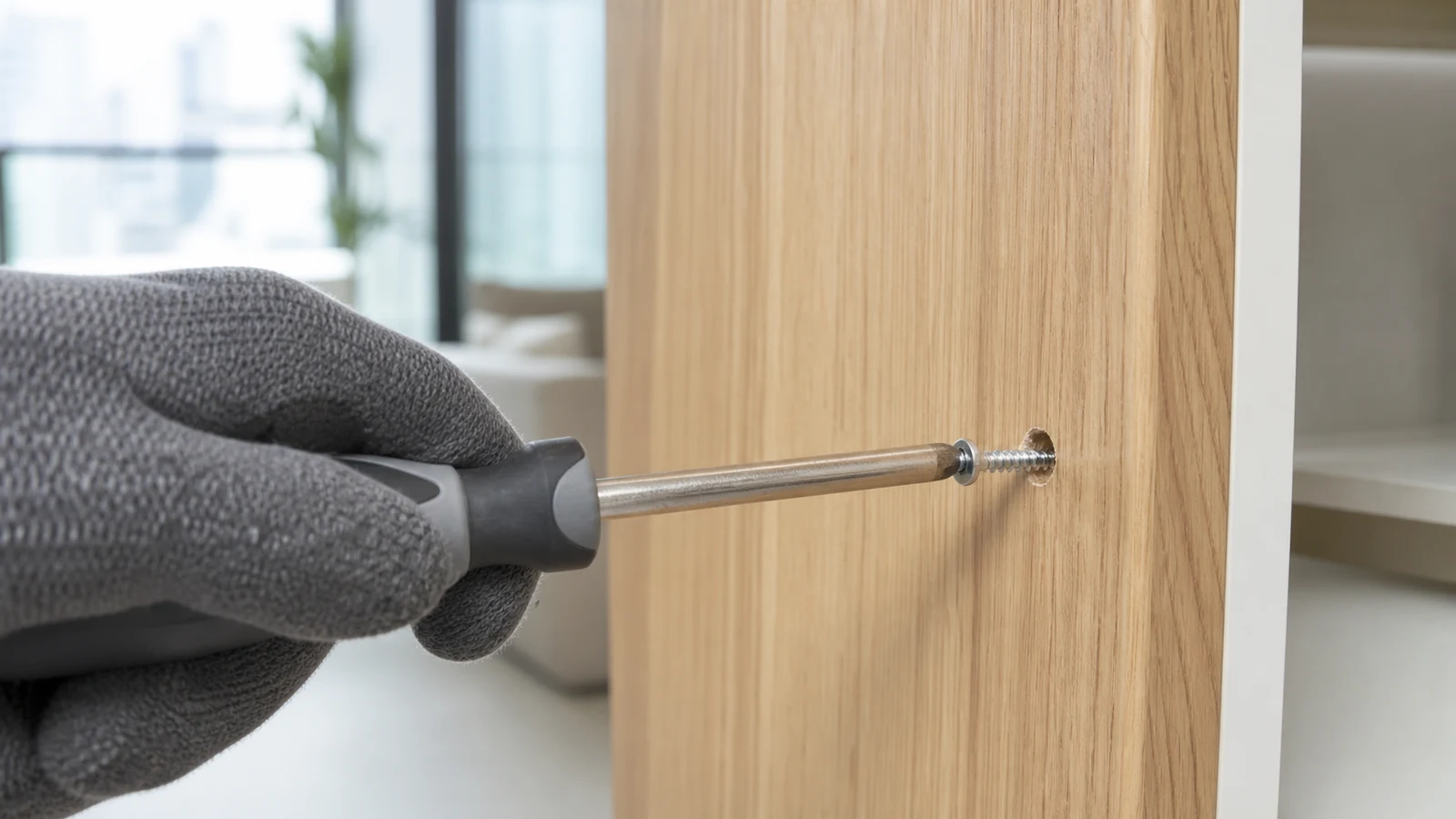
Remove the loose screw and inspect the hole
Unscrew the fastener fully and set it aside. Look into the enlarged hole: the wood should be dry, not swollen or crumbling. If the board is soft, damp or crumbles when probed, stop and use a larger dowel or abandon the repair.
-
Step 02
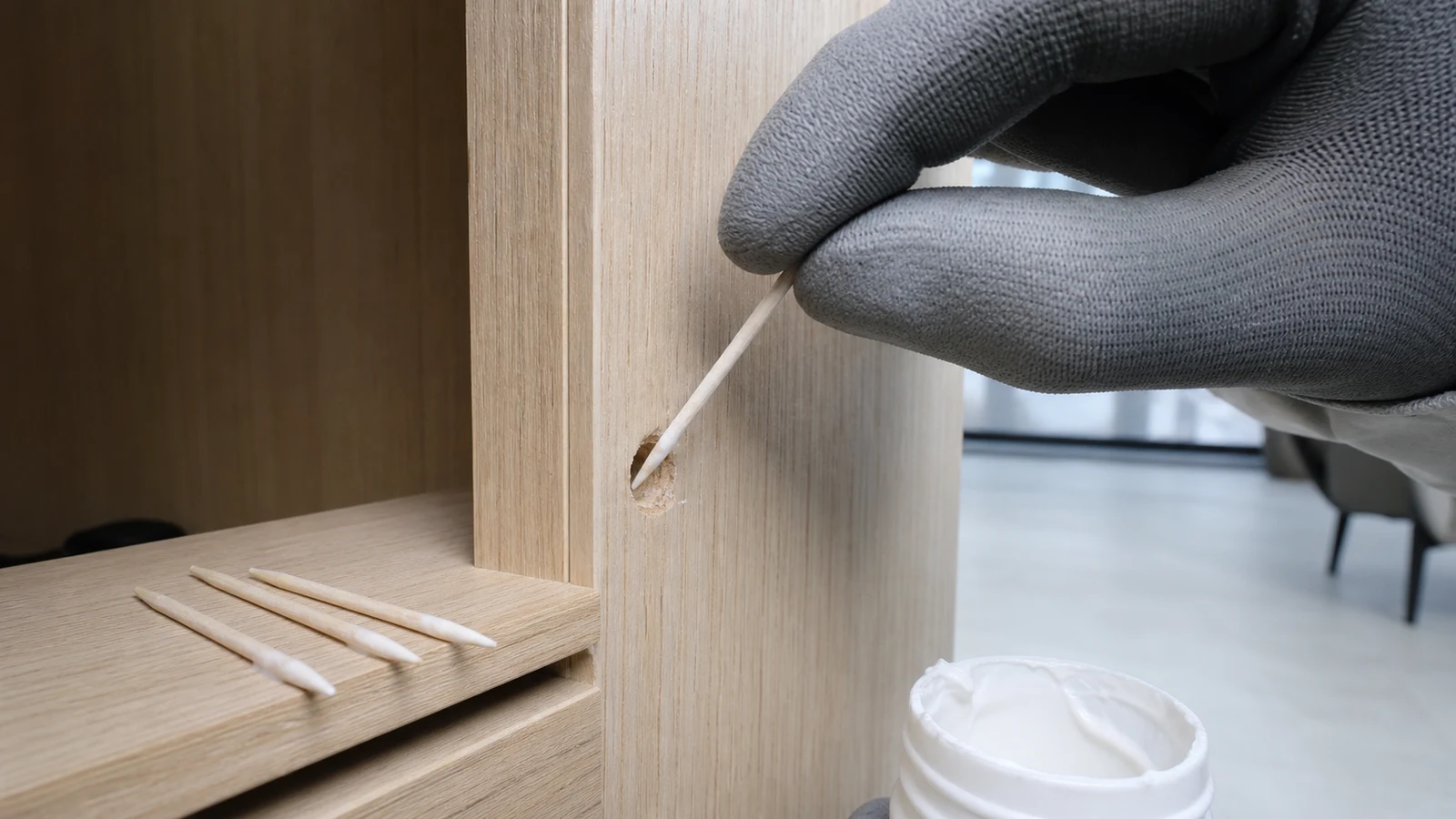
Dip toothpicks in wood glue and pack the hole
Put on nitrile gloves. Pour a small amount of wood adhesive onto a scrap. Take 4–8 wooden toothpicks and roll each one in the glue until lightly coated. Insert them into the hole vertically, packing tightly until full and toothpicks protrude above the surface.
-
Step 03
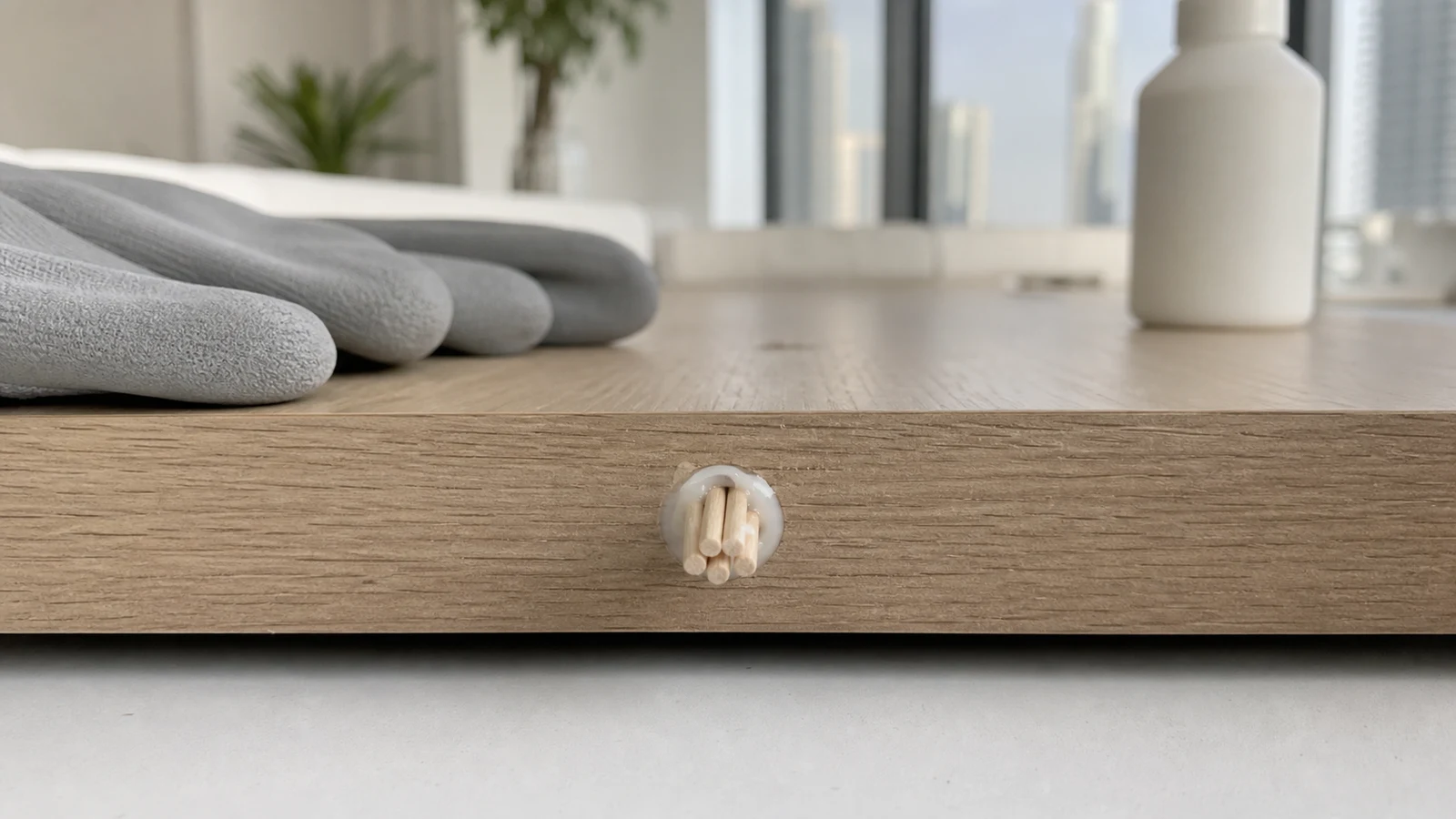
Allow glue to cure fully before trimming
Leave the toothpick-filled hole untouched for the full cure time specified on your wood adhesive label—typically 8–24 hours. Do not trim, sand or re-drive the screw before cure is complete. The glue must harden to provide grip for the fastener.
-
Step 04
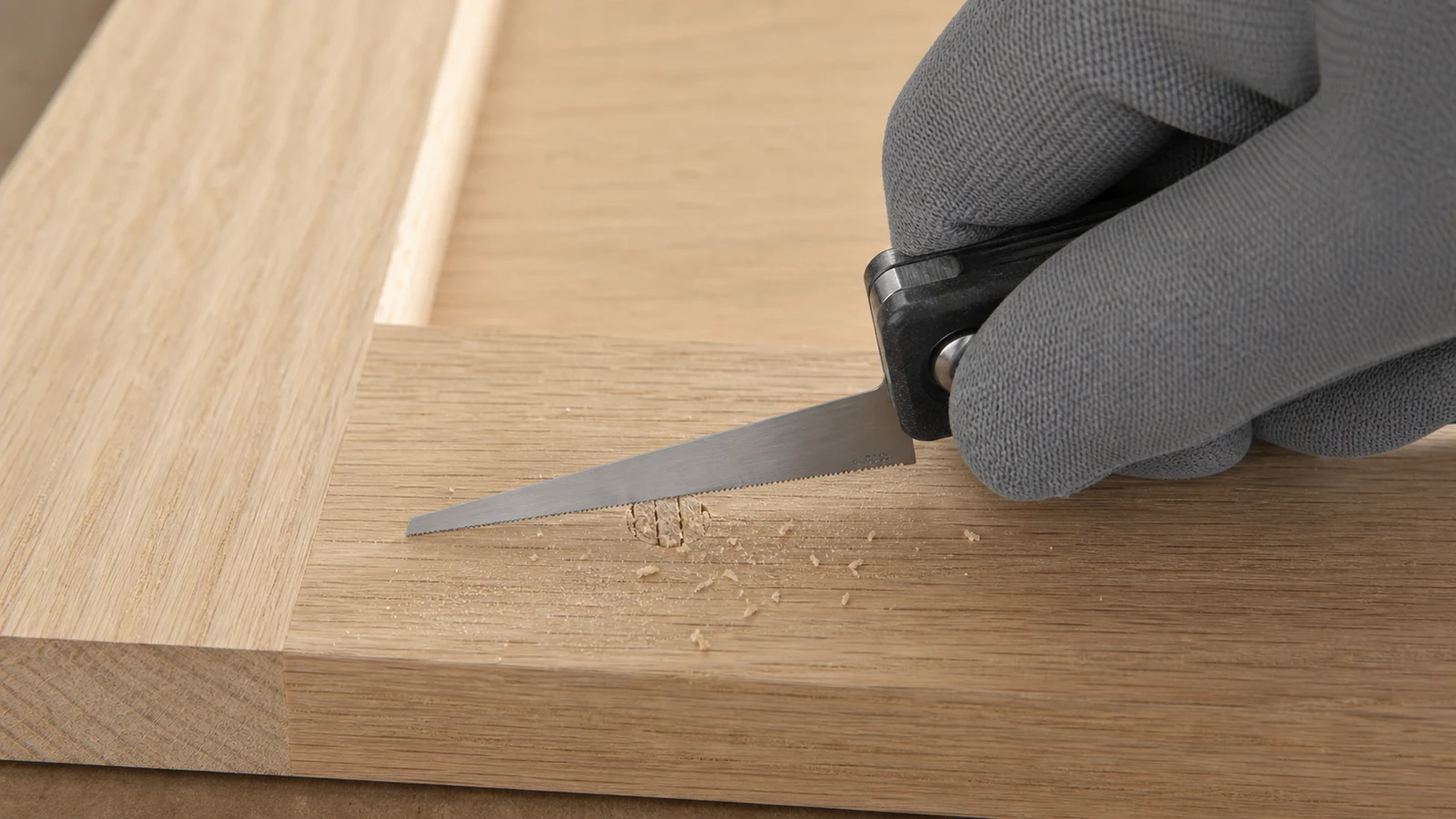
Trim the toothpicks flush with the wood surface
Once fully cured, use a handsaw or fine utility knife to carefully cut the protruding toothpicks level with the wood surface. Work at a shallow angle to avoid splitting the surrounding wood. Sand lightly if any rough edges remain.
-
Step 05
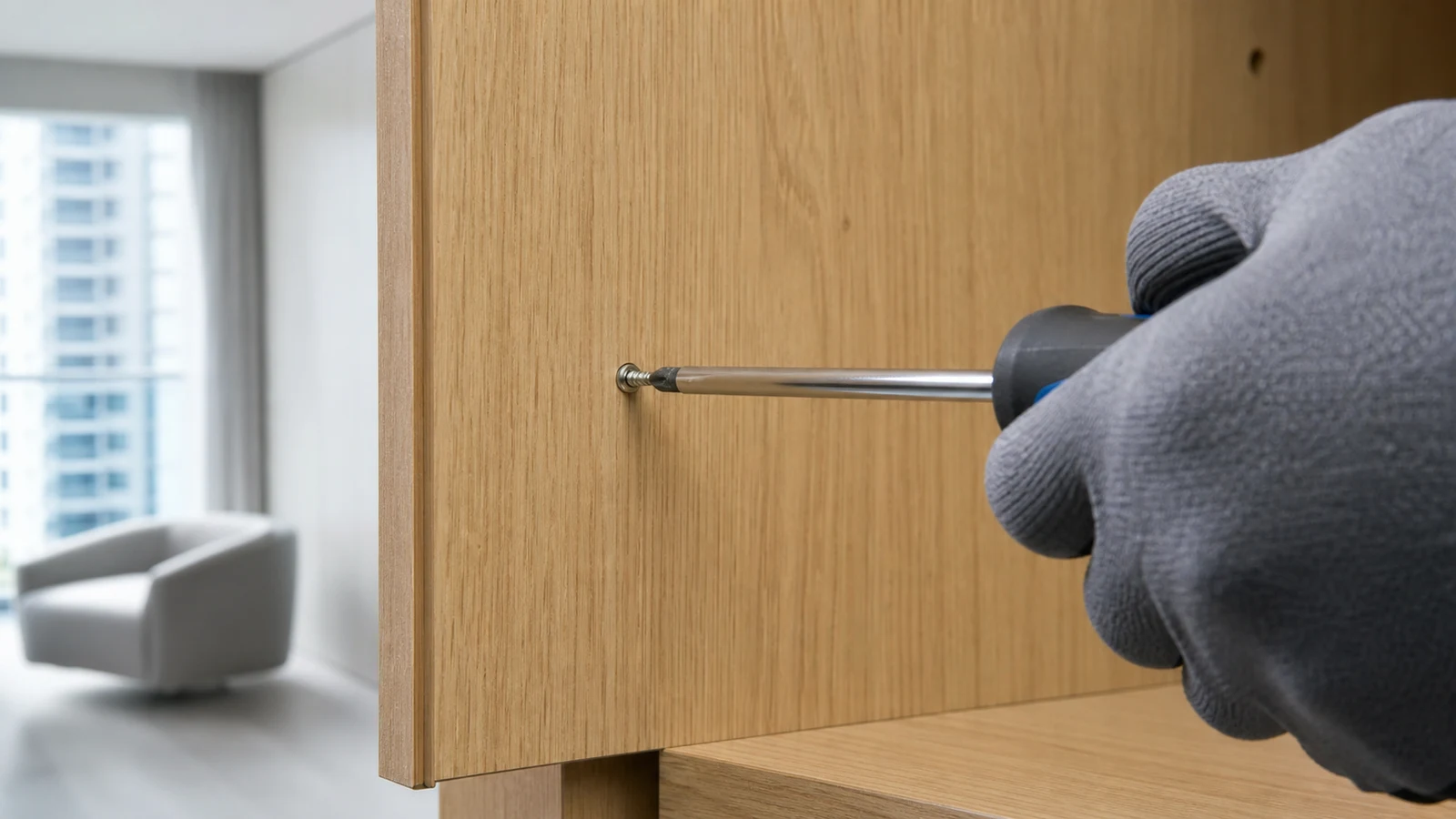
Re-insert the screw with firm, steady pressure
Position the original screw at the hole entrance and begin turning with a correctly sized screwdriver. Apply steady downward pressure as you drive. The screw should meet solid resistance—not spin freely as before. Tighten until snug without over-driving.
Quick answers
Frequently asked questions.
Does the toothpick trick really work?
Yes, for a small non-structural hole in sound solid wood when the hardware and screw are intact. Glued wood slivers can restore material for a pilot hole after the full labelled cure. Do not use it on composite board, wet wood, split edges or repeatedly loaded safety-critical fixings.
What do you do when a hinge screw keeps coming loose?
Inspect the hinge and hole first: the hinge may be bent or the wood stripped. If the hole is enlarged, repair it with toothpicks and glue or a dowel. Replace the hinge or screw if either is damaged. Wear eye protection when trimming/drilling.
Can you use this method on MDF?
No. This guide is intentionally limited to sound solid wood. MDF and particleboard fail differently, and toothpicks can split, loosen or crush the surrounding fibres. Use the board and hardware maker's approved repair system, or replace the damaged component when it is swollen, crumbling, load-bearing or repeatedly loaded.