
DIY / Bathroom
Remove Rust Stains from Bathroom Tiles Safely
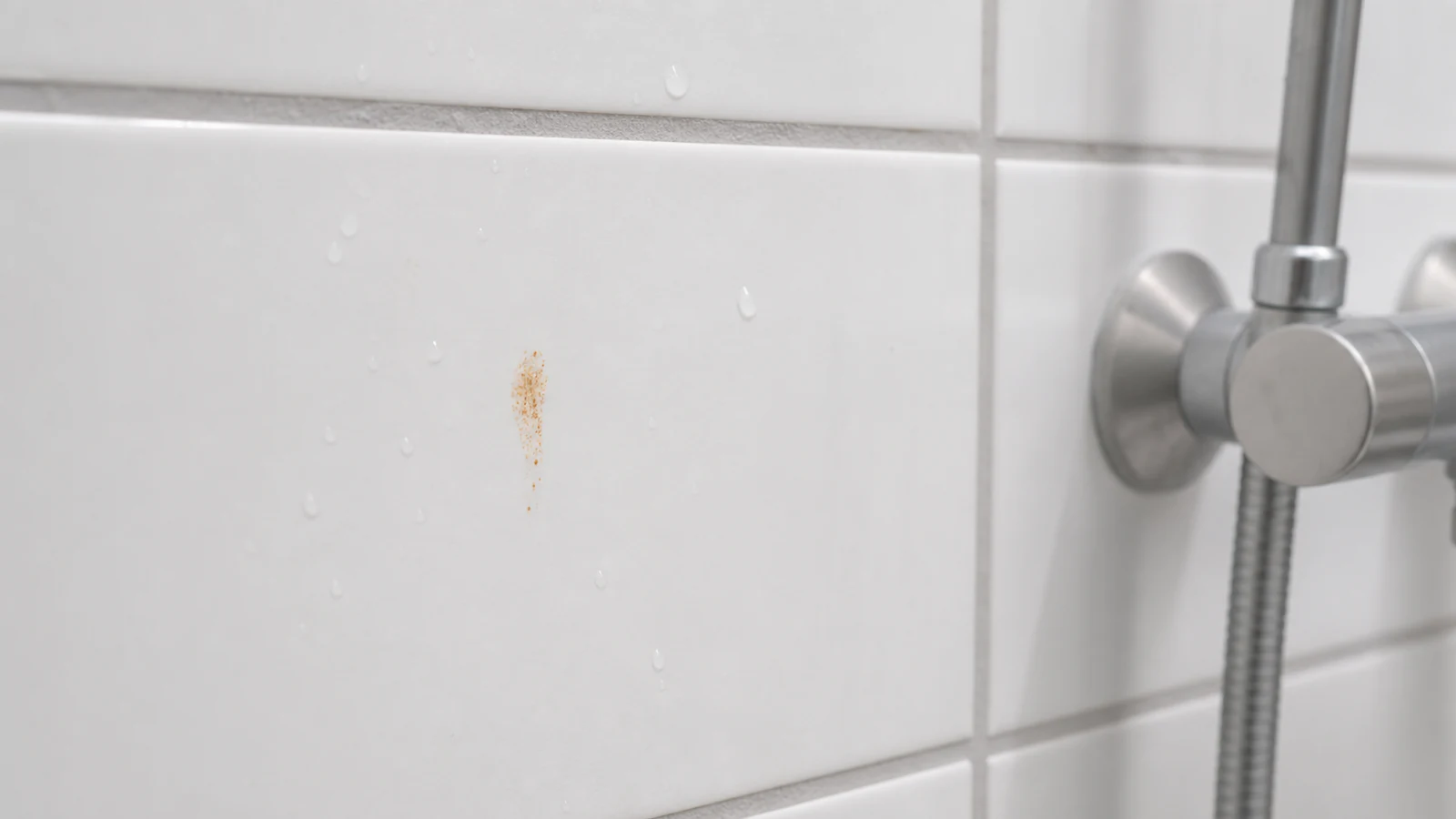
Use this method only for a small, one-time rust-transfer stain on identified, intact glazed ceramic or porcelain. Unknown stone, recurring stains, pitting, leaks and damaged metal need specialist assessment.
Quick answer
How do you remove rust stains from tiles?
Confirm intact glazed ceramic or porcelain and a small transfer stain. Try the tile maker's routine cleaner first. If needed, use only its approved rust product, following the label for PPE, testing, dwell and rinsing. Stop for recurrence, pitting, cracks or leaks.
A small one-time rust-transfer stain on identified, intact glazed ceramic tile / A small one-time rust-transfer stain on identified, intact glazed porcelain tile
Marble, limestone, travertine or terrazzo / Natural stone of unknown composition / Unsealed natural stone / Bare or unpainted metal (risk of accelerated corrosion) / Lacquered, powder-coated or anodised finishes without manufacturer approval / Grout, cracked tile, pitted metal, active corrosion or a recurring stain / Any surface or finish you cannot positively identify
What you need
What you need
Check the tile maker's care guide. Start with its routine cleaner, then only an approved rust product. Follow the label and SDS for PPE, ventilation, testing, contact time and rinsing.
- Difficulty
- Easy
- Active time
- Product-label specific
- Total time
- Product-label specific, including rinse and drying
Tile-maker-approved routine cleaner
As labelled
Tile-maker-approved rust-stain cleaner, only if required
As labelled
Clean water
As needed for labelled rinsing
Soft cloth or non-scratch pad approved by the tile maker
1
Product-label-specified gloves and eye protection
1 set
Clean dry cloth
1–2
Typical UAE retail ranges. Prices vary by pack and store, and your total is lower when you already own the reusable tools.
Step by step
How to Remove Rust Stains from Bathroom Tiles
Proceed only with identified, intact glazed ceramic or porcelain and an approved cleaner. Follow its label; stop for unknown material, damage, corrosion, cracks, leaks or recurrence.
-
Step 01
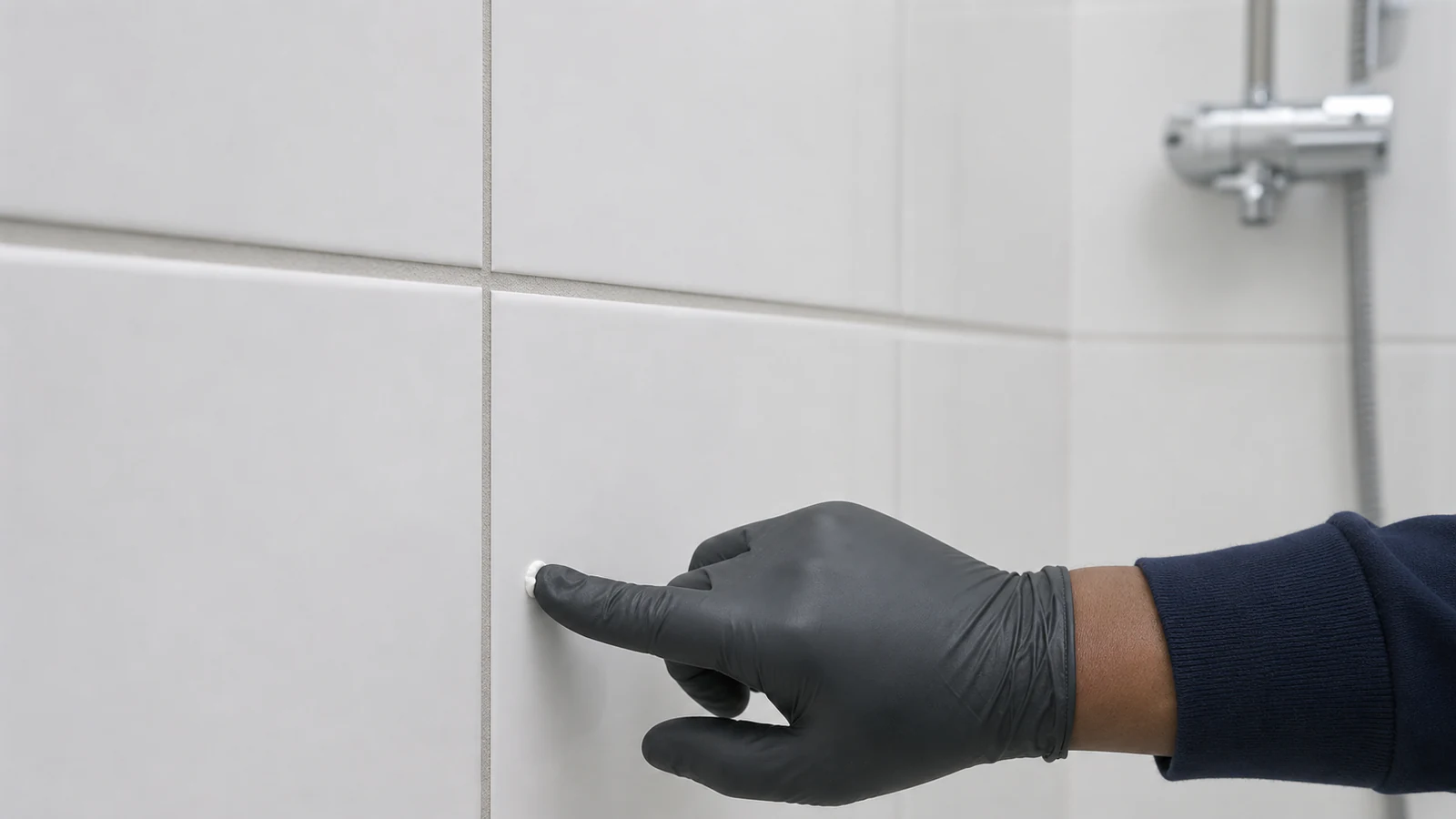
Identify the tile and distinguish transfer from corrosion
Use records or the maker's mark to confirm intact glazed ceramic or porcelain. Check nearby fixtures for pitting, flaking, looseness, cracks or leaks. Stop for stone, unknown material, corrosion or recurrence.
-
Step 02
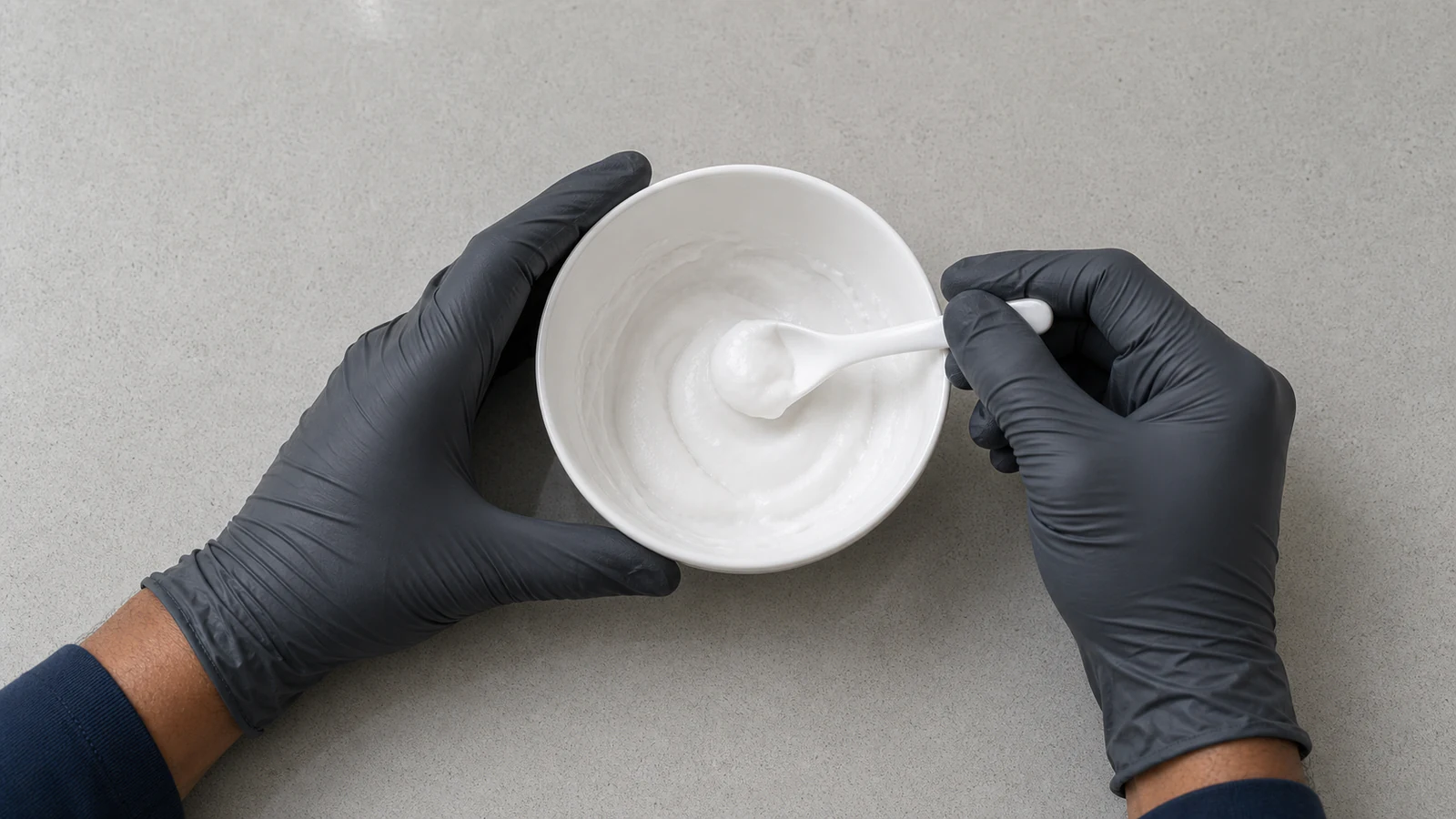
Check approval and prepare the labelled cleaner
Proceed only when the tile guide and cleaner label approve the surface. Ventilate, wear labelled PPE and prepare the product exactly as directed. Never add bleach, vinegar, lemon, salt or another cleaner.
-
Step 03
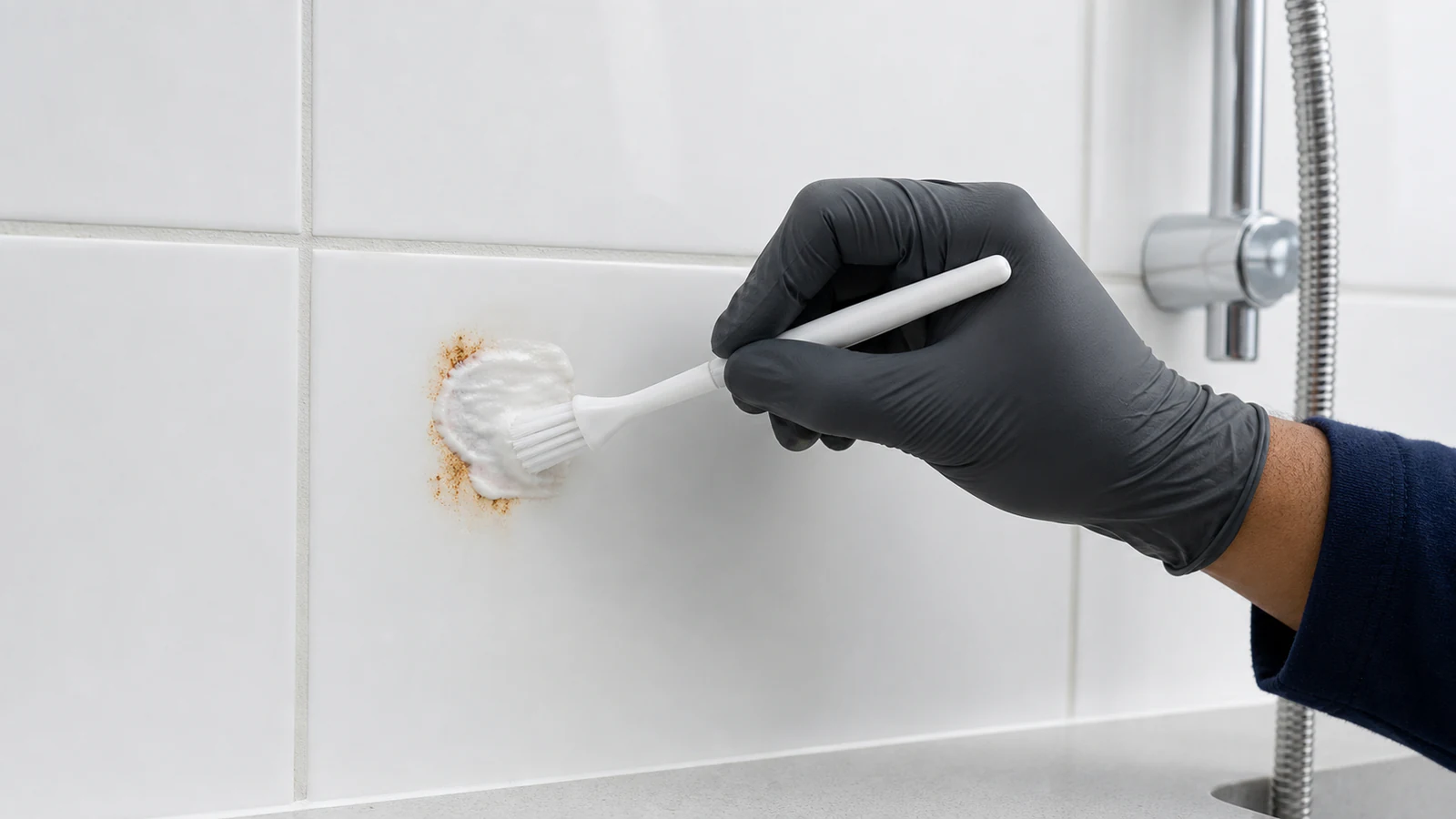
Test the approved cleaner in a hidden area
Test the approved product on a hidden area using the labelled tool, amount and contact time. Rinse as directed and dry. Stop for dulling, colour change, roughness, softening or another finish change.
-
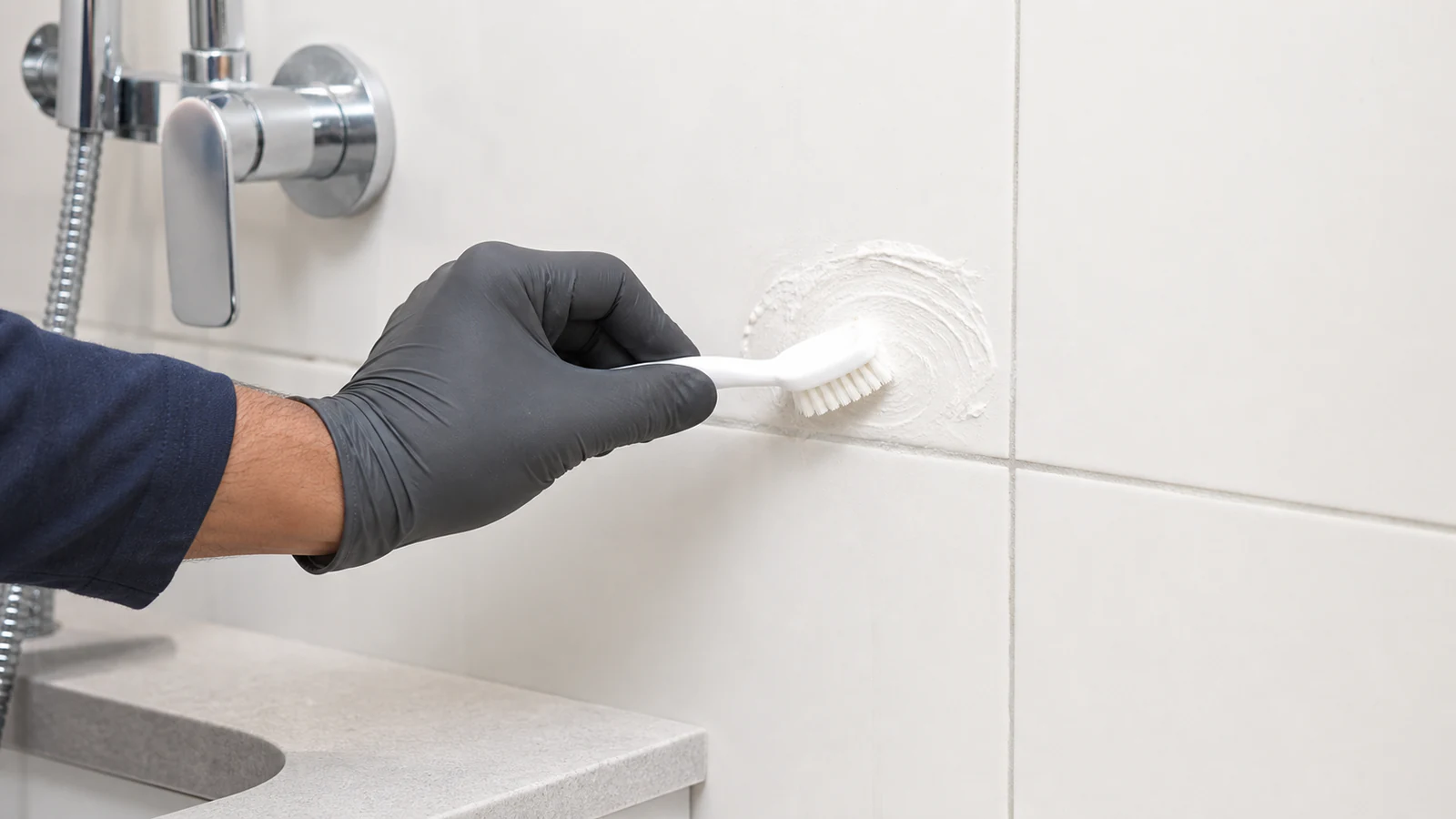
Step 04
Treat only the small transfer stain
If the test dries unchanged, treat only the mark using the labelled amount, applicator and contact time. Do not extend dwell or exceed permitted scrubbing. Stop if the finish changes.
-
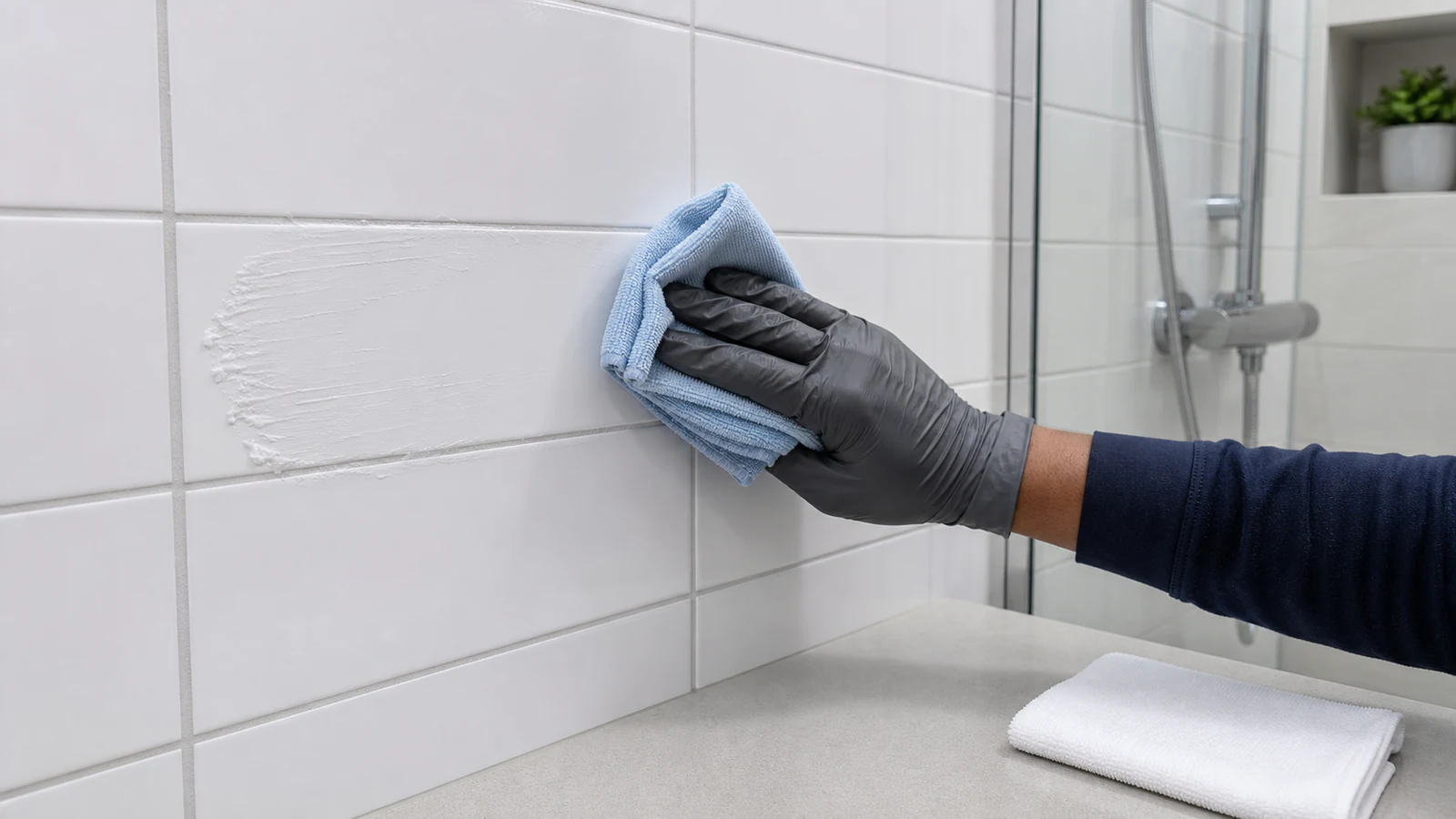
Step 05
Rinse thoroughly with clean water
At the labelled time, remove and rinse the product as directed. Use a fresh cloth until no residue remains, then dry. Do not apply clear coat, nail polish or another improvised barrier.
-
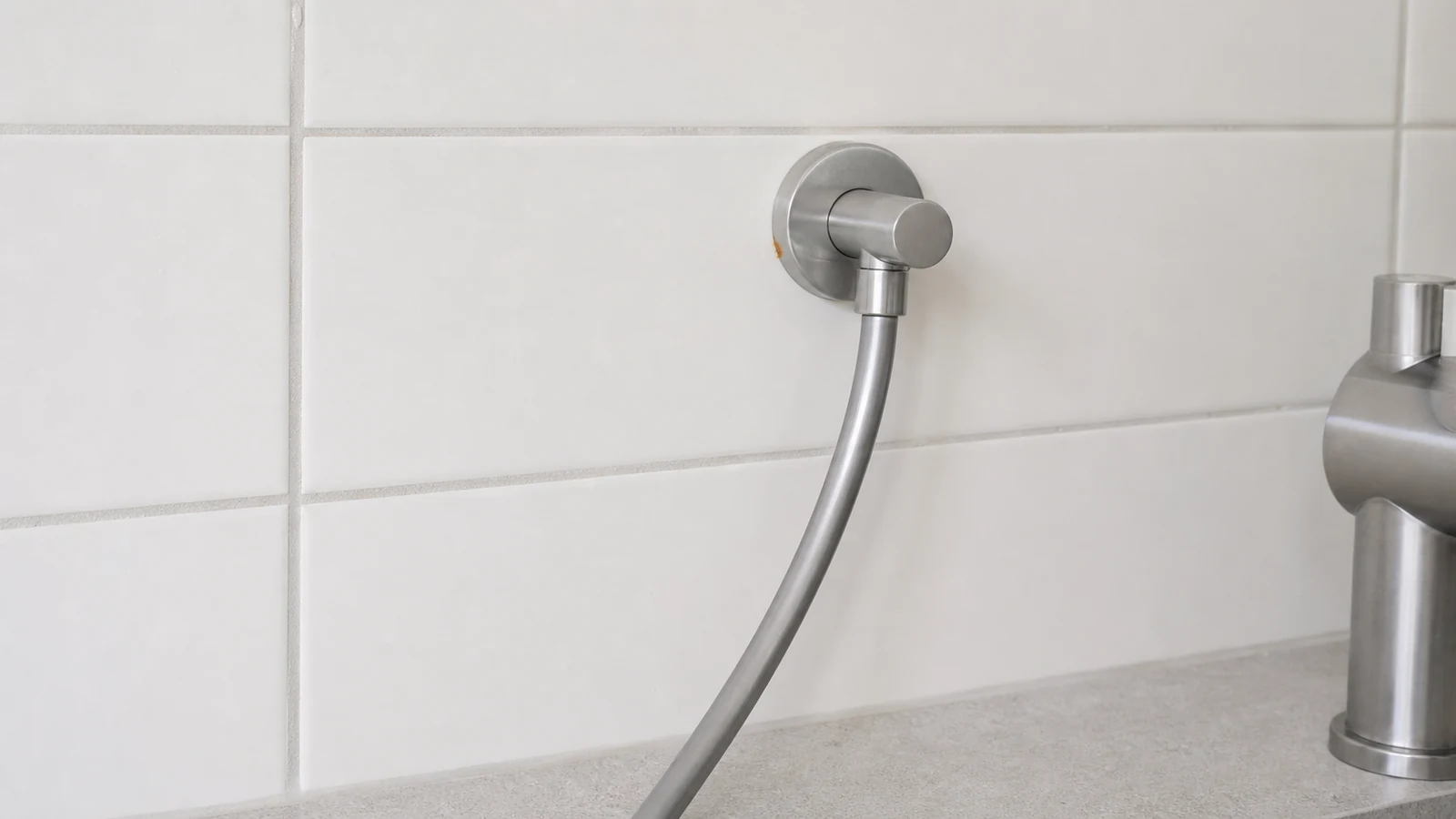
Step 06
Check the source and assess recurrence
Inspect the dry tile and fitting without dismantling. Contact the landlord or a qualified tradesperson if the stain remains or returns, or for pitting, flaking, looseness, cracks or leaks. Use only manufacturer-approved metal coating.
Quick answers
Frequently asked questions.
Does lemon and salt really remove rust?
Do not use lemon and salt as a general bathroom remedy. Acid can etch marble and calcareous stone, while salt and abrasion can harm finishes. Identify the surface and follow its maker's care guide. For glazed tile, use only an approved cleaner and stop if nearby metal is pitted.
How do you stop rust coming back in the bathroom?
A recurring stain may indicate continuing corrosion, water movement or a leaking joint. Photograph the dry area and contact the landlord or a qualified tradesperson. Do not keep applying cleaner, dismantle the fitting or cover it with a generic coating. Stop immediately for pitting, flaking, looseness, cracks or leaks.
Can you use vinegar to clean rust stains on tiles?
Do not use vinegar as a default rust treatment. It can etch marble, limestone and other calcareous stone and may damage grout or metal finishes. Identify the exact tile, consult its care guide and choose an approved product. Never mix vinegar or any acid with bleach or another cleaner.
Sources and review notes
- Daltile: Care and maintenance of ceramic and porcelain tile - Tile-manufacturer guidance to identify the surface, use suitable products, test first and rinse residues.
- American Olean: Porcelain tile care and maintenance - Manufacturer care guidance supporting product compatibility checks and non-abrasive cleaning.
- Natural Stone Institute: Natural stone care - Primary industry guidance warning that acids can etch calcareous stone and that stains require material-specific treatment.