
DIY / Doors, Windows & Cabinets
Remove Paint Splatter From Window Screens Safely
Screen makers generally specify mild soap, water and a soft brush for routine care. That method may lift tiny water-based paint specks only while they are still fresh. Dried, oil-based or unidentified paint is outside this guide: alcohol, acetone, thinner and scraping can weaken mesh or coatings, so replacement is safer than chemical escalation.
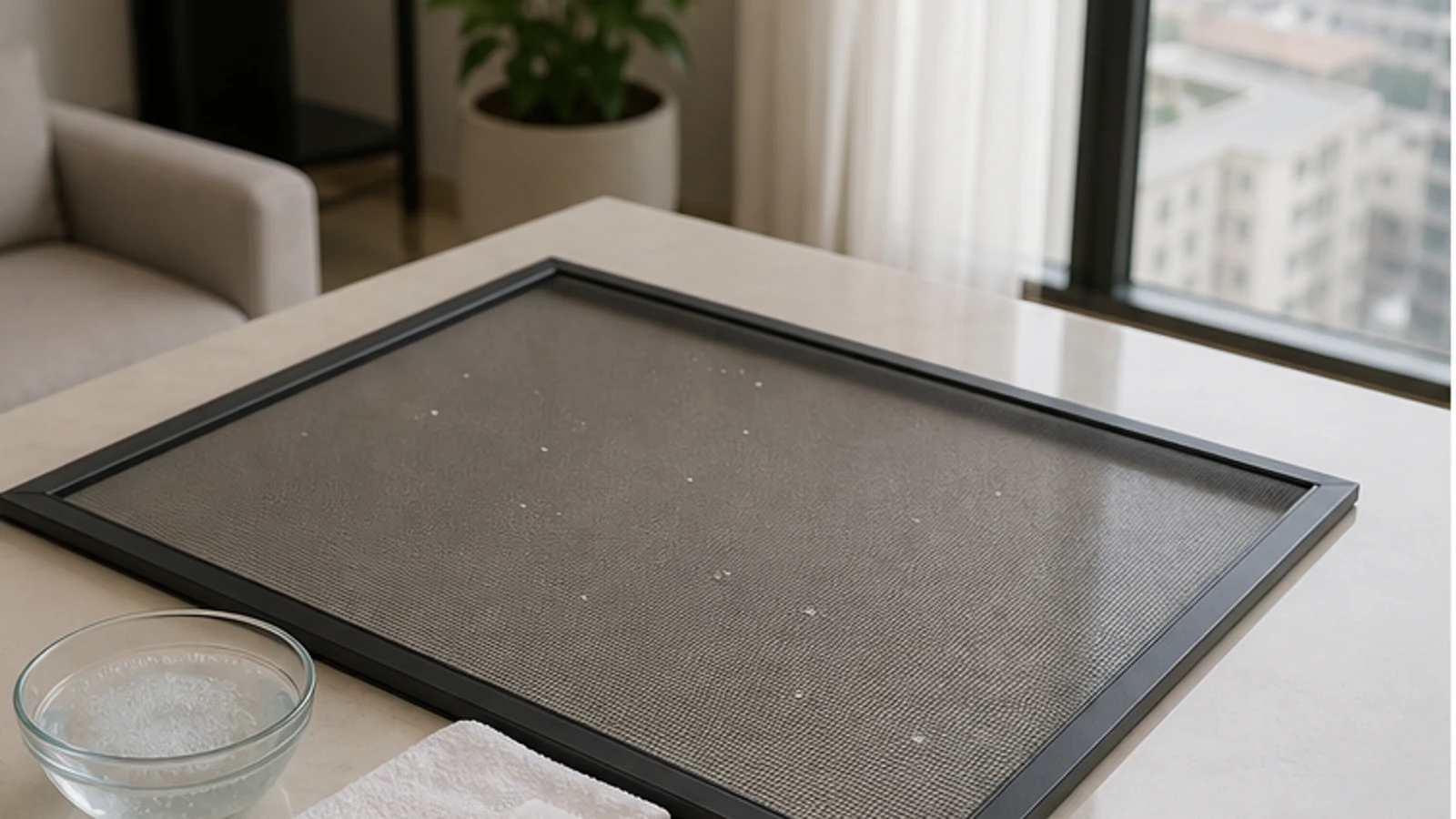
Quick answer
How do you remove paint specks from a mesh screen?
Act only on tiny fresh water-based specks when the screen maker permits mild soap and water. Support the screen flat, hidden-test the method, soften with label-diluted mild soap, use a soft brush, rinse and dry. Do not use alcohol, acetone, thinner or a scraper. Leave cured or unknown paint and arrange screen replacement.
Maker-confirmed washable screens in sound condition / Tiny fresh water-based paint specks only
screens with unknown mesh material or coating / Dried, cured, oil-based or unidentified paint / screens already softened, discoloured or peeling / screens that cannot be safely removed
What you need
What you need
Use only mild soap diluted as its label directs, clean water, soft cloths and a soft brush approved by the screen maker.
- Difficulty
- Easy
- Active time
- 15–20 minutes per screen
- Total time
- 20–30 minutes including drying
Mild soap approved by the screen maker
Label-directed dilution
Lint-free cotton pads or soft cloth
1 pack
Soft-bristled toothbrush or nylon brush
1 piece
Clean rinse water
As needed without soaking
Typical UAE retail ranges. Prices vary by pack and store, and your total is lower when you already own the reusable tools.
Step by step
How to Remove Paint Splatter From Window Screens Safely
Confirm the screen and paint first. Continue only with a tiny fresh water-based speck and the maker's mild soap-and-water method.
-
Step 01
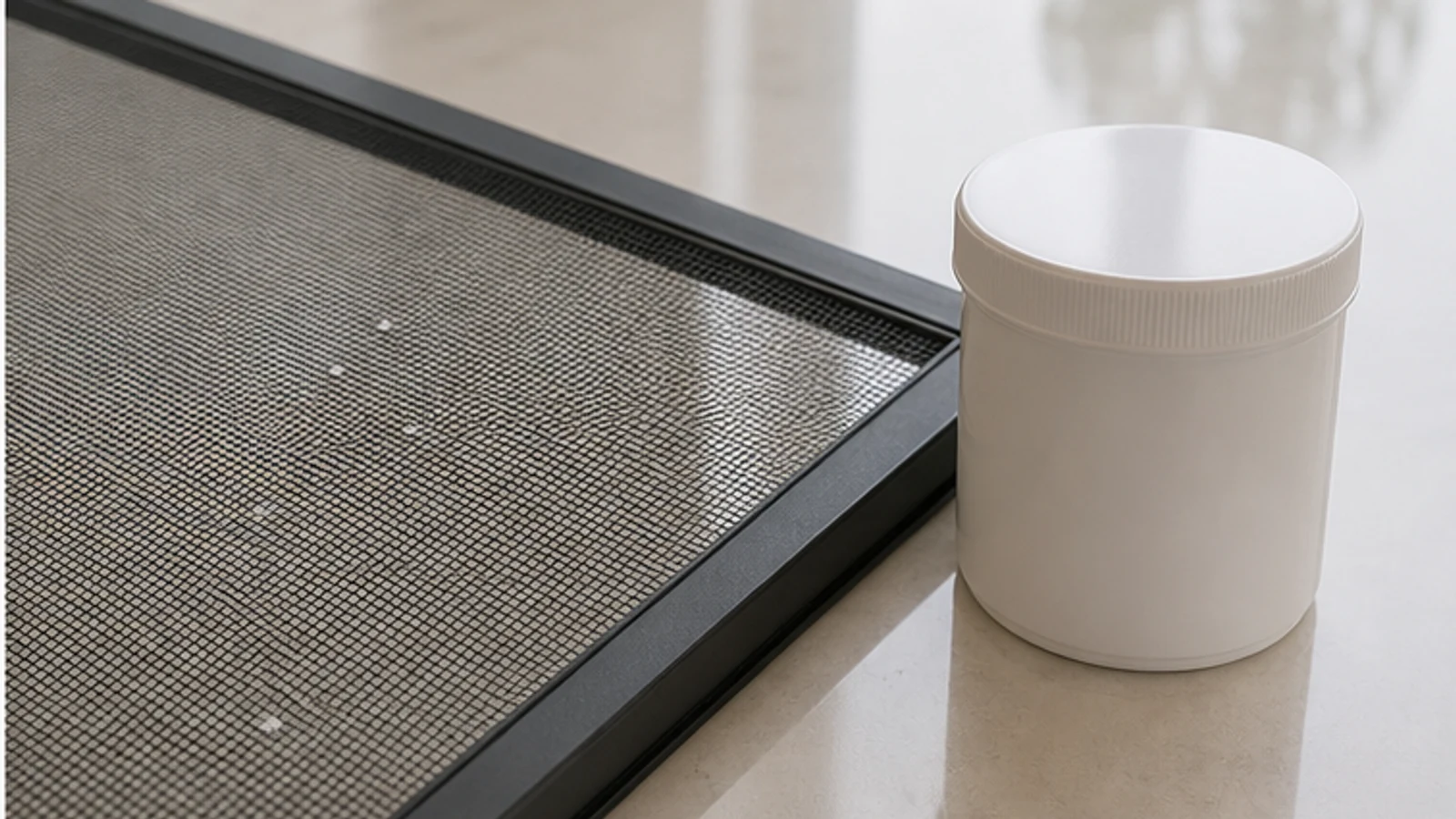
Identify the screen and confirm the paint is fresh
Check the screen maker's care guide and the paint container or contractor record. Continue only if the mesh is sound, washable with mild soap and water, and the tiny specks are fresh water-based paint. Stop for dried, unknown or oil-based paint, damaged mesh or uncertain care instructions.
The maker permits mild soap and water on this screen
The mesh and frame are sound before cleaning
The paint is confirmed fresh and water-based
-
Step 02
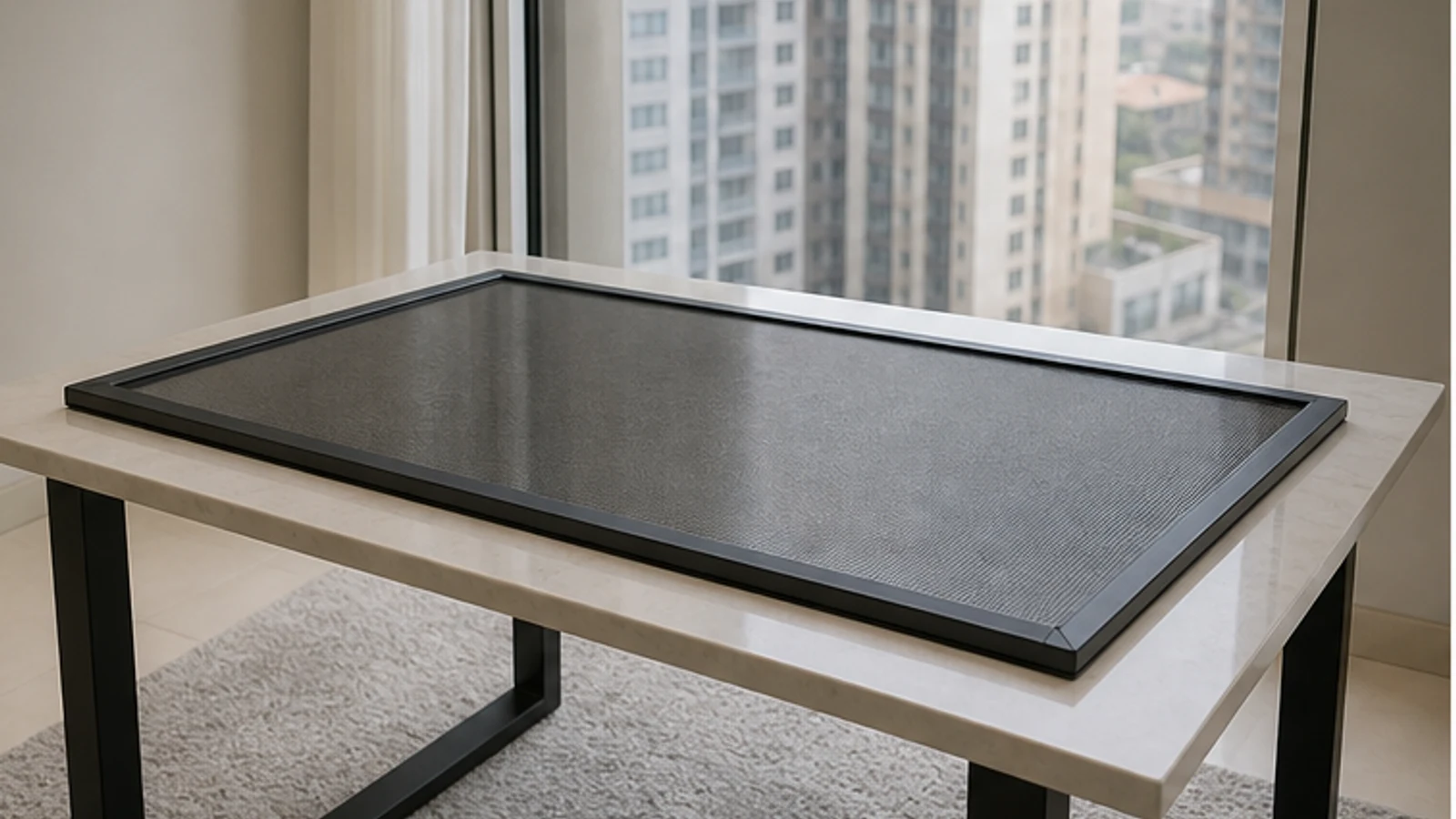
Remove the screen and secure it safely
Remove the screen only when its maker provides user-removal instructions and it can be reached entirely from a stable indoor floor. Lay it flat on a clean supported surface. Never lean outside, work at height, force clips or handle a large, damaged or wind-exposed screen.
Screen is horizontal, stable and within arm's reach
No part of the screen overhangs a table edge
Lighting is direct and shadows do not obscure paint specks
-
Step 03
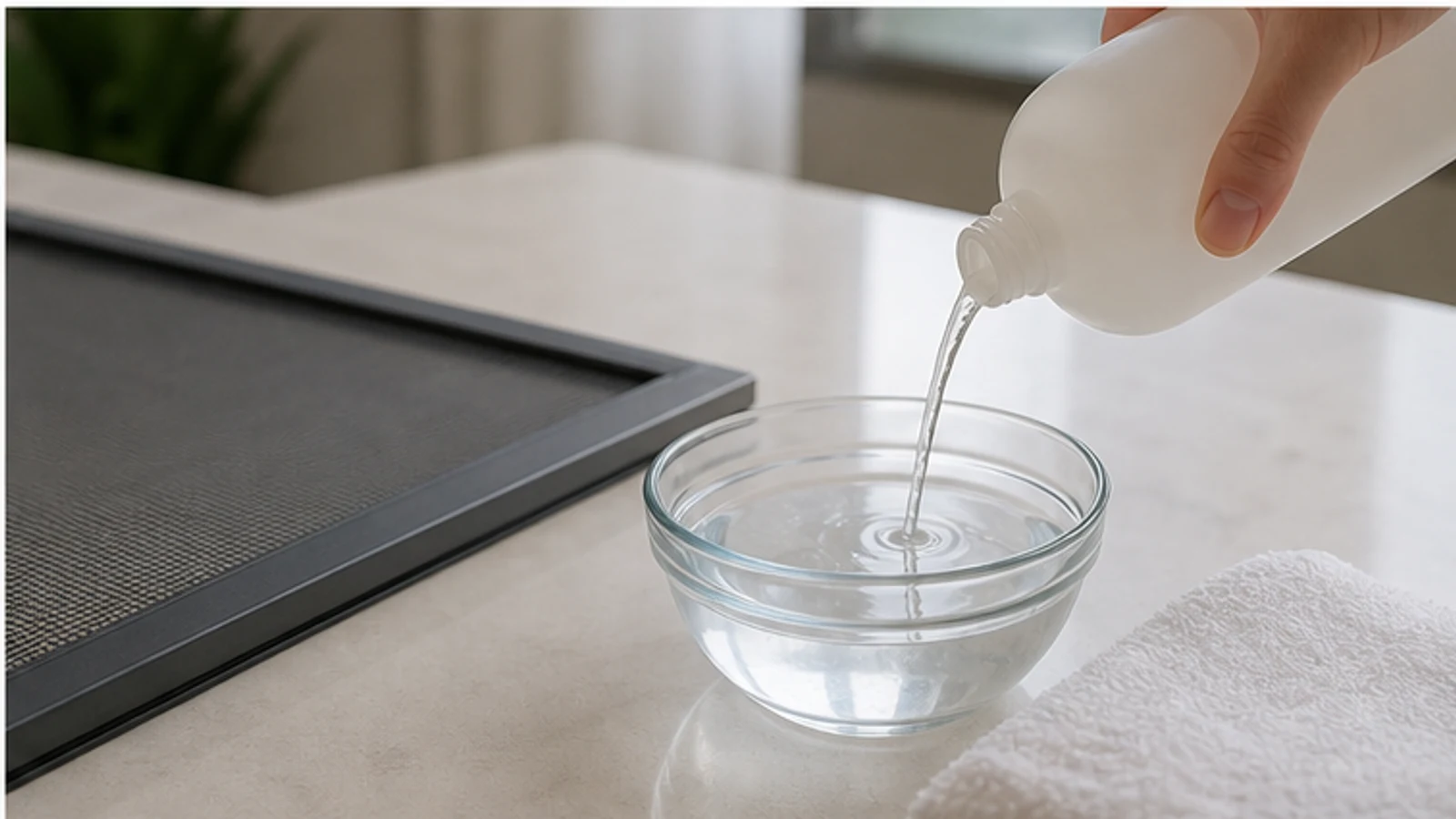
Prepare the label-diluted soap solution
Dilute the maker-approved mild soap exactly as its label directs. Place the supported screen over a clean absorbent towel and keep the workspace free of trip hazards. Do not bring alcohol, acetone, thinner, aerosol cleaner or another chemical into the process.
Soap is diluted exactly as its label directs
A clean towel supports the treatment area
No solvent, aerosol or abrasive tool is present
-
Step 04
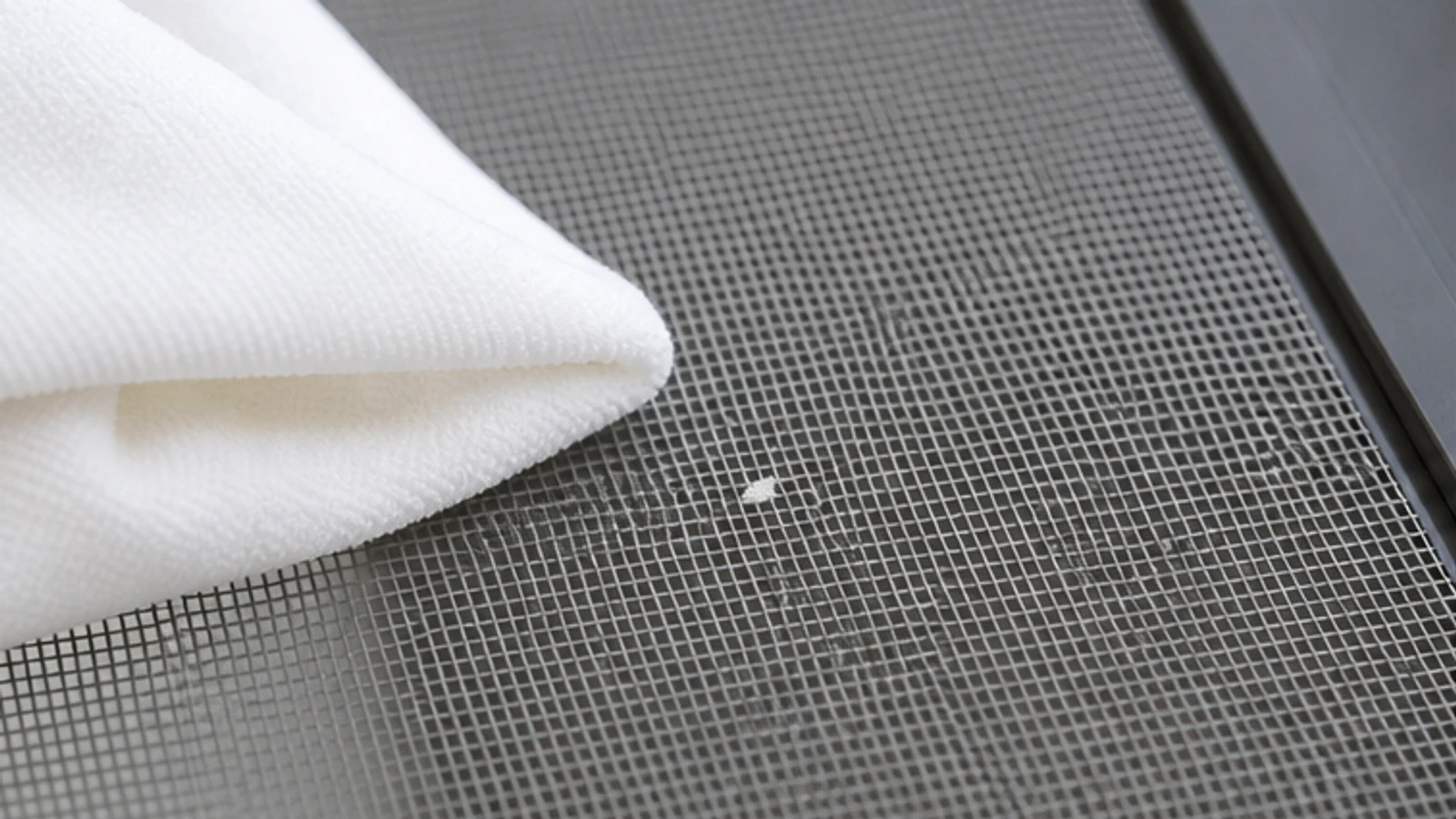
Soften the fresh specks with mild soapy water
Hidden-test the soap method first. Then touch a barely damp soft cloth to each fresh speck for the screen maker's stated cleaning time without soaking the mesh. If the paint does not transfer easily, stop. Do not extend contact, add solvent or chase a dried speck.
The hidden test leaves mesh colour and texture unchanged
A fresh speck transfers with minimal contact
The mesh remains supported and is not soaked
-
Step 05
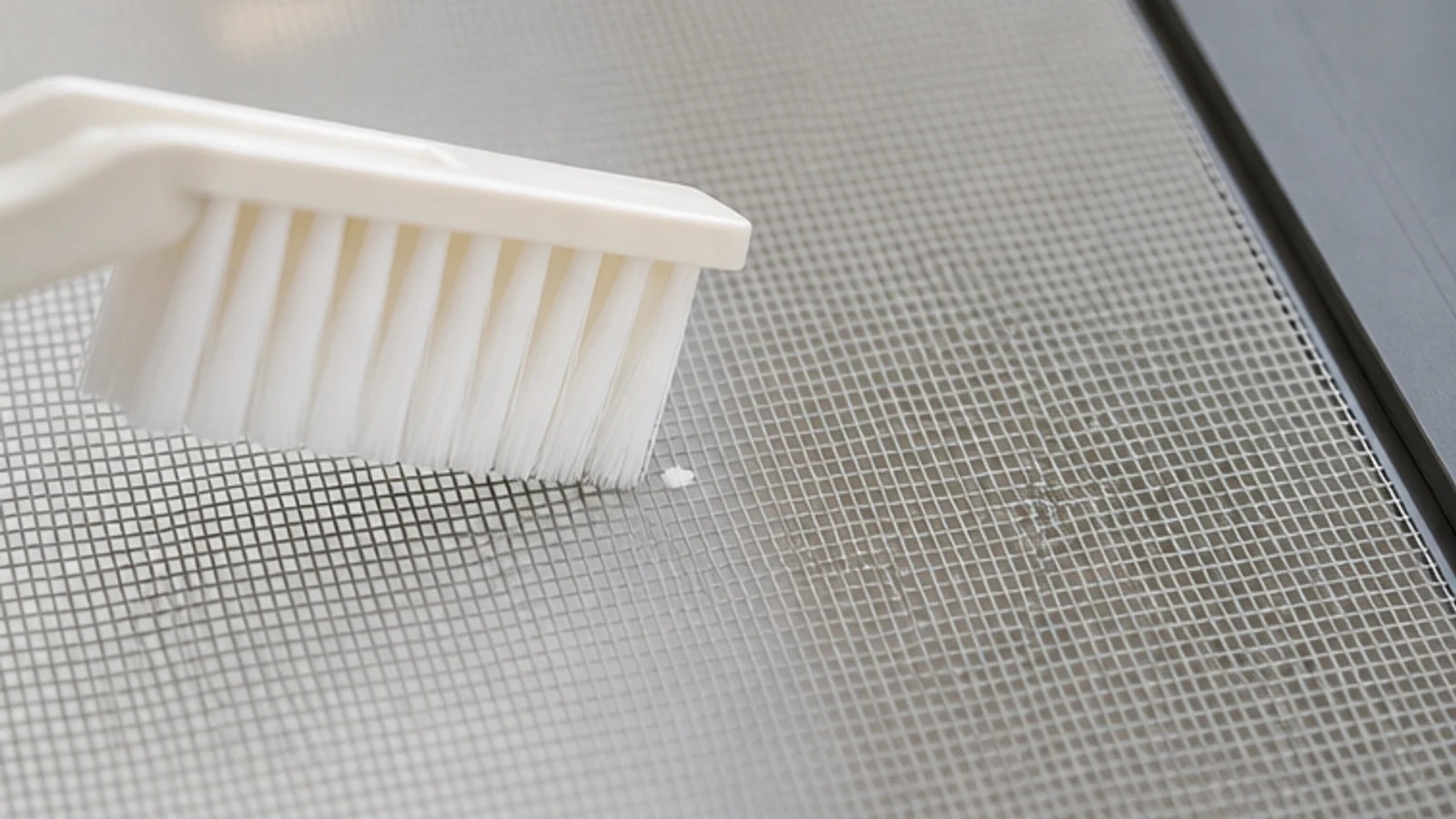
Use a soft brush with almost no pressure
Move a soft-bristle brush gently along the supported mesh while it remains damp with the approved solution. Never use a scraper, fingernail, abrasive pad or stiff toothbrush. Stop at the first resistance, fraying, stretch, colour transfer or coating change; cured paint should remain for replacement.
Paint speck lifts away without force or tearing mesh fibre
Soft brush bristles bend only slightly
No mesh discolouration or pilling appears around the treated area
-
Step 06
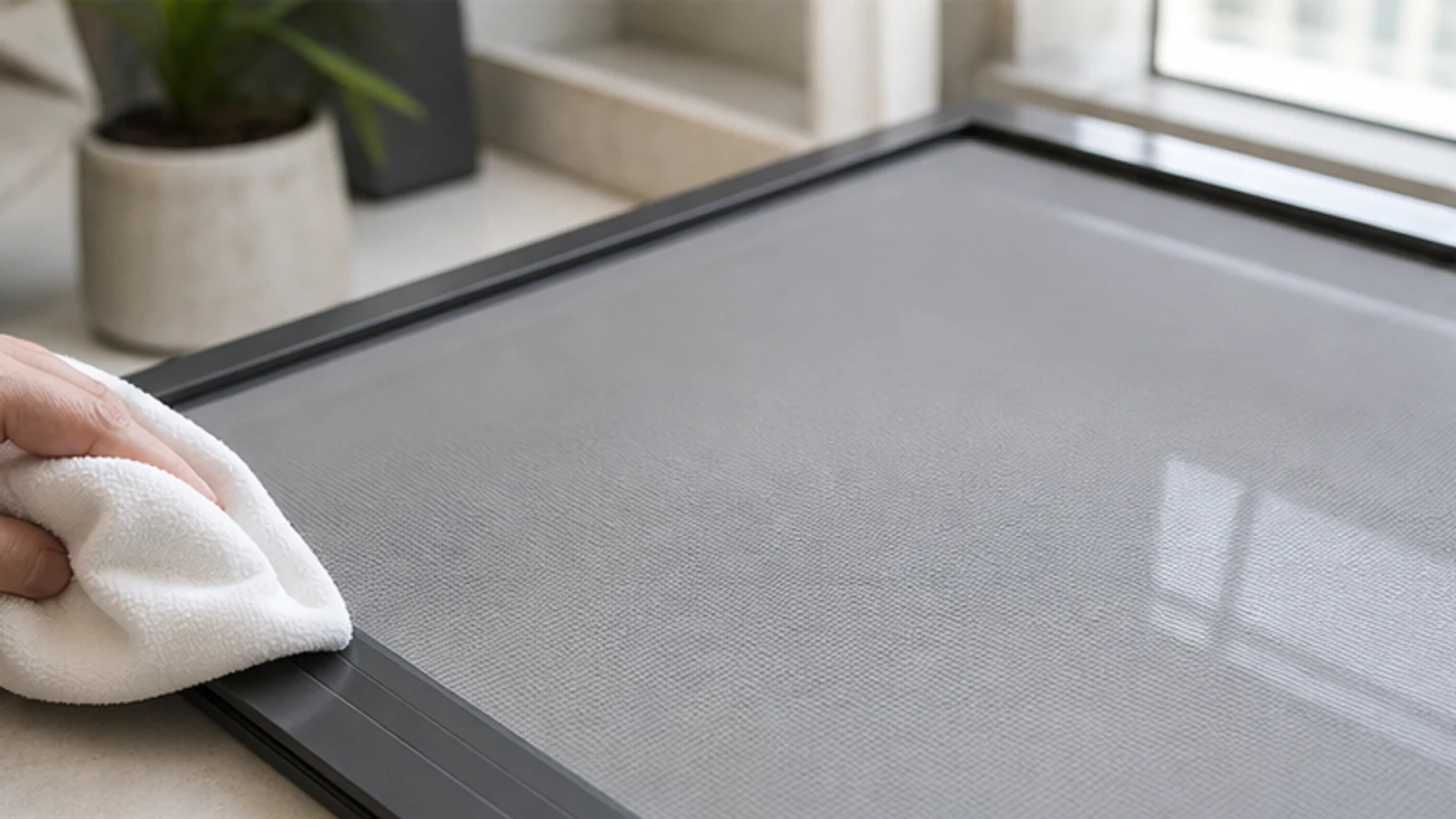
Rinse the treated area and dry completely
Rinse using the screen maker's method with minimal clean water, then blot the frame and leave the screen supported flat until completely dry. Reinstall only by the maker's instructions from a stable indoor position. Stop if the mesh is loose, distorted or damaged.
Mesh is visibly dry to touch
Frame and mesh retain their original shape
Only freely lifted fresh paint is gone
Finished result
What success looks like
The screen remains sound and correctly tensioned. Tiny fresh specks that released easily are gone; resistant marks were left untouched.
Only freely released fresh specks were removed
Mesh texture and colour are unchanged from before treatment
Frame finish shows no discolouration or softening
The screen is completely dry before reinstallation
Screen reinstalls smoothly in the window track
Troubleshooting
When the first pass does not solve it.
The paint does not transfer with mild soapy water
The speck may already be cured, may not be water-based, or the maker-approved cleaning method may not release it.
End this method. Extra pressure, scraping or solvent may damage mesh. Leave a small cosmetic mark in place or arrange replacement of the screen panel.
Mesh colour, texture or coating changes
The screen or its finish may not tolerate the soap solution, contact time or moisture.
Stop immediately. Rinse only as the maker permits, support the screen until dry and arrange replacement if the change remains.
The mesh stretches or a strand separates
The screen was already weak or received too much pressure while unsupported.
Stop cleaning and do not reinstall a loose or damaged screen. Arrange a replacement panel sized for the existing frame.
Quick answers
Frequently asked questions.
How do you get dried paint off a mesh screen?
Check the screen maker's care instructions first. If mild soap and water are allowed, support the screen flat, hidden-test the diluted solution and touch a barely damp cloth to the fresh speck. Use a soft brush only if it releases freely, then rinse and dry as directed.
Will acetone melt a fibreglass screen?
Acetone can damage some fibreglass screen coatings and plastic components, while exact materials vary. A generic solvent or scraper is therefore outside this guide. Leave a small cosmetic dried mark alone, check the screen maker's instructions, or replace the panel when the mark is unacceptable.
Can you clean window screens without removing them?
Follow the screen maker's method. Remove a screen only when the maker provides user instructions and you can work entirely from a stable indoor floor. Otherwise use the approved in-place routine from indoors or book service. Never lean outside, climb or force retaining clips.
When is it better to replace a screen than clean it?
Replace the panel when paint is dried, oil-based or unidentified; when mild maker-approved cleaning does not release it; or when mesh is torn, loose, stretched, discoloured or softened. Arrange service when removal requires height, leaning outside, force or instructions you do not have.
Sources and review notes
- Andersen: Clean Your Insect Screen Mesh and Frame - Manufacturer instructions for gentle screen cleaning with mild soap, water and a soft brush.
- Milgard: Window and Door Care Tips - Manufacturer care guidance for screen washing, rinsing and complete drying before reinstallation.