
DIY / Floors
Old Carpet Stains: What Comes Out — and What Won't
Moving into a home with inherited carpet stains is frustrating—but not all stains respond equally to treatment. Some lift cleanly with the right approach; others are permanent marks left by dyes, bleach or solvents that won't yield to water-based spotting. This guide separates what you can realistically remove from what you'll need to live with or cover.
Quick answer
Can old carpet stains be removed?
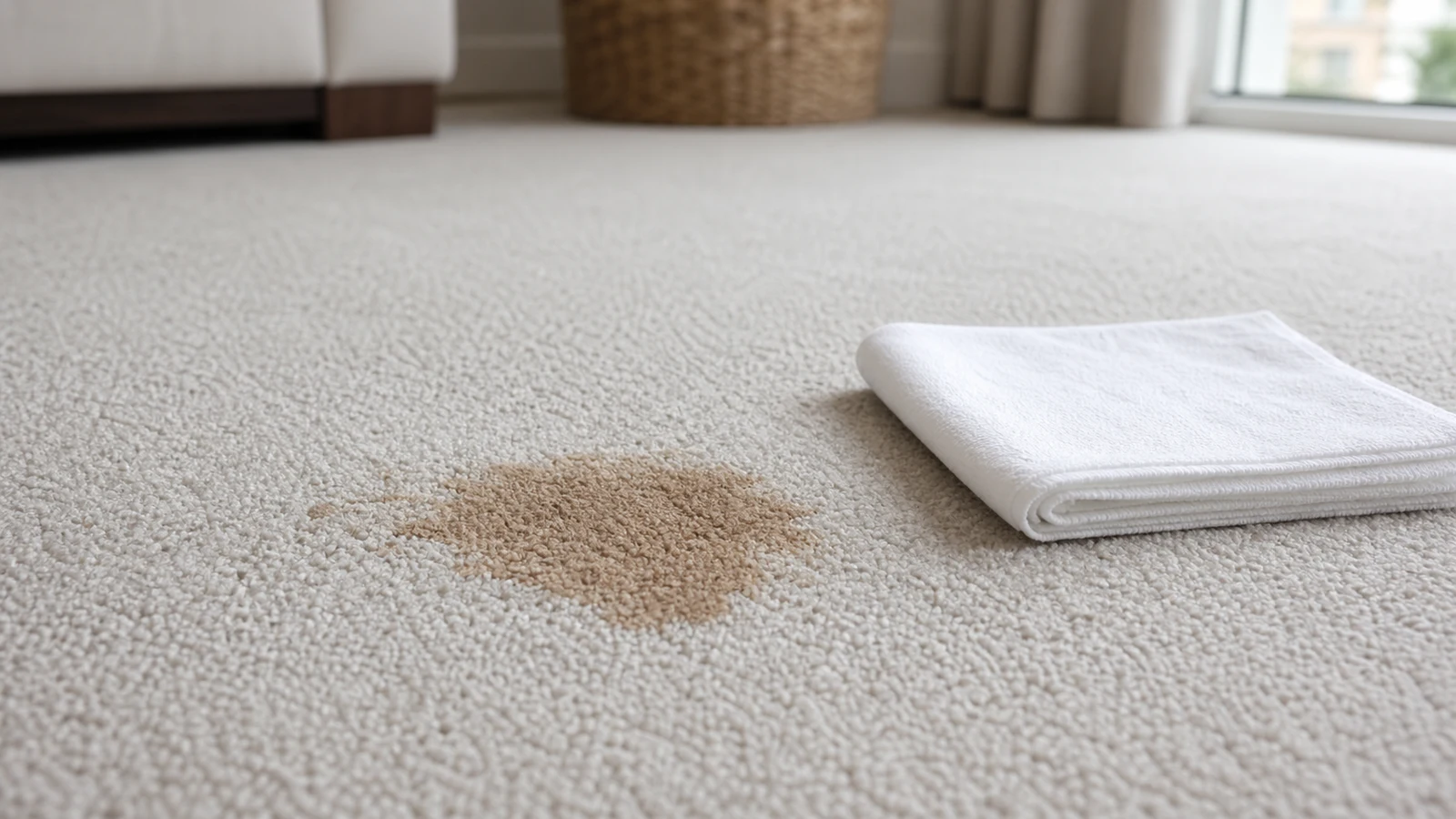
Some old stains improve with gentle blotting, but first identify the carpet fibre, backing and maker-approved cleaning method. For confirmed water-cleanable carpet, start with a barely damp white cloth and cool water. Stop for unknown chemicals, biological contamination, odour, mould, dye loss, paint, burns or colour transfer.
Natural-fibre carpets (wool, sisal) / Synthetic carpets (polypropylene, nylon) / Upholstered seating fabrics
Antique or hand-knotted rugs / Carpet with unknown fibre content or unknown prior treatment / Areas with visible mould, backing damage or dampness / Stains from bleach, paint, permanent marker or dyes
What you need
What you need
Confirm the carpet fibre, backing and maker-approved spot method before buying anything. Use liquid only when the installed carpet is explicitly water-cleanable. Gather separate white cloths for testing, treatment and drying, and stop if the material or prior treatment is unknown.
- Difficulty
- Easy to Medium
- Active time
- 10–15 minutes per stain
- Total time
- 30–45 minutes including drying
Cold water
1 litre
Neutral dish soap (pH 7–8)
1 teaspoon
White cotton cloths or microfibre towels
3–4
Small clean mixing bowl
1
Absorbent dry white towels
2–3
Typical UAE retail ranges. Prices vary by pack and store, and your total is lower when you already own the reusable tools.
Step by step
How to Assess and Treat Old Carpet Stains
Begin by identifying what you're dealing with, then proceed cautiously to avoid setting or spreading the stain further.
-
Step 01
Identify the carpet and approved cleaning method
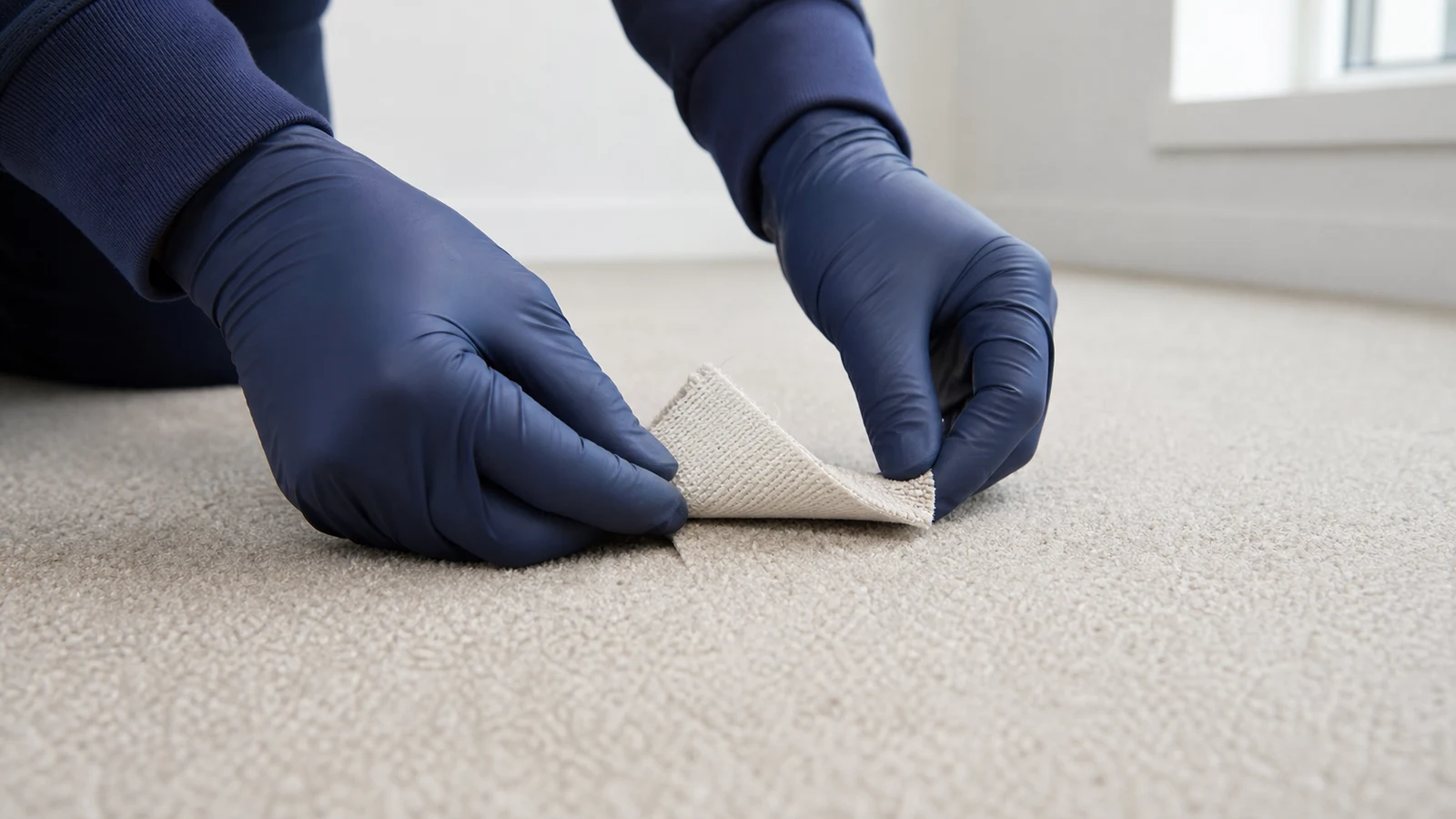
Check handover documents, the carpet maker or building maintenance for the fibre, backing and approved spot-cleaning method. Inspect an already-accessible edge without pulling fixed carpet or relying on upholstery letter codes. If the material or approved liquid method is unknown, do not wet-clean it.
Confirmed the fibre, backing and approved method
Did not pull or lift fixed carpet
Stopped if the material remained unknown
-
Step 02
Identify the stain type before treatment
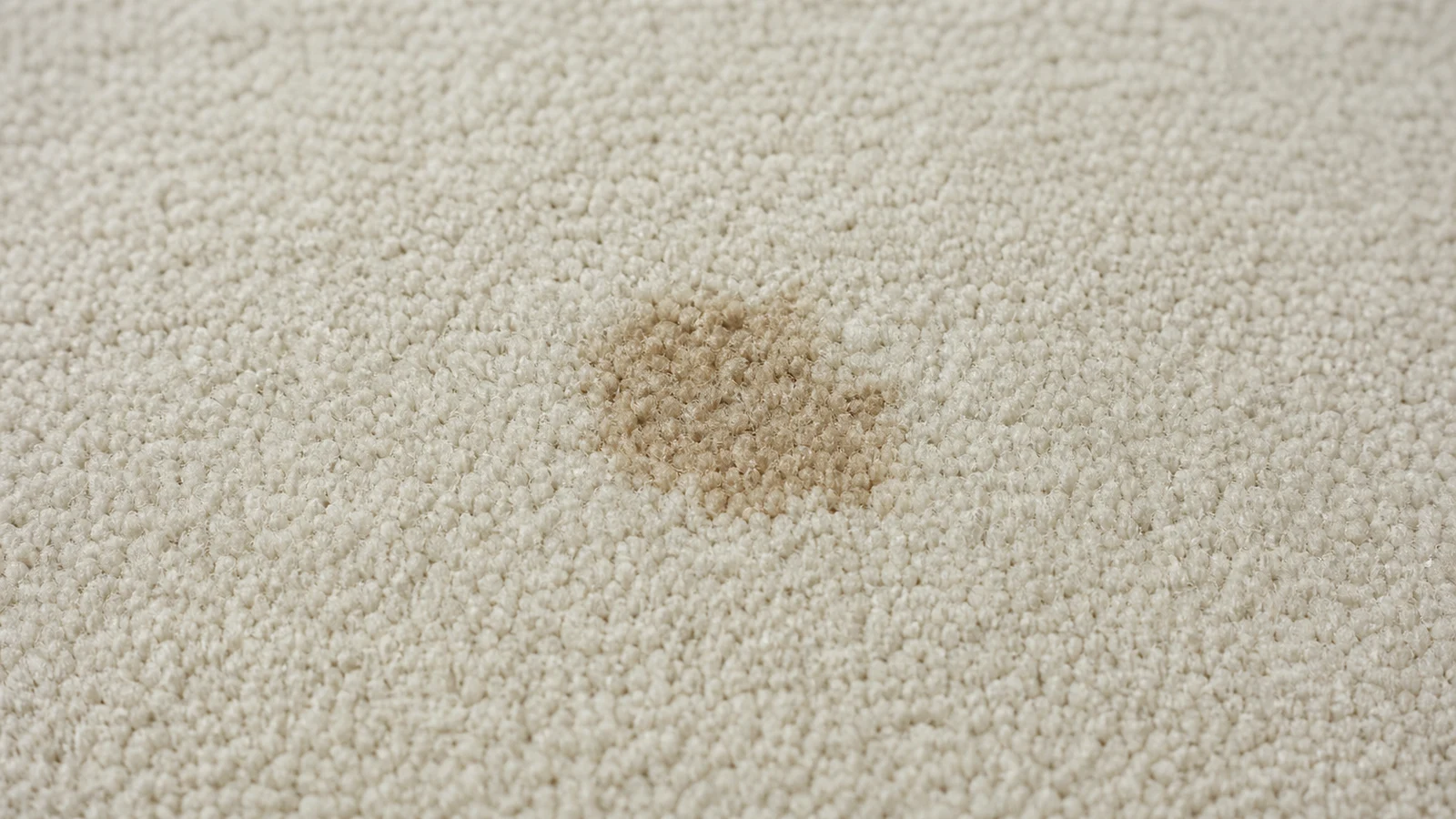
Inspect without touching or smelling closely. Stop for dampness, mould, pest residue, bodily fluid, sharp debris, sticky chemical residue or strong odour. Bleach loss, paint and scorch damage need repair or replacement, not stronger cleaner. Treat only a dry ordinary stain with a known approved method.
Found no dampness, contamination or sharp debris
Classified it as a dry ordinary stain
Stopped for damage or an unknown residue
-
Step 03
Perform a compatibility test in a hidden corner
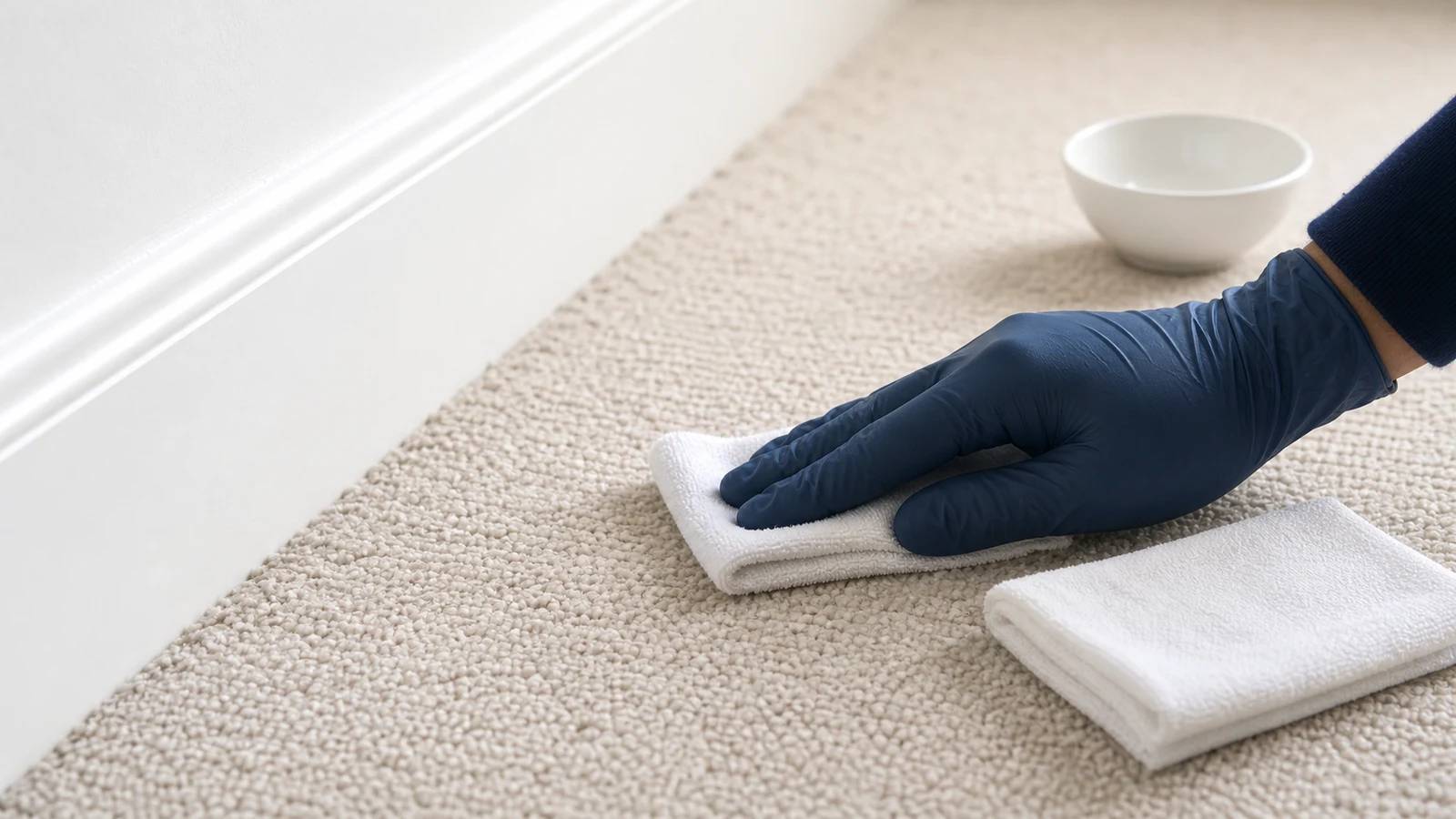
If the maker approves a neutral solution, mix the exact directed dilution in a small bowl. Dampen a white cloth, never the carpet, and test a hidden edge for the label-directed time. Stop for colour transfer, darkening, texture change, stickiness or backing distortion.
Mixed only the approved dilution
Applied solution to the cloth, not the carpet
Checked for colour, texture or backing change
-
Step 04
Blot the stain with cold water first
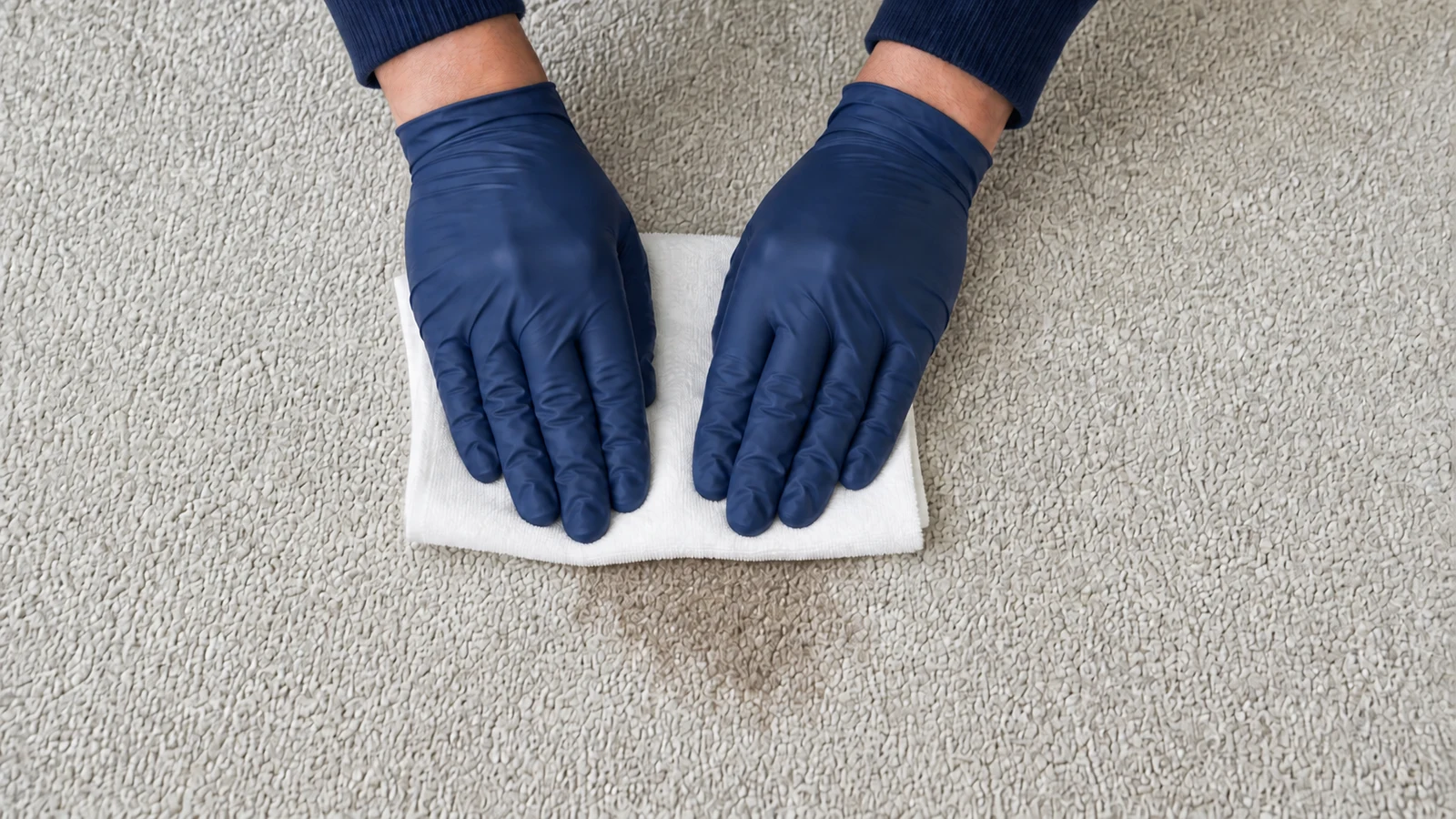
For confirmed water-cleanable carpet, dampen a white cloth with cool water and wring it nearly dry. Press and lift from the stain edge inward. Never spray, soak, scrub or twist the pile. Stop after several presses if colour transfers from the carpet or no soil transfers.
Applied cool water only through the cloth
Blotted from outside edge inward
Stopped when no more stain transferred to cloth
-
Step 05
Apply the soap solution and blot repeatedly
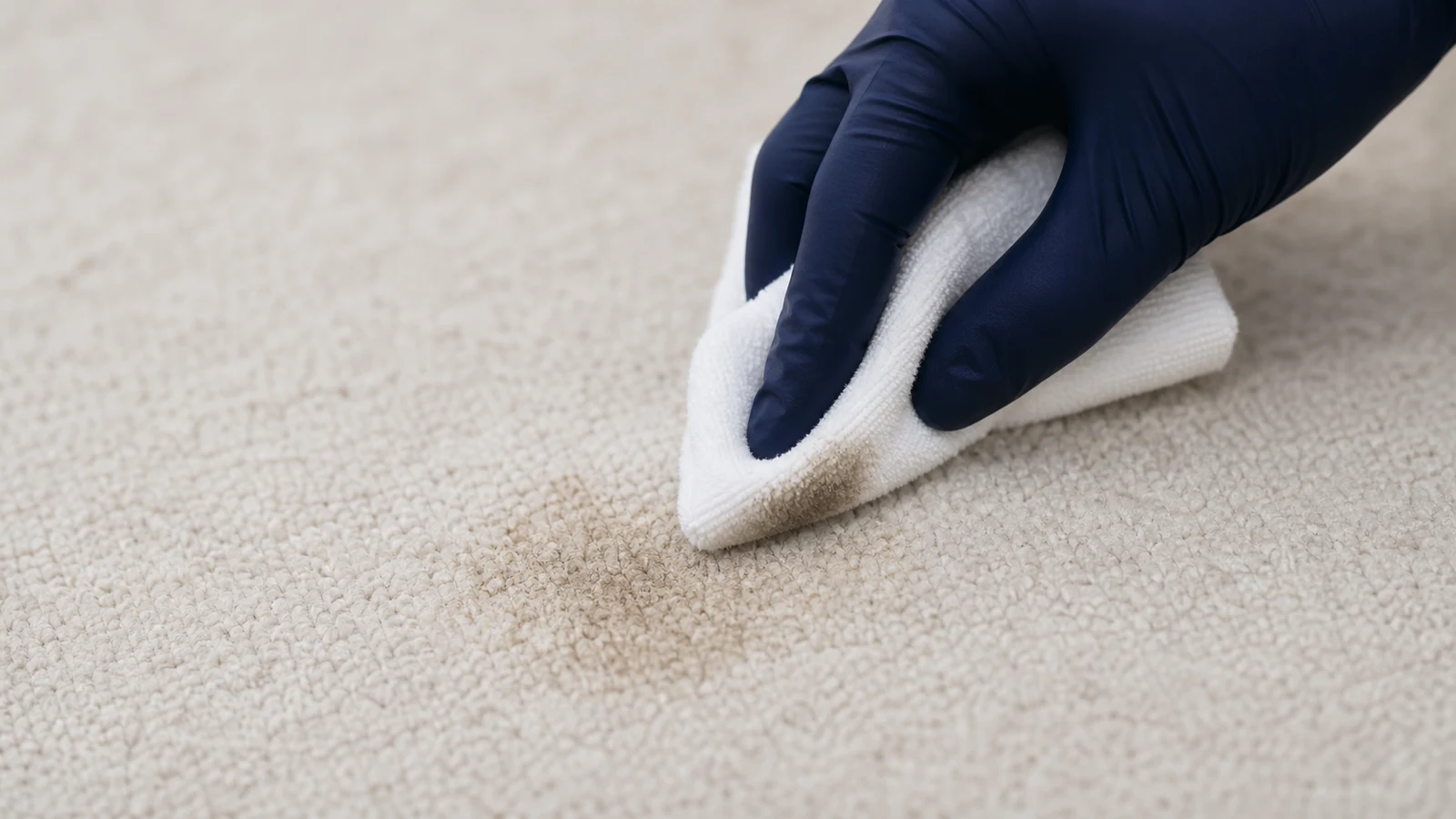
Only if the patch test passed, apply the approved diluted solution to a fresh white cloth and press from the edge inward. Follow the label contact time, then blot with a separate barely damp cloth and a dry one. Perform one controlled cycle; repeated wetting can spread soil into the backing.
Used only the approved solution and contact time
Kept treatment within the stain edge
Used separate damp and dry cloths
Stopped after one controlled cycle
-
Step 06
Stop if one controlled cycle does not work
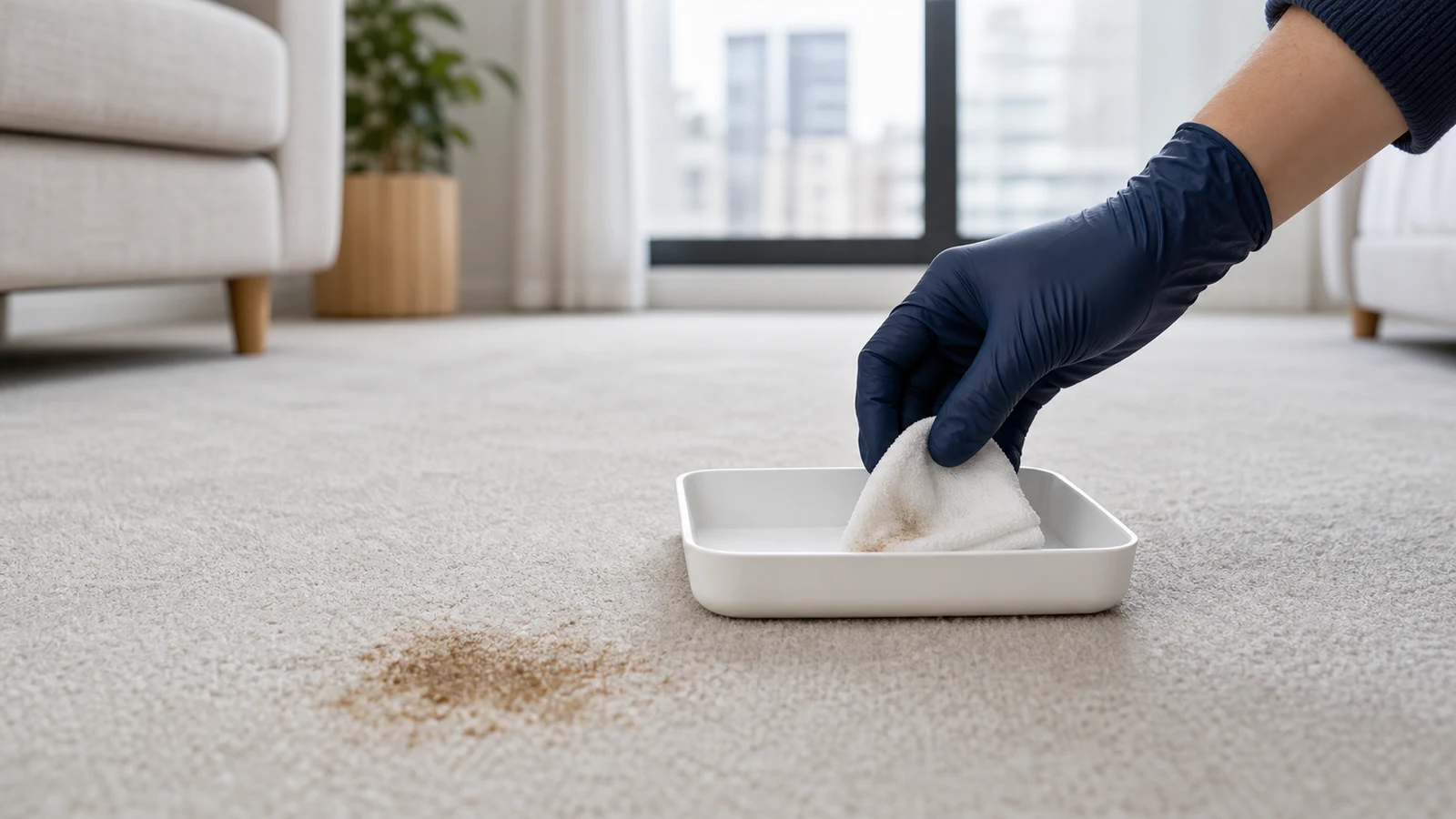
If the stain remains, do not escalate to peroxide, bleach, solvent or another household cleaner. Unknown old stains and residues can react, bleach fibres or reach the backing. Let the area dry and arrange manufacturer-approved professional spot treatment or extraction; permanent dye loss, paint and burns need repair.
Added no second household cleaner
Allowed the area to dry
Arranged approved professional treatment if needed
-
Step 07
Blot dry and keep the area unused
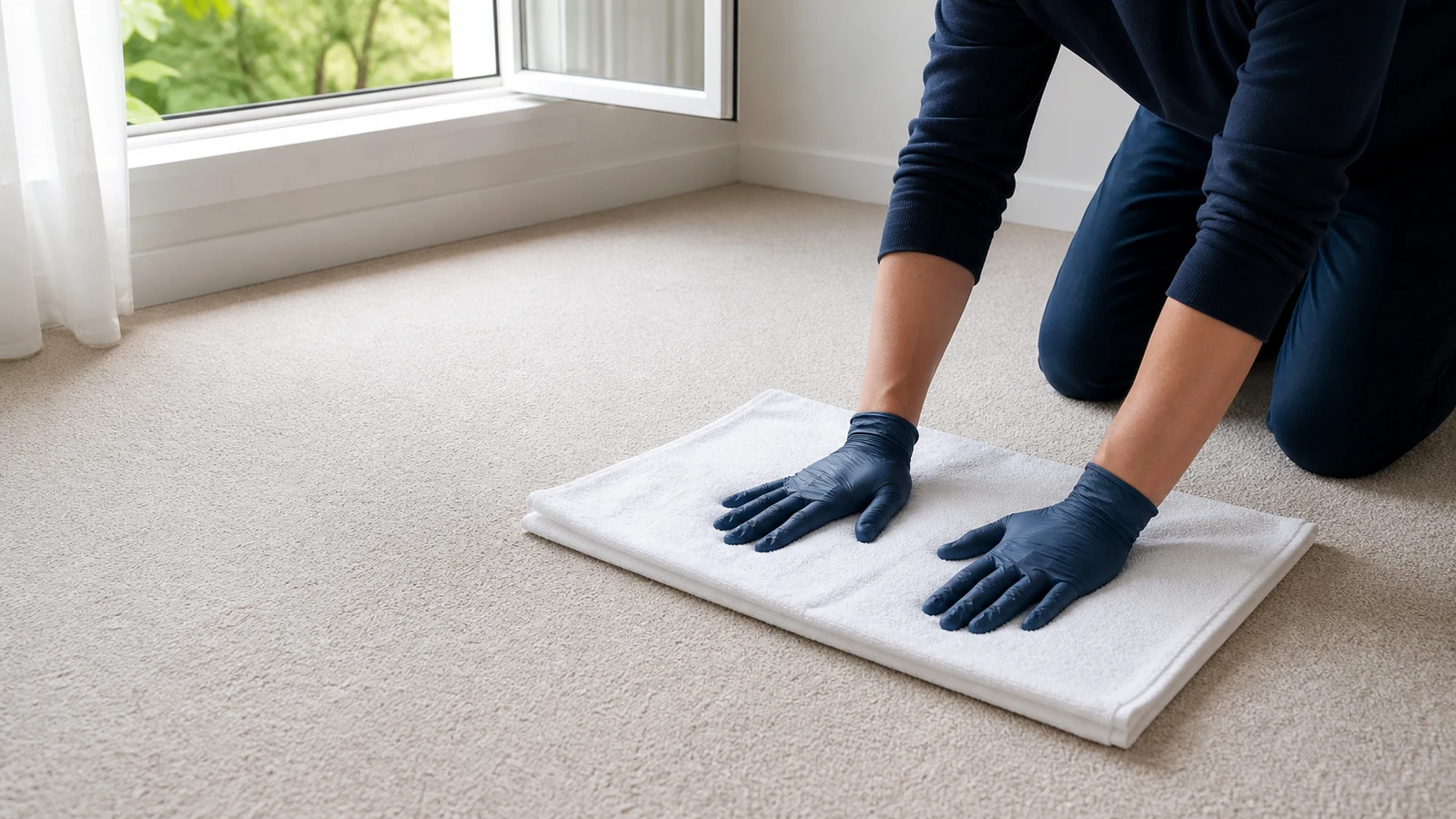
Press with dry white towels until they lift no moisture, then ventilate according to current outdoor conditions. Keep people and furniture off the area until it is fully dry. Do not add baking soda, fragrance or powder. Persistent dampness, odour or wicking needs professional extraction and source assessment.
Pressed with dry towels until moisture stopped transferring
Kept people and furniture away
Added no powder or fragrance
Escalated persistent dampness or odour
Finished result
What success looks like
A successful first pass leaves the dry carpet stable and undamaged, even when an old permanent mark remains visible.
The stain did not spread beyond its original edge
Carpet fibres are dry and retain their normal texture
No colour transferred from the carpet itself
No sticky residue, dampness or new odour remains
A persistent mark has been left for professional assessment
Troubleshooting
When the first pass does not solve it.
Stain remains unchanged after one controlled cycle
It may be dye loss, paint, a burn, an incompatible residue or soil that has reached the backing.
Stop adding liquid and arrange maker-approved professional spot treatment or extraction after the area dries.
The carpet feels wet, sticky or smells musty after treatment
Incomplete extraction or drying, or soap residue in the fibres, has allowed moisture to linger.
Blot with dry towels, keep the area uncovered and unused, ventilate when outdoor conditions permit, and arrange professional extraction.
Colour has transferred to the cloth or the carpet darkened
The cleaner solution may be too strong, the dye may not be colourfast, or the test was not thorough.
Stop immediately. Blot surface moisture with a dry white towel without flooding, leave uncovered and seek carpet-specific advice.
A light ring or halo appears around the treated stain
Incomplete rinsing left soap residue, which dries lighter than surrounding carpet.
Do not spray or repeat the cycle. Allow full drying and ask a qualified carpet cleaner about controlled extraction.
Quick answers
Frequently asked questions.
Can old carpet stains be removed?
Some old ordinary food or drink stains improve with maker-approved blotting, but success depends on the fibre, backing, prior cleaners and stain type. Dye loss, bleach damage, paint and burns are physical damage, not removable soil. Biological, mouldy, odorous or unknown residue needs professional assessment.
What takes out a stain you can't identify?
Do not run a ladder of household chemicals on an unidentified stain. First confirm the carpet material and maker-approved method. If plain cool water is approved, use a barely damp white cloth for several press-and-lift motions. Stop for colour transfer, odour, stickiness, wet backing or no soil transfer.
Does hydrogen peroxide bleach carpet?
Yes. Hydrogen peroxide can bleach dyes, weaken some fibres and react with an unknown residue. Do not use it as a generic next step on installed carpet. Use only a method explicitly approved by the carpet maker or a qualified carpet cleaner after identifying the fibre and prior treatment.
What should I do if I've made the stain worse?
Stop adding liquid or cleaner. Blot surface moisture with dry white towels without flooding the backing, keep people and furniture away, and arrange a carpet professional if colour, texture, dampness or odour changed. Tell them every product used. Do not hide a damp area under furniture or a rug.
Sources and review notes
- Carpet and Rug Institute: Cleaning and Maintenance - Primary industry guidance for white-cloth blotting, hidden testing, approved products, rinsing and avoiding scrubbing.
- Carpet and Rug Institute: Correction Fluid Spot Guidance - Explains edge-to-centre blotting, backing protection, residue removal and professional escalation for stubborn unknown stains.