
DIY / Bathroom
Musty Smell in a Windowless Bathroom: The Ventilation Routine
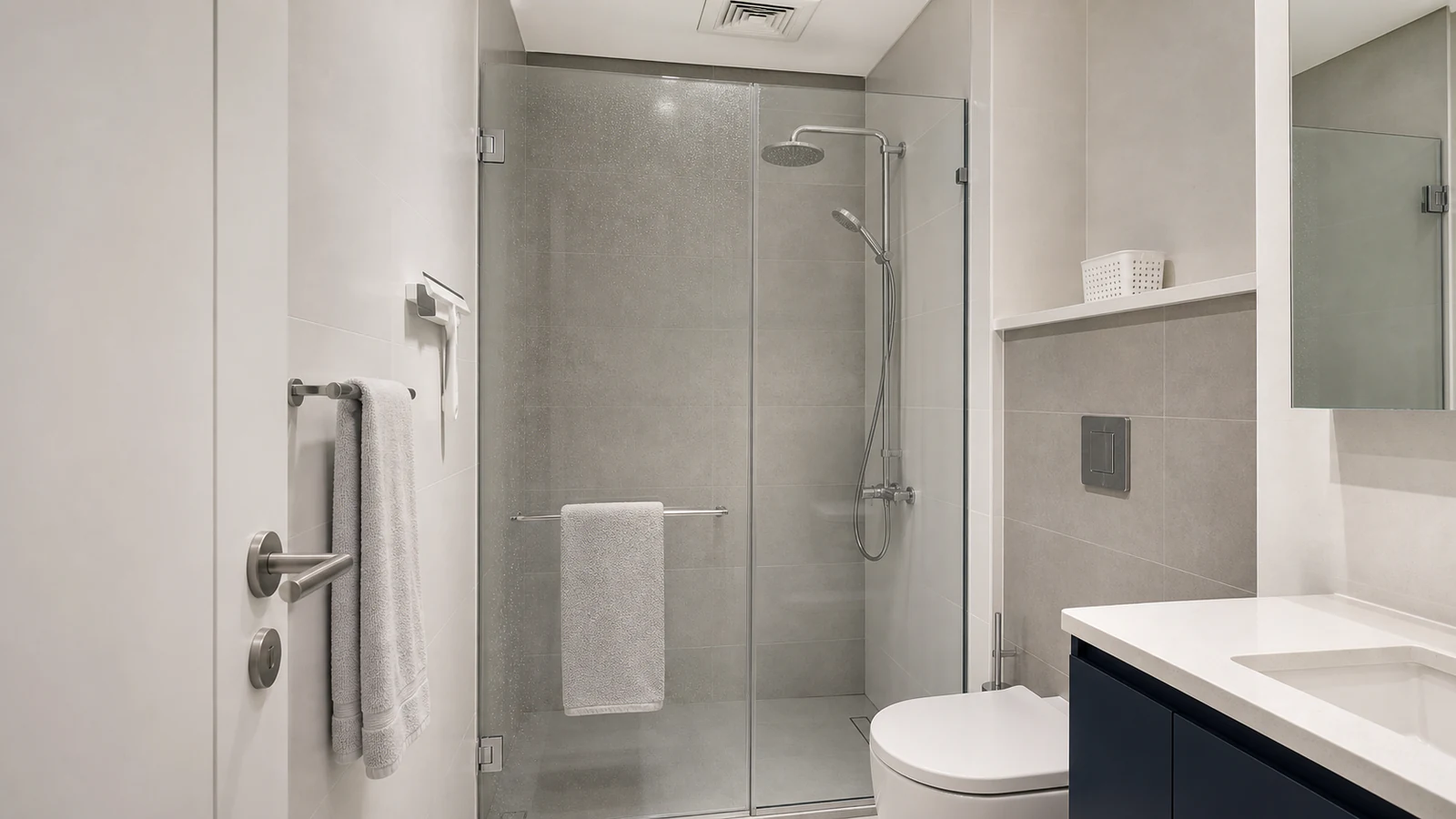
A musty smell can come from lingering humidity, wet textiles, visible growth, a leak, a failed fan or a drainage problem. Do not diagnose it by smell alone. First check for immediate stop conditions and confirm the extractor works and vents outdoors; then use a humidity meter to judge whether the drying routine is effective.
Quick answer
How do you get rid of a musty bathroom smell?
Check first for visible growth, leaks, wet or soft finishes, sewage odour and symptoms. Confirm the fan works and vents outdoors, run it during and after bathing as its manual directs, wipe standing water, dry textiles in a ventilated place and measure relative humidity. Keep it below 60% where possible. Escalate a faulty fan or persistent moisture promptly.
Windowless bathrooms / Bathrooms with inadequate natural ventilation / High-humidity climates
Bathrooms with active leaks or dampness / Spaces where moisture absorbers cannot be kept away from children or pets / Exhaust fans that discharge moisture back indoors
What you need
What you need
A basic humidity meter makes the routine measurable. Use electrical equipment only when its manual permits that bathroom location and keep it outside splash zones. Use a passive absorber only according to its label and where children and pets cannot reach it.
- Difficulty
- Easy
- Active time
- 15 minutes per day
- Total time
- Assess after each use with humidity and visible-dryness checks
Digital humidity meter
1
Extractor fan (existing)
1
Microfibre cloth or squeegee
1
Moisture absorber sachets or container (optional)
2–4 sachets or 1 container
Towel rail or outdoor drying space
1
Typical UAE retail ranges. Prices vary by pack and store, and your total is lower when you already own the reusable tools.
Step by step
How to Stop Musty Smell in a Windowless Bathroom: The Ventilation Routine
Establish this daily routine immediately after moving in or after the first musty smell appears.
-
Step 01
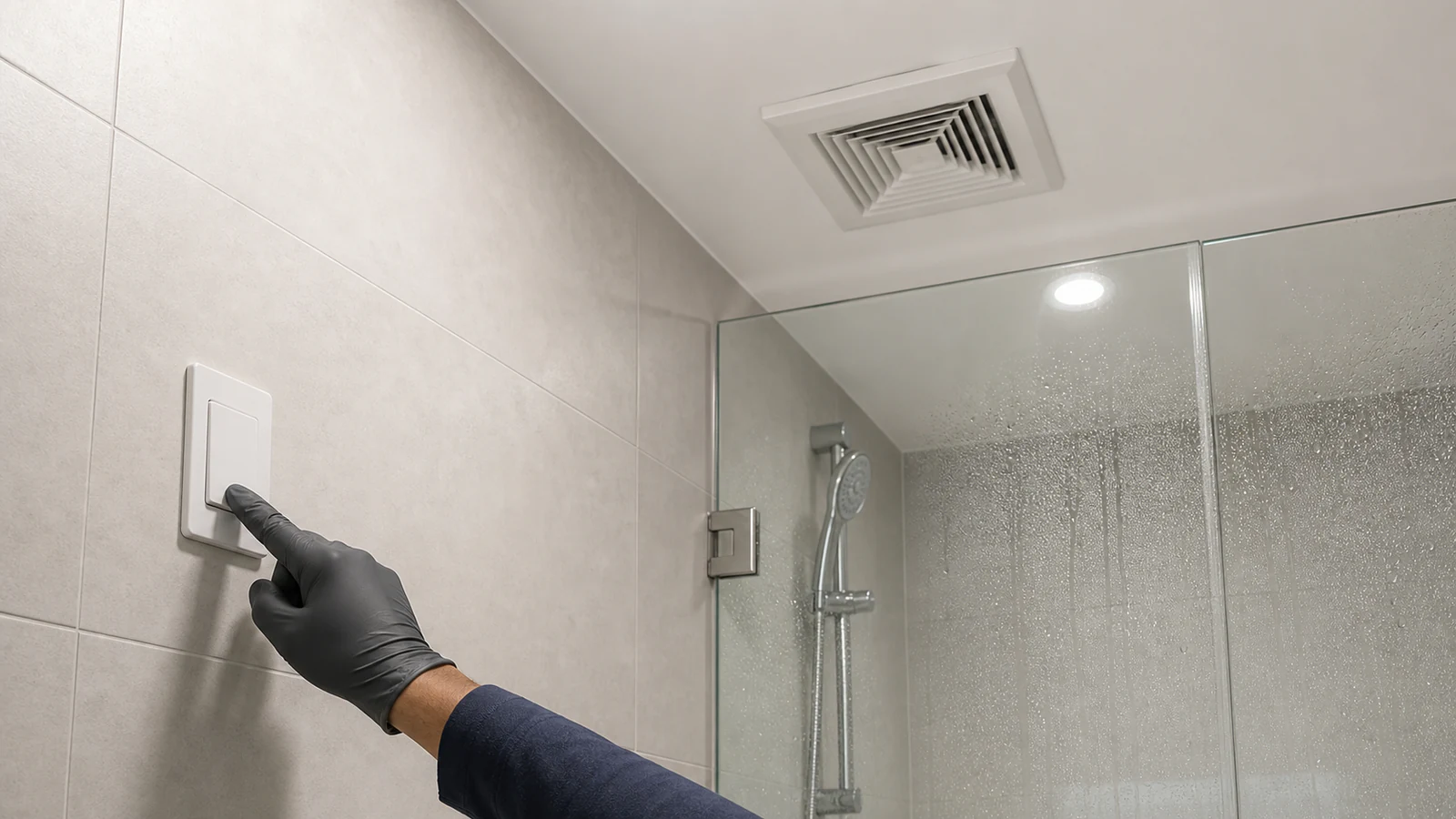
Run the extractor fan immediately after a shower
Before relying on the fan, confirm it runs, draws air at the grille and discharges outdoors rather than into the room or ceiling void. Run it during bathing and afterward for the period in its manual; a common manufacturer baseline is about 20 minutes. Use the humidity reading and visible condensation to determine whether more drying or service is needed.
Fan runs continuously without interruption
No water droplets visible on mirrors or tiles by the time you turn it off
You can hear the fan drawing air upward and feel slight pressure when you stand near the grille
-
Step 02
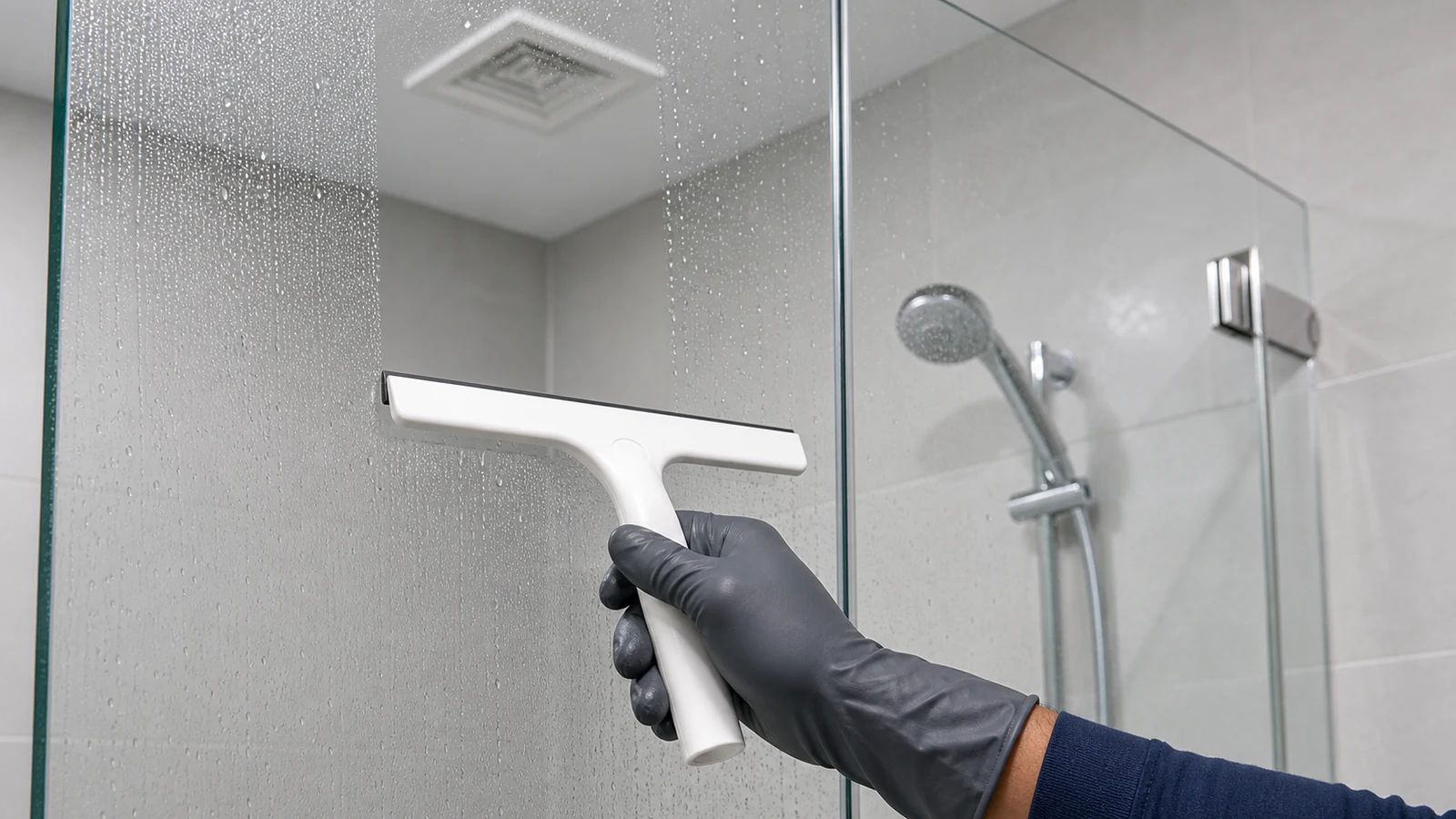
Wipe down all wet surfaces while the fan runs
Using a microfibre cloth or squeegee, wipe down the shower glass, bathroom mirror, tiles around the shower and the floor. Do this while the bathroom is still steamy and the fan is running—the moisture is being actively removed. Pay special attention to corners and low spots where water pools.
No visible water droplets remain on glass or tiled surfaces
Floor is dry enough to walk across without slipping
Cloth or squeegee removes water in one pass
-
Step 03
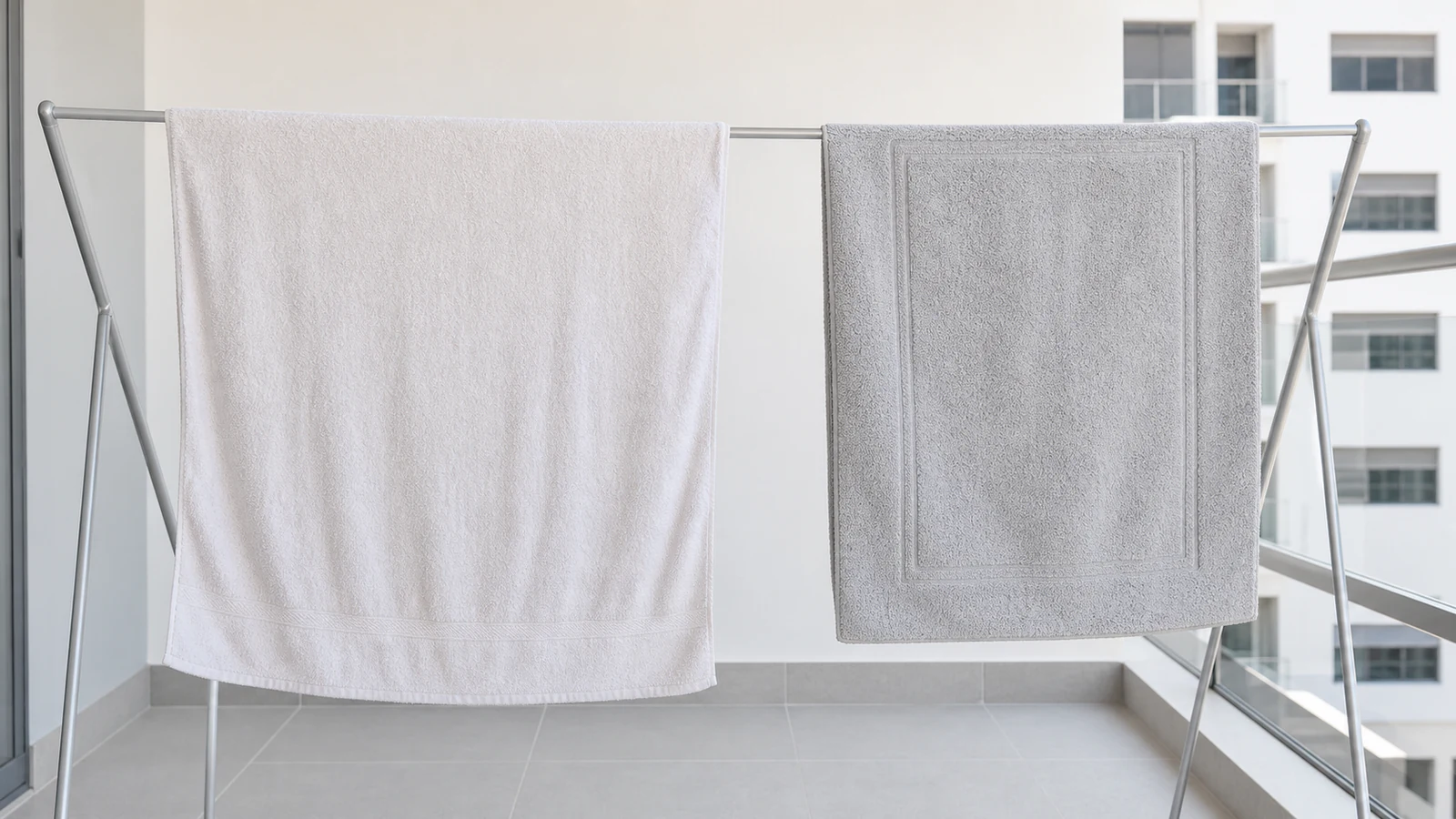
Hang towels and mats to dry outside or in an open, ventilated area
Do not leave wet towels, bath mats or washcloths on the bathroom floor or draped over the shower screen. Hang them on an outdoor washing line, balcony or in a separate well-ventilated room where air can circulate freely around the fabric. Damp textiles in an enclosed bathroom act as a moisture reservoir and are a source of musty smell.
Towels are spread out, not folded or bunched
They are in direct sunlight or strong natural light if possible
No towel is touching another or touching the bathroom wall
-
Step 04
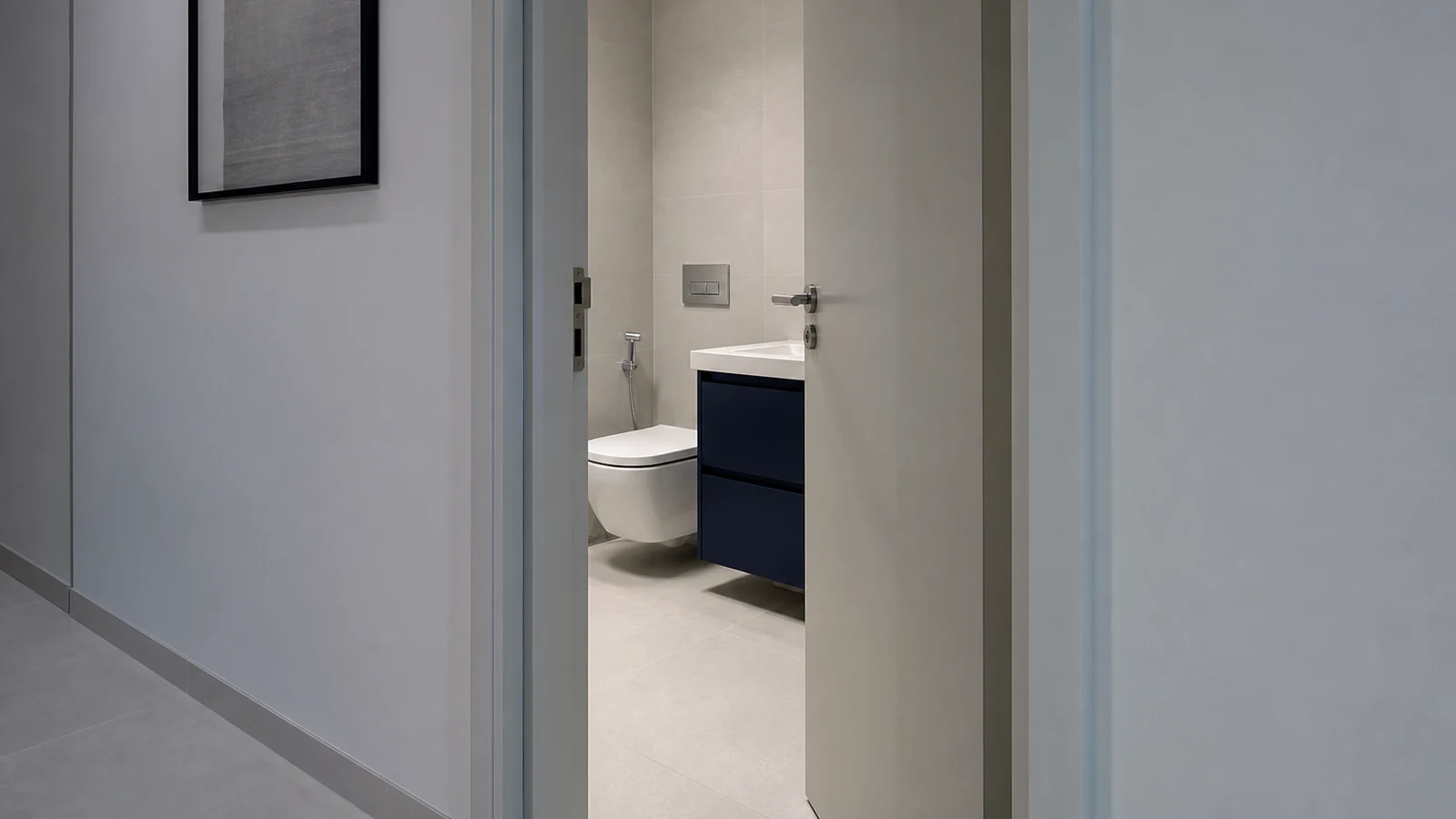
Keep the bathroom door open between uses
After the extractor has discharged the shower moisture, leave the door open when practical so the room can equilibrate with the home's conditioned, drier air. Do not use the hallway as the primary exhaust path or spread humid air into another damp room. Keep the door closed if building guidance or fire-safety hardware requires it.
Door moves freely and does not swing shut on its own
You can feel gentle air movement into the bathroom when standing in the doorway
The door is left open for at least 1–2 hours after showering
-
Step 05
Place a moisture absorber in a safe corner
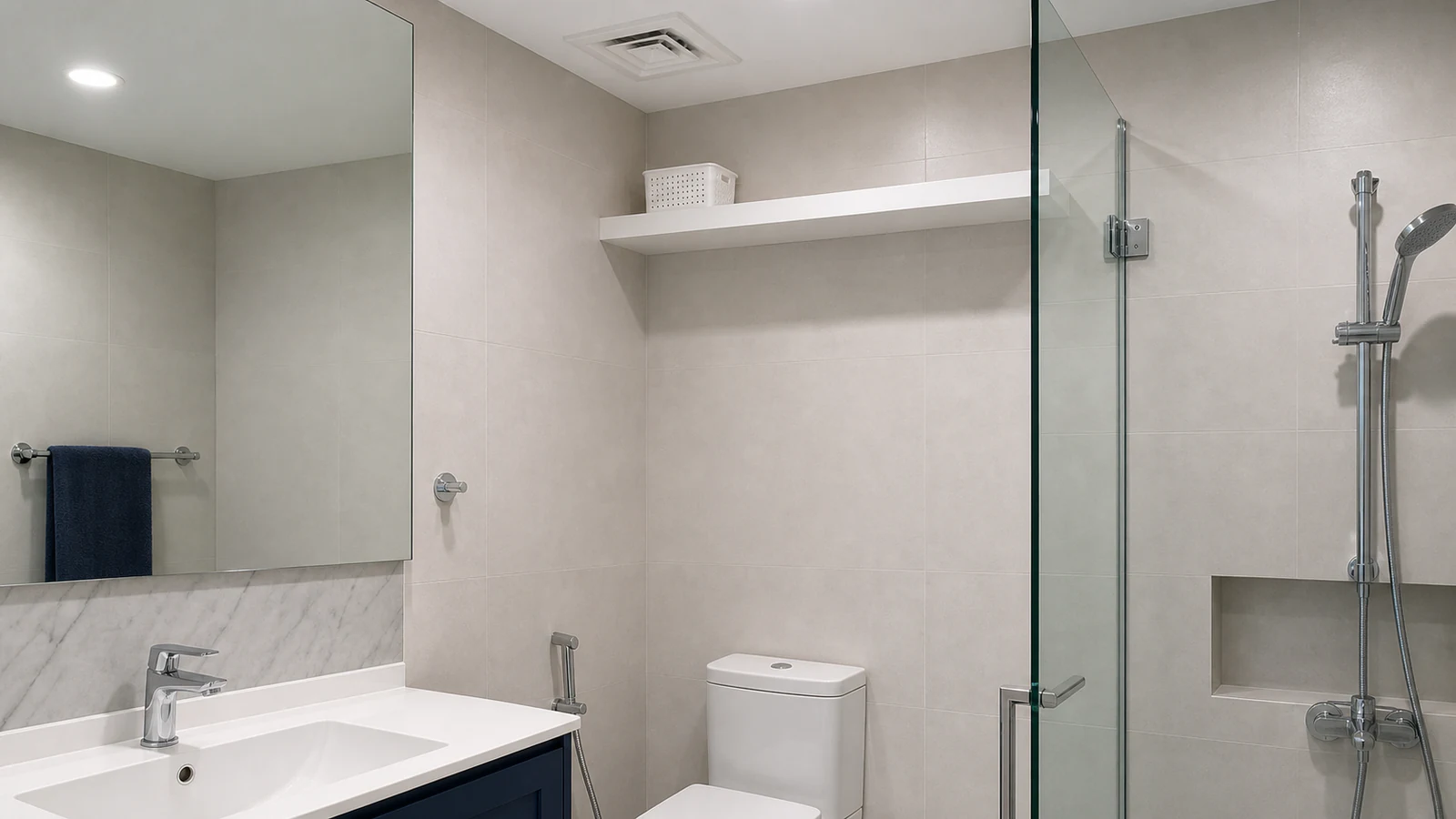
If measured humidity stays high, first request inspection of the fan, duct and possible leaks. A passive moisture absorber is only a supplement: use one whose label permits the location, place it outside splash zones and beyond children and pets, and follow its spill, replacement and disposal instructions. Do not substitute it for ventilation repair.
Absorber is on a shelf, windowsill or high corner—not on the floor
It is at least 1.5 metres away from shower spray and splash zones
The label is clearly visible and legible
-
Step 06
Check and clean the extractor fan grille monthly
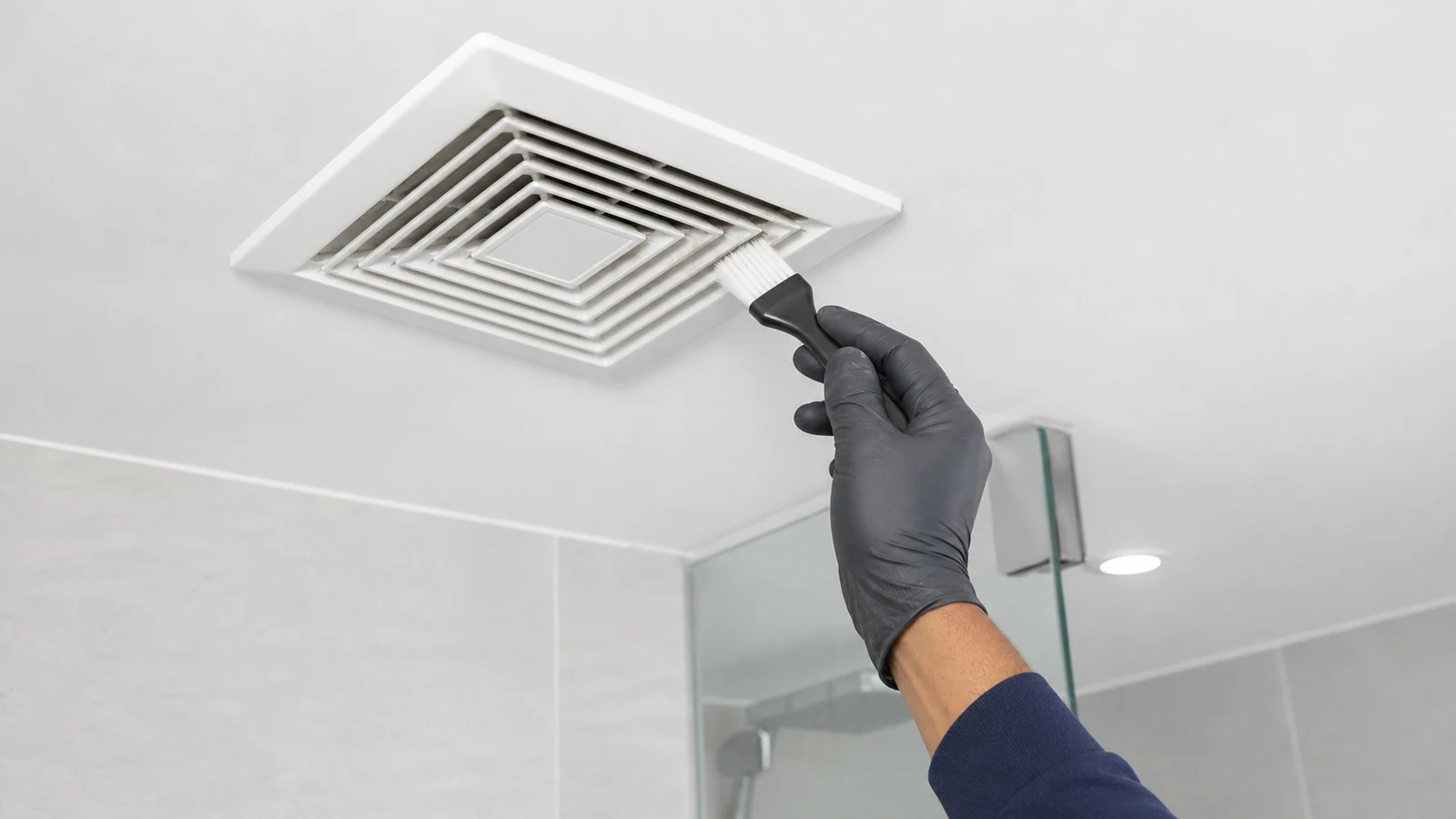
Follow the fan manual for cleaning frequency and electrical isolation. From a stable, dry position, clean only the user-accessible outer grille with a dry soft brush or cloth. Do not use liquid, touch the motor or open ductwork. If the grille is inaccessible, airflow is weak or water returns through it, request qualified service.
Grille surface is visibly free of dust and cobwebs
Fan runs more quietly after cleaning
No visible blockage in the visible duct opening
Quick answers
Frequently asked questions.
Do moisture absorbers really work?
A labelled absorber may collect moisture, but it does not prove the fan or duct works and cannot repair a leak. Measure relative humidity instead of judging by fragrance or collected liquid. Keep the product outside splash zones, away from children and pets, and follow its label.
How long should the extractor fan run after a shower?
Use the manufacturer's runtime and confirm results with a humidity meter and dry surfaces. Broan-NuTone cites a common 20-minute post-shower baseline, but capacity, ducting and room size differ. If humidity stays above 60%, condensation persists or airflow is weak, request fan and duct inspection.
What if the extractor fan is broken or missing?
Request repair or installation from your managing agent or building maintenance. A functioning extractor fan is essential in a windowless bathroom. While waiting, keep the door wide open for as many hours as possible and dry all textiles outside. This is temporary only.
Can I use an air freshener instead of fixing ventilation?
No. Fragrance does not identify or remove moisture, visible growth, a leak, sewage gas or a fan fault. Check the room, measure humidity and correct the source. Persistent smell despite an outdoor-vented fan and dry surfaces needs assessment; do not wait if there is damage or symptoms.
Sources and review notes
- US EPA: biological contaminants and indoor air quality - Primary guidance on outdoor-vented bathroom fans, prompt leak response and keeping indoor RH below 60%.
- US EPA: mold, moisture and your home - Primary guidance on measuring humidity, drying wet surfaces promptly and using bathroom extraction.
- Broan-NuTone bath fan runtime guidance - Fan-manufacturer guidance citing a 20-minute post-shower baseline while the exact installation remains model-dependent.