
DIY / Walls & Ceiling
Remove Small Mould Spots on the Ceiling Safely
A ceiling mark is not just a cleaning problem: the moisture source must be identified and corrected first. This guide is limited to no more than three tiny surface patches with a combined area below 1 m² on a dry, intact painted ceiling. It does not claim that vinegar, bleach or any other chemical is universally suitable.
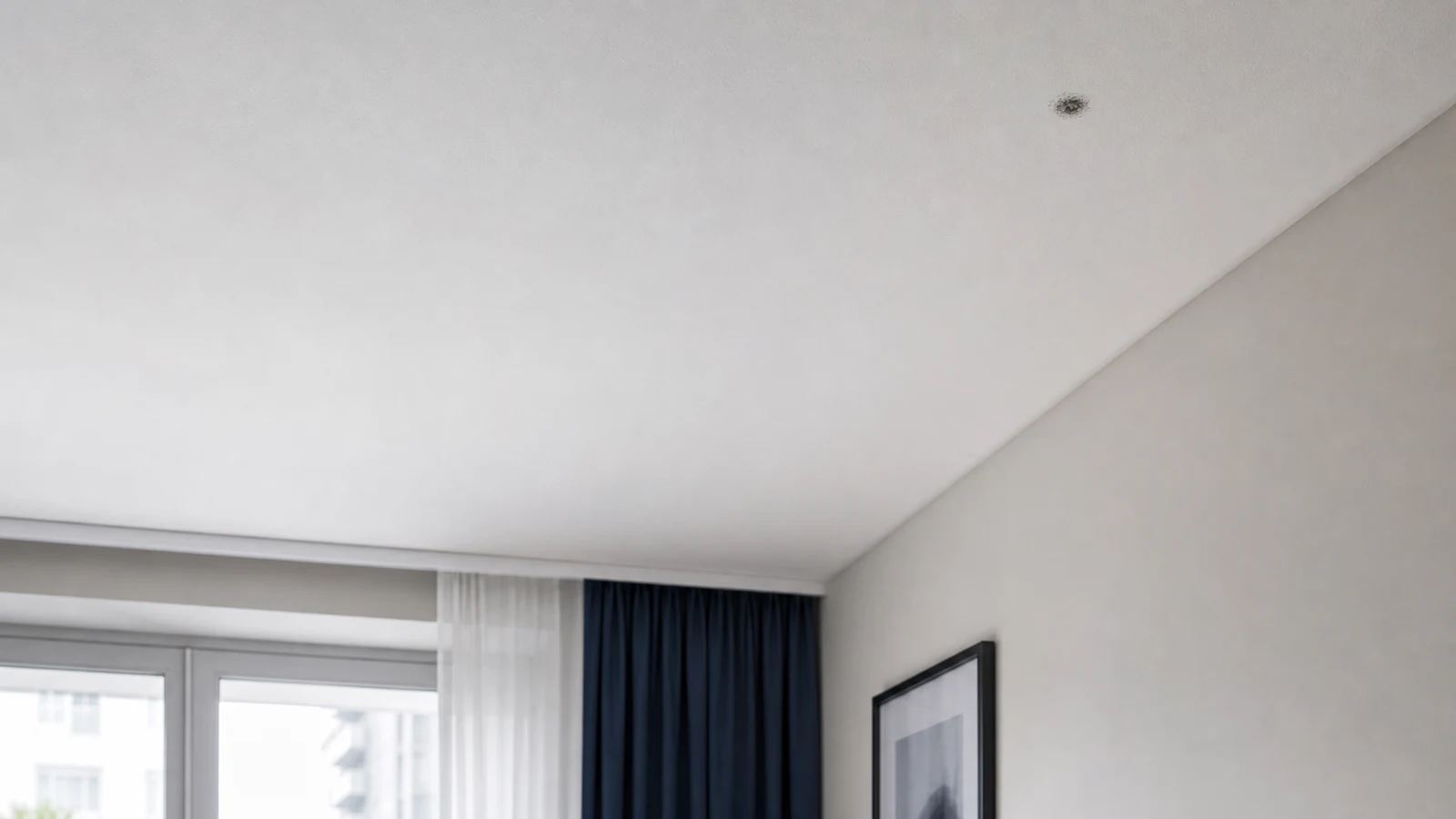
Quick answer
How should you handle a small mould spot on a ceiling?
Report ceiling mould and identify the moisture source first. Proceed only for a tiny isolated spot on a dry, intact ceiling after building management confirms a surface-condensation cause and approves a cleaner for that paint. Never spray overhead, mix products or work from an unsafe height.
No more than three tiny surface patches below 1 m² combined / Dry painted gypsum ceiling board with an intact washable coating / Dry plaster ceilings with an intact washable coating
More than three patches or a combined area of 1 m² or more / Wet stains, sagging or bubbling ceiling / HVAC vents or ductwork / Asbestos-containing materials (pre-1980s buildings) / Unsealed natural stone or terrazzo / Any mould associated with structural leaks or sewage
What you need
What you need
Gather the listed materials before you start.
- Difficulty
- Easy
- Active time
- 15 minutes
- Total time
- 45 minutes (including drying time)
Building- and paint-maker-approved mould cleaner
Small label-directed amount
Small tray for dampening the pad
One clean tray
Disposable or washable cloths
3–4 pieces
Nitrile or rubber gloves
1 pair
Well-fitted P2/N95 respirator and sealed eye protection
1 piece
Long-handled flat cleaning pole with replaceable pads
One pole and two pads
Typical UAE retail ranges. Prices vary by pack and store, and your total is lower when you already own the reusable tools.
Step by step
How to Remove Small Mould Spots from Your Ceiling
Work in order and check the result after each step.
-
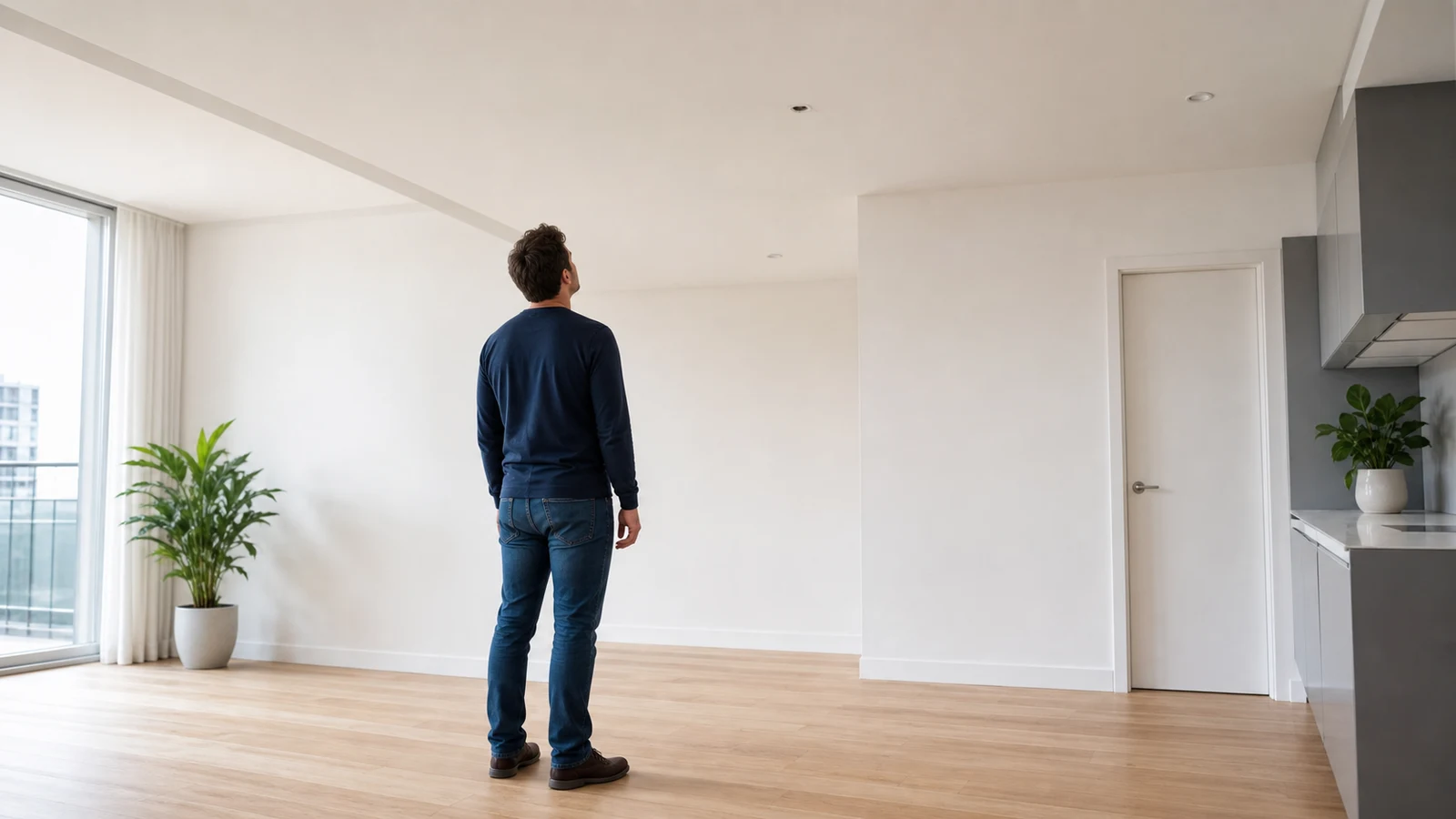
Step 01
Inspect from the floor and report the moisture source
Inspect from the floor; do not climb. Stop for wet stains, leaks, sagging, bubbling, softness, recurrence, widespread spots or an unknown source. Continue only after building maintenance fixes the moisture source, confirms a tiny surface spot and approves DIY cleaning.
-
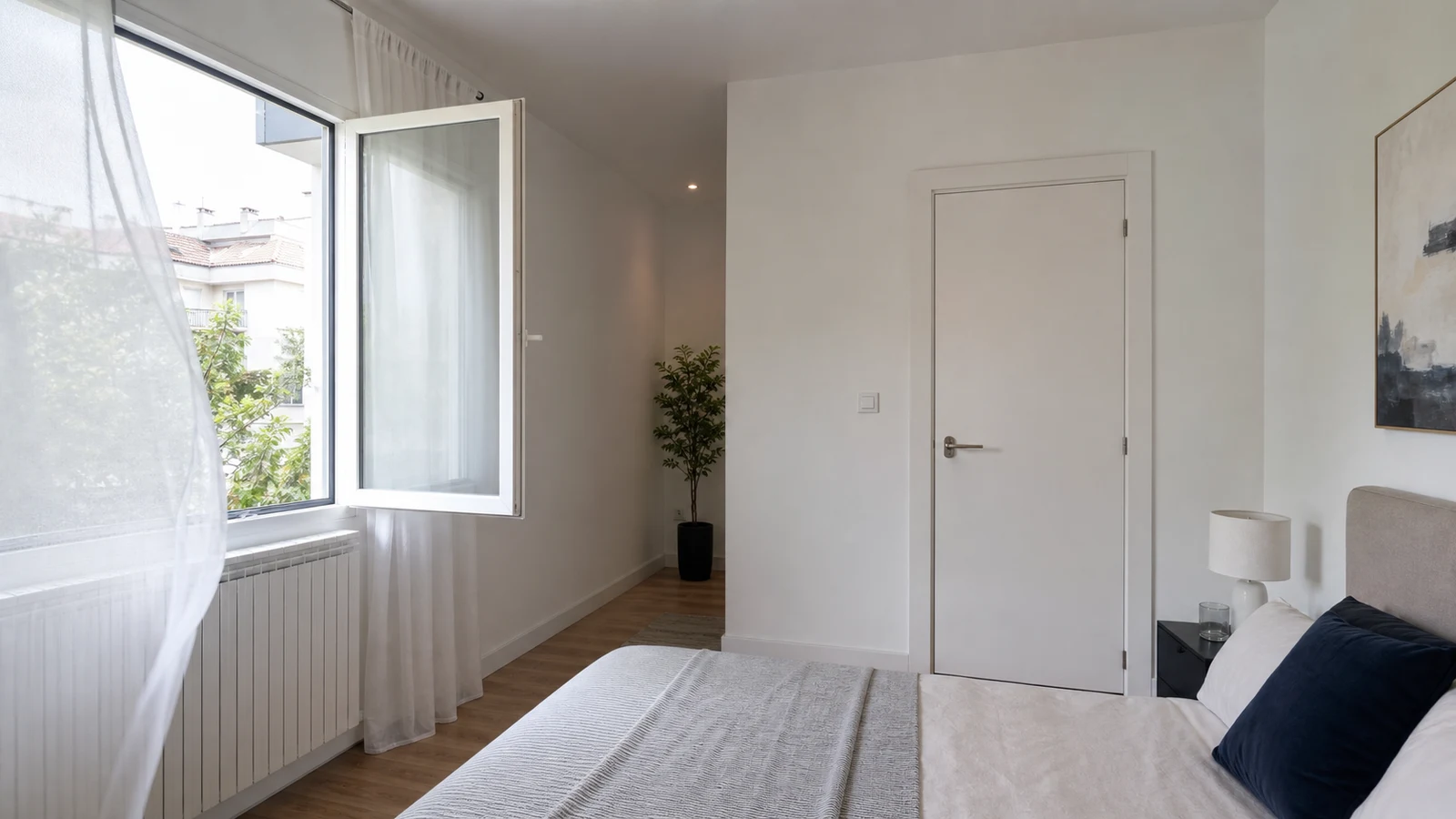
Step 02
Ventilate outdoors without spreading particles indoors
If outdoor air is suitable, open the room's exterior window and keep the internal door closed. Use only fixed extraction that vents outdoors. Never aim a portable fan at the spot; it can spread particles.
-
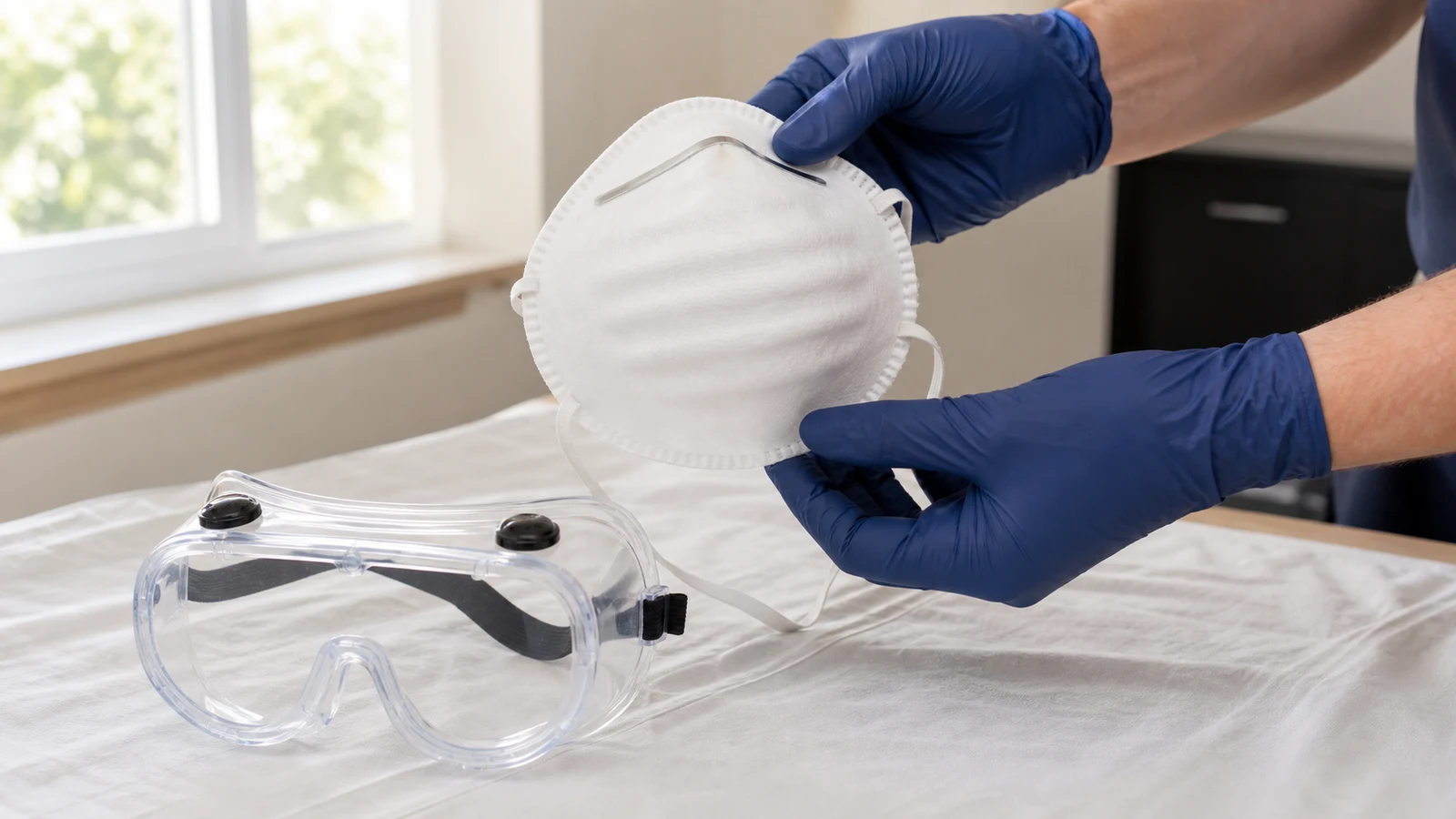
Step 03
Put on gloves, mask and eye protection
Wear nitrile gloves, sealed safety goggles and a well-fitted P2/N95 respirator. Glasses and surgical masks are not substitutes. Anyone with asthma, allergies, respiratory disease or immune compromise should not do the cleaning.
-
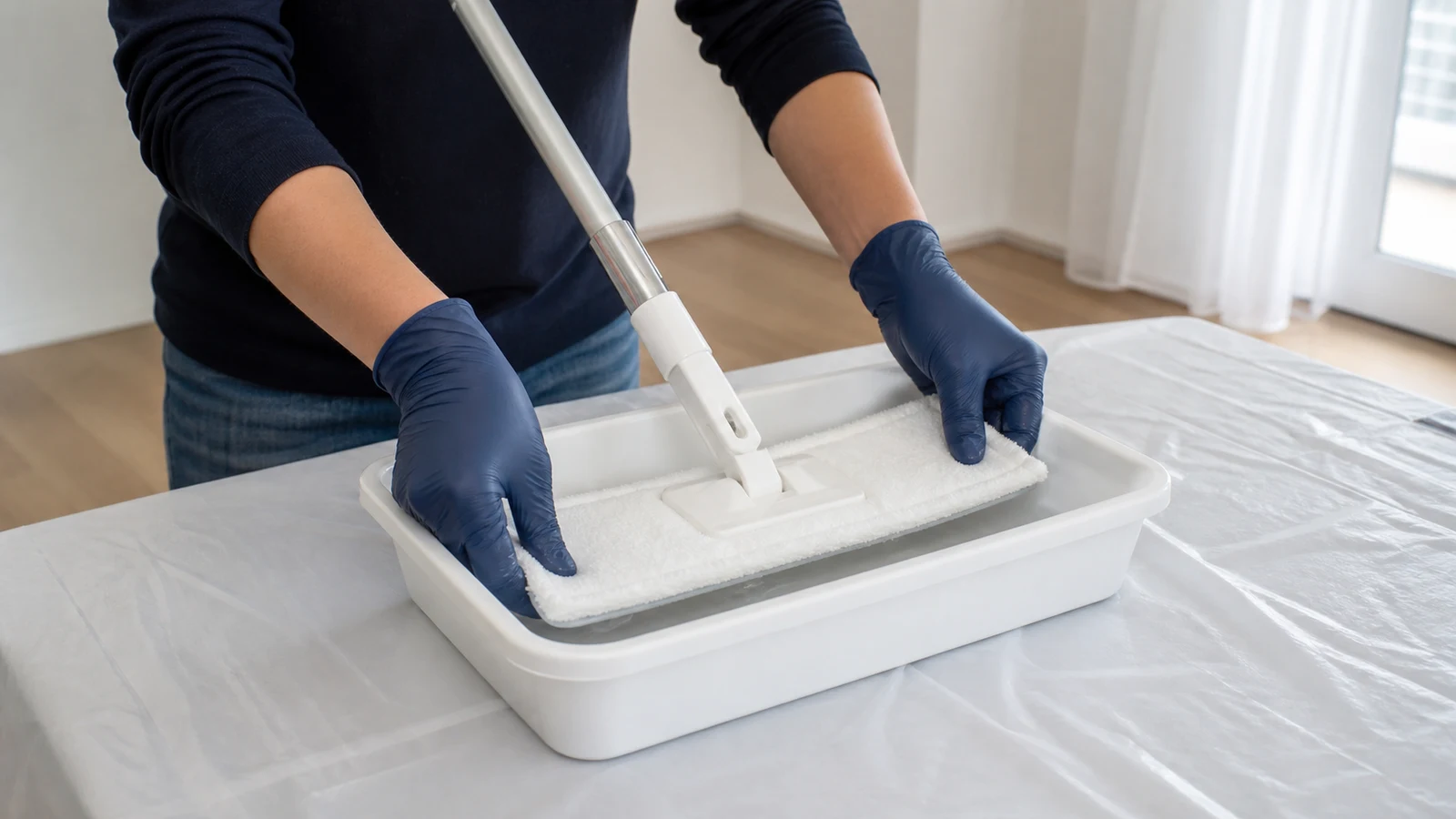
Step 04
Confirm the approved cleaner and dampen the pad
Read the approved cleaner and paint guidance. At waist height, put the directed amount in a tray and dampen a clean flat pad without dripping. Never mix products, reuse an unlabelled bottle or spray upward. Stop if compatibility is uncertain.
-
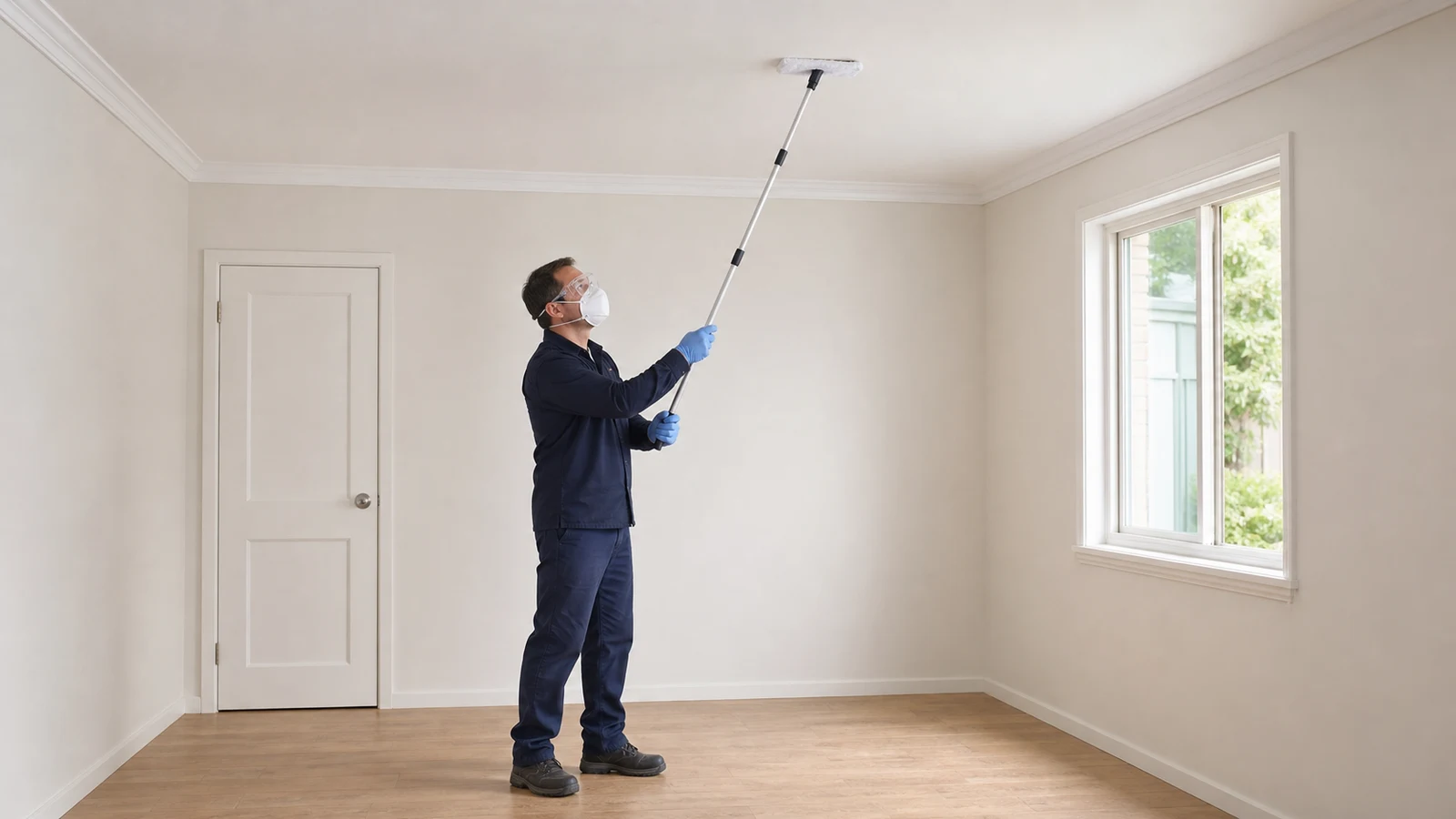
Step 05
Treat the tiny spot from the floor
Keep both feet on the floor and guide the damp pad with the extension pole. Press lightly for the label-directed time without scrubbing, soaking the ceiling or expanding the area. Stop if you cannot control the pad safely.
-
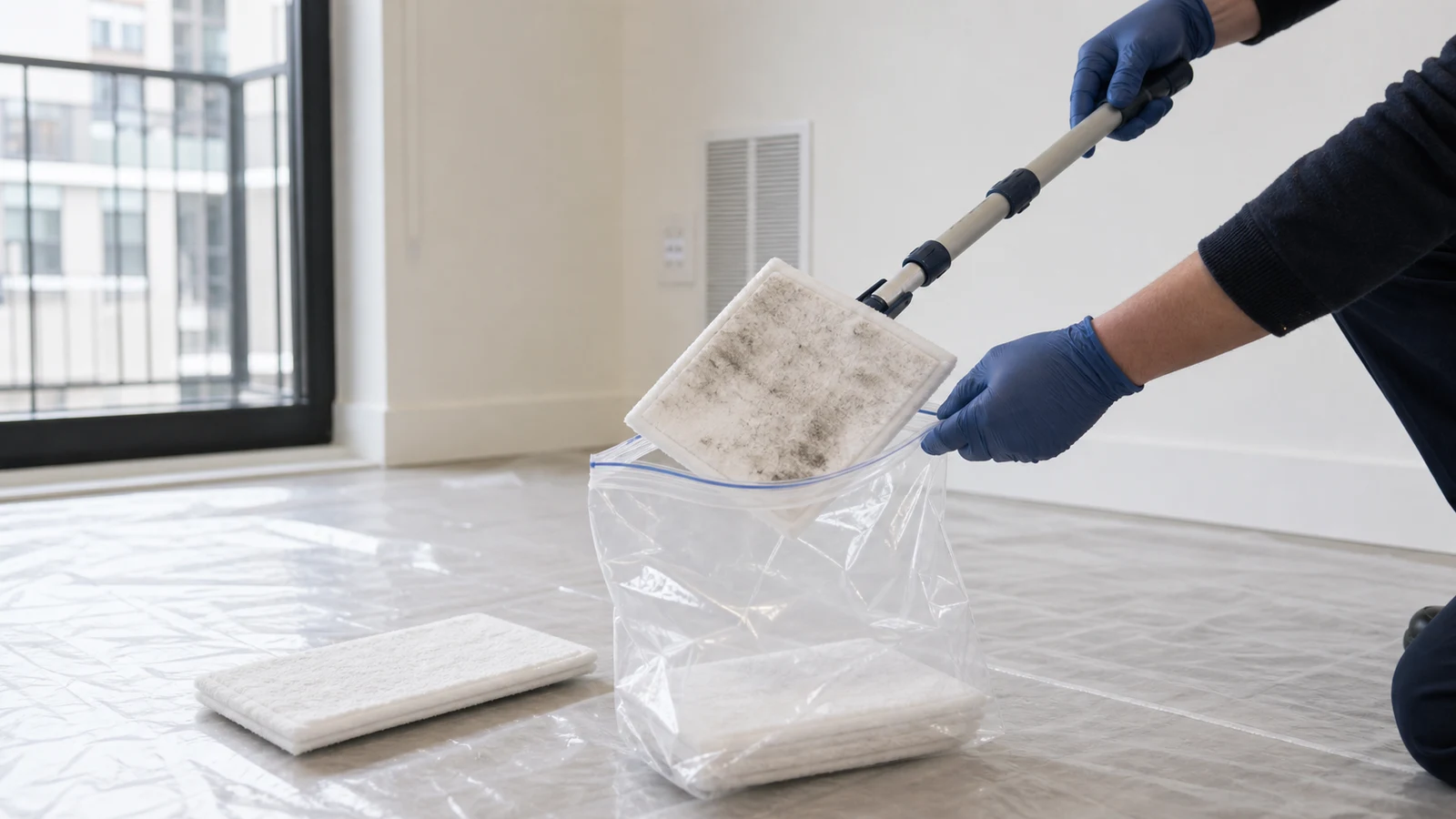
Step 06
Make one controlled wipe and contain the used pad
After the label-directed time, attach a second clean lightly damp pad and make one controlled pass. Do not dry-scrub or repeat aggressively. Lower it slowly, bag each used pad and remove gloves without touching their exterior.
-
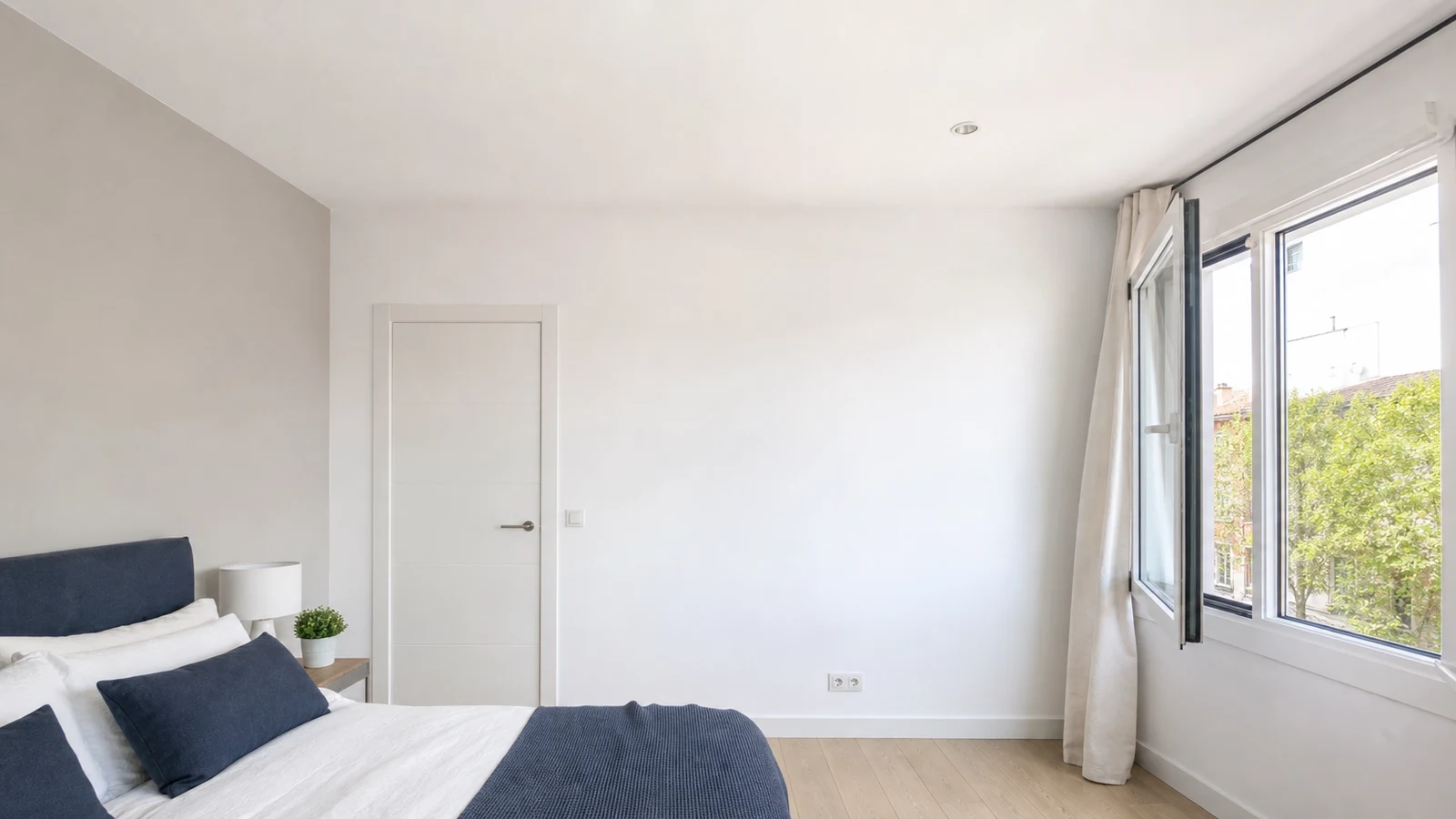
Step 07
Ensure complete drying and maintain ventilation
Keep the room isolated and ventilated outdoors until the ceiling is fully dry. Do not aim a fan at it. Monitor the area; any returning mark, odour, dampness or paint change means stop and call building maintenance.
Quick answers
Frequently asked questions.
Why does mould keep coming back on my ceiling?
Mould returns when moisture remains from a leak, condensation or failed ventilation. Cleaning cannot solve that source. Photograph the area and contact building maintenance to inspect plumbing, waterproofing, insulation and extraction. Do not seal, paint over or repeatedly clean a returning ceiling patch yourself.
Is ceiling mould dangerous?
Mould exposure affects people differently and can trigger eye, skin or respiratory symptoms. Anyone with asthma, allergies, lung disease or immune compromise should avoid the work. Wet ceilings, widespread or recurring growth, strong odour and any symptoms require professional assessment; seek medical advice for health concerns.
Is vinegar or bleach better for mould?
No single cleaner suits every painted ceiling. The correct method depends on the paint, substrate, moisture source and approved product. Never mix cleaners or spray them overhead. Ask building management and the paint or cleaner manufacturer for a compatible method before treating a tiny confirmed surface spot.
Sources and review notes
- Health Canada: Guide to Addressing Moisture and Mould Indoors - Defines small mould areas, PPE, moisture-source control, washable-surface cleaning and escalation conditions.
- US EPA: Mold Cleanup in Your Home - Sets the approximately 10-square-foot DIY boundary and requires water and moisture problems to be corrected.