
DIY / Walls & Ceiling
Scuff Marks on Walls: The Gentle-to-Strong Cleaning Ladder
Scuff marks on walls—from shoes, furniture or daily contact—don't always need sanding or repainting. The professional approach is to escalate gradually, testing each method on a hidden area before committing to the visible mark. This ladder prioritises your paint finish.
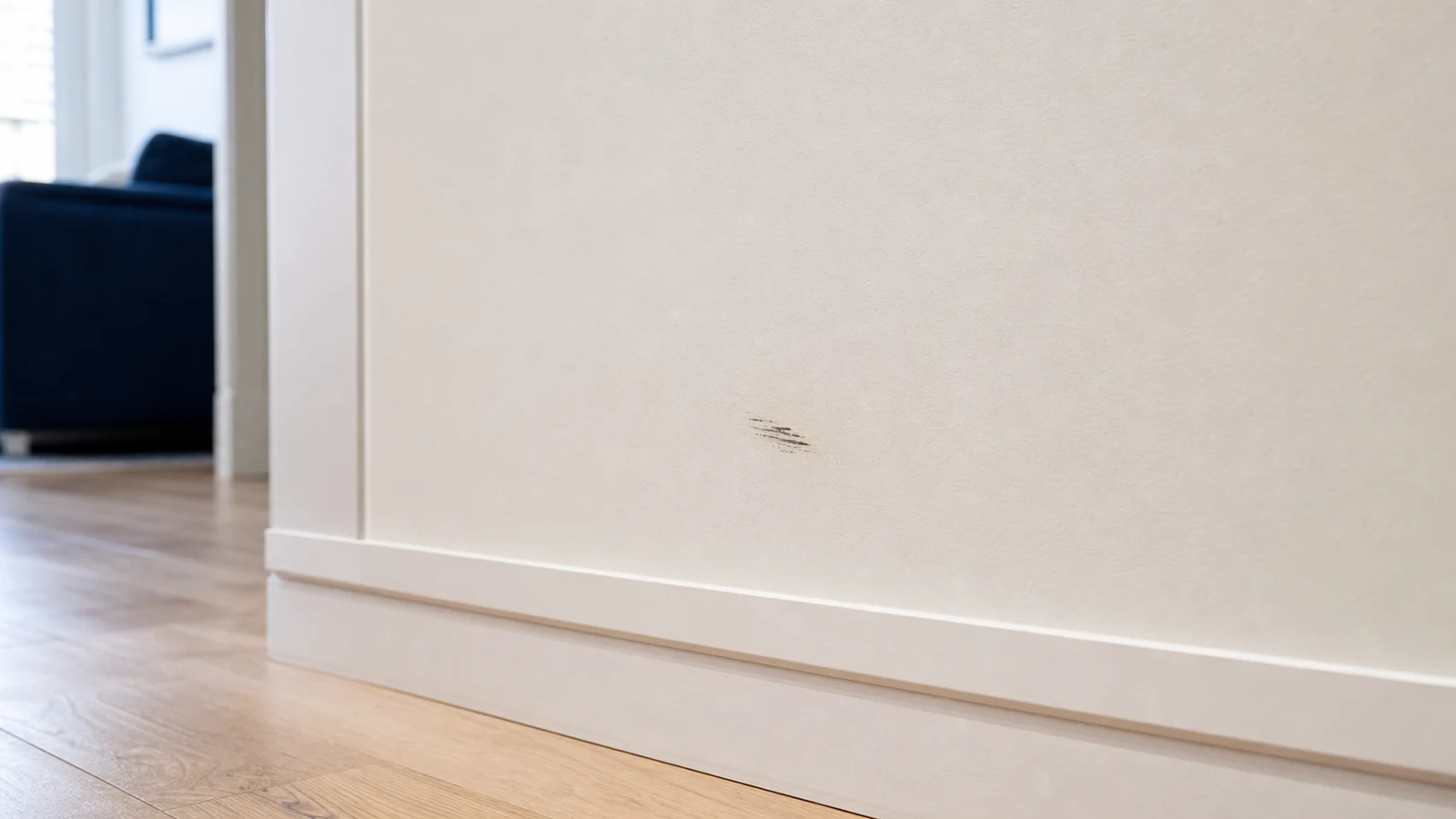
Quick answer
How do you remove scuff marks without removing paint?
Start dry on intact, fully cured, washable paint. Hidden-test each escalation before using a soft cloth with mild soapy water or a paint-maker-approved eraser. Use minimal pressure and moisture. Stop if colour transfers, the finish softens, or its sheen changes.
Intact, fully cured, washable painted drywall / Satin or eggshell paint after a hidden compatibility test / Surface-transfer scuffs that have not cut through the paint film
Flat, matte, dark or high-gloss paint unless its maker approves the exact method / Wallpaper or textured coverings / Fresh, unknown-age, non-washable or unidentified paint / Powdery, damp or mouldy surfaces
What you need
What you need
Most households already own a dry cloth, rubber eraser and washing-up liquid. A magic eraser is optional and costs under AED 10; buy only if you reach step 5.
- Difficulty
- Easy
- Active time
- 10 minutes
- Total time
- 15 minutes including drying
Dry microfibre or cotton cloth
1
Standard rubber eraser (pencil eraser or office block eraser)
1
Washing-up liquid
1 tsp in 500 ml water
Small bowl or spray bottle for water
1
Magic eraser (melamine foam block)
1
Typical UAE retail ranges. Prices vary by pack and store, and your total is lower when you already own the reusable tools.
Step by step
How to Remove Scuff Marks from Walls: The Gentle-to-Strong Cleaning Ladder
Work on the same test area in a hidden spot first. Once confident, apply the successful method to your visible scuff.
-
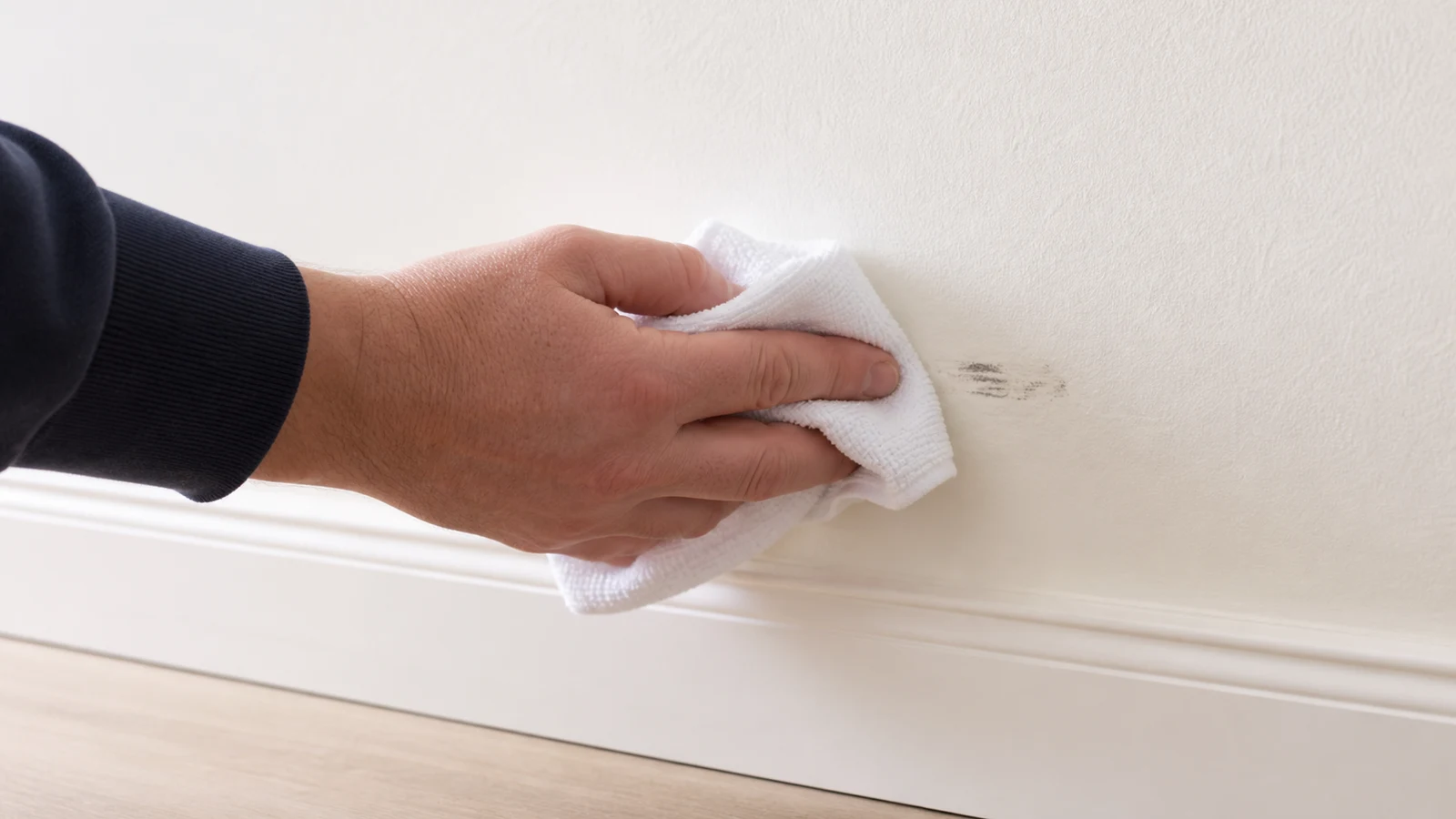
Step 01
Start with a dry cloth
Fold a clean dry microfibre cloth into a firm pad. Place it directly over the scuff and rub gently in small circular motions for 20–30 seconds using light pressure only. If the scuff lightens or disappears, you are done.
Scuff visibly lightens or dust comes away on the cloth
No change in paint sheen or colour
-
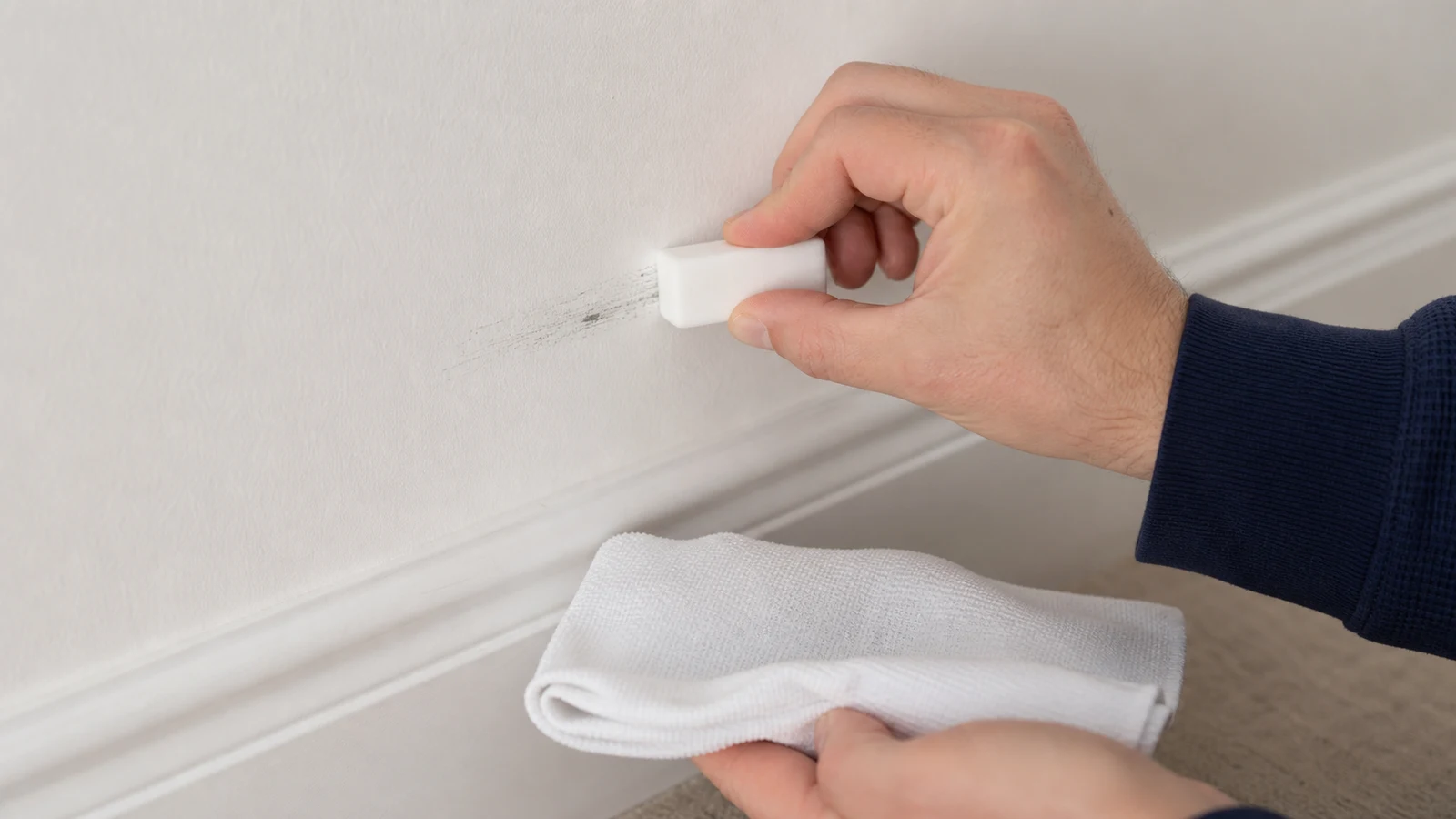
Step 02
Test with a rubber eraser
If the dry cloth did not work, hidden-test a clean rubber eraser. On a finish that passes, make one or two light strokes in one direction, then inspect. Even a rubber eraser can burnish or lift soft paint, so stop at the first colour or sheen change.
Scuff is noticeably lighter or gone
Eraser leaves no grey or coloured dust on the wall
Paint sheen remains unchanged and uniform
-
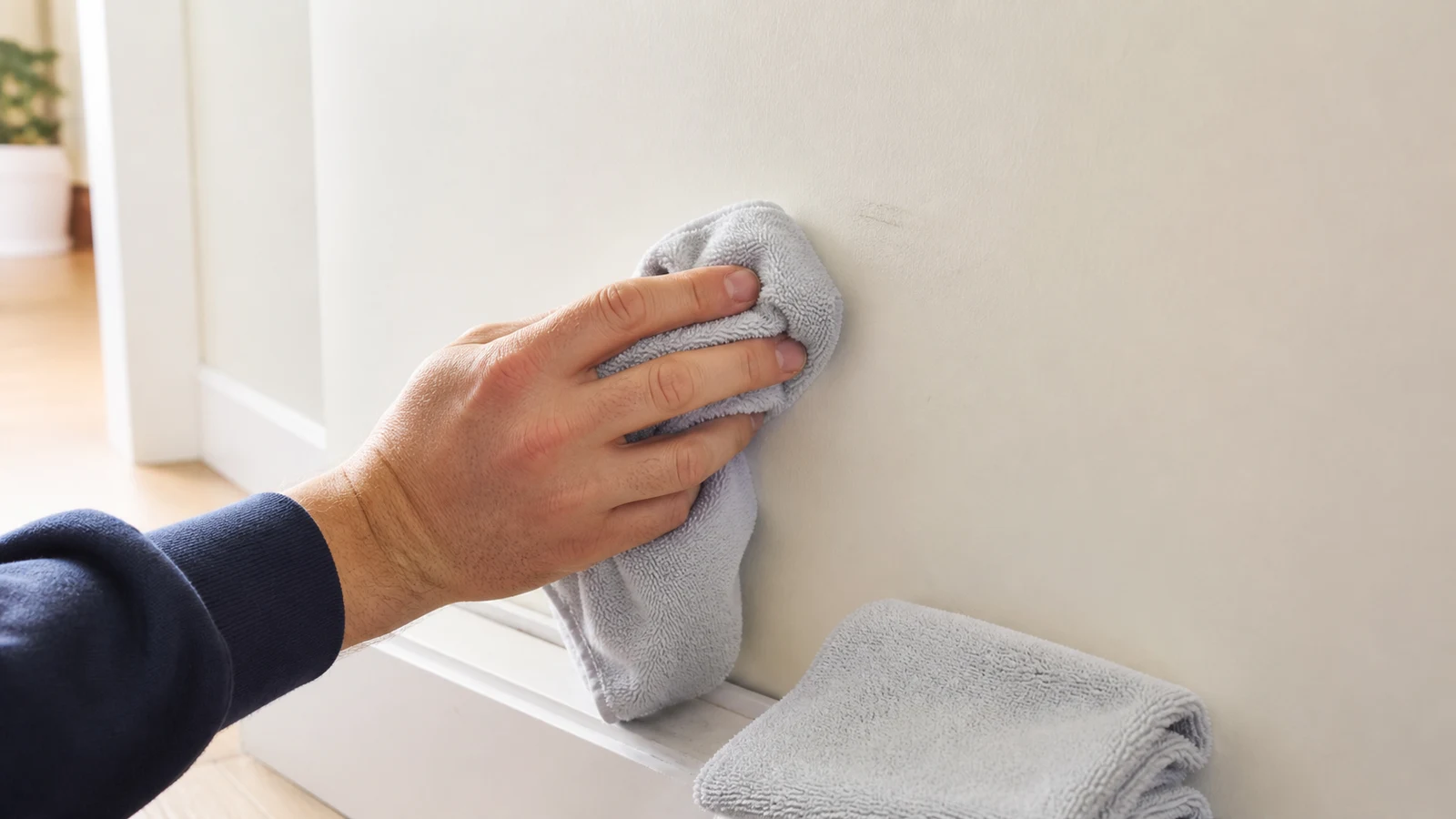
Step 03
Use a damp cloth with mild soap
If the eraser did not fully remove the mark, follow the paint maker's cleaning guidance. Hidden-test a clean cloth barely dampened with mild soapy water, wring it thoroughly, then make one gentle pass. Remove residue with another barely damp cloth and dry immediately.
Scuff fades or disappears
Wall surface feels dry within 2 minutes
No paint softening, peeling or colour change
-
Step 04
Allow the wall to dry completely
After any damp method, leave the wall untouched until it is completely dry under the paint maker's guidance. Judge colour and sheen only after dry-down; a temporarily darker wet patch is not the final result.
Wall surface is dry and feels firm
No moisture visible on the paint
No sticky or soft areas remain
-
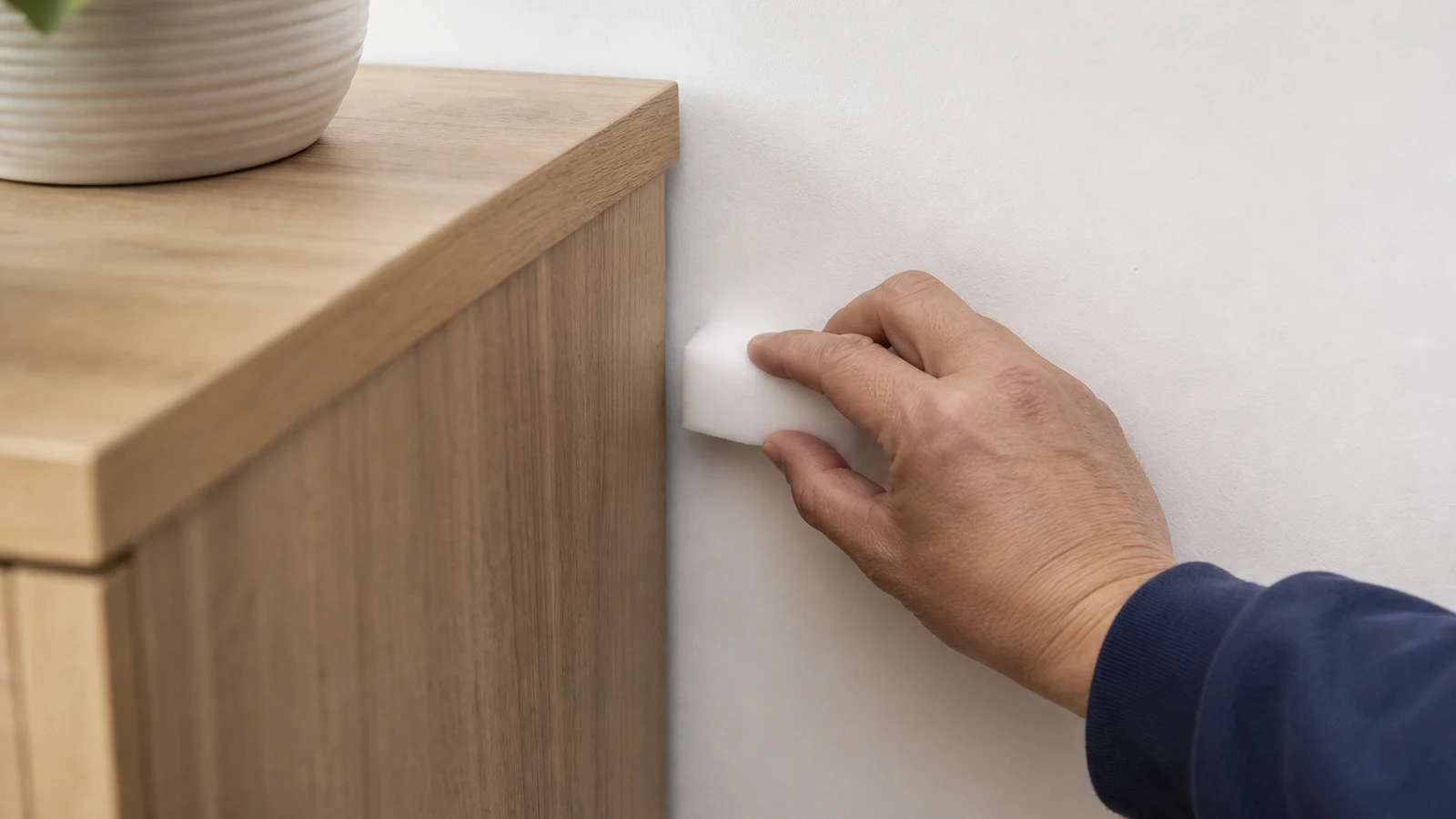
Step 05
Test magic eraser on a hidden area only
Magic erasers are fine melamine foam abrasives and can damage paint. Test on a hidden area first—inside a cupboard or behind furniture. Dampen slightly, squeeze out excess water, and rub gently in one direction for five seconds. Check whether sheen changes or surface feels rougher.
Paint in the hidden test area remains the same sheen and colour
No roughness or texture change to the paint surface
Eraser does not transfer colour or leave residue
-
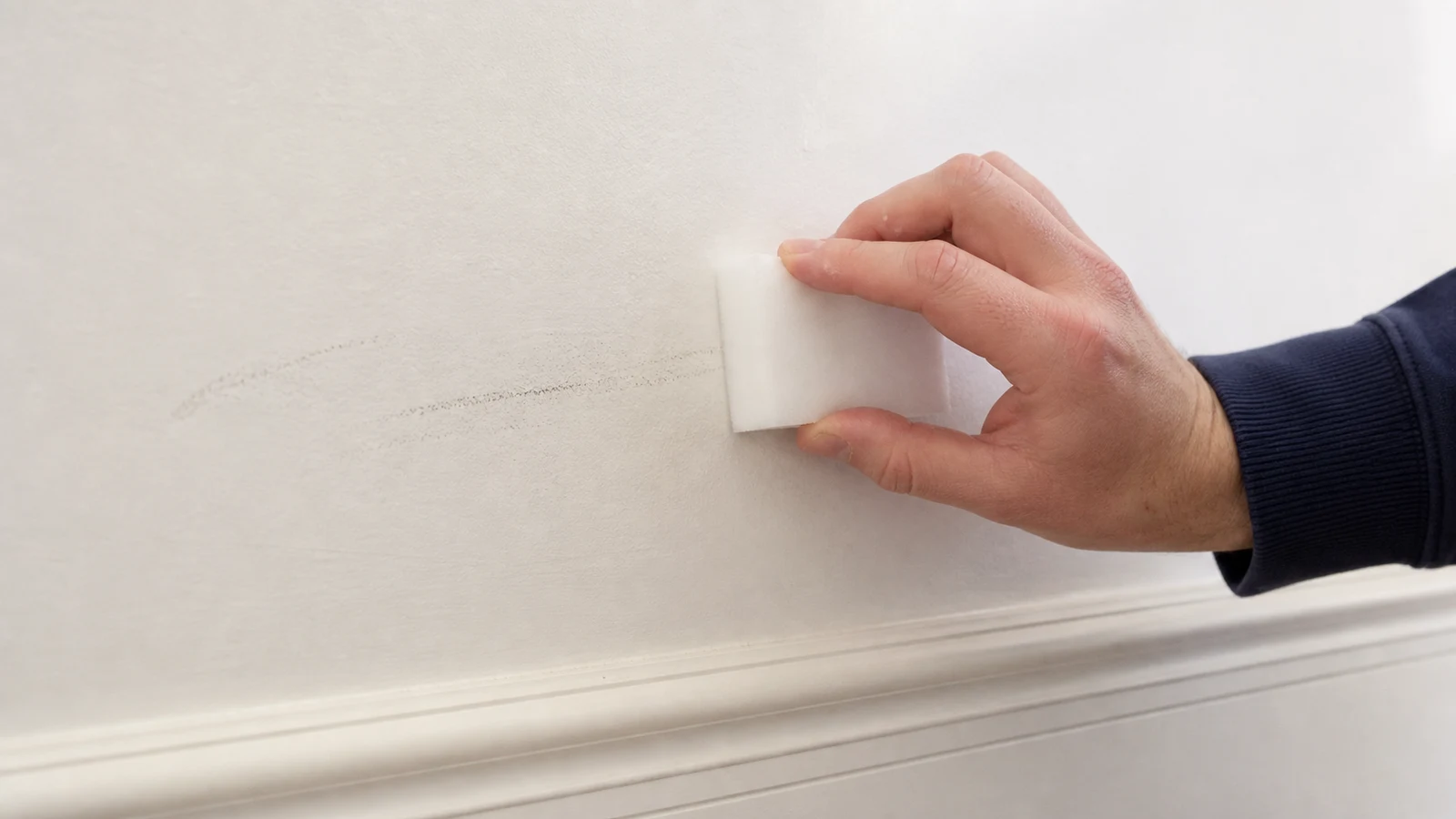
Step 06
Apply magic eraser to the scuff if the test passes
If your test showed no damage, dampen the magic eraser and squeeze until firm but damp. Press gently against the scuff and rub in light, short strokes for five seconds. Stop and allow to dry, then check the result.
Scuff is removed or significantly lightened
No dull spot or colour change visible
Paint sheen remains uniform across the treated area
-
Step 07
Inspect the result and stop if successful
Once the wall has dried fully, view the treated area under normal room light and from different angles. If the scuff is gone and the paint sheen is uniform, you are finished. If a dull spot remains, do not continue rubbing.
Scuff mark is no longer visible under normal light
Wall sheen is consistent across the treated area and surroundings
Surface feels smooth with no roughness or change
Finished result
What success looks like
A successfully removed scuff leaves the wall looking uniform, clean and unmarked, with no visible dull spot, colour change or surface texture difference.
Scuff mark is no longer visible under normal room light
Wall sheen is consistent across the treated area and its surroundings
Surface feels smooth and has not become rougher or powdery
Troubleshooting
When the first pass does not solve it.
The dry cloth and eraser made no difference
The mark may be deeply embedded in the paint, or it may be paint damage rather than surface transfer.
Try the damp cloth with soap once. If that fails, stop and consider whether the mark is acceptable. Continued rubbing risks enlarging the affected area.
The magic eraser left a dull or lighter spot on the paint
The magic eraser is abrasive and has removed a thin layer of paint sheen or exposed the underlying colour. This is especially visible on flat or dark paints.
Stop using the magic eraser immediately. Do not rub the area further.
The damp cloth made the wall feel sticky or the paint feels soft
Excess moisture has weakened the paint bond or caused the paint to soften slightly.
Dry the area immediately with a clean cloth and stop using moisture. Allow the wall to dry fully before attempting any other method.
Quick answers
Frequently asked questions.
How do you remove scuff marks without removing paint?
Escalate gradually: start with a dry cloth, then try a rubber eraser, then a damp cloth with mild soap, and only test magic eraser on a hidden area. Each step preserves the paint film. Always patch-test before using tools on visible walls.
Do magic erasers damage walls?
Magic erasers are fine abrasives that can lighten paint sheen or expose lighter layers underneath, especially on flat or dark paint. Patch-test on a hidden area first. Use light pressure and stop if the sheen changes. On gloss paint they may leave visible dull spots.
What takes hand marks off painted walls?
Light pressure with a dry cloth removes most hand marks and dust. For stubborn marks, use a damp cloth with one teaspoon of washing-up liquid in 500 ml water, wrung nearly dry. Do not oversaturate, as excess water can soften paint. Dry immediately afterward.
Can I use vinegar or lemon juice to clean wall scuffs?
No. Acidic cleaners like vinegar or lemon can damage paint over time. Stick to pH-neutral washing-up liquid and water. Stop immediately if the surface, fit or function changes unexpectedly during cleaning. Avoid high-gloss or gloss paint (risk of burnishing and dull spots).
Sources and review notes
- Sherwin-Williams: How to Clean Painted Walls - Paint sheen, mild soap, minimal water and inconspicuous testing.
- Mr. Clean: How to Get Scuff Marks off Walls - Manufacturer exclusions and light-pressure test requirement for melamine foam.