
DIY / Doors, Windows & Cabinets
Dusty Venetian Blinds: The Kitchen Tongs Trick
Venetian blinds collect dust quickly in the Gulf climate. Wrapping two clean microfibre cloths securely around smooth kitchen tongs lets you wipe both faces of one rigid slat in a controlled pass. Identify the slat material first, keep cords clear, and use only the moisture level approved by the blind maker.

Quick answer
What is the fastest way to dust blinds?
Secure clean microfibre cloths around smooth kitchen tongs, then close them lightly around one rigid blind slat and wipe from the supported end outward. Work from top to bottom, keep operating cords clear and follow the blind maker on moisture. Skip brittle, loose, motorised, fabric or inaccessible blinds.
Venetian blinds with rigid plastic or aluminium slats / Roller blinds with rigid slats / Louvre-style shutter slats
Fabric roller blinds (use vacuum brush attachment instead) / Motorised blinds (refer to manufacturer instructions) / Brittle or cracked slats (risk of breakage)
What you need
What you need
Most items are already in your kitchen and laundry. Buy microfibre cloths as a pair if you don't have them.
- Difficulty
- Easy
- Active time
- 20 minutes
- Total time
- 30 minutes
Kitchen tongs (stainless steel, 30 cm)
1 pair
Microfibre cloth
2 cloths
Rubber bands or elastic bands
4 bands
Typical UAE retail ranges. Prices vary by pack and store, and your total is lower when you already own the reusable tools.
Step by step
How to clean dusty venetian blinds with the kitchen tongs trick
Start with the blinds fully extended and the room well ventilated, then work slat-by-slat from top to bottom.
-
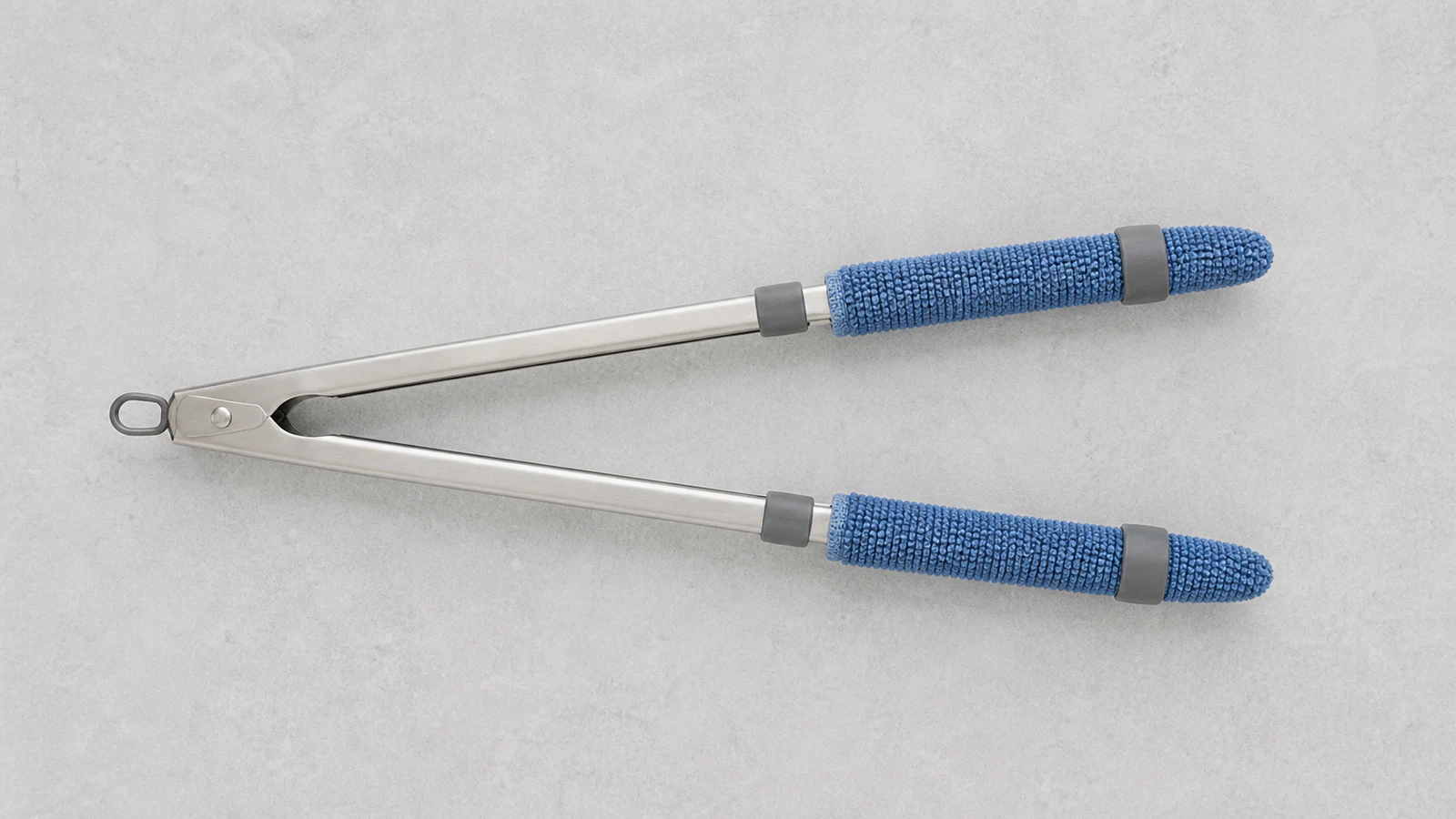
Step 01
Prepare your wrapped tongs
Centre one clean microfibre cloth over each smooth tong arm. Secure each at the handle and tip with rubber bands. Confirm the cloths cannot slip or catch, and that the tongs close freely without exposing a sharp edge.
-

Step 02
Start at the top and work downwards
Use a stable step stool only if the slat is safely within reach. Support the top slat near the headrail, close the wrapped tongs lightly around it, then draw them outward in one slow pass. Keep the cord clear.
-

Step 03
Move to the next slat and repeat
Release the tongs, support the next slat and repeat from top to bottom. Replace or rotate the cloth when it becomes loaded with dust. Never squeeze hard, rush a bent slat or pull against a cord.
-

Step 04
Finish with a clean dry-cloth pass
Replace the used cloths with clean, dry microfibre and make one light pass on each slat. This collects loosened dust and removes permitted moisture without leaving a coating. Support each slat, and stop if the finish transfers or the slat bends.
-
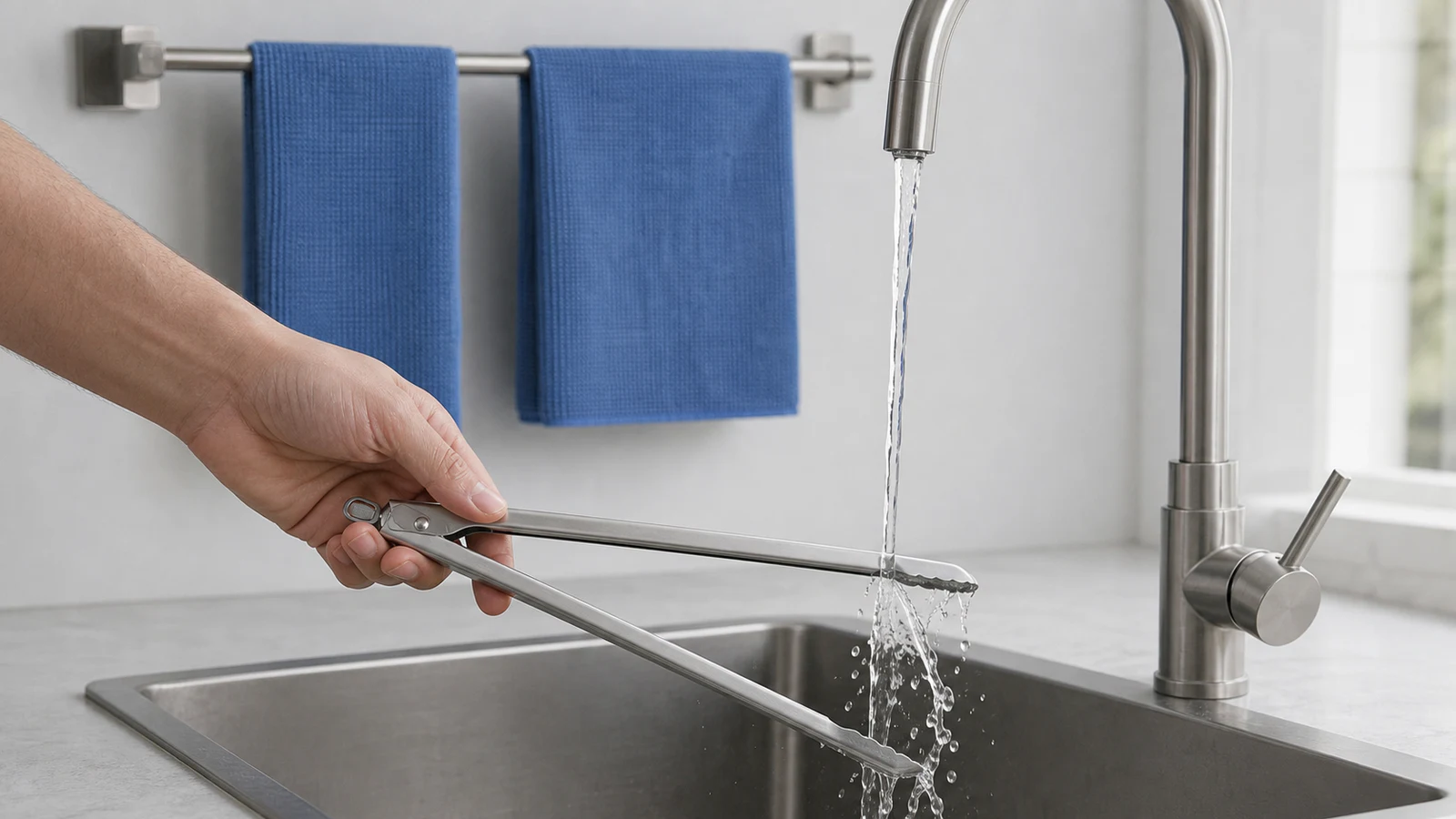
Step 05
Clean and store your tools
Remove the microfibre cloths without catching a cord or slat. Wash the cloths according to their care label, wipe and dry the tongs, then return the blind to its normal position. Keep cords secured and inaccessible to children, and do not rehang or repair a loose blind during this cleaning task.
Quick answers
Frequently asked questions.
Do dryer sheets stop dust settling?
Some dryer sheets leave a conditioning residue that can reduce static on products whose manufacturer explicitly permits it, but they are not universal blind cleaners. Skip them unless the exact blind care guide allows the product on that slat material and finish. Clean microfibre is the default method.
Can you wash venetian blind slats with water?
Do not assume aluminium, coated wood and plastic blinds tolerate the same moisture. Follow the exact blind care guide. When damp wiping is permitted, use a barely damp microfibre cloth and dry each slat promptly. Never submerge the headrail, cords, mechanisms, motors or an unidentified blind.
How often should you clean venetian blinds this way?
Clean when a visible dust film returns rather than following a universal schedule. Gulf dust, open windows, nearby construction and room use change the interval. Light, regular dry dusting is gentler than infrequent aggressive cleaning. Stop if the blind is high, unstable, brittle, motorised or difficult to reach safely.