
DIY / Whole Home
How to Clear a Stale Closed-Apartment Smell Safely
You've just opened the door to your new home and the air feels thick with stale odour—not necessarily a serious problem, but unmistakably unpleasant. This protocol helps you air the space safely, clean visible sources and spot warning signs of dampness that require professional attention.

Quick answer
How do you get rid of a musty smell in a new place?
First rule out gas, burning, chemical, sewage, damp, mould and pest odours. For ordinary stale air, ventilate only when current outdoor air, humidity and security conditions are suitable. Wash care-label-approved textiles, follow the AC manual for user-serviceable filters and remove dust. Investigate persistent, worsening or localised odour instead of masking it.
closed apartments with stale air odour / homes with stagnant indoor air after vacancy
apartments with active gas, sewage, burning or chemical smells / spaces with visible mould, dampness or pest activity
What you need
What you need
Use ordinary cleaning supplies only on compatible surfaces. Check the AC manual before touching a filter, read every textile care label, and confirm live outdoor air quality, humidity and security conditions before opening windows.
- Difficulty
- Easy
- Active time
- Depends on the source and approved cleaning steps
- Total time
- No fixed wait; escalate hazardous or persistent odours immediately
Replacement AC filter (if required by your system)
One filter matching your unit model
Clean cotton cloths or microfibre dusting cloths
3–5 cloths
Household vacuum or soft brush
One unit
Typical UAE retail ranges. Prices vary by pack and store, and your total is lower when you already own the reusable tools.
Step by step
How to clear a stale apartment smell safely
Rule out danger first, then use source control, condition-appropriate ventilation and maker-approved cleaning. Do not wait for a deadline when an odour persists or points to a specific source.
-
Step 01
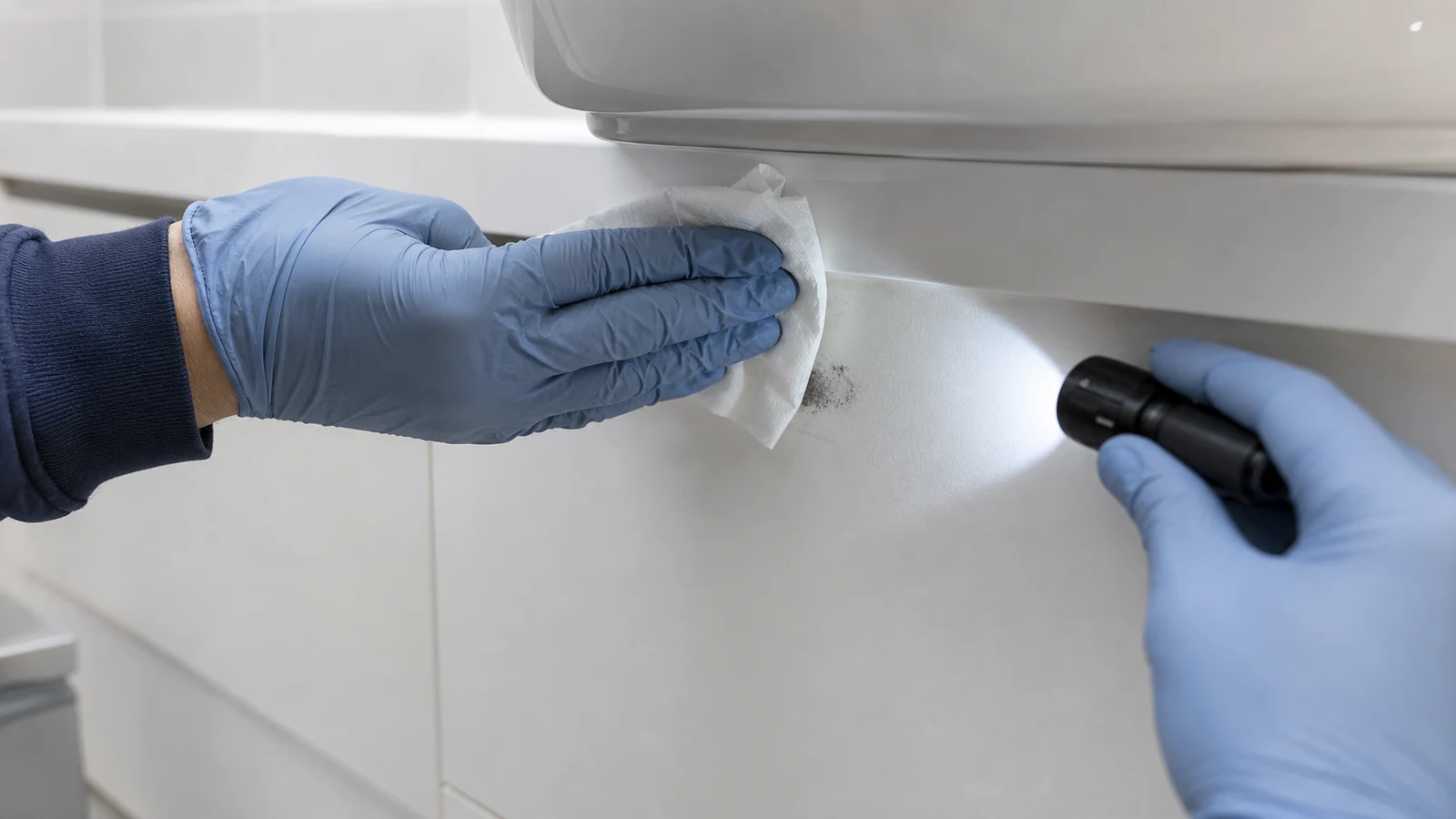
Check for hazardous odours and ventilation safety
Pause at the entrance before operating lights, appliances or the AC. If you notice gas, burning or a strong chemical odour, do not investigate or operate switches: leave immediately and call building security or emergency services from outside. Otherwise, look for sewage odour, visible dampness, active leaks or mould and report them before routine airing.
You have eliminated immediate safety concerns (gas, sewage, active leak or mould)
Outdoor air quality is acceptable for extended window opening
You have noted any visible damp or discolouration for later investigation
-

Step 02
Open windows to create cross-flow ventilation
Check a current local AQI and weather source first. If outdoor air quality, humidity, heat and dust are suitable, and the openings can be secured, open windows on different sides to create cross-flow. Close them if outdoor conditions worsen, moisture condenses indoors or security cannot be maintained.
Air is visibly moving through rooms (curtains move gently)
Windows remain open only while live outdoor and security conditions are suitable
You have opened safe internal doors so air can move between spaces
-
Step 03
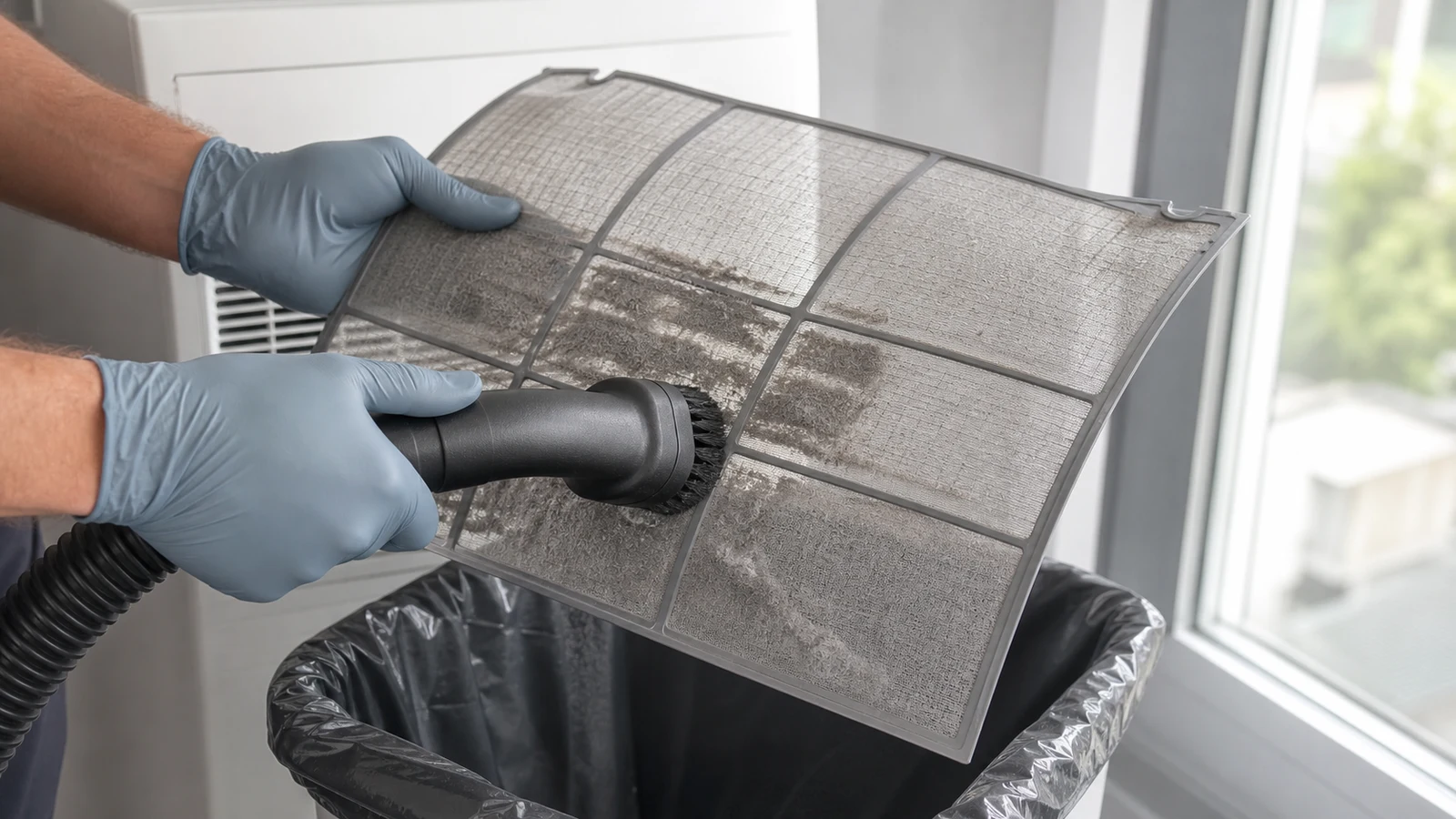
Remove and clean or replace your air-conditioning filter
Follow the exact isolation and access steps in the AC unit's manual before opening a user-serviceable filter compartment. Remove the filter without force. Clean a washable filter only by the approved method, and replace disposable, damaged or overdue filters with the specified type. Stop if access requires tools, panels or electrical work not designated for users.
Filter is removed without forcing or bending it
The filter has been cleaned or replaced exactly as the manual specifies
Filter is reinstalled correctly and the compartment is sealed
-
Step 04
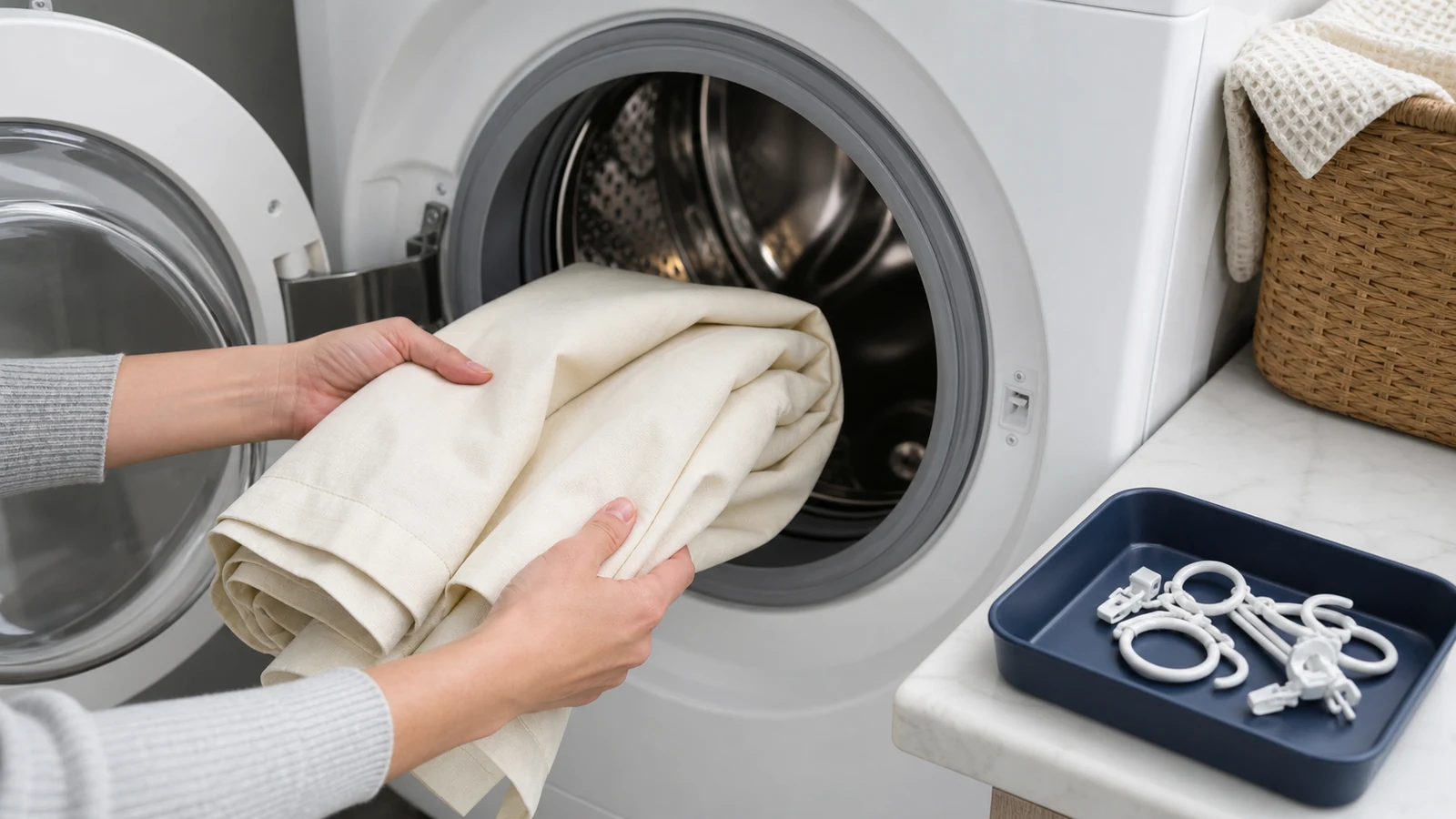
Launder all textiles, especially curtains and upholstery covers
Remove and wash machine-washable curtains, cushion covers, bedding, towels and throws according to each care label. Dry every item fully before returning it. Air non-removable cushions and mattresses in a well-ventilated shaded area only when their manufacturer permits; direct UAE sun can fade or damage some materials.
All care labels have been read and respected
Textiles come out smelling fresh and are fully dry before replacing
Items are hanging or laid out in an airy space while drying
-
Step 05
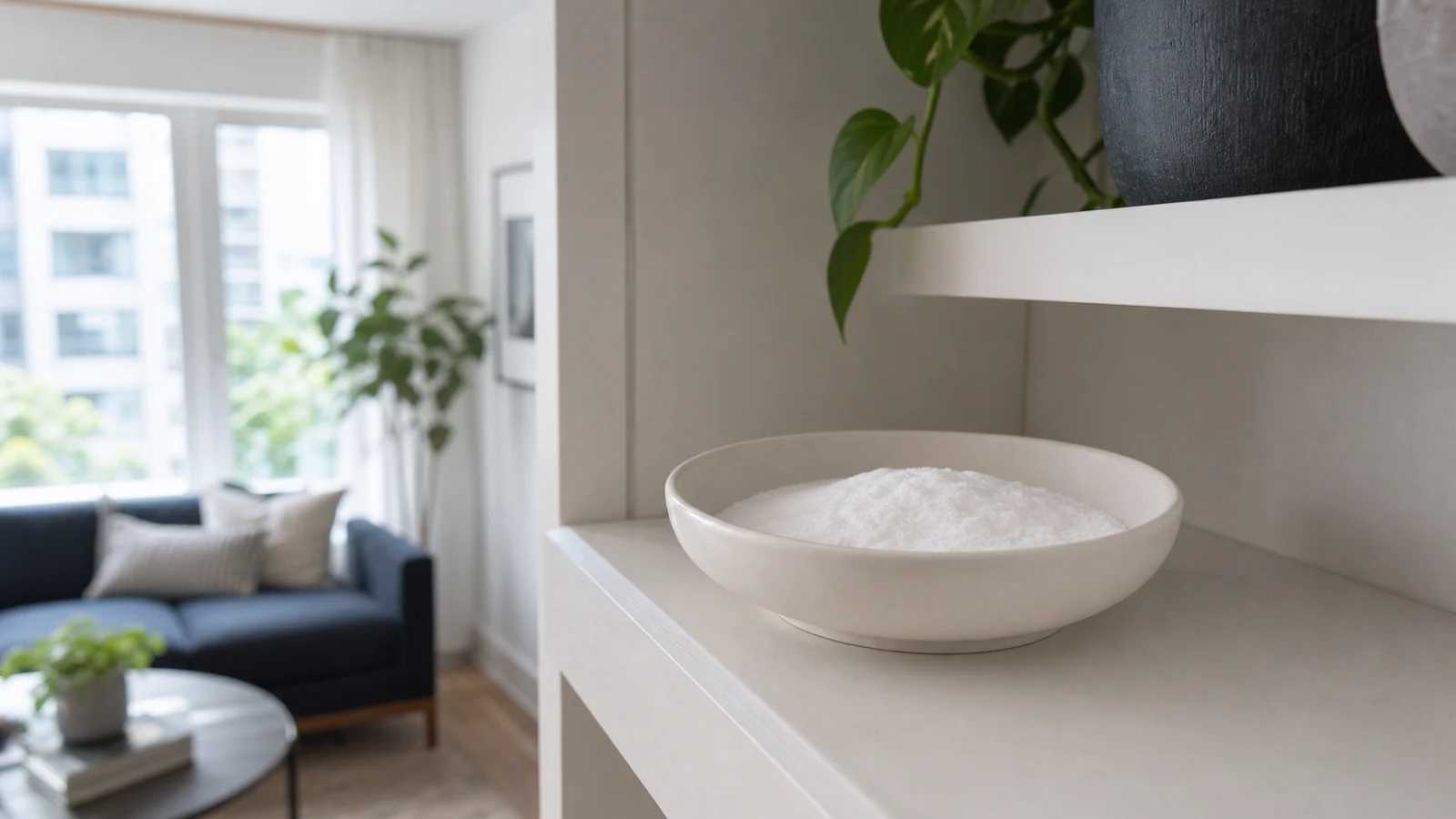
Trace the odour instead of masking it
With no hazardous smell present, note whether the odour is stronger near a drain, under-sink cabinet, damp patch, pest sign or AC return. Inspect visually without opening building services or disturbing mould. Do not add fragrance, powder or another cleaner. Report a localised, recurring or worsening source to building maintenance.
The likely area is recorded without touching pipes, mould or building services
No fragrance, loose powder or cleaner is used to conceal the smell
Persistent, recurring or localised odour is reported for source diagnosis
-
Step 06
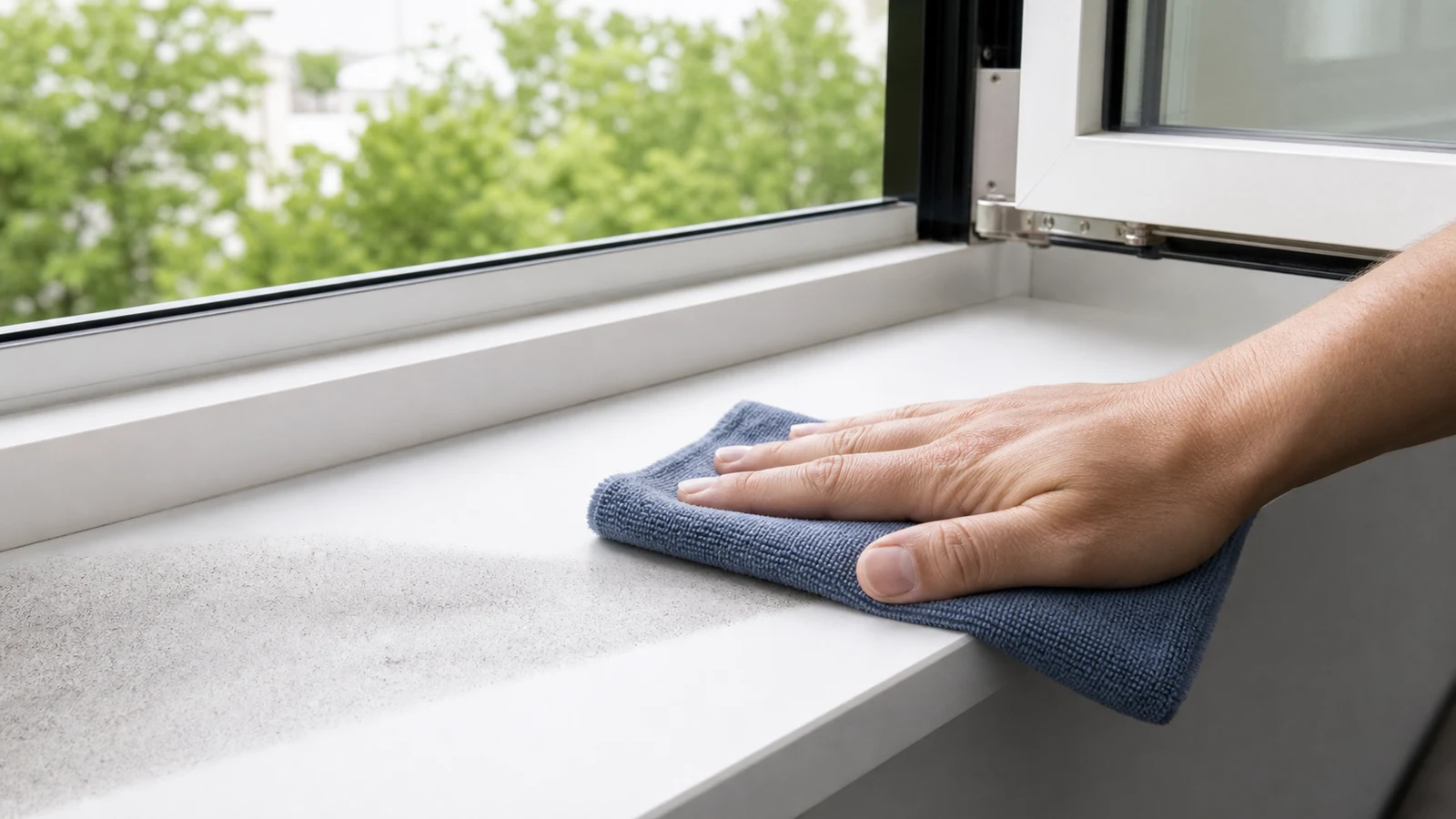
Wipe down horizontal surfaces to remove dust and stagnant particles
Use a slightly damp microfibre or cotton cloth on water-compatible horizontal surfaces, working from top to bottom and allowing each surface to dry. Follow the surface maker's instructions for counters, coated furniture and floors; use only compatible vacuum attachments or floor-cleaning methods.
Cloth is damp but not soaking wet
All accessible horizontal surfaces have been wiped
Surfaces are allowed to dry naturally in circulating air
-
Step 07
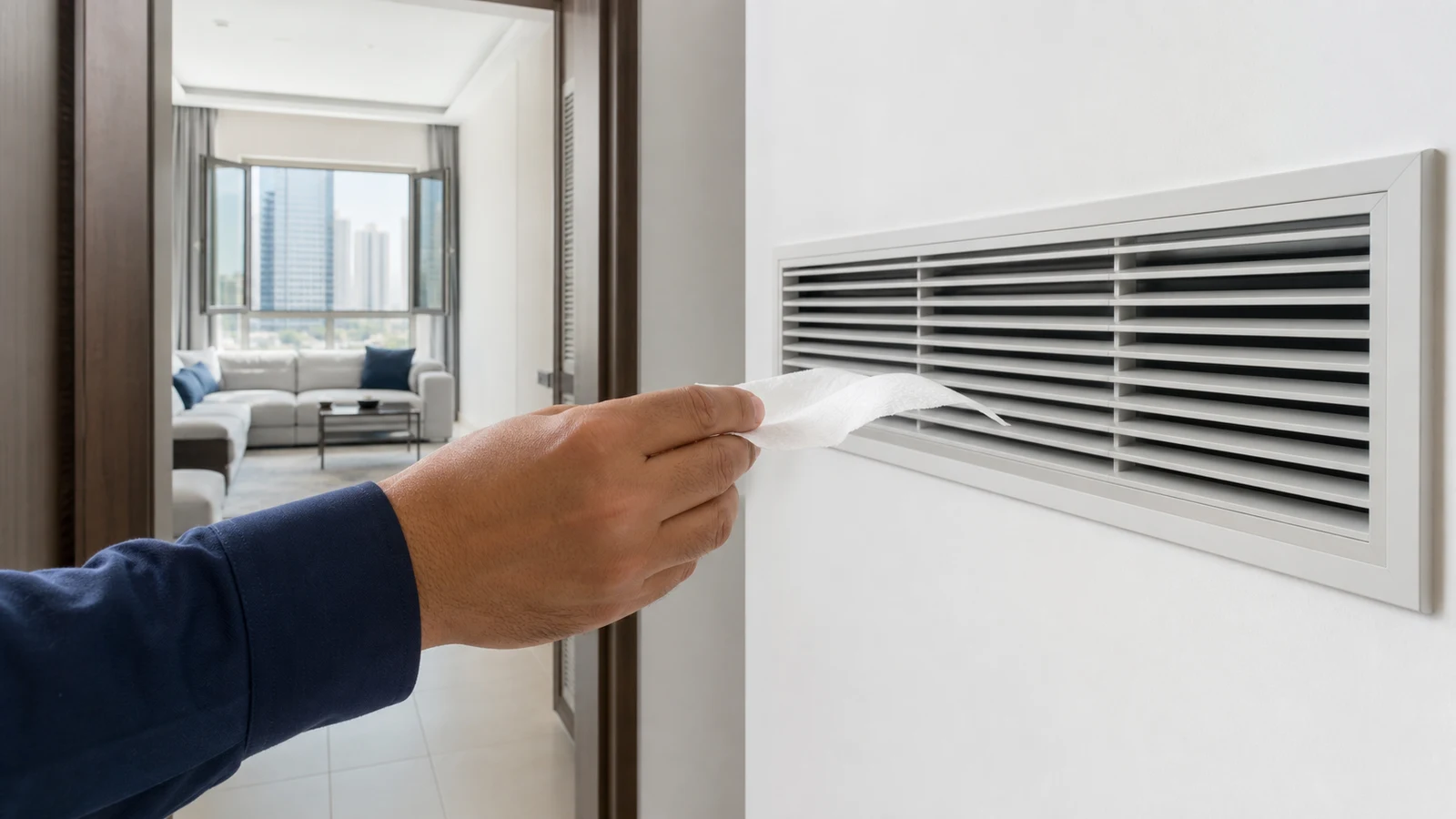
Monitor odour and stop if you detect hazardous smells
Recheck after each ventilation or cleaning action. If the odour worsens, returns, concentrates near a drain or AC return, or is accompanied by symptoms, dampness, growth, a leak or pest signs, stop routine cleaning and request source diagnosis. For gas, burning or strong chemical odour, leave immediately and call from outside.
Odour is noticeably lighter compared to day one
No new damp patches, mould spots or hazardous smells have appeared
Air circulation is continuous and outdoor conditions remain suitable
Finished result
What success looks like
Success means an ordinary stale odour improves after safe ventilation and source-appropriate cleaning, with no hazardous smell, symptoms, dampness, growth, leak or recurring local source. Any remaining or returning odour still needs investigation.
Air smells noticeably fresher when you walk in, without obvious staleness
No new damp patches, discolouration or mould have appeared
No hazardous odours (gas, sewage, burning, chemicals) are detectable
Textiles smell clean and feel dry
No fragrance or loose powder is masking the result
Quick answers
Frequently asked questions.
How long does it take to air out an apartment?
There is no universal safe deadline because the source and outdoor conditions vary. Recheck after each safe ventilation or cleaning action. Do not wait if the smell is hazardous, worsens, localises, returns, causes symptoms or appears with dampness, growth or a leak; leave for immediate hazards and request source diagnosis.
What absorbs bad smells in a room?
Source removal and suitable ventilation work better than masking. Wash compatible textiles, remove dust and follow the AC manual for user-serviceable filters. A labelled odour absorber may be used only as directed and kept from children and pets, but it cannot correct damp, mould, sewage, pests or another active source.
Can I open all my windows at once in the UAE?
Only when current outdoor conditions are suitable. Check a local AQI and weather source, then choose that day's coolest lower-dust, lower-humidity period. Keep windows closed during dust events, poor air quality or extreme humidity. Fixed morning and evening hours are not reliable year-round.
What if the odour remains or comes back?
The source may not be transient staleness. Do not investigate gas, burning or strong chemical odours; leave and call from outside. For non-emergency persistent odour, visually check for leaks, dampness or mould without disturbing materials. If it concentrates, worsens or returns, contact building maintenance for diagnosis.
Sources and review notes
- US EPA: Improving Indoor Air Quality - Primary public-health guidance prioritises source control, ventilation and filtration while recognising that outdoor conditions affect ventilation.
- UAE National Center of Meteorology: Air Quality Index - Official live UAE air-quality source for deciding whether outdoor-air ventilation is suitable.
- Dubai Municipality: Safety of Liquefied Petroleum Gas Cylinders - Official local safety guidance supports immediate evacuation and avoiding ignition sources when gas is suspected.