
DIY / AC & Ventilation
Musty Smell When the AC Turns On: Safe Checks Before Service
A musty smell at startup is a moisture signal, not a diagnosis. It can involve a damp filter, drain problem, wet insulation, coil contamination or another source in the room. A filter check and a documented self-dry feature are the only resident-level actions here. Internal HVAC contamination requires experienced professional assessment.
Quick answer
Why does my AC smell when I turn it on?
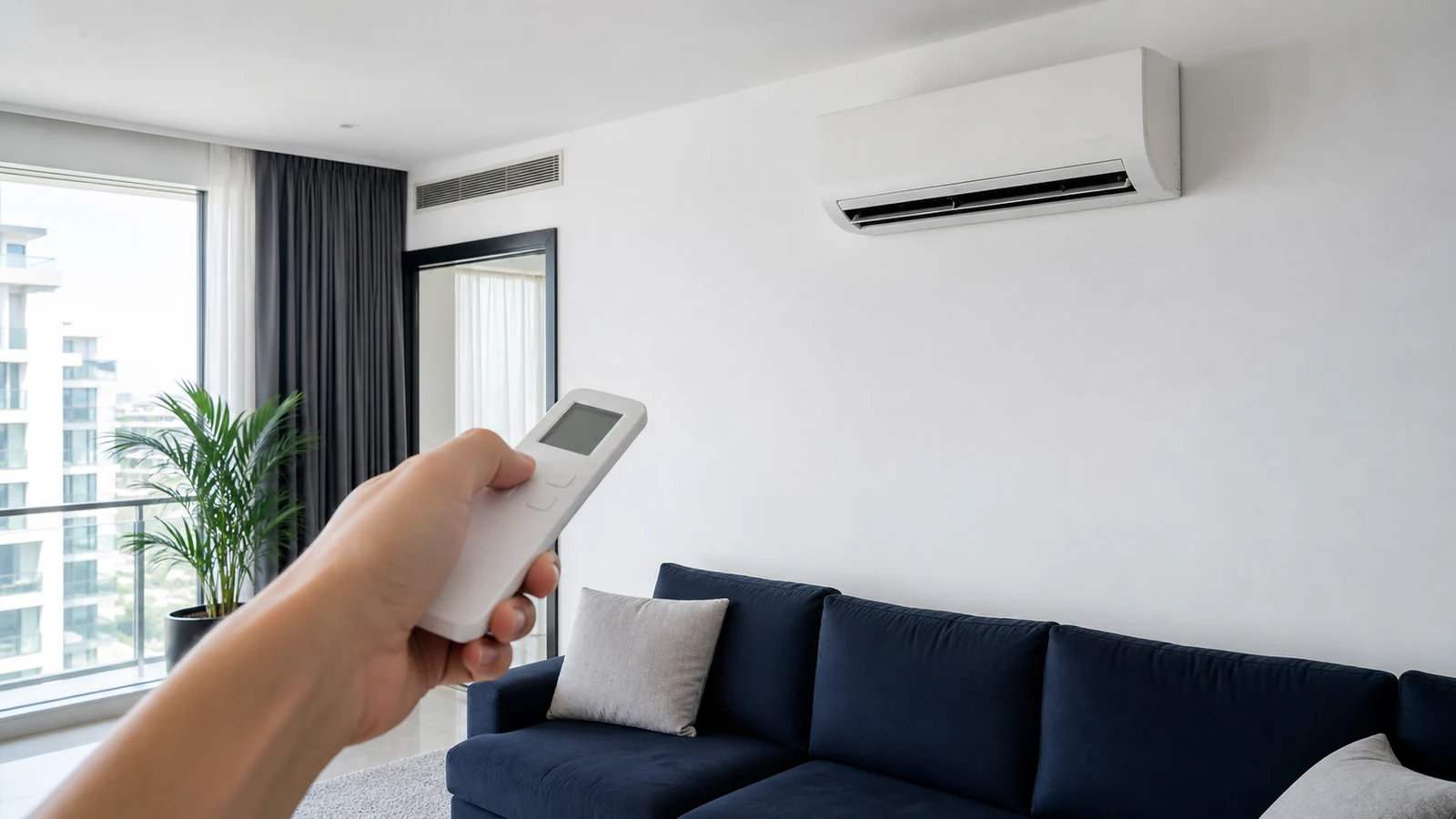
Stop using the AC if you see water, ice, smoke, damaged wiring or widespread growth. Otherwise, inspect and service only the manual-approved user filter, then use a manufacturer-documented self-clean, coil-dry or fan-dry feature exactly as instructed. If odour persists, recurs or affects multiple outlets, arrange qualified HVAC assessment.
Residential AC units with a floor-reachable user filter and a documented self-clean or coil-dry function
Units without a documented drying function / Visible water, ice, smoke, electrical damage or burning odour / Dark growth inside outlets, ducts, insulation or coils / Persistent or recurrent musty odour after approved filter maintenance / Symptoms affecting several outlets or vulnerable occupants
What you need
What you need
No deodoriser or chemical is needed. The exact manual decides whether the filter is washable, replaceable or automatically cleaned, and whether a self-clean or coil-dry function exists.
- Difficulty
- Easy inspection
- Active time
- About 15 minutes
- Escalation
- Immediate for moisture, ice, damage or persistent odour
Exact AC model manual
One digital or printed copy
Manufacturer-specified replacement filter
Only if the manual identifies the existing filter as disposable
Vacuum or clean water
Only as permitted for the documented user filter
Typical UAE retail ranges. Prices vary by pack and store, and your total is lower when you already own the reusable tools.
Step by step
How to check a musty AC smell safely
Do not open service panels or treat internal parts. Work through observable stop conditions, the user filter and documented controls, then escalate if the odour does not resolve.
-
Step 01
Check for conditions that require immediate service
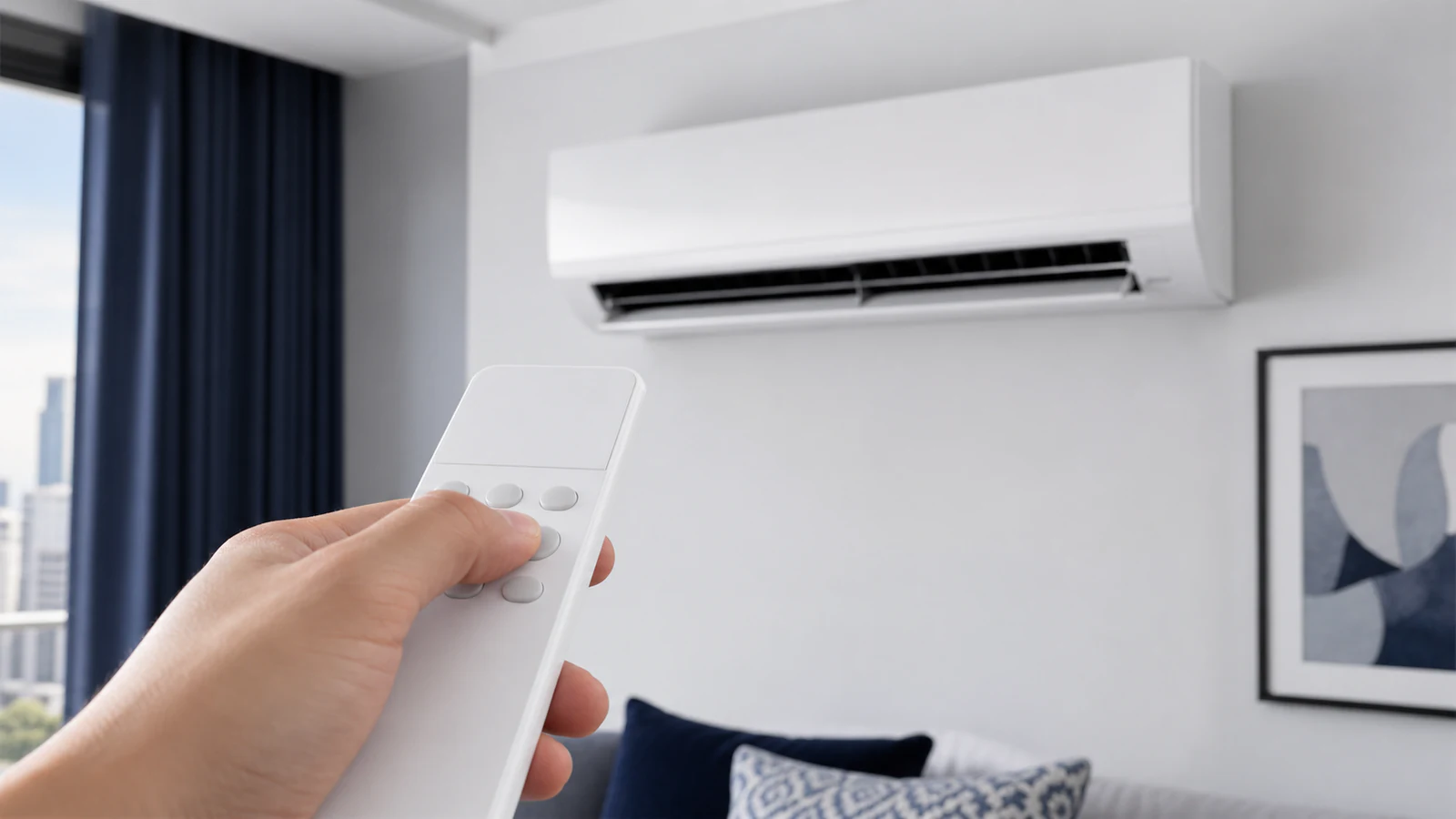
From the floor, look for dripping water, wet wall or ceiling finishes, ice, smoke, damaged cable, burnt marks or dark growth inside the outlet. Note whether the smell comes from one unit or several outlets. Stop the system for electrical, burning, water or widespread contamination symptoms and arrange qualified assessment promptly.
Do not touch wet equipment or open a service panel.
Keep anyone with asthma or respiratory sensitivity away from suspect airflow until the source is assessed.
-

Step 02
Read the exact model maintenance section
Find the model number and official manual. Identify the user filter instructions and look for a named Self Clean, Coil Dry, X-Fan or similar function. Do not assume ordinary Fan mode dries the coil; control logic and humidity behaviour vary. If no drying function is documented, skip that action.
Use only functions described for the exact model.
A room fan setting is not a substitute for a manufacturer drying cycle.
-
Step 03
Clean or replace only the user filter
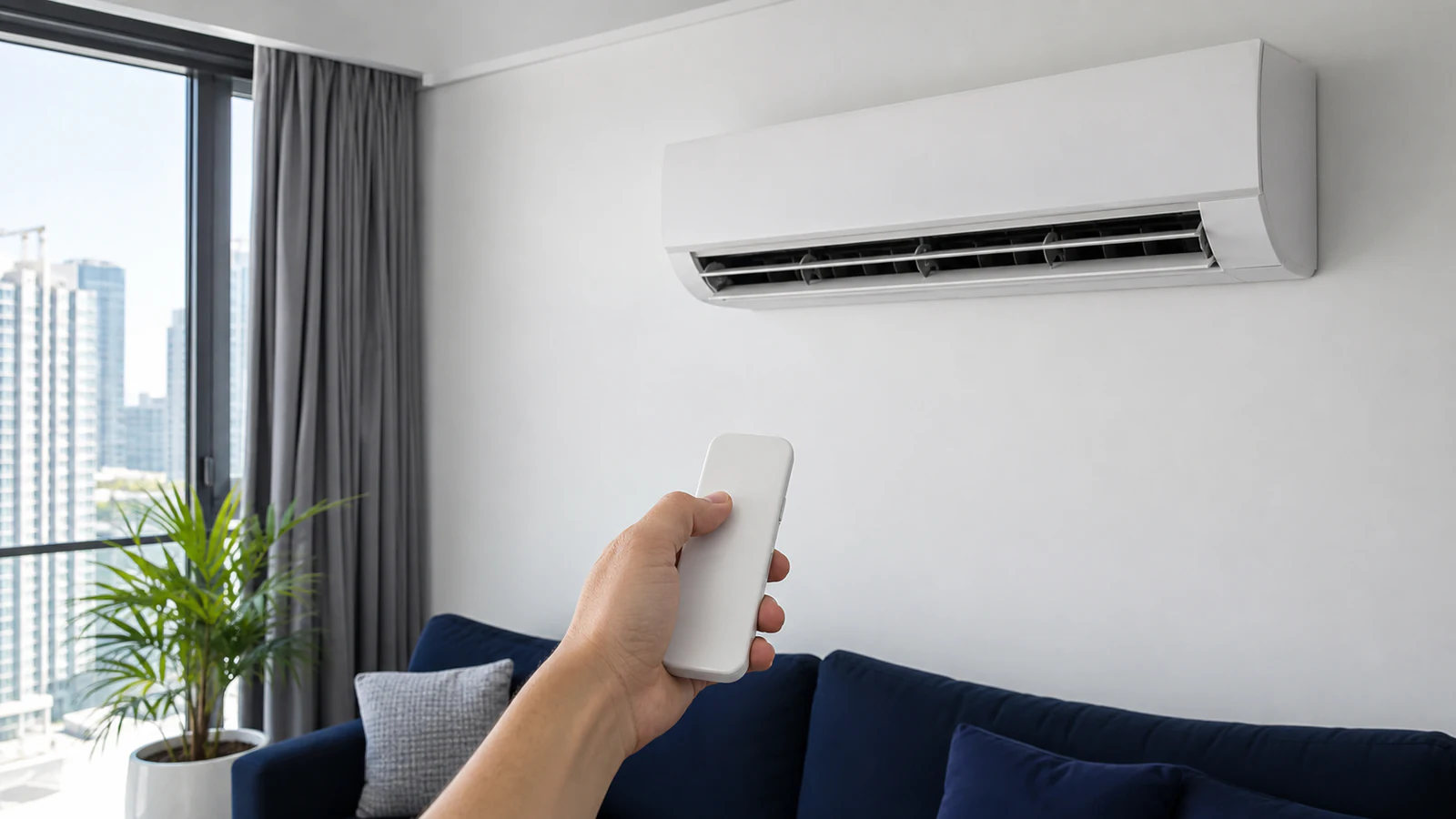
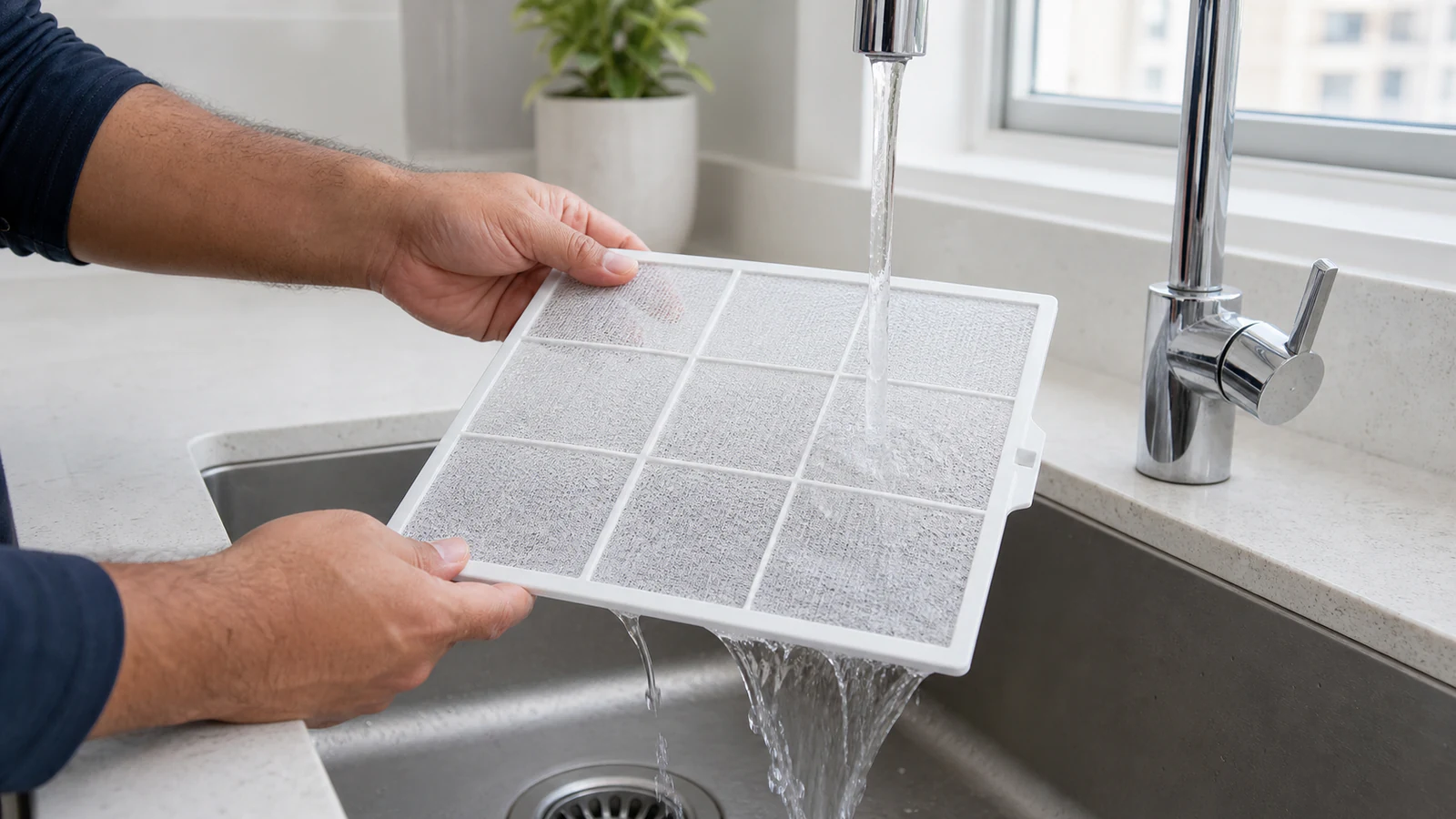
With the unit stopped, remove the floor-reachable user filter only as the manual shows. Vacuum, rinse or replace it according to its specified type. A washed filter must shade-dry fully before refitting. Stop if access needs a ladder or tools, clips resist, wiring appears or the filter is damaged or unidentified.
Do not spray deodoriser, disinfectant or cleaner into the unit.
Do not operate the AC without a correctly seated filter.
-
Step 04
Run only the documented drying function
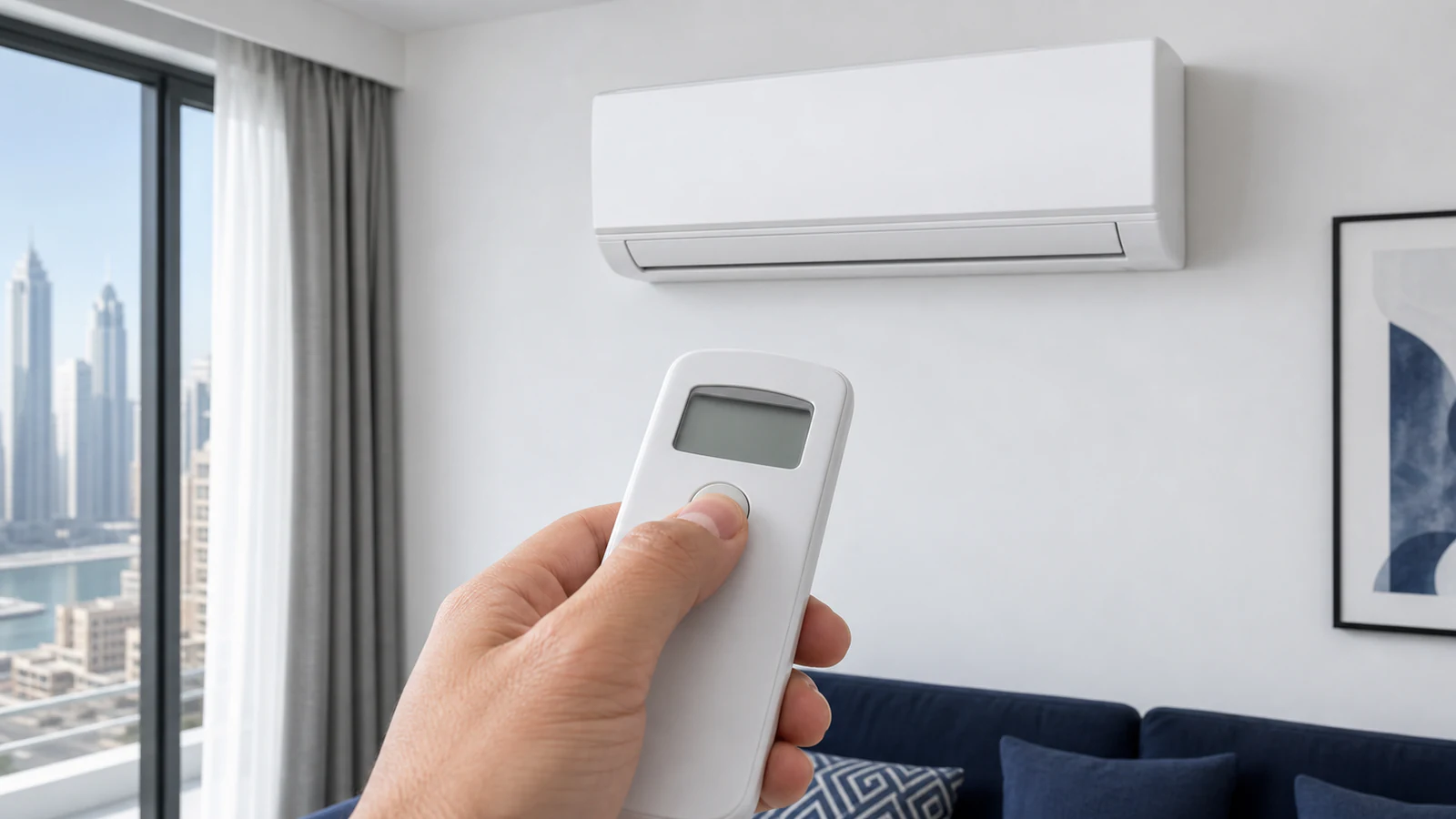
Reinstall the dry filter and close the cover. If the manual provides a self-clean or coil-dry feature, start it with the normal control and let the documented cycle finish. Follow its occupancy, window and shutdown instructions. Do not invent a duration, repeat the cycle more often than stated or combine it with fragrance.
Some models run the indoor fan after cooling automatically.
Stop for new noise, leakage, burning odour or an error code.
-
Step 05
Recheck the next starts and escalate recurrence
After approved maintenance, observe the next two or three starts without opening the unit. A brief dusty smell may differ from persistent mustiness, but do not keep testing an odour that remains strong or causes symptoms. Recurrence, moisture, dark marks, several affected outlets or no improvement requires an experienced HVAC professional.
Filters and drying functions cannot clean contaminated ducts, coils, drain pans or wet insulation.
The service assessment should identify and correct the moisture source, not only mask odour.
Finished result
What success looks like
After 7–14 days of consistent daily routine, musty odour should noticeably reduce or disappear when you first turn the unit on.
Initial smell is mild or absent when AC starts
No persistent damp odour in the room after 5 minutes of running
Filter is visibly clean and dry
No water pooling under the indoor unit
No burning, electrical or chemical smells
Troubleshooting
When the first pass does not solve it.
Odour persists strongly after one week of daily fan routine
The coil may have heavy biofilm, the drain pan or line may be blocked, or the odour source may be elsewhere in the room (damp furniture, carpets, or walls).
Stop the routine and contact a qualified HVAC technician. Do not increase cleaning chemicals or extend fan time. Check if other rooms or the ductwork also smell, and ensure your home is not unusually damp due to water ingress or poor ventilation.
Water drips from the indoor unit during or after the fan cycle
The drain line or pan may be clogged, or the coil may have excessive condensation.
Immediately stop using the AC and do not run the fan routine again. Contact a technician to inspect the drainage system. Place a towel under the unit to catch any drips and prevent water damage.
Fan mode does not exist on my remote or causes the AC to cool
Your model may not have a standalone fan function, or the control is labelled differently (e.g. 'Ventilation', 'Air circulation' or 'Dry mode').
Refer to your user manual or contact the manufacturer's support line. If no equivalent exists, focus on keeping your filter clean and opening doors regularly to improve airflow. Schedule an annual professional coil inspection.
The musty smell smells like chemicals or burning plastic
This suggests an electrical fault, refrigerant leak or internal component failure—not typical coil biofilm.
Stop using the AC immediately. Do not run the fan routine. Contact a qualified technician or the manufacturer. Do not attempt repairs yourself.
Quick answers
Frequently asked questions.
Why does my AC smell when I turn it on?
A musty startup smell suggests retained moisture somewhere in the unit, drain, insulation, ductwork or room, but odour alone cannot locate or identify mould. Check only the user filter and visible exterior. Water, recurrence, dark internal marks or a smell across several outlets needs qualified HVAC investigation.
Does fan mode dry out the AC?
Only a manufacturer-documented self-clean or coil-dry function should be used for that purpose. Ordinary Fan mode can behave differently by model and local humidity, so a universal ten-minute routine is not reliable. Follow the exact manual and stop if odour, moisture, ice, noise or an error remains.
How do I stop my AC smelling damp?
Service the manual-approved user filter and run the exact documented drying feature, if one exists. Do not add fragrance or chemical spray. If the odour stays strong, returns after a few starts, affects multiple outlets or appears with water, ice or dark growth, arrange experienced HVAC assessment.
Is it safe to spray anything inside my AC to kill the smell?
No household spray belongs inside an AC unit. Fragrance can mask the warning while disinfectants, bleach, oils and cleaners may damage materials or create an inhalation risk. Internal coils, drains, ducts and insulation need model-appropriate professional methods, especially when moisture, visible growth or persistent odour is present.
Sources and review notes
- US EPA: What Does Mold Smell Like? - Explains that musty odour can indicate mould and that the moisture source must be addressed.
- US EPA Mold Course, Chapter 5 - States that HVAC mould remediation should be performed by experienced professionals and contaminated systems may need to remain off.
- Daikin: Air Conditioner Maintenance Tips - Manufacturer guidance for user filters and the boundary between resident maintenance and professional service.