
DIY / AC & Ventilation
Black Spots and Dust Around AC Vents: Clean Only the Removable Grille
Dark marks around an AC outlet may be dust caught by condensation, but colour cannot identify mould. Clean only a dry, floor-reachable grille that its instructions call user-removable. Recurrence, musty odour, moisture or marks inside the HVAC system need qualified assessment.
Quick answer
What causes black dust around AC vents?
Switch the unit off and inspect from the floor. Clean only a dry, manual-approved removable grille: vacuum loose dust first, then wash the detached grille only if its instructions allow it, dry it fully and refit it. Stop for unsafe access, wiring, moisture, recurrence, musty odour or marks inside the duct.
Dry, floor-reachable plastic grilles confirmed as user-removable by the exact equipment or building instructions
Ceiling or high wall grilles / Wired, motorised, sealed or permanently fixed grilles / Wet grilles, active dripping or condensation / Marks or odour extending inside ducts, coils or insulation / Recurring dark growth or occupants with respiratory concerns
What you need
What you need
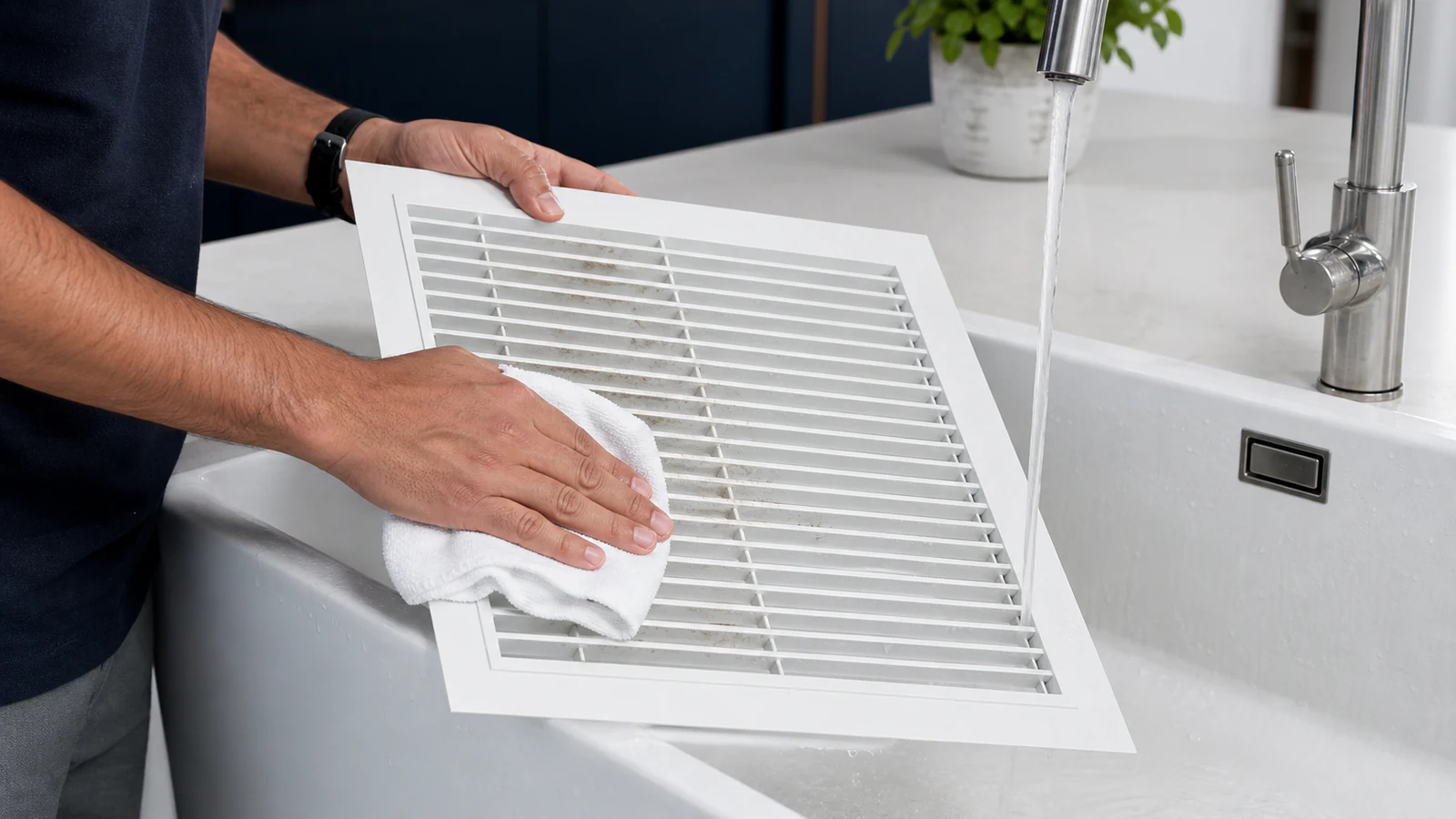
Start dry. Wash only a fully detached grille when its instructions permit it; never introduce liquid into an outlet, duct or unit.
- Difficulty
- Easy
- Active time
- 15 minutes
- Total time
- 30 minutes (including dry time)
Exact grille or AC maintenance instructions
One digital or printed copy
Vacuum with soft brush attachment
One
Soft microfibre cloth
Two
Mild detergent
Only if the instructions permit washing the detached grille
Typical UAE retail ranges. Prices vary by pack and store, and your total is lower when you already own the reusable tools.
Step by step
How to clean a removable AC grille without wetting the system
Work from the floor. Stop for an overhead, wet, wired, resistant or internally marked grille and arrange HVAC assessment.
-
Step 01
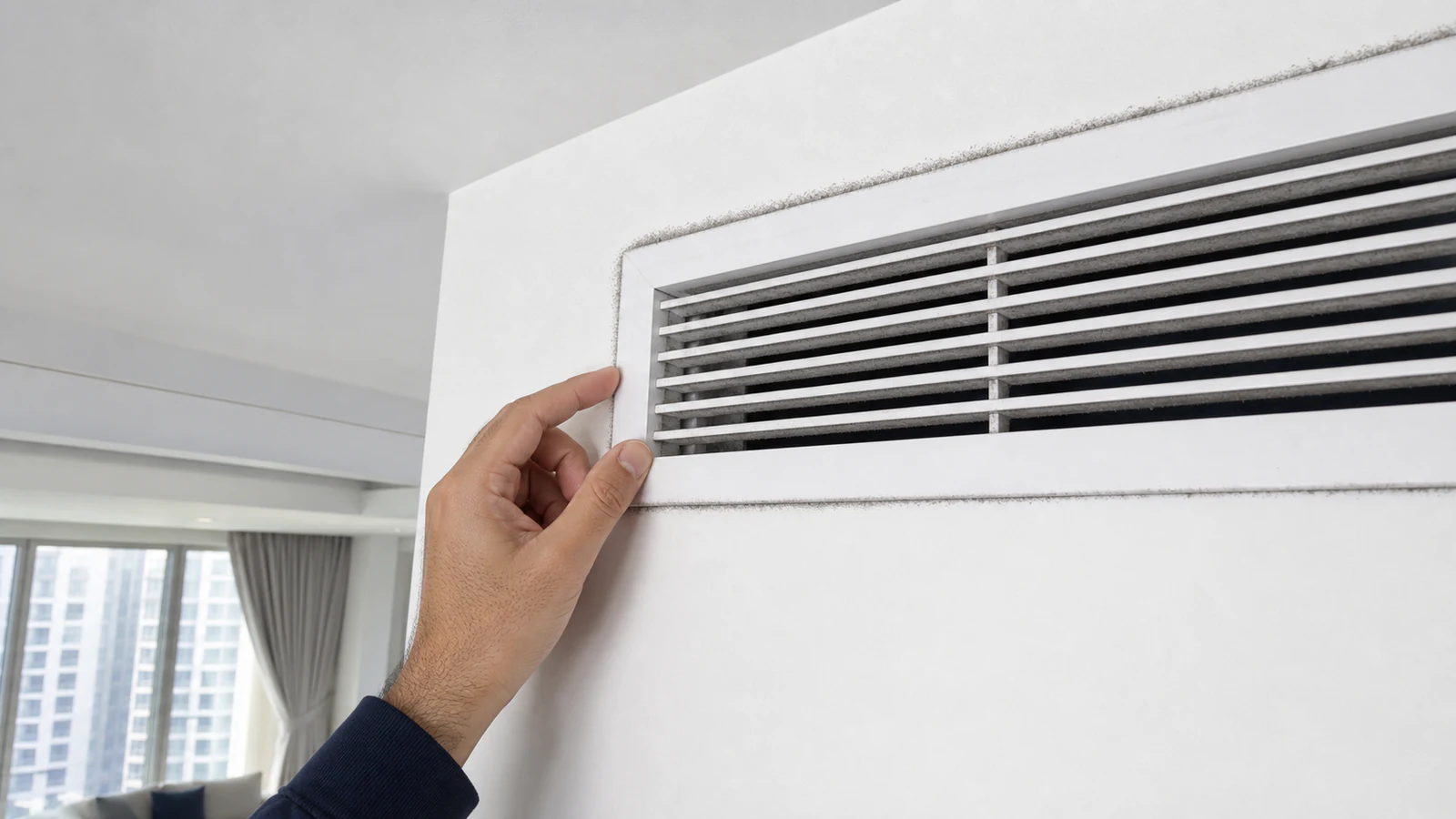
Switch off the AC and inspect the grille
Stop the AC normally and wait for airflow to end. Inspect from the floor. Do not touch a wet, dripping, high, wired or damaged grille. Persistent musty odour or marks inside the opening are service conditions.
-
Step 02
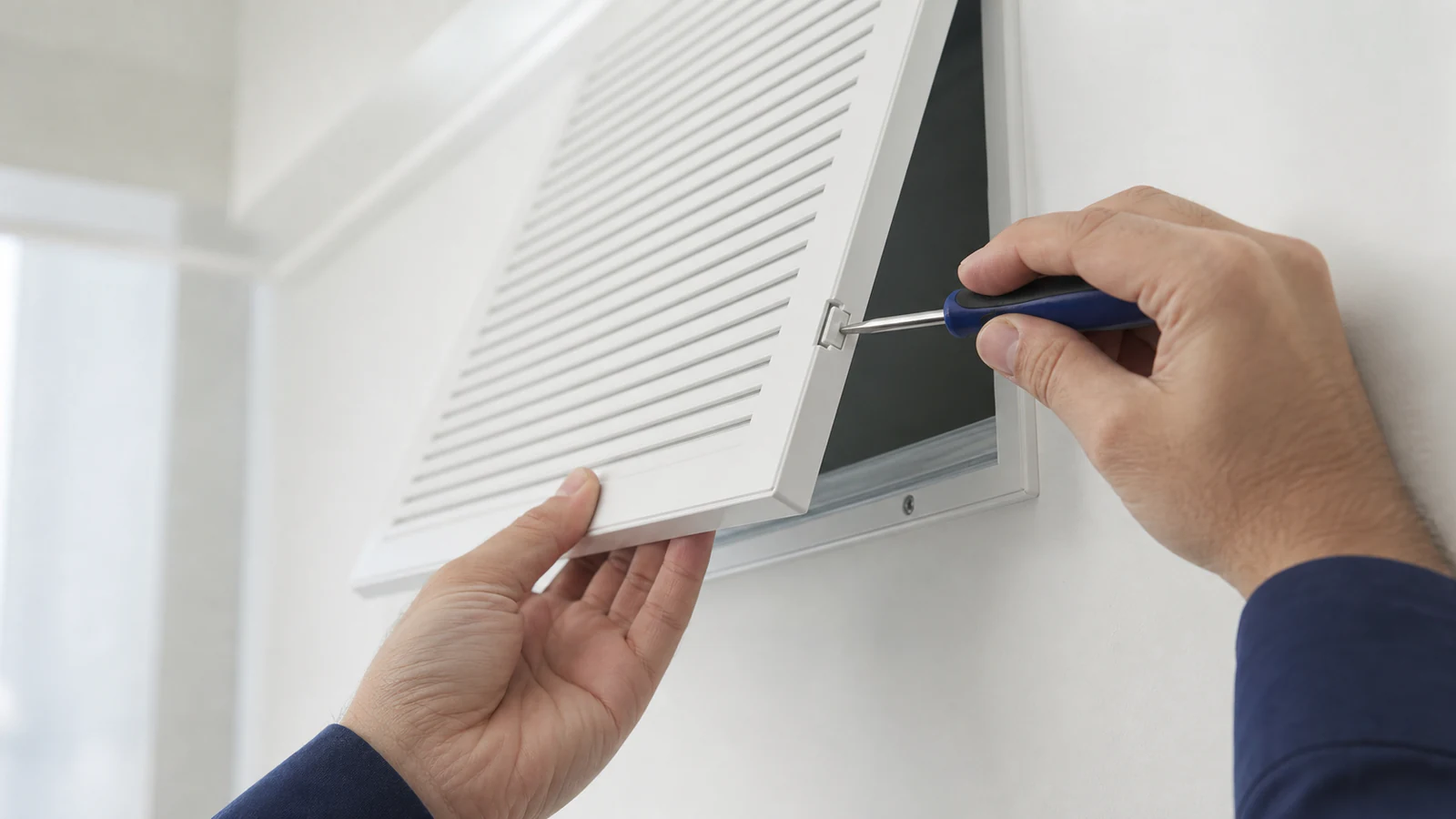
Release and remove the grille
Check the exact instructions. Remove the grille only if it is user-removable and floor-reachable. Support it with two hands and stop for cables, motorised vanes, sealed screws, resistance or brittle plastic.
-
Step 03
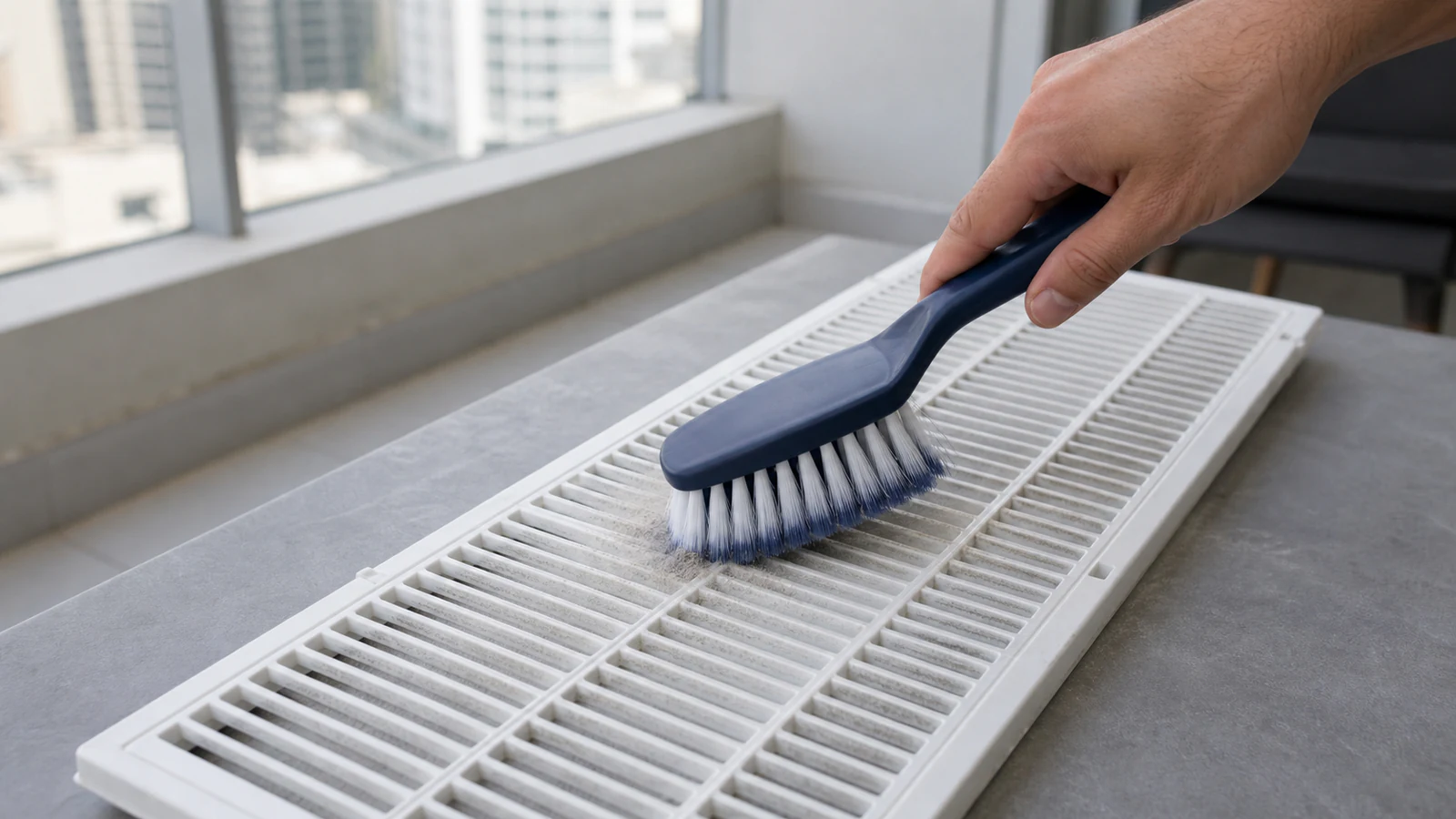
Vacuum loose dust from the detached grille
Carry the detached grille to an indoor cleaning area. Vacuum both sides with a soft brush on low suction without bending slats. Bag the dust; do not shake it over a balcony or toward the outlet.
-
Step 04
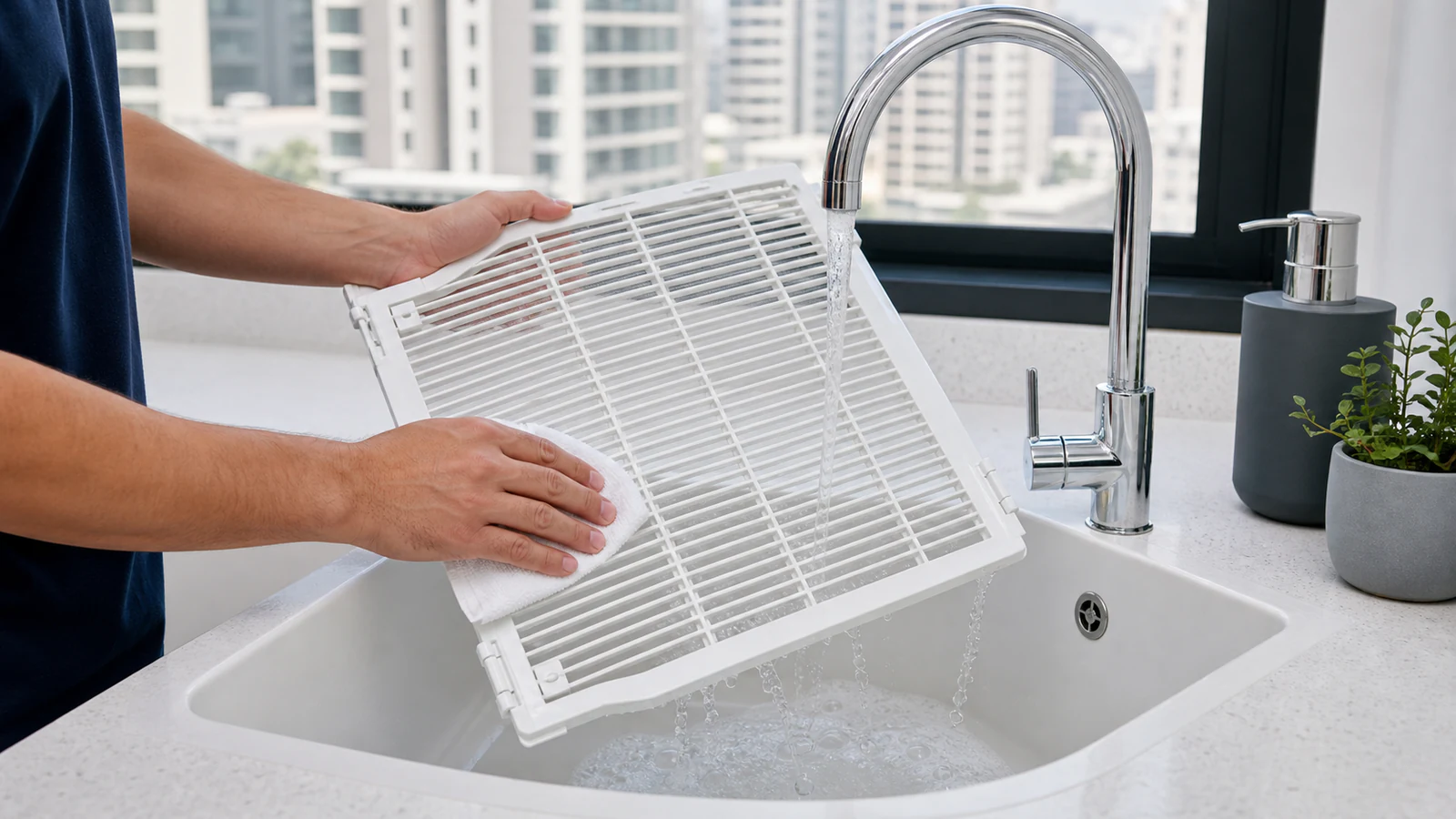
Wash only when the instructions permit it
If washing is permitted, use the stated lukewarm water and mild detergent. Keep clips supported. Do not use bleach, disinfectant, solvent, abrasive or high pressure, and never treat internal HVAC material.
-
Step 05
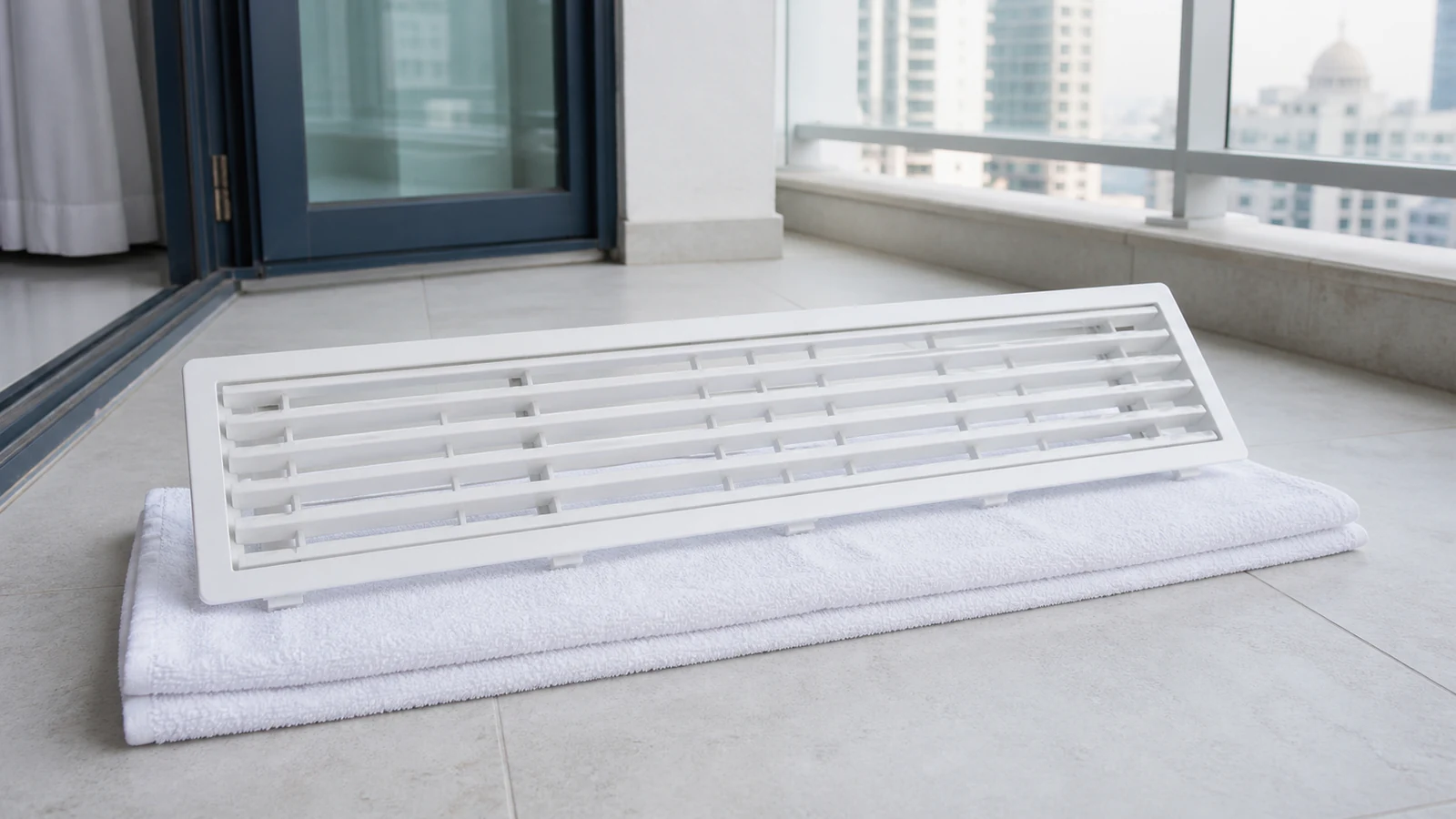
Dry the grille fully in shade
Blot the grille and shade-dry it on a clean towel until every recess is dry. Do not refit it damp or use heat. Persistent staining is not a reason to escalate chemicals.
-
Step 06
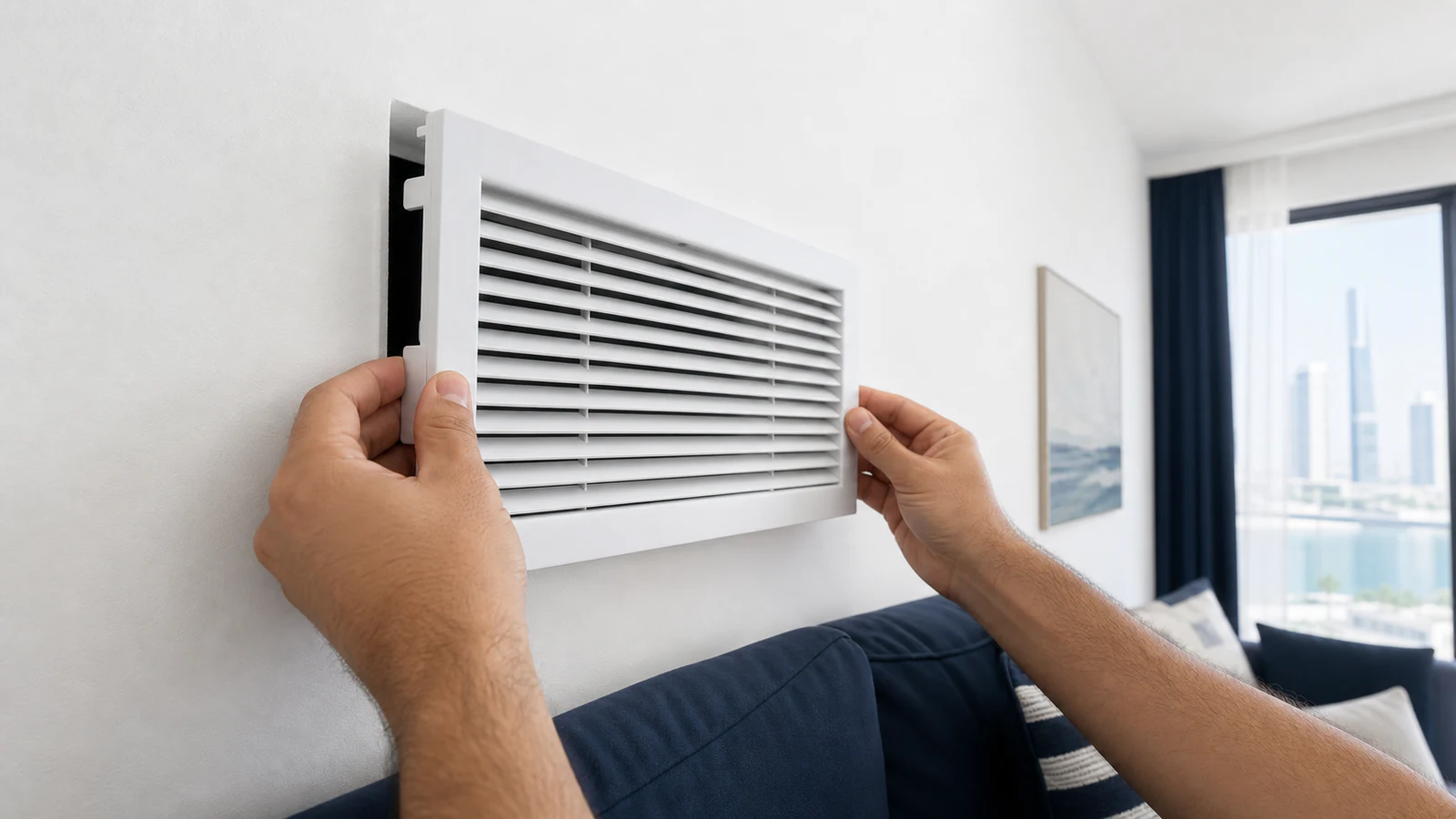
Reinstall the grille
Refit the dry grille without force and restart normally. Stop for recurrence, musty odour, condensation, abnormal airflow or an insecure fit and obtain qualified help.
Quick answers
Frequently asked questions.
What causes black dust around AC vents?
Grey or dark dust can collect where humid air and condensation meet airborne particles, but appearance alone cannot identify mould. If marks recur, the grille is wet, a musty odour continues or dark material extends inside the outlet, stop surface cleaning and arrange qualified HVAC investigation of the moisture source.
Is mould on AC vents dangerous?
Possible mould on an HVAC grille is a moisture warning, and internal contamination can affect indoor air. Do not spray or disturb it. Stop the unit if contamination appears internal or extensive, keep vulnerable occupants away from the airflow, and ask an experienced HVAC professional to assess the source.
How do you remove an AC grille to clean it?
Remove a grille only when the exact equipment or building instructions say it is user-removable, dry and reachable from the floor. Stop the AC, support the grille, release the documented clips and use no force. Wired, motorised, overhead, sealed or resistant grilles should be handled by qualified service.
Sources and review notes
- US EPA: What Does Mold Smell Like? - Primary guidance that musty odour can indicate mould and that moisture control is essential.
- US EPA Mold Course, Chapter 5 - States that mould remediation in HVAC systems should be performed by experienced professionals.
- US EPA: Should You Have the Air Ducts in Your Home Cleaned? - Guidance on visible contamination, wet insulation and qualified service.