
DIY / Balcony & Outdoors
Greyed Plastic Outdoor Furniture: What Comes Back and What Doesn't
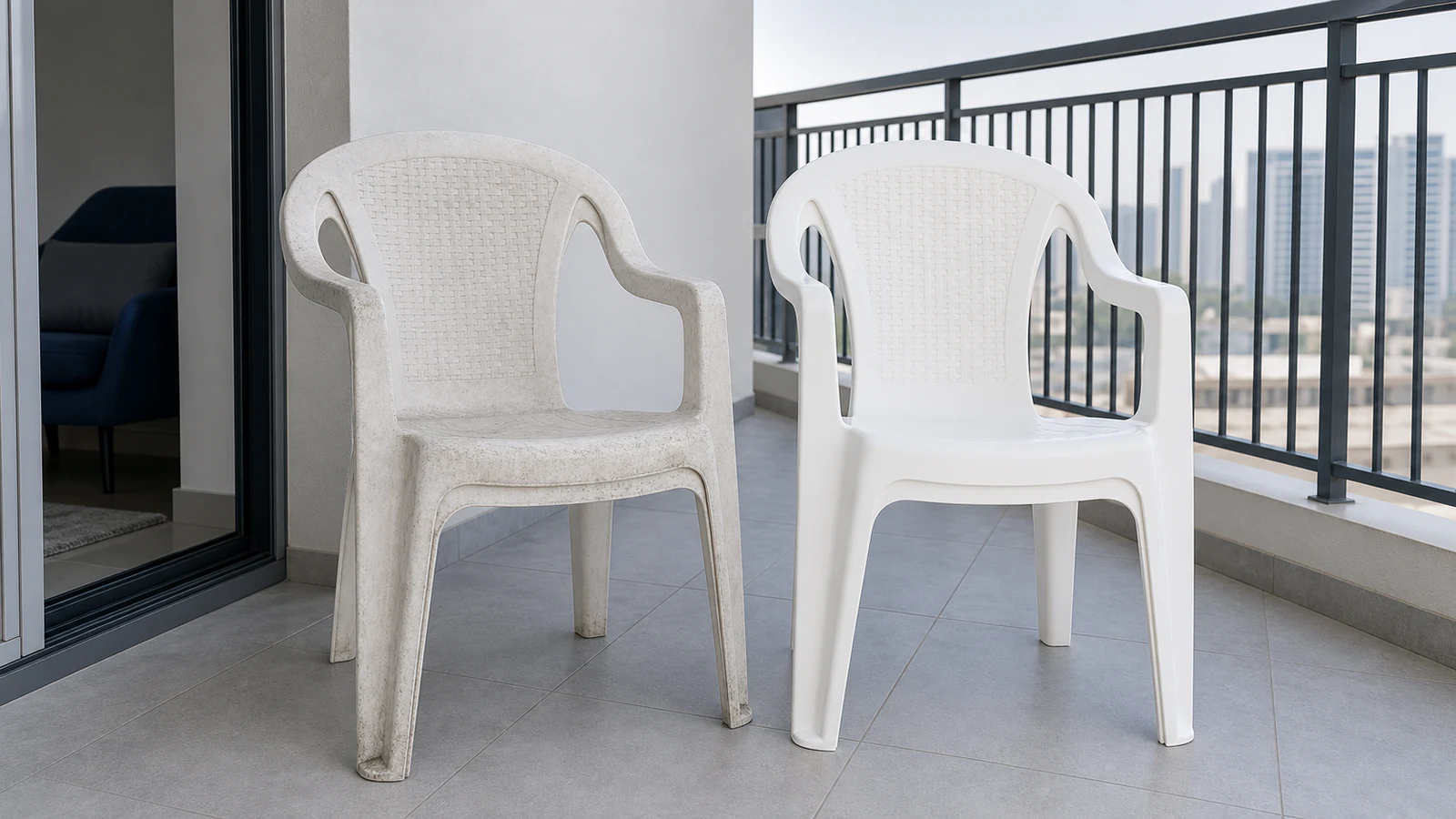
Outdoor plastic furniture in the UAE accumulates grey surface soiling quickly, but telling the difference between washable grime and irreversible UV yellowing matters enormously. Not everything can come back. This guide shows what responds to gentle cleaning, what fades permanently, and how to slow further damage.
Quick answer
Can yellowed plastic be made white again?
Surface grey dirt rinses away with mild soap and water. True UV yellowing is a chemical change inside the plastic and cannot be reversed. Prevent further damage with shade, covers and UV-blocking products applied per manufacturer instructions. Do not scrub plastic furniture with hard-bristled brushes.
white or light-coloured rigid outdoor plastic furniture / polypropylene and polyethylene chairs and tables / plastic loungers and stacking chairs
brittle or cracking plastic / furniture with weakened joints or load-bearing parts / coloured or textured plastic finishes not tested first / cushioned or fabric-covered plastic
What you need
What you need
Start with mild soap and soft cloths. Use any stain treatment or UV protectant only when the furniture maker approves it for the identified plastic and the product label gives a compatible method.
- Difficulty
- Easy
- Active time
- 20–25 minutes
- Total time
- 30–40 minutes including drying
Mild liquid dish soap
one squirt per bucket
Soft microfibre cloth or sponge
2–3 cloths
Water (cool or lukewarm)
1 large bucket
Furniture-maker-approved plastic cleaner or UV protectant (optional)
Follow the product label
Typical UAE retail ranges. Prices vary by pack and store, and your total is lower when you already own the reusable tools.
Step by step
How to Clean and Protect Greyed Plastic Outdoor Furniture
Start by checking structural condition and material guidance, then clean gently and patch-test only products approved for the identified plastic.
-
Step 01
Check for brittleness and damage
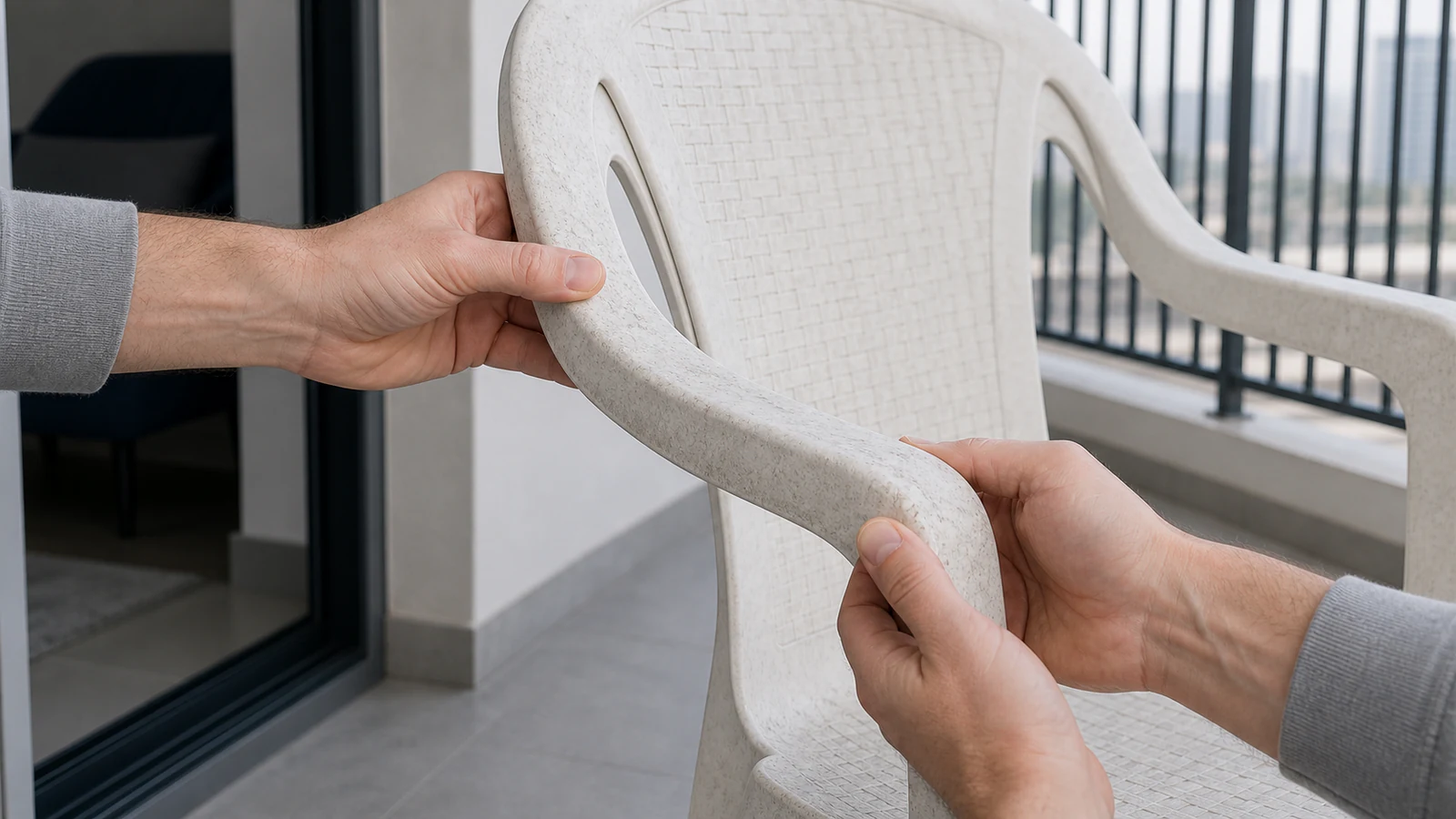
Inspect the entire chair or table before cleaning. Flex a joint gently—if it cracks, breaks or feels soft, stop immediately. Look for whitish chalking on the surface, deep cracks or splits in load-bearing areas. If you find any, the furniture is unsafe.
Plastic is intact and flexes without cracking
No soft spots, chalking or deep splits visible
Joints feel firm and do not move independently
-
Step 02
Rinse with cool water and mild soap
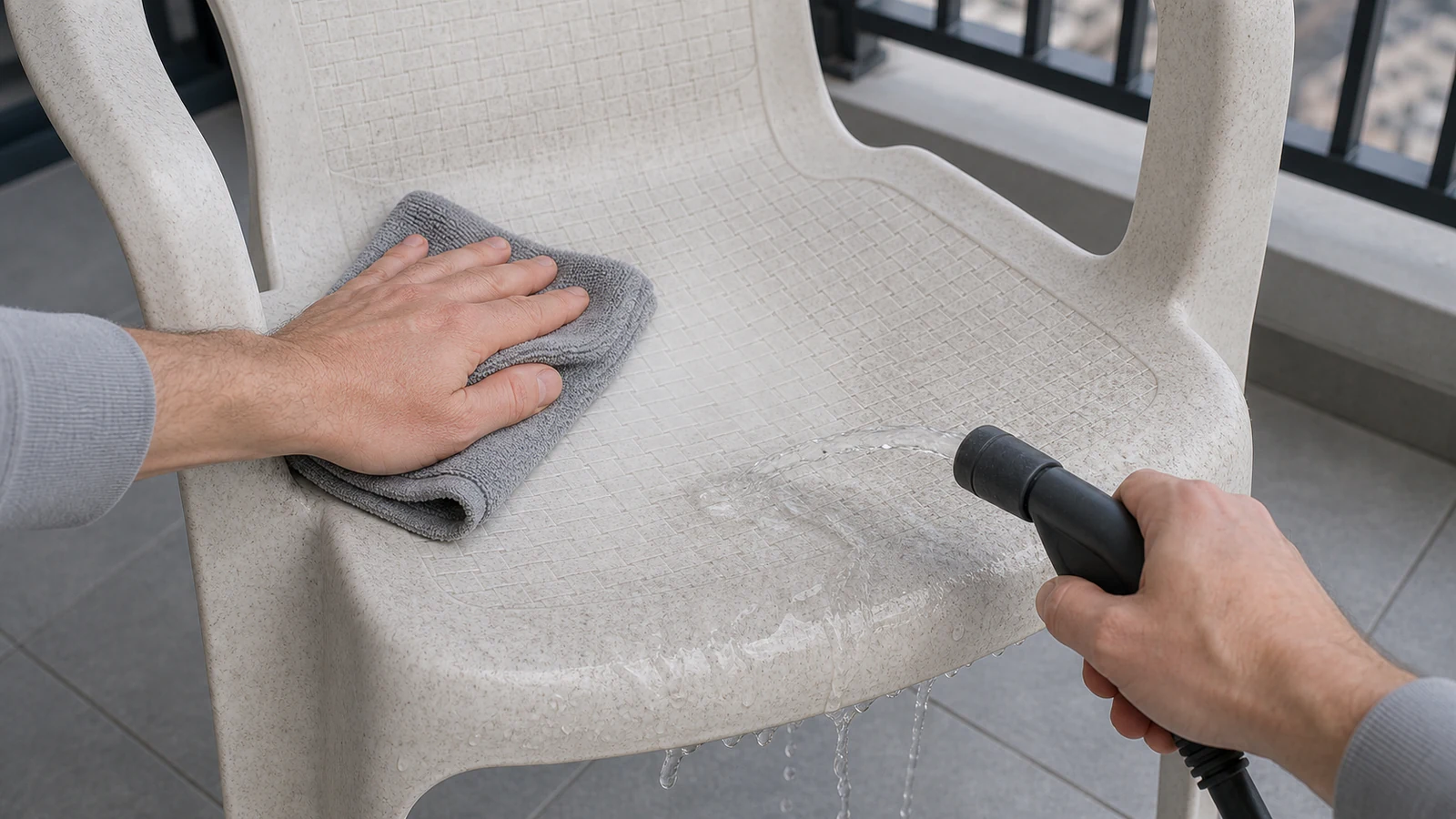
Fill a large bucket with cool or lukewarm water and add one squirt of dish soap. Use a soft microfibre cloth or sponge to wet the entire chair, working top to bottom. Scrub gently in circular motions to remove loose dust and dirt. Rinse thoroughly with clean water until all soap is gone.
All soap is rinsed away—no slippery residue remains
Furniture is visibly damp but no puddles pool on flat surfaces
Surface grime is noticeably lighter
-
Step 03
Check the care guide before treating remaining marks
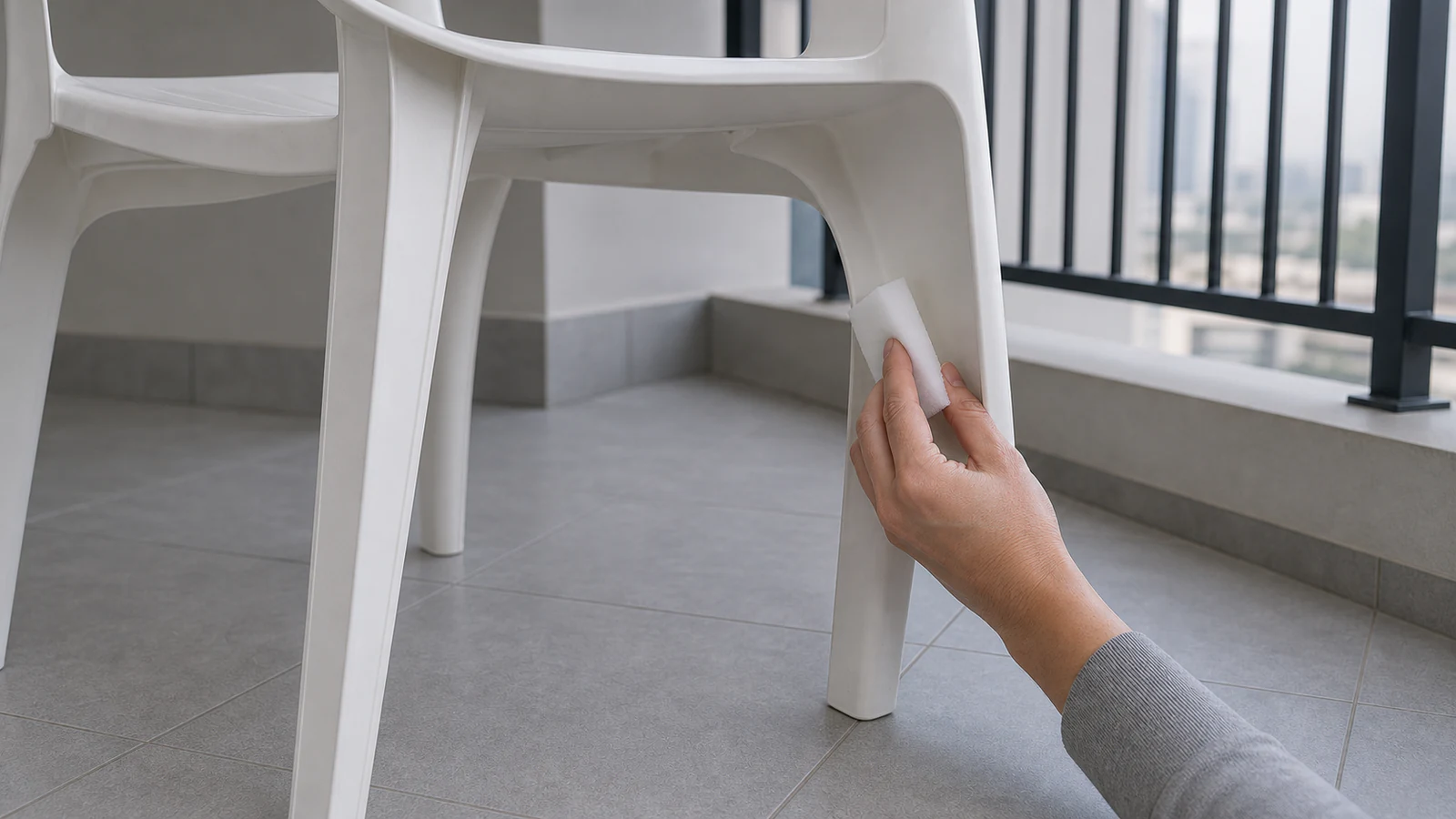
If grey marks remain after soap washing, identify the plastic and check the furniture maker's care guide. Use no abrasive pad, baking-soda paste, solvent or protectant unless the maker explicitly permits it. Patch-test an approved product on an underside corner and let it dry for the full labelled time.
Test area shows no hazing, colour loss or texture change
Plastic remains smooth and retains its original finish
Method is safe to apply to visible parts
-
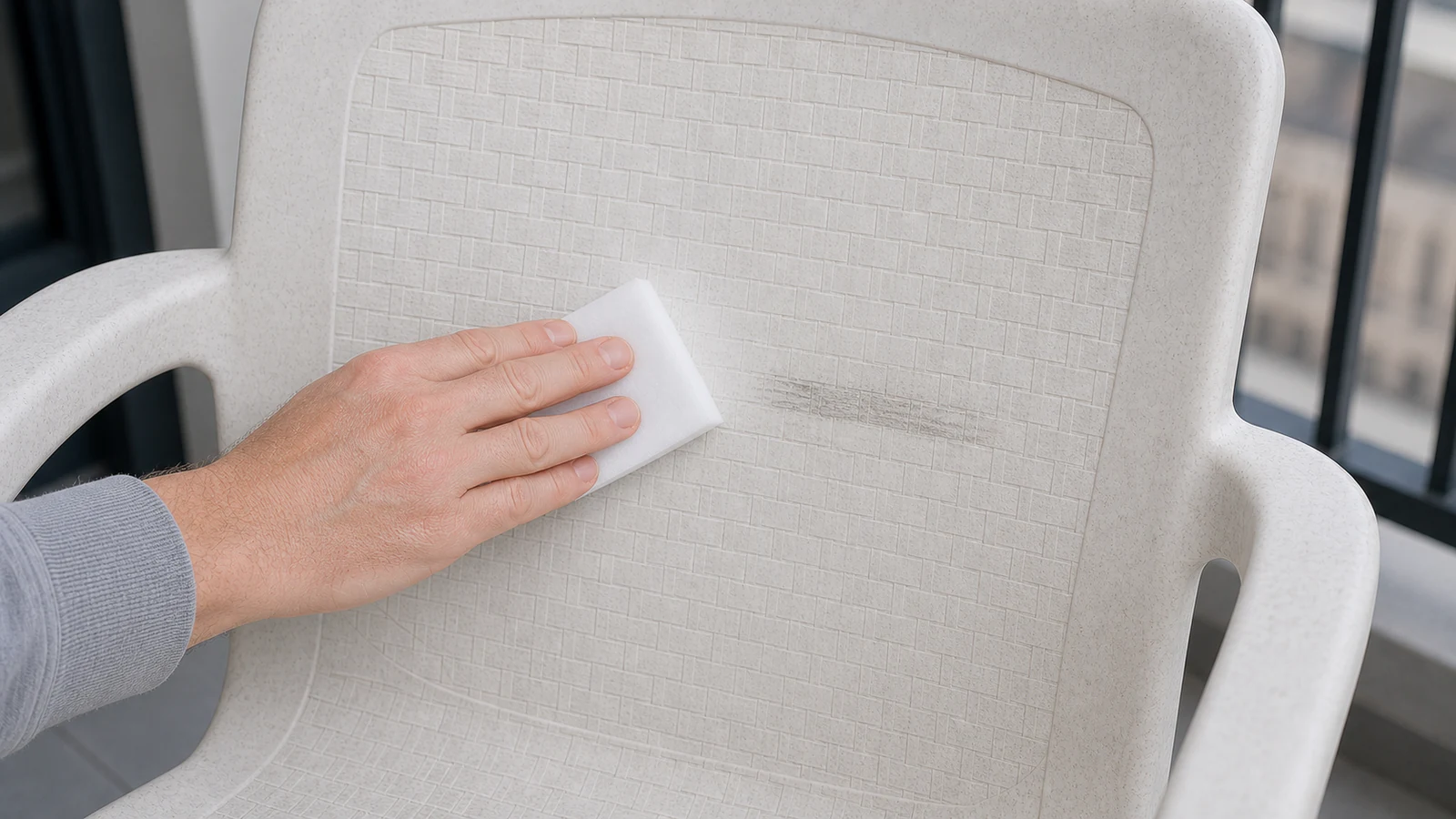
Step 04
Use only the approved stain treatment
Continue only if the fully dried patch test shows no change in colour, gloss or texture. Apply the maker-approved cleaner exactly as labelled with a soft cloth, then rinse or wipe it away as directed. Stop immediately if the surface hazes, dulls, softens or changes colour.
Grey marks are noticeably lighter or gone
Plastic surface remains smooth—no visible abrasion or dulling
All residue is rinsed away completely
-
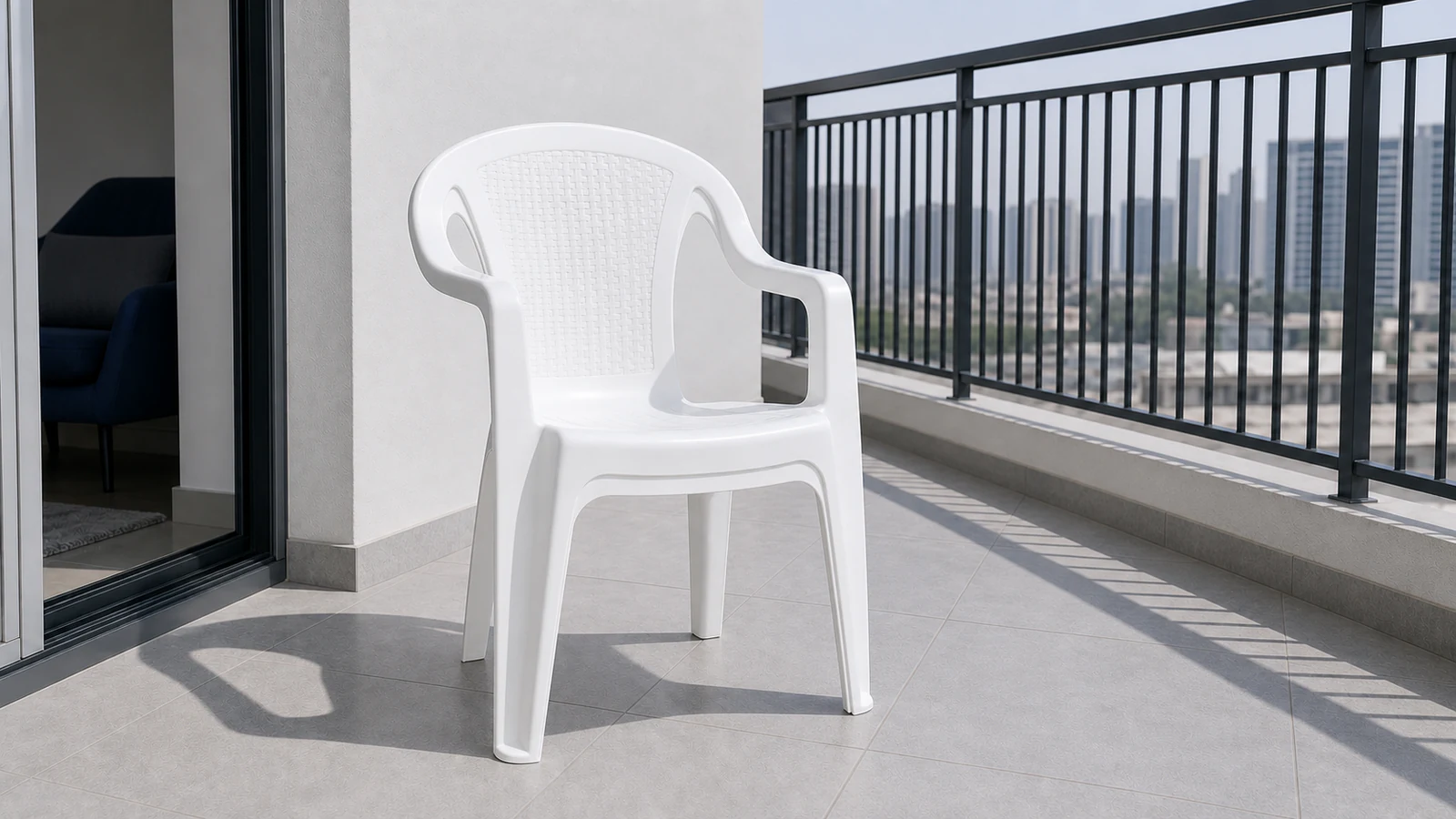
Step 05
Dry completely before use or treatment
Leave the furniture in a shaded, ventilated area until every surface is completely dry. Before applying any approved protectant, follow its label for surface preparation and cure time. Check every leg, joint and load-bearing part again before anyone sits or leans on the furniture.
Plastic is completely dry to touch
No damp patches or water beads remain
Furniture is structurally sound and ready for use
-
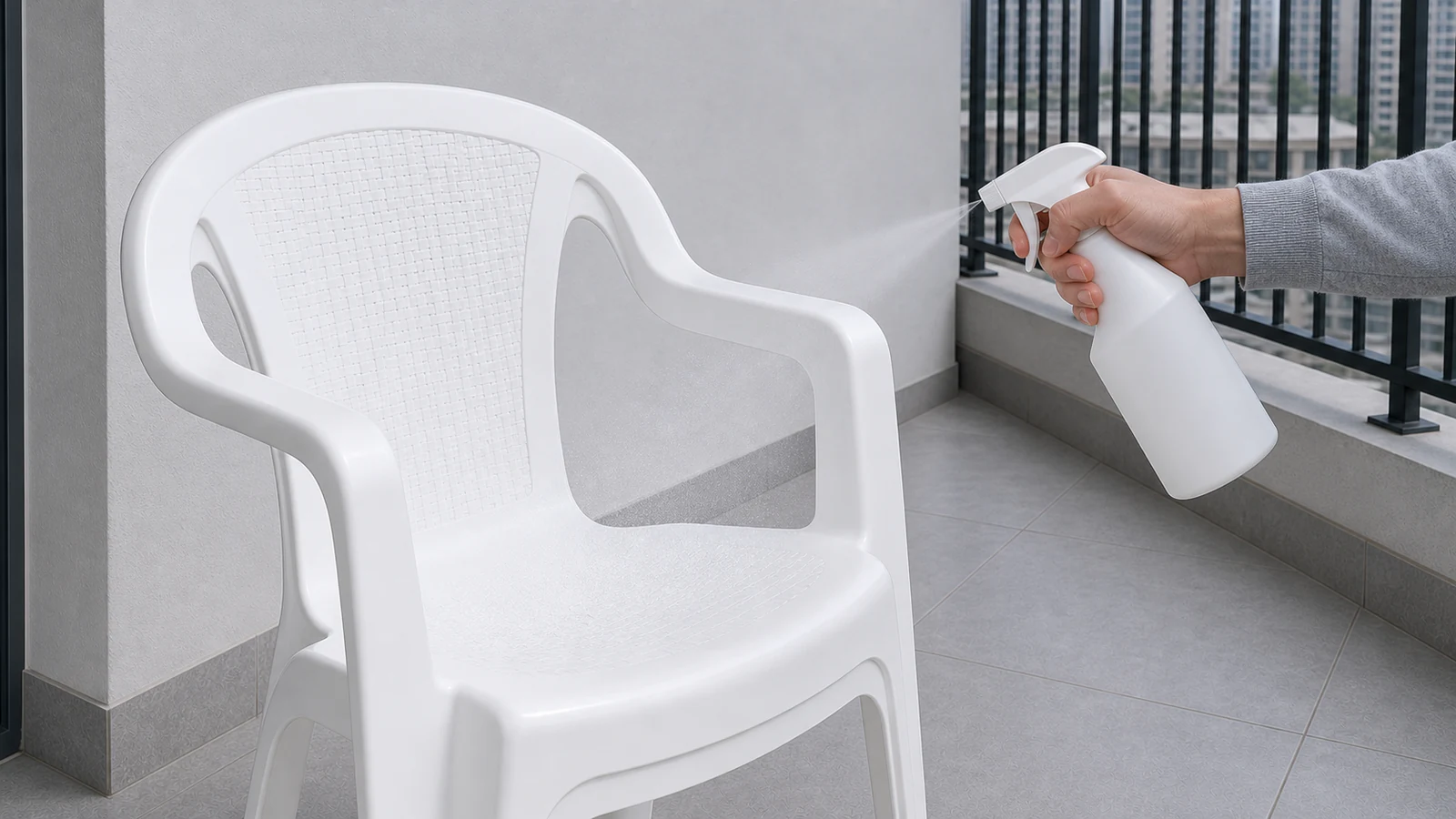
Step 06
Apply a protectant only when both labels approve it
If persistent yellow tint remains after cleaning, accept that cleaning may not reverse UV degradation. Apply a protectant only if both the furniture maker and product label approve it for that plastic. Work in a shaded, ventilated area, prevent overspray near pools, food, children and pets, and keep the furniture unused until the labelled cure time is complete.
Product is applied evenly with no drips or pooling
Manufacturer's cure time is observed before use
Furniture is protected in shade between applications per label
Finished result
What success looks like
Your cleaned chairs return to their original bright white or light colour, with all surface grime removed and joints secure.
Plastic is visibly brighter and matches the original factory colour
Grey streaks and dust are gone or greatly reduced
Surface feels smooth and retains its original gloss or texture
Furniture is fully dry and ready for use
Joints are firm and structurally sound
Troubleshooting
When the first pass does not solve it.
Yellow or amber tint remains after cleaning
The plastic has undergone UV-induced chemical yellowing, a permanent change inside the material that cannot be reversed by cleaning.
Accept the current colour as potentially permanent. Use shade or a compatible cover, and apply a UV protectant only when the furniture maker and product label approve it for the identified plastic.
Grey marks return quickly after cleaning
Dust, pollen and moisture-bound soiling accumulate rapidly in the hot, dry UAE climate, especially if the furniture is in direct sun or near a balcony edge.
Move furniture to a shaded spot or use a breathable furniture cover. Dust lightly once a week with a dry cloth and do a full wash every 4–6 weeks to prevent crust buildup.
The plastic feels rough, chalky or has white patches after cleaning
The plastic is degrading due to UV exposure and age. Chalking is a sign of structural failure, and the material is becoming brittle.
Stop using the furniture immediately. Do not attempt further cleaning or abrasive treatment. The plastic is unsafe and should be disposed of responsibly. Replace with a UV-resistant plastic or alternative material.
A patch test made the plastic look dull or streaky
The product or method is incompatible with the surface.
Stop immediately and do not repeat the treatment on visible areas. Ask the furniture maker which cleaner, if any, is compatible; do not try to hide the change with a generic coating.
Quick answers
Frequently asked questions.
Can yellowed plastic be made white again?
No. UV yellowing is a change inside plastic that cleaning, bleach or abrasives cannot reliably reverse. Shade and a compatible cover can reduce further exposure. Use protectant only when both the furniture maker and product label approve it for the identified plastic. Mild soap removes surface soil.
Does bleach whiten plastic chairs?
No. Bleach damages plastic by causing yellowing, brittleness and discolouration, and it can weaken joints. Use only mild dish soap and water, or products approved by the furniture manufacturer. Never use bleach on outdoor plastic. Do not scrub plastic furniture with hard-bristled brushes.
How do you protect plastic furniture from the sun?
Move furniture into shade and use a compatible breathable cover. Apply protectant only when the furniture maker and product label approve it for the identified plastic, following all application and cure directions. These measures cannot reverse existing UV damage. Avoid hard brushes and abrasive pads.
Is a magic eraser safe for plastic furniture?
Not generally. Melamine foam is abrasive and can permanently dull or haze plastic. Start with mild soap and a soft cloth. Use stronger treatment only when the furniture maker approves it for that plastic and a fully dried hidden test shows no colour, gloss or texture change.
Sources and review notes
- Nardi Outdoor: Maintenance Guide - Manufacturer maintenance guidance covers routine cleaning of polypropylene and aluminium outdoor furniture.
- Tribù: Synthetic Outdoor Furniture Care and Maintenance - Manufacturer guidance specifies pH-neutral soap, soft cleaning and product-specific protection for synthetic furniture.