
DIY / Balcony & Outdoors
Dust Crust on Balcony Tiles: Why Dry First, Then Water
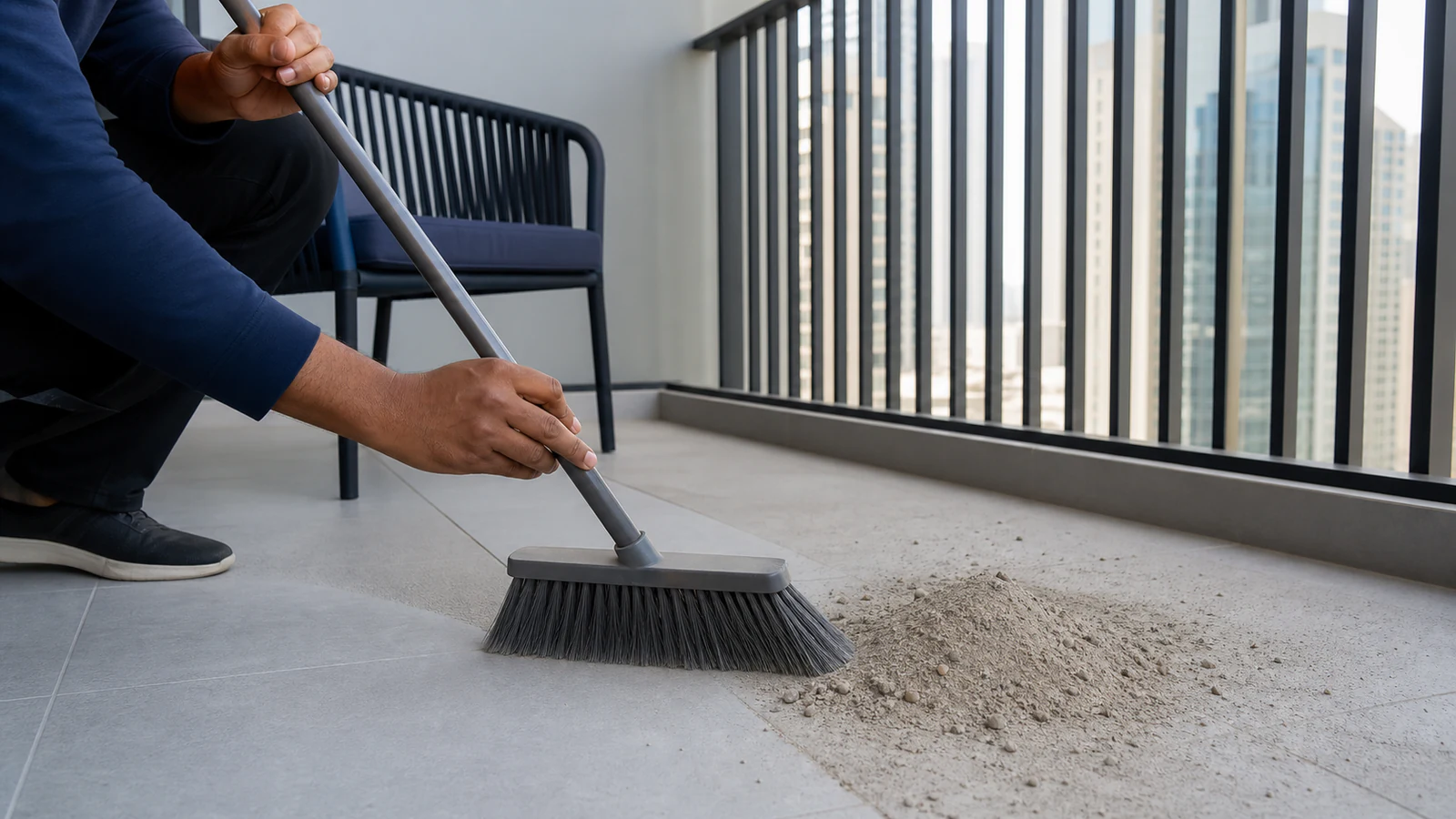
Loose sand and dust become harder to remove once they are wetted. Sweep or vacuum first, then damp-mop only when the tile maker and building rules permit it. Stay on the balcony floor, keep away from the edge and outlets, and stop if the drain, threshold, waterproofing or railing shows a defect.
Quick answer
How do you clean a balcony after a sandstorm?
Remove loose sand with a soft broom, dustpan or suitable vacuum before using liquid. Work only from the balcony floor on a calm day, with the railing, threshold, outlets and drain visibly sound and building rules allowing damp cleaning. Then use a well-wrung mop and approved tile cleaner; never hose, flood or push debris into the drain.
ceramic balcony tiles / porcelain balcony tiles / glazed stone tiles
natural marble, limestone or travertine tiles / unglazed or porous stone tiles / sealed wooden decking
What you need
What you need
Most materials are already at home. If you lack a soft broom, budget for a basic model. Floor cleaner is optional if water alone suffices on light dust.
- Difficulty
- Easy
- Active time
- 30 minutes
- Total time
- 45 minutes including drying
Soft-bristled broom or dustpan
1
Cordless vacuum (optional, for fine dust containment)
1
Damp cloth or cotton rags
2–3
Buckets
2
Tile-maker-approved pH-neutral cleaner (optional)
Label dilution
Mop or mop head
1
Cotton or microfibre gloves
1 pair
Typical UAE retail ranges. Prices vary by pack and store, and your total is lower when you already own the reusable tools.
Step by step
How to Remove Dust Crust from Balcony Tiles
Work on a calm day with low wind, and check that your building permits balcony water discharge before you begin.
-
Step 01
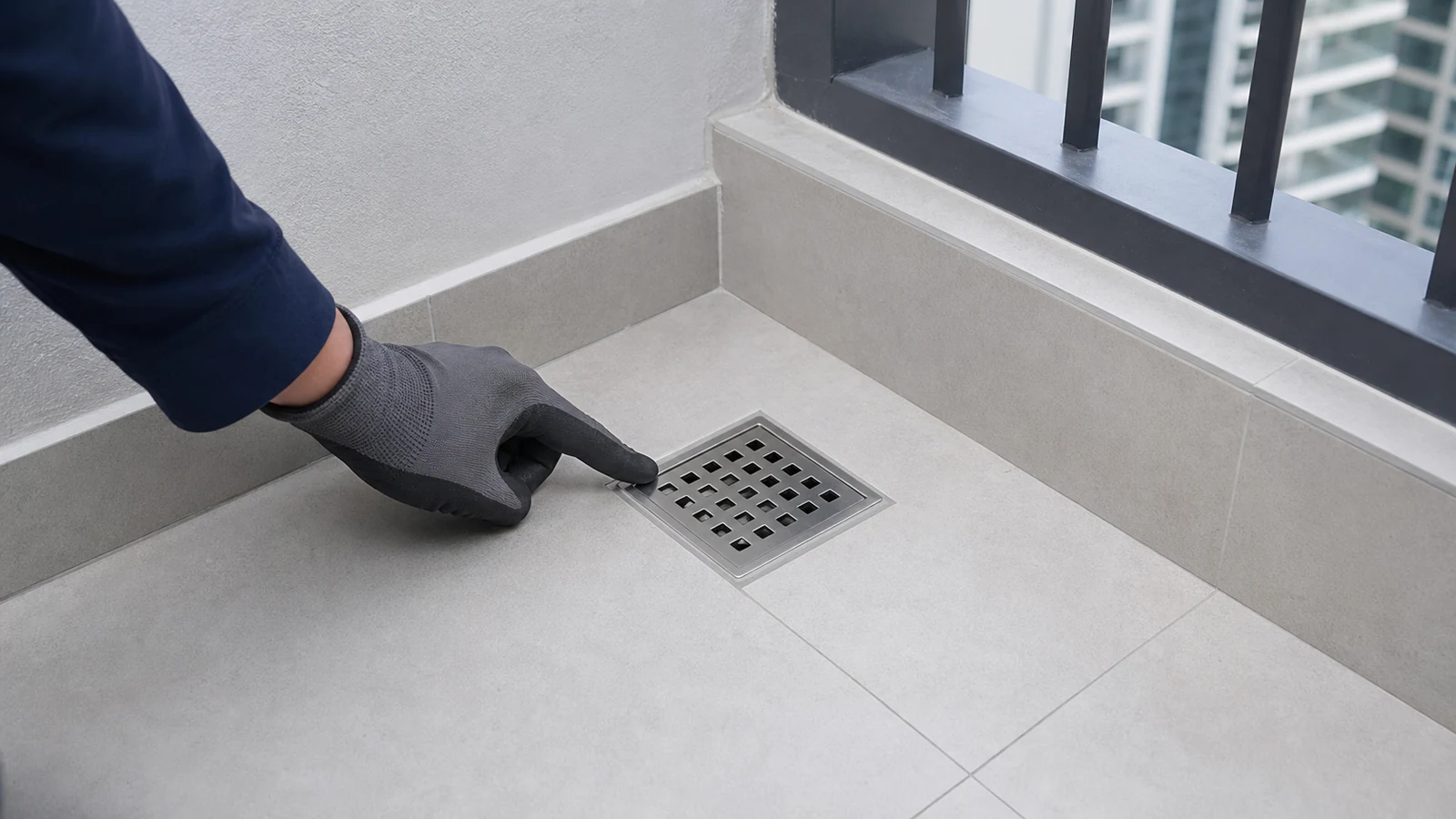
Check the balcony drain
Read the building's balcony-cleaning and discharge rules. From the safe inner floor, inspect the railing, threshold, outlets, tile, grout and drain without leaning over the edge or moving a fixed grate. Do not wet-clean during high wind. Stop for a loose or low railing, cracks, ponding, damaged outlets, water ingress or an unverified drain route and contact building maintenance.
Drain grate is visible and free of large debris
No water is ponding on the surface
-
Step 02
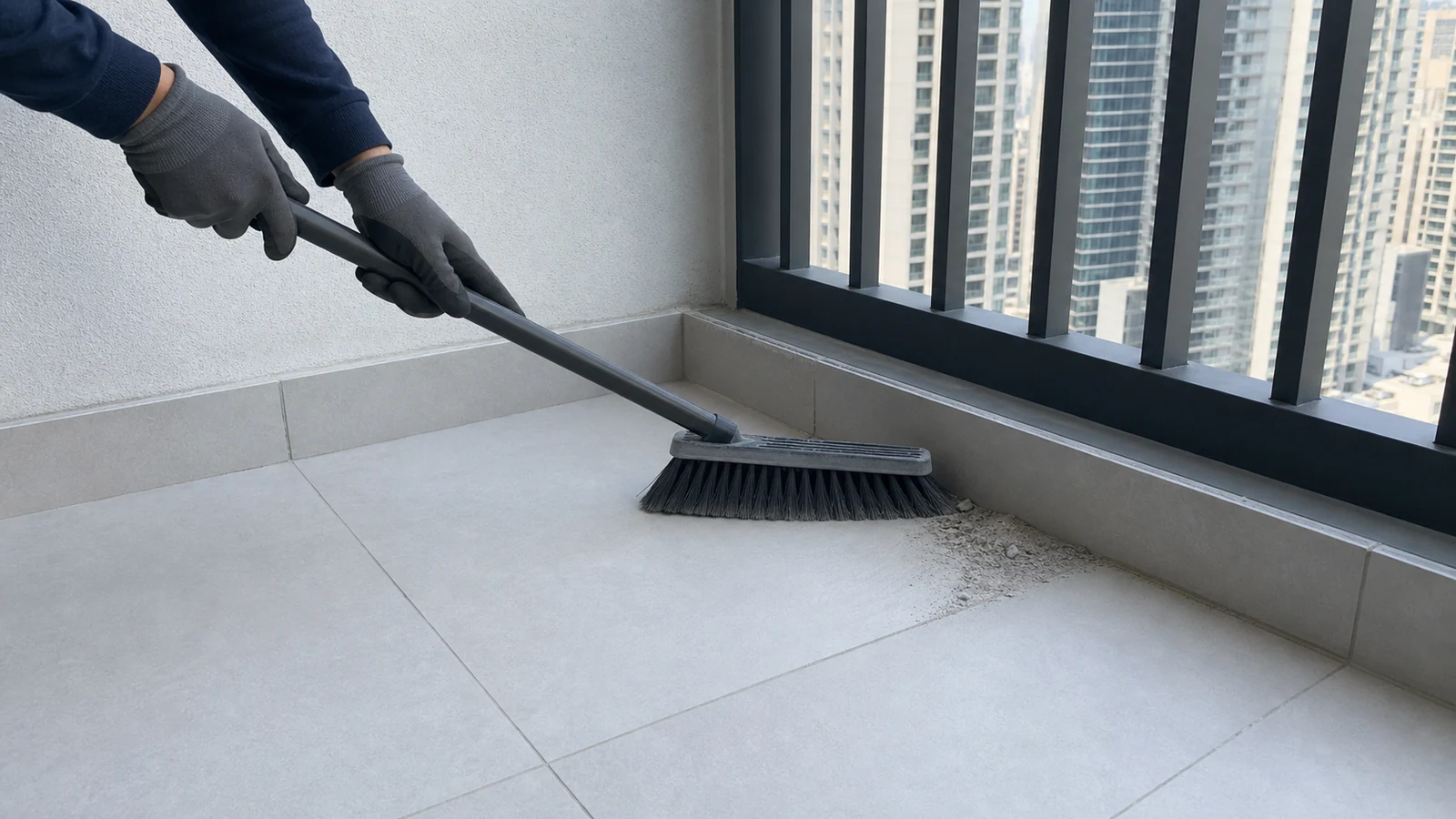
Sweep the entire balcony with a soft-bristled broom
Put on gloves and use a soft broom with slow strokes that keep dust away from the doorway, outlets, neighbours and balcony edge. Do not sweep debris into the drain. If dust becomes airborne, stop rather than adding water; resume when conditions are calm or use a suitable vacuum with the maker-approved floor attachment.
All visible grey dust and crust is dislodged and collected
No large dust clouds are visible during sweeping
Pile of debris is near the drain outlet
-
Step 03
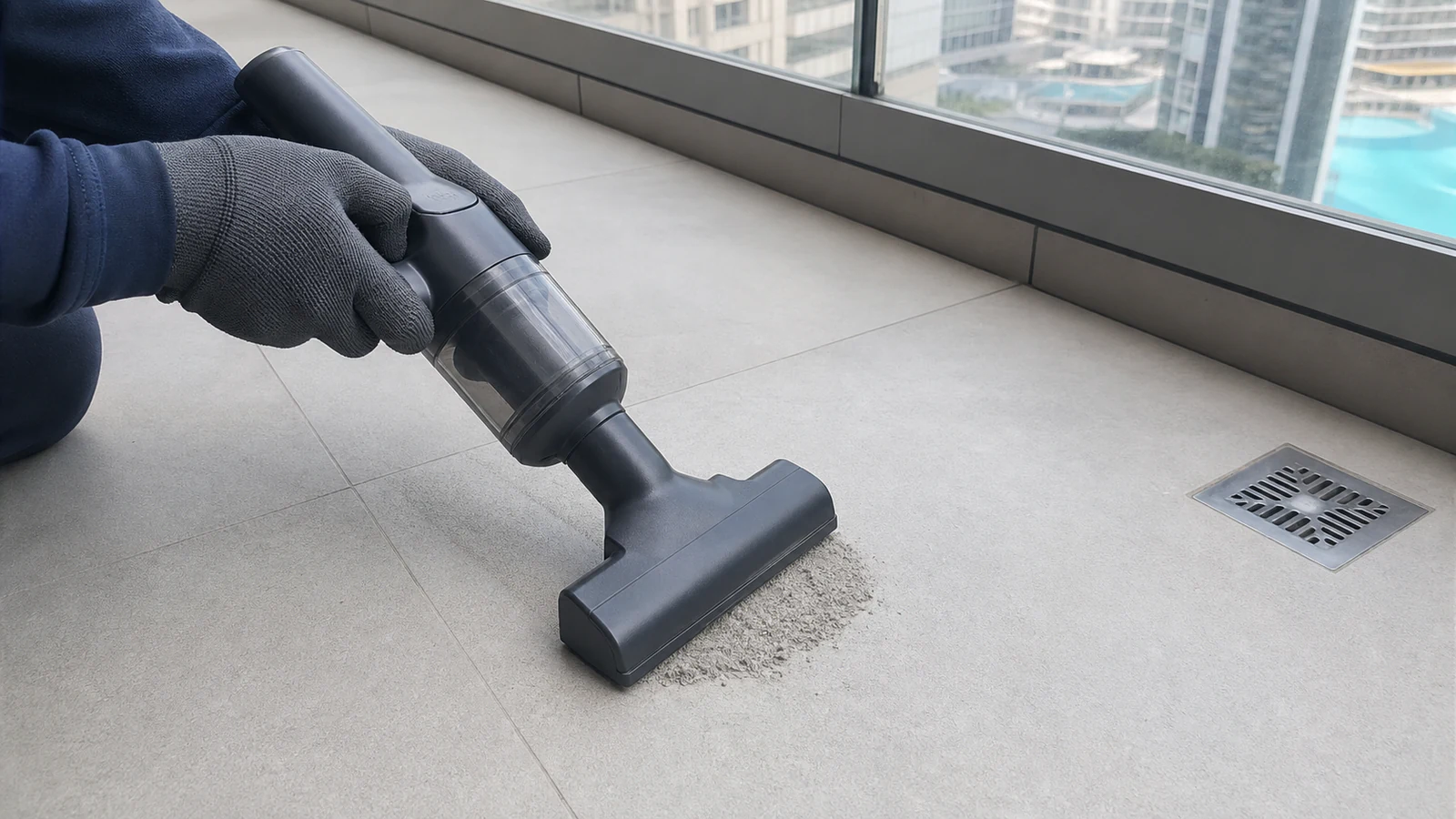
Vacuum or collect the dust pile
Collect the pile with a dustpan and brush, or use a suitable vacuum according to its manual. Move slowly so fine dust is not released. Bag the debris and remove it through the apartment. Keep loose material out of the drain and never reach through, lift or disassemble a fixed grate.
All loose dust and debris is collected
Balcony tile surface is visibly dry and free of dust piles
No debris remains near the drain grate opening
-
Step 04
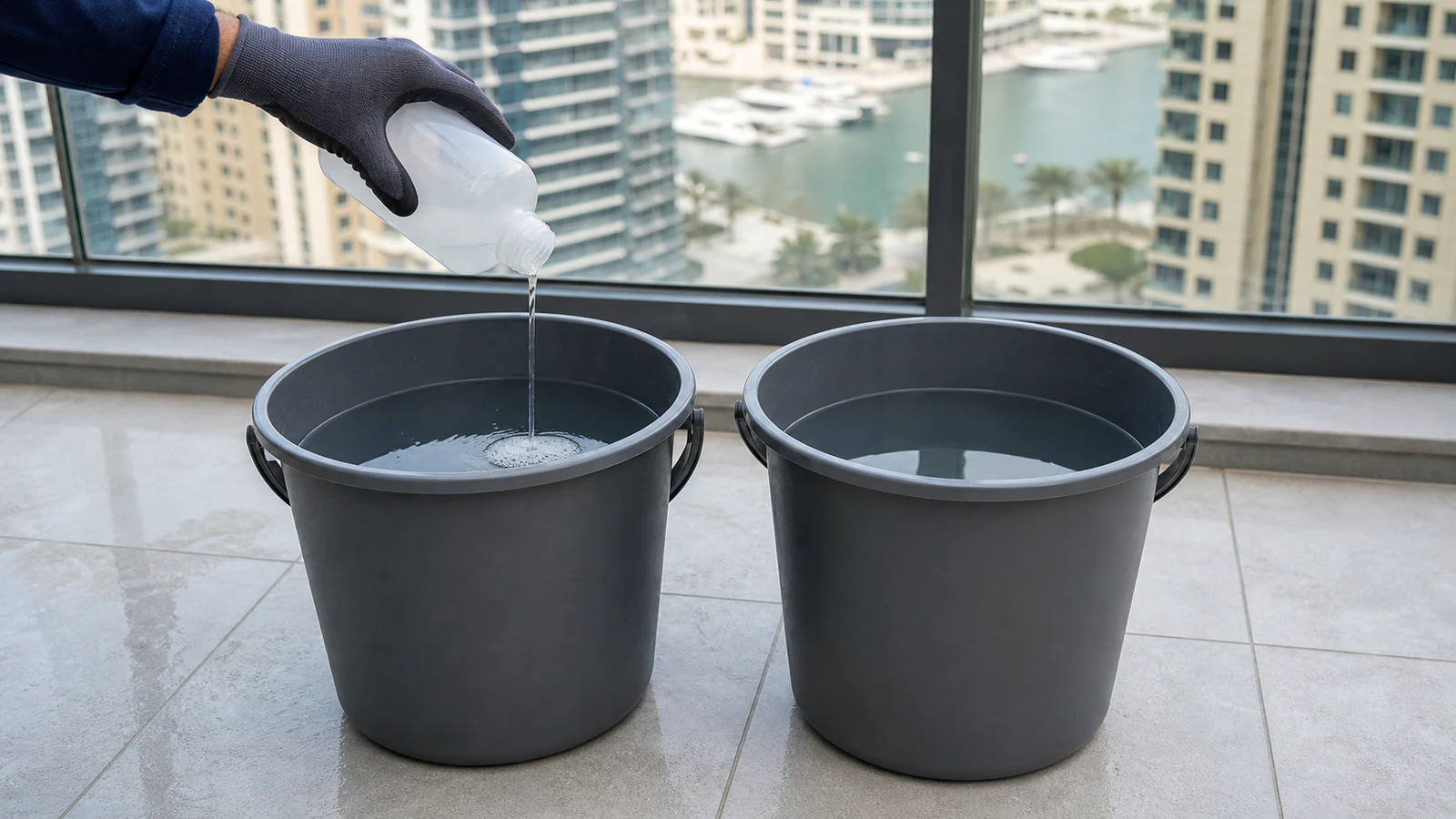
Prepare soapy water in two buckets
Confirm the surface is ceramic or porcelain and read its care guide. If permitted, prepare a pH-neutral cleaner at the exact label dilution in one bucket and clean water in the second. Patch-test a hidden tile and grout joint, rinse and dry it. Continue only if colour, sheen, texture and grip remain unchanged.
Water is light and foamy, not thick with suds
Both buckets are within reach of the balcony
You can wring excess water from the mop
-
Step 05
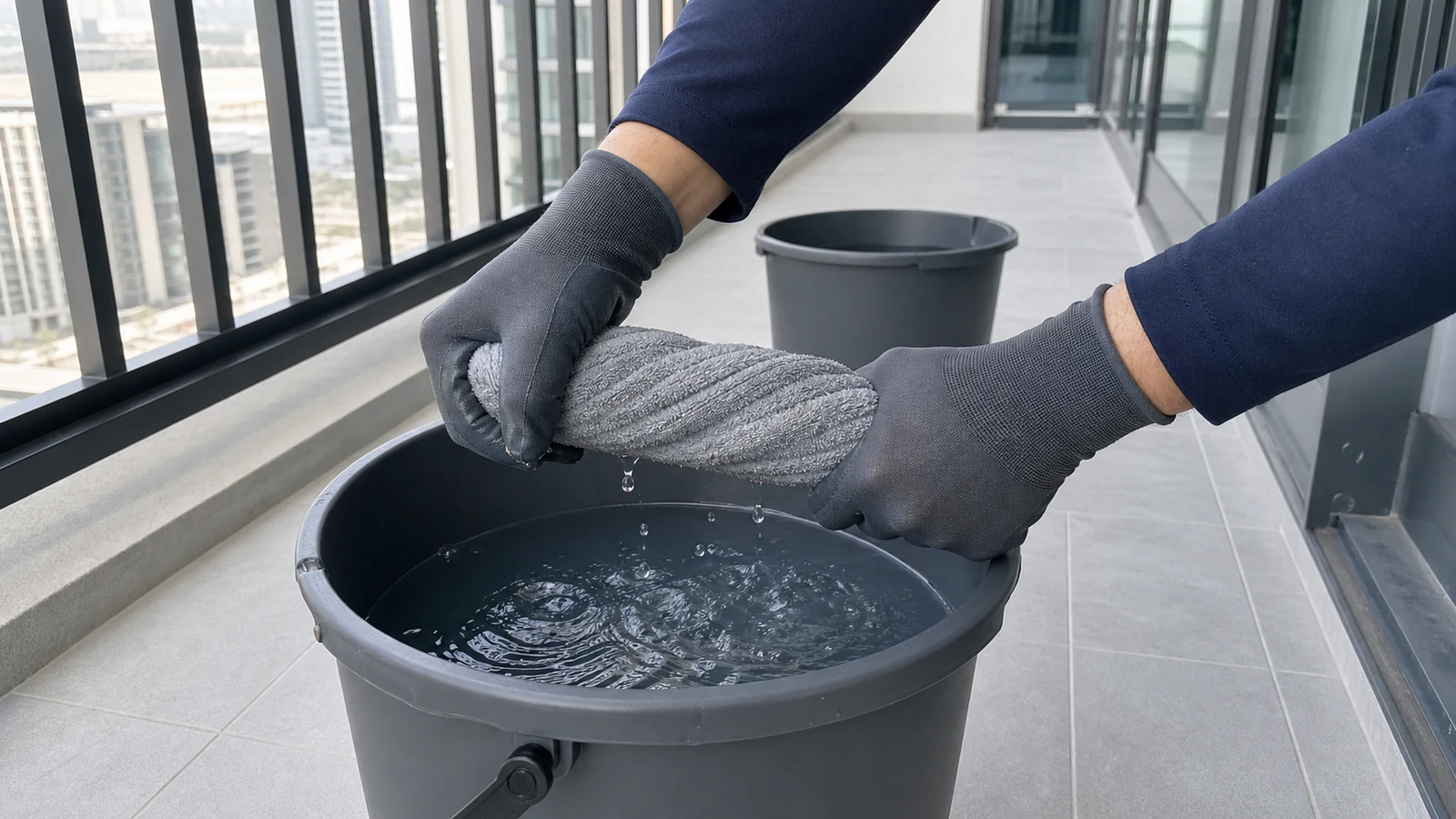
Mop with minimal water, wringing firmly
Dip the mop into the approved solution, then wring it firmly so it is damp, not dripping. Mop small sections with light overlapping strokes while keeping water away from the edge, threshold, outlets and damaged joints. Rinse the mop in clean water and wring again. Stop immediately if water pools, crosses the threshold or appears below.
Mop is wrung out and leaves only a damp sheen, not puddles
No water is pooling or running over the edge
No water has entered the interior doorway or threshold
Tile colour is uniformly refreshed with no muddy residue
-
Step 06
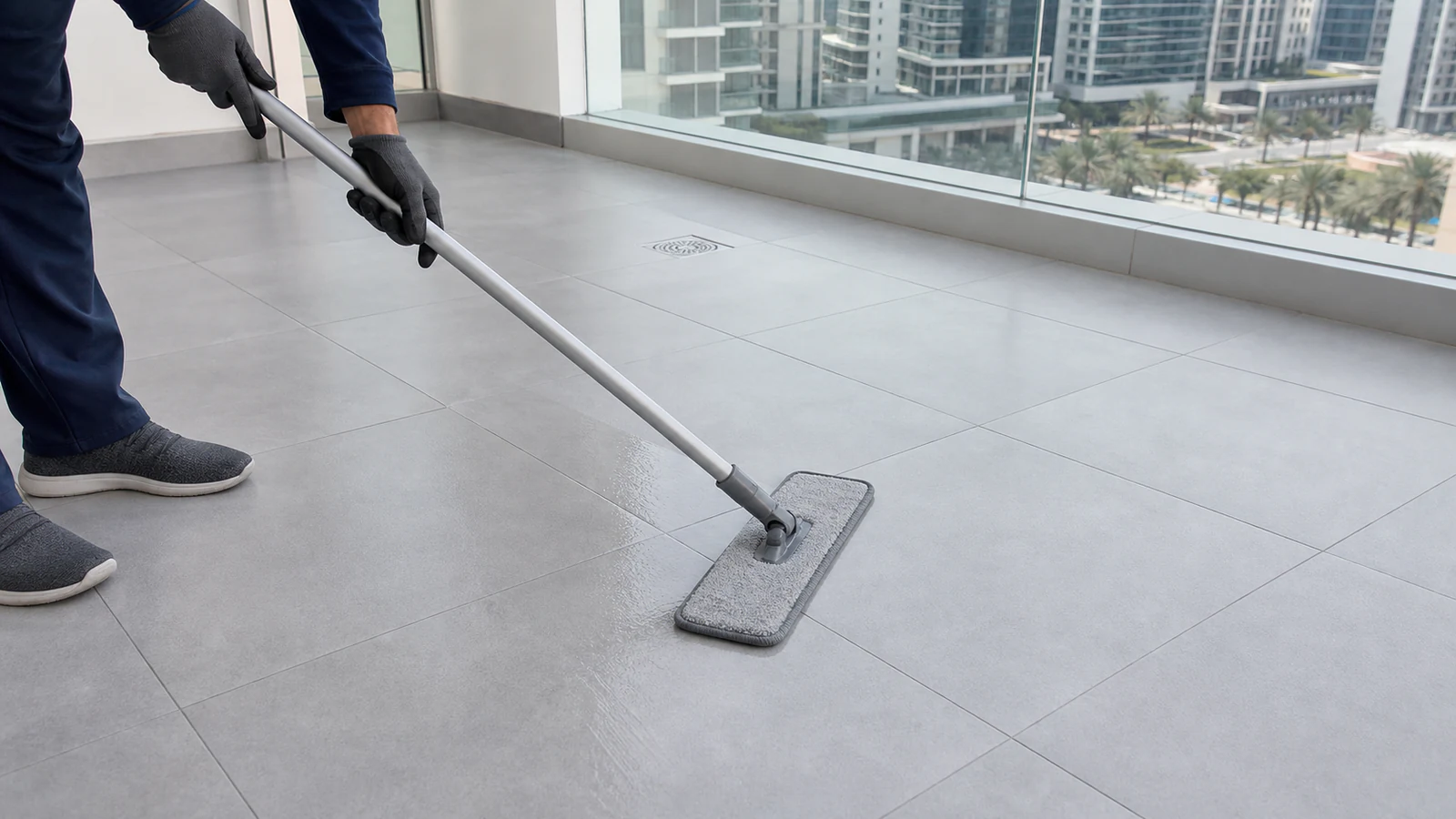
Do a final rinse with clean water only
Use a clean, firmly wrung mop for the rinse required by the cleaner or tile guide. Remove residue and excess water rather than directing it toward the drain or edge. Blot corners with a cloth. Take the mop indoors to dry; never hang or lean tools over the railing.
No soap bubbles or foam are visible on tiles
The balcony smells fresh, not soapy
All water has soaked in or drained; no pooling
Tile surface is not slippery when dry
-
Step 07
Allow the balcony to air-dry completely
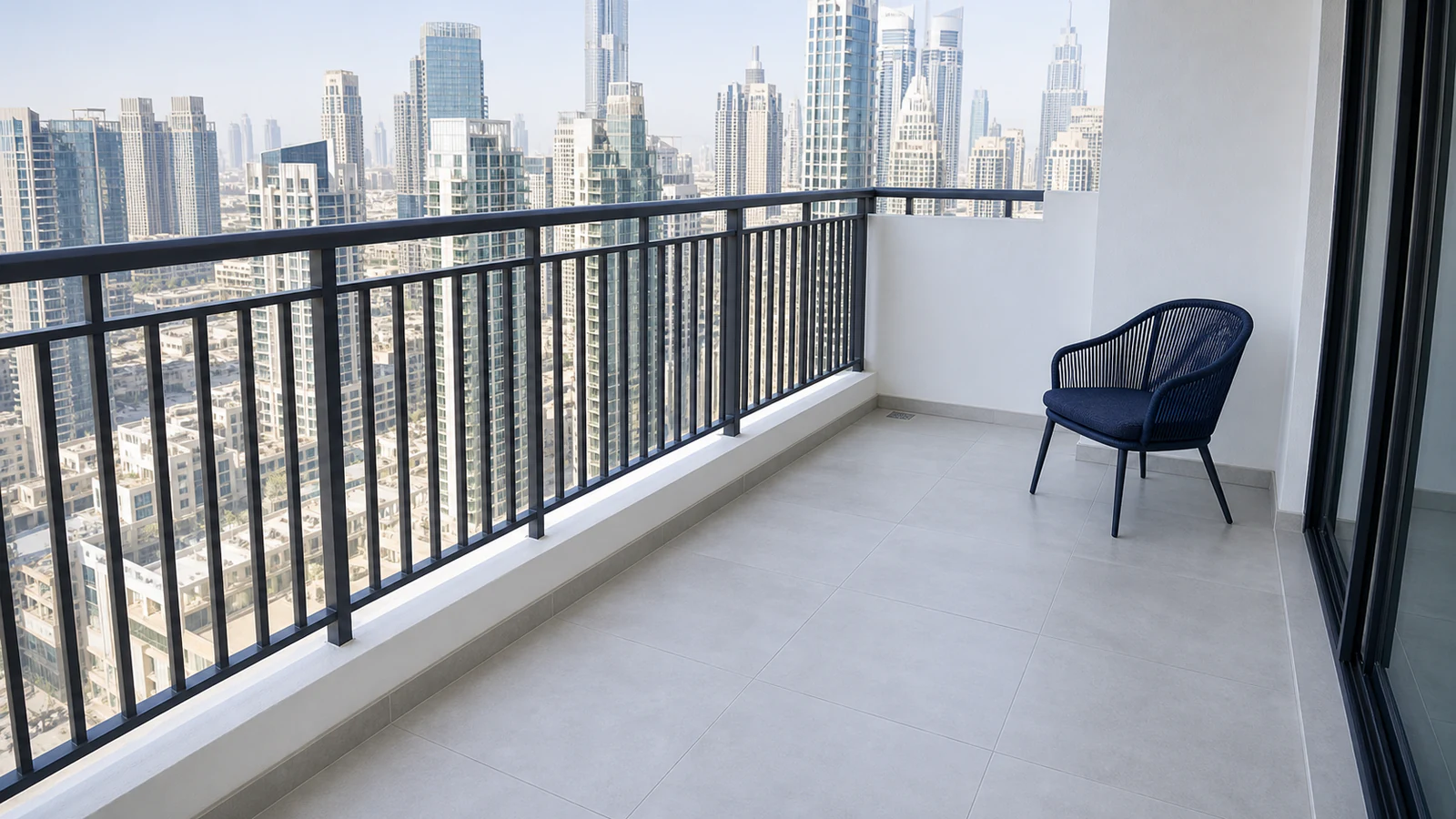
Leave the balcony undisturbed for 15–20 minutes. Once fully dry, walk across the surface to confirm tiles are not slippery and no water is standing. Inspect for any remaining dust marks or stains. Light streaks usually fade within hours of sun exposure.
Tiles are fully dry and feel secure underfoot
No water is pooling or trickling from the drain
Tile colour is even and clean
No stains have appeared
Finished result
What success looks like
Your balcony tiles are clean, dry and safe to walk on, with no mud residue, standing water or drainage problems.
Tiles are uniformly clean and light in colour
No water is pooling or dripping from the edge
No water has entered the apartment threshold
The surface is not slippery when dry
The drain grate is clear and water flows freely
Quick answers
Frequently asked questions.
Why does my balcony stain when I wash it?
Adding water directly to dry dust creates mud that soaks into grout and tile, leaving dark marks. Mineral deposits in standing water also stain tiles. Always sweep dry dust first, minimise water use, and ensure excess drains freely. Rinse thoroughly with clean water to remove soap residue.
How often should you wash a balcony in Dubai?
There is no universal Dubai schedule. Sweep when loose dust appears and conditions are calm. Wet-clean only when the tile care guide and building rules permit it, using minimal water. Exposure, wind and construction activity change the interval. Stop if drainage, railing, tile, grout or waterproofing appears defective.
Can I use vinegar or lemon to clean balcony tiles?
Do not choose vinegar or lemon by surface appearance alone. Acids can affect grout, stone and some finishes. Identify the tile and grout, then use only a cleaner their makers approve at the labelled dilution. Patch-test, rinse as directed and stop for any change in colour, texture, sheen or grip.
What if water pools on my balcony after mopping?
Stop immediately. The drain may be partially blocked or the surface slightly uneven. Use a soft brush to clear debris from the drain grate. If water still pools, contact building maintenance to inspect the drain and waterproofing. Stop if you find loose or low railing.
Sources and review notes
- Daltile: Ceramic and Porcelain Tile Care Instructions - Manufacturer guidance to remove loose dirt before mopping, follow cleaner dilution, rinse with clean water and remove excess water.
- Marazzi USA: Tile Care and Maintenance - Manufacturer guidance for compatible cleaners, non-metallic tools, clean-water rinsing and full drying.
- Building and Plumbing Commission: Balcony Water Ingress - Government guidance on ponding, blocked outlets, corrosion and professional assessment of balcony water-ingress warning signs.